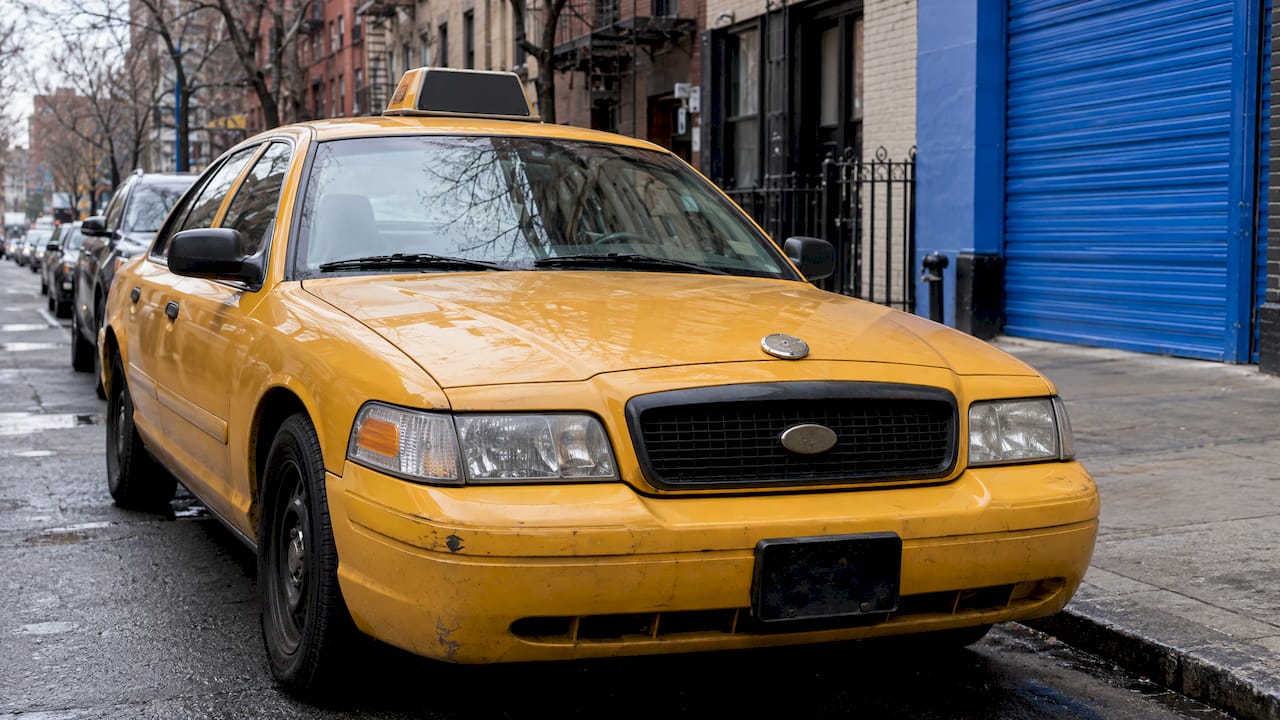
How to Sell a Taxi Cab in NYC: Cab vs. Medallion
If you want to sell a taxi cab in New York City, the first question is what you are selling: the car or the medallion. The car is an ordinary used vehicle with a title, a VIN and a lot of miles, and you can sell it for cash in a day. The medallion is the city license, and it moves through the Taxi and Limousine Commission (TLC), not through a car buyer. This guide covers the car: what a retired cab is worth, which papers you need, what to do with the plates, and how a same-day cash sale works. We come to your location, make a guaranteed offer, handle the paperwork and pay at pickup.
TL;DR
- A taxi medallion is the city license. A taxi cab is the car. They are sold in different ways, and this article is about selling the car.
- Cabs rack up miles fast, so retired ones sell for modest prices. One retired 2011 Crown Victoria cab sold for $5,000 in 2023.
- For the sale you need the signed NY title, a bill of sale (MV-912) and a matching ID. Remove the plates afterward.
- We buy running and non-running vehicles in New York, New Jersey and Connecticut, come to you, and pay the quoted price at pickup.
Table of Contents
- Taxi cab or taxi medallion: know which one you are selling
- What a retired NYC cab is worth
- Your options by type
- The paperwork for selling a cab in New York
- Plates, stickers and insurance after the sale
- How a same-day cash sale works
- Check these before you accept any offer
- Ready to sell your cab for cash?
- Our view on selling a former cab
- FAQ
- Sources
Taxi cab or taxi medallion: know which one you are selling
People search “sell taxi cab NYC” and mean two very different things.
The medallion is the license that lets a vehicle operate as a yellow cab. Transferring one is a TLC process. According to the TLC’s medallion transfer page, it uses forms such as OS-1 for medallions and OS-2 for corporate stock or LLC interests. It also requires lien, lawsuit and judgment searches, and the buyer signs a non-reliance affidavit. A broker is optional. If your goal is to sell the medallion, that is the process to follow with the TLC.
The cab is the vehicle. Once the medallion is removed or moved to another car, what is left is a used car. The TLC’s medallion owner page explains that a Vehicle Transfer changes which vehicle is attached to a medallion. So when you replace a cab, the old car is yours to sell like any other vehicle, and that is where we come in.
Before you sell the car, check three things:
- The medallion has been taken off the car, or the TLC process for moving it to your next vehicle is under way.
- The taximeter, roof light and any TLC-required equipment are handled the way the TLC requires.
- Any lien on the car is paid off or can be settled at the sale.
The TLC’s page says the medallion is installed and the equipment checked at its Woodside inspection facility, so equipment questions belong with the TLC.
What a retired NYC cab is worth
A retired cab is a high-mileage car, and its price is set by mileage, condition and age, not by the fact that it was a taxi.
The TLC’s 2017 Used Vehicle Taxicab Pilot report puts numbers on the mileage. The average taxicab covers about 55,000 miles a year, against roughly 11,000 for the average New York State vehicle. That is about five years of ordinary driving every year. The same report found that an unlicensed used vehicle is likely to be in better condition than a previously licensed one.
A public example shows where old cabs land. CBC News reported that a 2011 Ford Crown Victoria cab, in service from 2012 to 2018, sold for $5,000 on Facebook Marketplace. The same story notes that NYC rules require taxis to be replaced after seven years. Your own figure will depend on the model, the miles and whether it runs.
What moves the price:
- Mileage and engine or transmission health. A cab with a recent engine or transmission replacement and records is easier to price than one with unknown history.
- Body and interior wear. Dents, a worn driver seat and partition holes all matter.
- Running or not. A cab that starts and drives gets a higher offer than one that needs a tow, but both can be sold.
- Paperwork. A clean, signed title speeds everything up.
- Model and year. Hybrids and newer models hold value better than older sedans.
One guide to high-mileage sales in NYC, from NYCAutoMart, suggests that heavy city wear can take 25 to 40 percent off a comparable car’s value, and that thick maintenance records can add 5 to 10 percent. Treat those as rough guideposts, not a quote. Keep your service records in one folder, because they are the cheapest way to raise an offer.
Your options by type
When the vehicle is a retired cab, you generally have four routes.
| Route | Speed | What to expect |
|---|---|---|
| Direct cash buyer that comes to you | Same day | A guaranteed offer, pickup at your location, paperwork handled |
| Dealer trade-in | Same day, but in a lot you must visit | Offers tend to be lower, and high-mileage fleet cars are often declined |
| Online instant-offer platform | A few days | Offers depend on a form you fill out, and you deliver or wait for transport |
| Private listing | Weeks | You handle photos, messages, test drives and no-shows yourself |
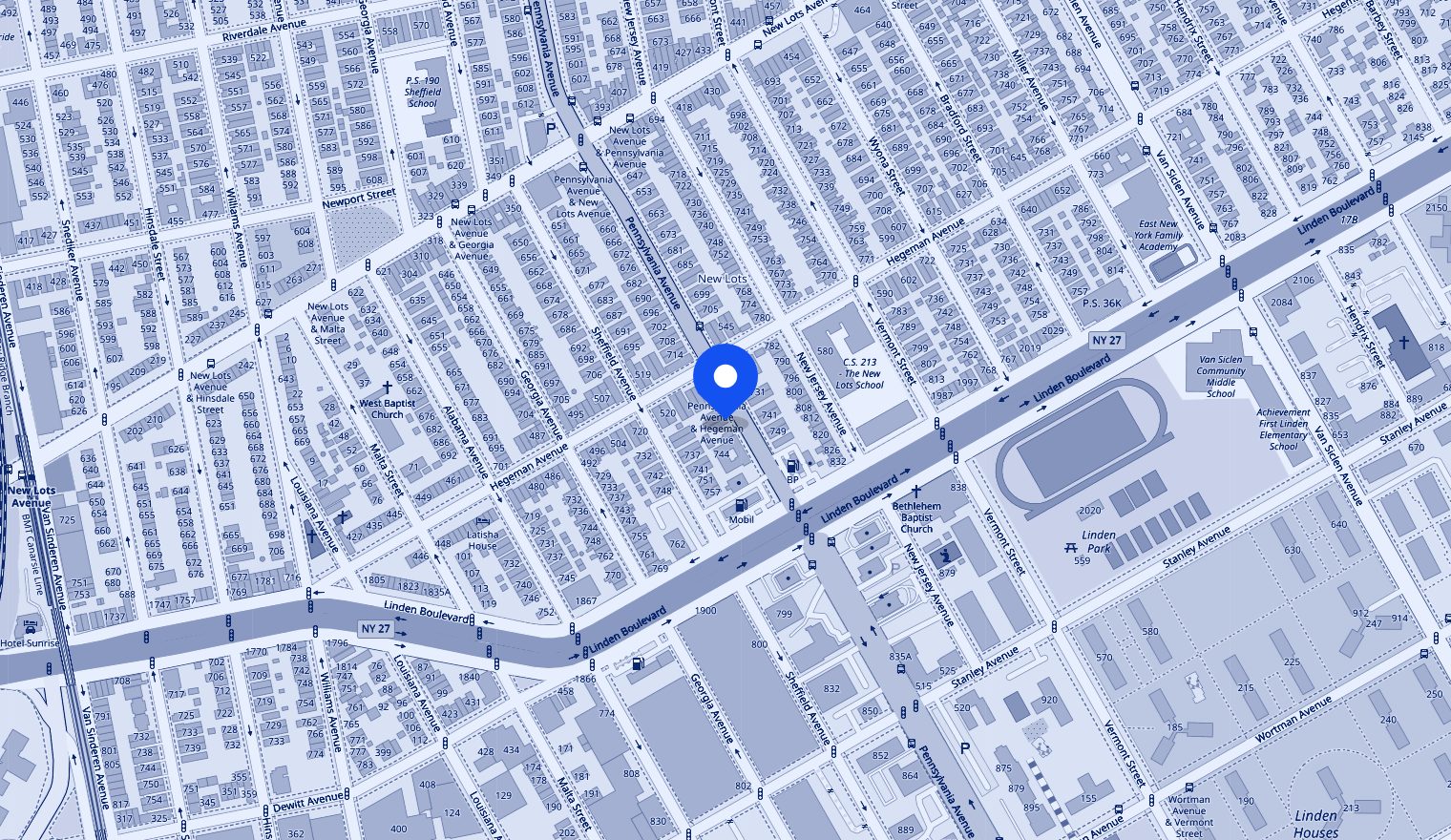
For a cab, the private route has a particular problem. Buyers who respond to a listing for a former taxi often ask for steep discounts, and each test drive is a stranger in your car. A direct buyer who sends a team to you takes that off your plate. That is the route we built our service around.
The paperwork for selling a cab in New York
A retired cab is sold with the same documents as any New York vehicle. Here is the list, with what each does.
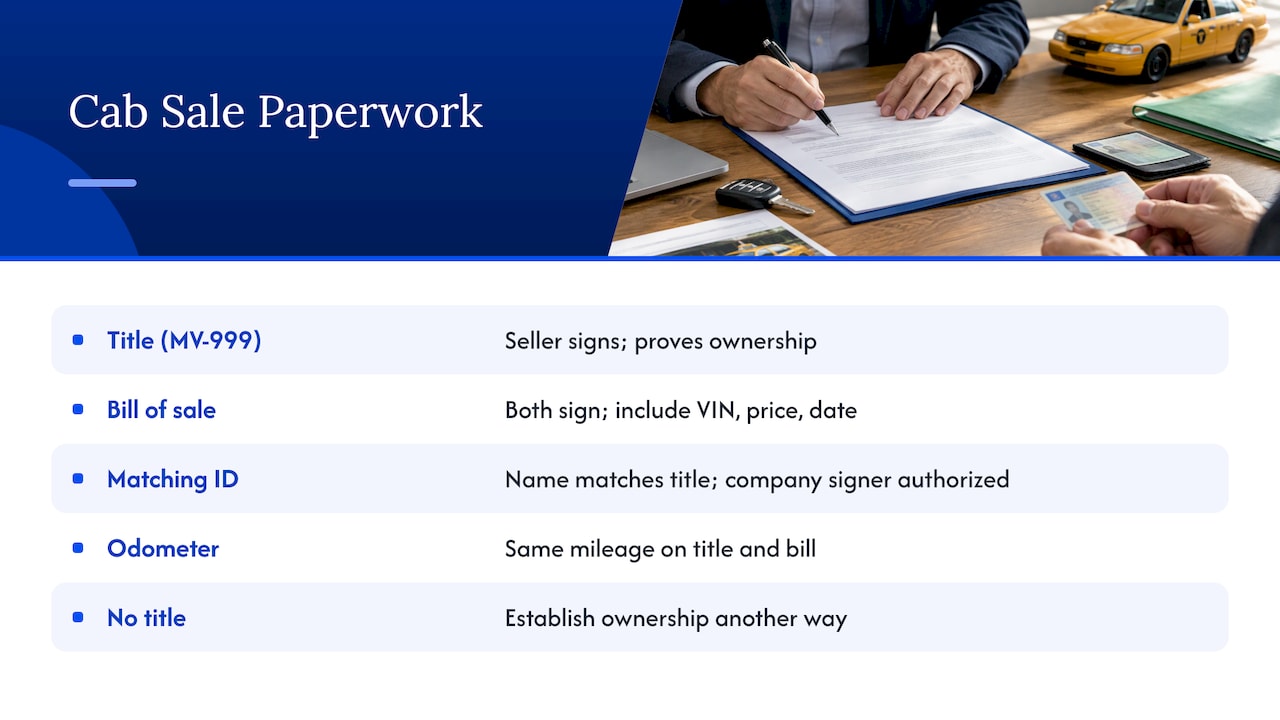
1. The title (Certificate of Title, MV-999). The NY DMV explains that the title is the official proof of ownership. In a used-car sale, the seller signs it over to the buyer. The DMV will not accept titles with cross-outs, alterations or erasures, so sign carefully in the transfer section and do not correct a mistake by writing over it. If a lender holds a lien, it needs to be released first or settled at the sale.
2. The bill of sale (MV-912). According to the DMV’s buy, sell or transfer page, the seller signs the title and both parties sign a Vehicle Bill of Sale. An acceptable bill of sale lists the year and make, the VIN, the date of sale, the purchase price, and the names and signatures of buyer and seller. Keep a photocopy. Our page on the NY bill of sale and MV-912 walks through the form.
3. A matching government ID. The name on your ID should match the name on the title. Cabs are often owned by an LLC or corporation, so if the title is in a company name, the person signing needs to be authorized to sign for it. We cover that in selling a company car in NY.
4. Odometer reading. Write the mileage on the title and the bill of sale. For a cab, it is usually a big number, and it should be the same on both documents.
5. No title? If you cannot find the title, you generally need to establish proof of ownership another way. Our guide on selling a car without a title in NY explains the options, and the proof of ownership page lists what the DMV accepts. We buy vehicles with or without a title.
The buyer, not the seller, titles and registers the vehicle at the DMV and pays sales tax or shows an exemption. That part is on the buyer, and when you sell to us, it is on our side of the table too.
Plates, stickers and insurance after the sale
This is where sellers lose money or get stuck with tickets.
The NY DMV says that after you sell, you can transfer the registration and plates to another vehicle you own or surrender the plates to the DMV. You may be eligible for a refund if you surrender them before the registration expires. For a taxi, the TLC plates and medallion are a separate matter handled with the TLC, so take them off the car and deal with them there.
A sensible order:
- Hand over the signed title and bill of sale and take your payment.
- Remove the plates and the registration and inspection stickers from the windshield.
- Transfer or surrender the plates.
- Cancel or move your insurance only after the plates are off and the sale is documented.
Our page on NY car sale paperwork and plates explains why the plates come before the insurance, and how to report a car sale in NY covers the notice side.
A signed bill of sale with a date and time is your proof that you no longer own the cab. That matters if a toll, camera ticket or parking violation shows up later.
How a same-day cash sale works
Here is how selling a cab to us goes, in the order it happens:
- You tell us about the car. Year, make, model, mileage, whether it runs, and whether you have the title.
- You get an offer. We guarantee the offer: we commit to paying the stated price at pickup.
- We come to you. A team arrives at your location in New York, New Jersey or Connecticut. Running or not, the car does not need to move first. See how pickup sales work.
- We handle the paperwork. You sign what is needed, and we take care of the rest. Our guide to car pickup paperwork shows what you sign before the car leaves.
- You are paid. Cash in hand, typically within an hour of the team arriving.
Before the team arrives, have these ready: the title, your ID, the keys and any lien information. If the car is in a garage or on a tight street, tell us so the pickup goes smoothly. If there is a loan, our six-step process covers selling safely with a payoff.
Check these before you accept any offer
Whoever you sell to, a few checks protect you.
- Is the offer in writing, and is it the price paid at pickup? Our guarantee is that the stated price is the price paid, with no hidden fees.
- Who pays for the tow or pickup? Confirm it is included.
- When do you sign the title? Sign when payment is in hand, not before.
- Is the bill of sale filled in completely? Price, VIN, date and both signatures.
- Have you removed your plates? Do it before the car leaves or right after.
These are simple, and they keep the sale clean regardless of the mileage on the cab.
Ready to sell your cab for cash?
If you have a retired or replaced cab sitting in a lot, a garage or on the street, we can make this quick. We buy cars, SUVs, trucks, vans and commercial vehicles in New York, New Jersey and Connecticut, whether they run or not, with or without a title. Tell us about your vehicle and we will give you a guaranteed offer. Get your cash offer for your car.

If you want to see how an on-site valuation works first, read about our on-site car appraisal. If you are in Brooklyn, our page on selling your car in Brooklyn covers the local pickup. For vehicles with very high mileage, our high-mileage sale guide explains the 24 to 72 hour options.
Our view on selling a former cab
A former taxi is a hard car to sell the usual way. The mileage scares retail buyers off, and the listing process turns into weeks of messages and lowball offers.
We built our service for that situation. You tell us what you have, we make an offer, and we stand behind it: the price we state is the price we pay at pickup. We come to your location, we handle the paperwork, and the payment is in your hand the same day.
The honest way to sell a cab is to separate the two things you own. The medallion goes through the TLC. The car goes to a buyer who will take it as it is, running or not, with or without a title, and not make you chase the sale. That is what we do for owners across New York, New Jersey and Connecticut.
Our aim is a sale that is finished in one visit, with the paperwork done right so nothing comes back to you later.
Eric
FAQ
Can I sell my taxi medallion to a car buyer?
No. The medallion is a city license, and transfers go through the TLC with its own forms and searches. A car buyer purchases the vehicle only. Once the medallion is off the cab, the car can be sold like any other used vehicle.
How much is a retired NYC taxi worth?
It depends on mileage, condition, model and whether it runs. One retired 2011 Crown Victoria cab sold for $5,000 in 2023. Cabs average about 55,000 miles a year, so offers reflect heavy use. Contact us with the details of your cab for a guaranteed offer.
What do I do with the plates after I sell?
Remove them from the car. The NY DMV says you can transfer them to another vehicle or surrender them, and you may get a refund if you surrender before the registration expires. Taxi plates tied to a medallion are handled with the TLC.
Can I sell a cab that does not run?
Yes. We buy running and non-running vehicles and come to your location, so the cab does not need to be driven anywhere. Have the title, your ID and keys ready if you have them.
Sources
- TLC: Medallion Transfers
- TLC: Taxi Medallion
- TLC: Used Vehicle Taxicab Pilot Final Report, 2017
- CBC News: a retired NYC cab sold for $5,000
- NYCAutoMart: Selling a High-Mileage Car in NYC
- NY DMV: Certificate of Title
- NY DMV: Buy, Sell, or Transfer Vehicle Ownership
- NY DMV: How to transfer a registration to another vehicle