How to Sell a Car With a Blown Head Gasket
You can sell a car with a blown head gasket, running or not, and you don’t have to fix it first. Repair is rarely the best use of your money on an older, high-mileage vehicle. The simplest route is to get a guaranteed cash offer from a buyer that takes cars as they are, tell the truth about the problem, and sign the right paperwork. This guide explains how to decide, what to disclose, and what you need to hand over in New York and New Jersey.
TL;DR
- A blown head gasket does not stop you from selling. Sell it “as-is” and say so in writing on the bill of sale.
- Repair only makes sense if the car is worth far more than the repair bill and you plan to keep it or sell it to a retail buyer.
- Be upfront about the problem. Honest disclosure protects you after the sale.
- In NJ and NY you will need the signed title, a bill of sale, and a plan for your license plates.
- We buy cars in NY, NJ and CT with a guaranteed offer, pickup, and paperwork help, even when the car won’t start.
Table of Contents
- What a blown head gasket means for your car’s value
- Repair or sell as-is?
- Your options for selling
- Is it legal to sell a car with a blown head gasket?
- How to sell a car with a blown head gasket, step by step
- Paperwork: New Jersey and New York
- Mistakes that cost sellers money
- Get a guaranteed offer for your car
- FAQ
- Sources
What a blown head gasket means for your car’s value
The head gasket seals the joint between the engine block and the cylinder head. When it fails, coolant and oil can mix, coolant can burn off as white smoke, and the engine can overheat. Buyers see two things: a major repair bill and the risk that the engine has already been damaged by heat.
That is why a private buyer on a listing site will usually offer very little, and why many retail buyers pass altogether. The car is not worthless, though. Even a car that won’t run has value as a working vehicle for someone who repairs cars, as a source of usable parts, or as wholesale inventory.
What moves the price up or down
No two offers are the same. These are the factors that matter most:
- Year, make and model. Popular models with strong parts demand hold more value than rare or discontinued ones.
- Mileage and overall condition. A clean interior, good tires and a straight body count for something even when the engine is down.
- How far the damage went. A gasket that has just started to seep is different from an engine that overheated badly and now won’t turn over. Buyers usually can’t know which until they open it up, so they price in the risk.
- Body and frame. Rust, collision damage or a missing catalytic converter will lower the offer.
- Title status. A clean title in your name makes the sale simpler. If you have a lien or a lost title, mention it early.
- Location. A buyer who can reach you quickly without towing costs can offer more than one who has to send a flatbed across several counties.
To get a realistic number, don’t search for what the car is worth running. Describe the actual condition and ask buyers who purchase cars as-is to quote it.
Repair or sell as-is?
This is the question behind most searches for this topic, and the answer comes down to arithmetic and plans.
Head gasket jobs are labor-heavy because the engine has to be partly disassembled, and the cost can climb into the thousands depending on the engine and shop. Get a written estimate from a mechanic you trust before you decide. Then compare three numbers:
- What the car would be worth running and in good condition.
- The repair estimate.
- What a buyer will pay for it today as-is.
If the repair estimate is close to, or more than, the running value, repairing it to resell almost never pays. You spend the money, wait for a buyer, and still negotiate. If the repair is cheap compared with the car’s value and you intend to keep driving it, fixing it can make sense, but that is a decision about keeping the car, not selling it.
When selling as-is is the better move
- The car is older and has high mileage.
- The repair estimate eats most of the car’s running value.
- Other problems are stacking up, such as transmission trouble, rust or a failed inspection.
- You need the money soon, or the car is taking up driveway or street space.
- You don’t want to deal with strangers, test drives and haggling.
If several of those apply, selling now is usually the cleaner outcome. For a look at how fast-sale routes compare on speed and price, see our guide to fast car sale options in NY, NJ and CT.
Your options for selling
There are four realistic routes. Here is how they compare for a car with this problem.
| Route | Speed | Effort | What to expect |
|---|---|---|---|
| Private listing (online marketplace, classifieds) | Days to weeks | High: photos, messages, no-shows, haggling | Buyers are usually hobbyists or flippers, and many will lowball or ask you to deliver the car |
| Dealer trade-in | Same day | Medium | Many dealers will not take a car with major engine problems, or will take it at a steep discount |
| National used-car retailers | Varies | Medium | Their appraisals are built around cars they can resell on the lot, so a car that doesn’t run often doesn’t fit |
| Local cash car buyer | Often same day | Low | Buys as-is, quotes by phone or online, and usually picks the car up |
On the question many readers ask, whether the big national used-car chains buy cars with a blown head gasket: policies change and differ by location and by the car, so ask the store directly. Their business is retail resale, and a car with a major engine fault often won’t meet their standards. A buyer that takes cars as-is has no such issue.
Selling privately: what to know
If you want to try a private sale, price the car to match its honest condition, state the head gasket problem in the first lines of the listing, and say the car is sold as-is with no warranty. Expect buyers who want to bargain hard. Accept payment in a way you can verify, and never hand over the title until you have been paid. Many private deals fall through when buyers see the car and reconsider, so be ready to relist.
Is it legal to sell a car with a blown head gasket?
Yes. Owners sell cars with mechanical problems all the time. What matters is how you describe the car and how you document the sale.
- Don’t hide it. If you know the head gasket has failed, say so. Misrepresenting a known defect is the kind of thing that leads to disputes, complaints and sometimes legal claims.
- Write “sold as-is” on the bill of sale. It makes clear that the buyer accepts the car in its current condition. Add a line such as “Buyer is aware the engine has a blown head gasket.”
- Keep a copy. Photograph or scan the signed bill of sale and the signed title before the buyer leaves.
Rules on disclosure and warranties differ by state and by whether you sell to a dealer or an individual. If you are worried about a specific situation, such as a recent purchase from a dealer or a car that is still under a manufacturer warranty, contact your state consumer protection office or an attorney. For the New Jersey and New York paperwork itself, the official pages below are the reference.
How to sell a car with a blown head gasket, step by step
- Confirm the problem. Common signs include white exhaust smoke, coolant that keeps disappearing, milky oil, overheating and bubbles in the radiator. A mechanic can confirm with a pressure or combustion-gas test. If you can’t afford to diagnose it, describe the symptoms honestly. A buyer will inspect the car anyway.
- Gather your documents. Find the title, your photo ID and your registration. If there is a loan, get the lender’s name and a payoff figure.
- Take clear photos and note the details. Year, make, model, trim, mileage, VIN, and what works and doesn’t. Include dents, rust and warning lights.
- Get offers. Contact a few buyers who purchase as-is. Compare the offers, and ask whether the price is guaranteed or can change at pickup.
- Schedule pickup. If the car won’t run, make sure the buyer brings a tow truck or flatbed and ask whether towing is free.
- Sign the paperwork. Title, bill of sale and any odometer disclosure the state requires.
- Get paid before the car leaves. Confirm the payment in hand and keep your receipt.
- Deal with your plates and insurance. This is where sellers most often slip up. See the next section.
The process is laid out in more detail in our six-step guide to selling safely through a car buying service, including what to do if you still owe money on the car.

Paperwork: New Jersey and New York
A blown head gasket doesn’t change the paperwork. What matters is that the title is signed correctly and that you protect yourself once the car is gone.
New Jersey
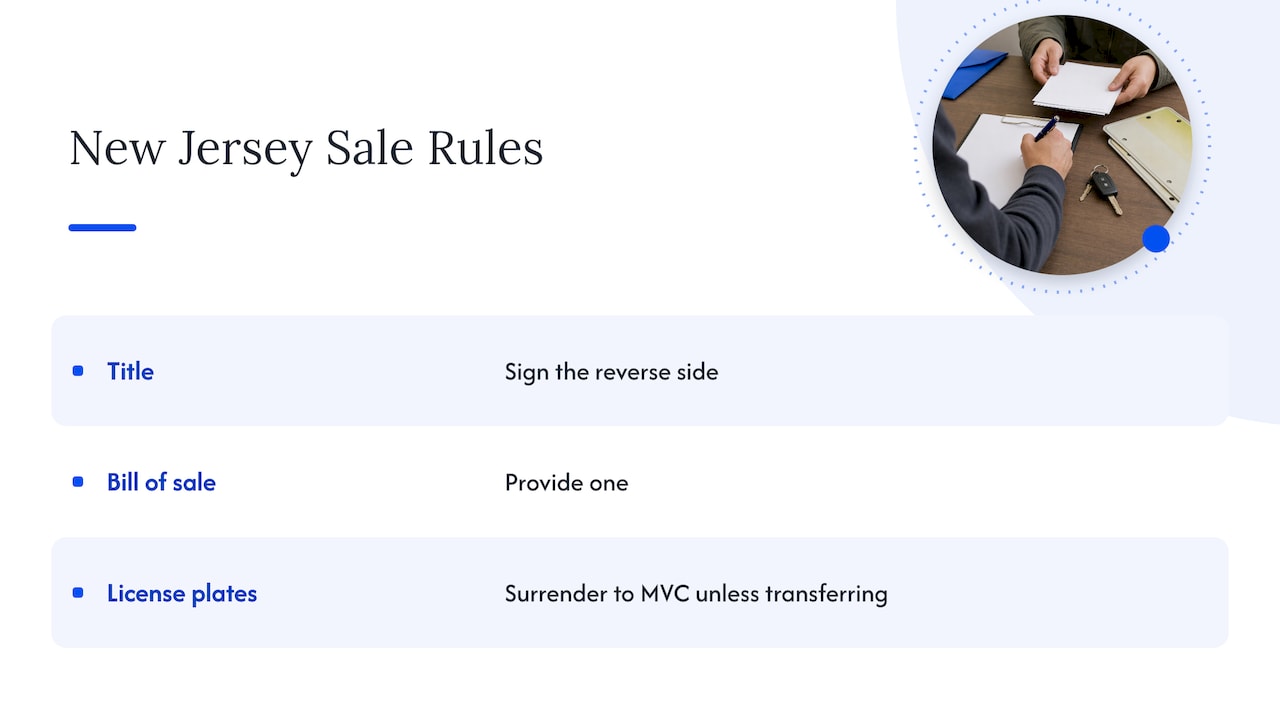
According to the New Jersey Motor Vehicle Commission, sellers must sign the reverse side of the title, provide a bill of sale and surrender the license plates to the MVC unless they are transferring them to another vehicle. Our walkthrough of the three forms for NJ car sale paperwork covers what to prepare before you visit the MVC, and our page on removing your plates after an NJ sale explains what to do with them.
New York
The New York DMV advises sellers to remove the plates and either surrender them to the DMV or transfer them to another vehicle. That is how you avoid insurance-lapse trouble after the car is gone. For proof of sale, the same page says a bill of sale should include the sale date, both parties’ names and addresses, and the vehicle’s year, make and VIN.
Two helpful follow-ups if you live in New York: how to surrender your plates by mail or in person and how to cancel your registration and keep your refund.

What to sign at pickup
Whatever state you’re in, read each page before you sign. Our checklist of what to sign before the buyer drives away shows what a clean handover looks like, so you leave with proof the car is no longer yours.
What if you don’t have the title?
A missing title is fixable, but it adds a step. Contact your state’s motor vehicle agency to request a duplicate before the sale, or ask the buyer whether they can complete the sale without one. Rules differ by state and by vehicle age, so confirm with your DMV or MVC.
Mistakes that cost sellers money
- Fixing it “just enough.” Pouring money into a quick patch rarely raises the sale price by as much as it cost, and buyers still assume the worst.
- Hiding symptoms. If the buyer discovers the problem on the way home, you could face a dispute. Disclosure costs you nothing.
- Accepting the first offer without asking about pickup fees. Some buyers lower the price at the door, citing towing or condition. Ask whether the quote is guaranteed.
- Leaving the plates on the car. You may stay tied to tickets, tolls or insurance issues. Remove them at pickup.
- Handing over the title before payment. Never do it.
- Skipping the bill of sale. It is your proof of the date and terms.
Perspective
We see cars with blown head gaskets all the time, and sellers usually arrive with the same worry: that the car is now worth nothing, or that they have to sink money into it before anyone will talk to them. We don’t think that’s right. Most people with an older vehicle and a major engine repair ahead of them are better off selling than repairing, and they are better off with a quote they can count on than with a listing that drags on for weeks.
That’s why we built our service around a guaranteed offer. Our commitment is to pay the price we quote at pickup, so you aren’t surprised at the curb. We come to you in New York, New Jersey and Connecticut, we buy cars whether or not they run, and we handle the paperwork with you so the transfer is done properly. Our goal is cash in your hand within an hour of pickup.
If you’re deciding between repair and sale, get a quote first. It takes the guesswork out of the math.
Eric
Get a guaranteed offer for your car
If you want to skip the repair bill, the listings and the haggling, we can help. Tell us about the car, including the head gasket problem, and we’ll give you an offer. We buy cars, SUVs, trucks, vans and commercial vehicles in NY, NJ and CT, running or not, and we come to your location. We designed the process so the price we quote is the price we pay at pickup. Get your offer at Tri State Cash For Cars.

Prefer to read first? Our guide to the instant cash car offer process in New Jersey explains what to expect from quote to payment.
FAQ
How much can I sell my car for with a blown head gasket?
It depends on the model, mileage, condition and where you are. The car will sell for less than a running equivalent, but it is not worth zero. The only reliable number is a real quote, so describe the car honestly and ask a buyer who purchases as-is for a guaranteed price.
Is it illegal to sell a car with a blown head gasket?
No. You can sell it, but you should not hide a defect you know about. State that the car is sold as-is, name the head gasket problem on the bill of sale, and keep a signed copy. For a specific legal concern, contact your state consumer protection office or an attorney.
Can I sell the car if it doesn’t run?
Yes. Buyers who purchase non-running cars arrange towing or pickup themselves. Confirm before you agree that pickup is included in the quote, and have your title and ID ready.
Do I need to fix the head gasket before I sell?
Usually not. Repair is labor-intensive, and on an older car the bill can approach or pass what the car is worth. Get a written estimate and a no-repair offer, then compare. Selling as-is is typically faster and simpler.
What happens to my license plates after I sell?
In New Jersey, you surrender the plates to the MVC unless you transfer them to another vehicle. In New York, remove them and either surrender them to the DMV or transfer them. Doing this promptly keeps you clear of insurance lapse problems.