Odometer Discrepancies for Buyers and Sellers: Fix, Report, or Sell
An odometer discrepancy sale happens when a vehicle’s title or paperwork shows a mileage that doesn’t match reality, often branded “Not Actual” on the title. Sellers must give a written mileage statement when the law requires one, and a false one can be illegal. Buyers should preserve evidence and report. Sellers should record the true reading and fix errors before transfer.
TL;DR:
- Federal law requires written mileage disclosure on transfer unless a vehicle age or weight exemption applies; state forms and signing rules vary.
- Sellers should record the exact dash reading, compare it with title and service records, photograph signed pages, and never guess or alter forms.
- Buyers should photograph the odometer and VIN, preserve ads and records, check mileage history reports, and report suspected fraud to the DMV or NHTSA.
- A title brand is permanent in many states, and correction may require an affidavit plus service or inspection records; procedures differ by state.
- Because digital tampering leaves no moving parts to inspect, buyers should weigh wear, service records, title history, and mileage reports together before paying.
Table of Contents
- What does an odometer discrepancy mean, and why does it matter?
- What must sellers disclose about mileage?
- What should you do if you find a discrepancy after buying?
- How do DMVs brand titles, and can a discrepancy be corrected?
- How can you spot tampering before you buy?
- What legal remedies and penalties apply?
- How do we handle odometer paperwork for sellers?
- Why careful paperwork beats a fast fix
- How can we help if odometer or title problems complicate your sale?
- FAQ
- Sources
What does an odometer discrepancy mean, and why does it matter?
A discrepancy means the mileage on the dash, the title, and the service history don’t agree. The cause can be a clerical slip, a broken odometer, or deliberate tampering. Mechanical odometers get rolled back by hand. Digital ones get reprogrammed, which is harder to spot than mechanical tampering.
The paperwork consequence is a title brand. States use brands to summarize odometer status, such as “Actual” or “Not Actual,” and DMVs advise buyers to compare title mileage with the odometer and service records. A “Not Actual” brand usually pushes resale value down and makes buyers wary.
Wrong mileage also affects maintenance schedules, insurance premiums, taxes, and what a car is really worth. The Virginia DMV calls the odometer reading a key factor in valuation.
What must sellers disclose about mileage?
Federal law requires a written disclosure of mileage when a vehicle changes hands, and it sets recordkeeping duties for resellers and auctions. Exemptions exist, mostly tied to vehicle age and weight, so check the federal exemption rules for your model year before assuming you can skip the form.
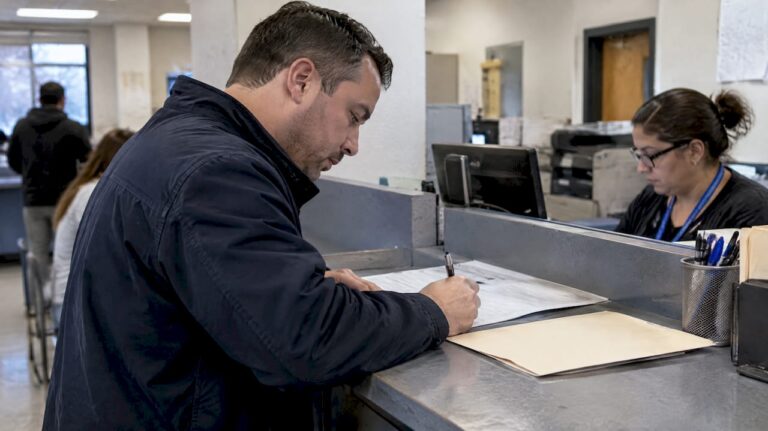
The statement usually goes on the title or a reassignment form, and some states use their own documents. New York, for example, points sellers to the Retail Certificate of Sale in its buyer guidance. Check your state’s instructions to see who must sign.
A sloppy form can create a permanent brand. Before you sign:
- Read the dash and write the exact number. Never guess.
- Don’t erase, overwrite, or use correction fluid.
- Mark the box for “not actual” only when you truly know the reading is wrong, such as a broken odometer.
- Photograph the dash and keep copies of every signed page.
- Compare the number with the title and recent service records before you hand anything over.
Guessing is exactly how incorrect records start, and the Iowa DOT warns sellers not to do it.
What should you do if you find a discrepancy after buying?
Act quickly and keep everything. Work through these steps in order:
- Photograph the odometer, the dash, and the VIN plate.
- Compare the reading against the title, bill of sale, and any service records.
- Order vehicle history reports from NMVTIS-approved providers and CARFAX or AutoCheck, and save mileage entries that drop or jump.
- Gather oil-change stickers, repair invoices, inspection reports, and prior titles.
- Move all communication with the seller into writing.
- File complaints with your state DMV, your state attorney general, and the NHTSA hotline.
Pro Tip: Save the original ad or listing as a screenshot before it disappears. Advertised mileage can be useful evidence later.
Act promptly and preserve records, since they may become harder to obtain as time passes.
How do DMVs brand titles, and can a discrepancy be corrected?
Common brands include “Actual,” “Not Actual,” and “Odometer Discrepancy.” In many states a “Not Actual” brand is generally permanent, and some states allow correction only with strong evidence such as service records or inspections, with county offices reviewing the submitted paperwork.
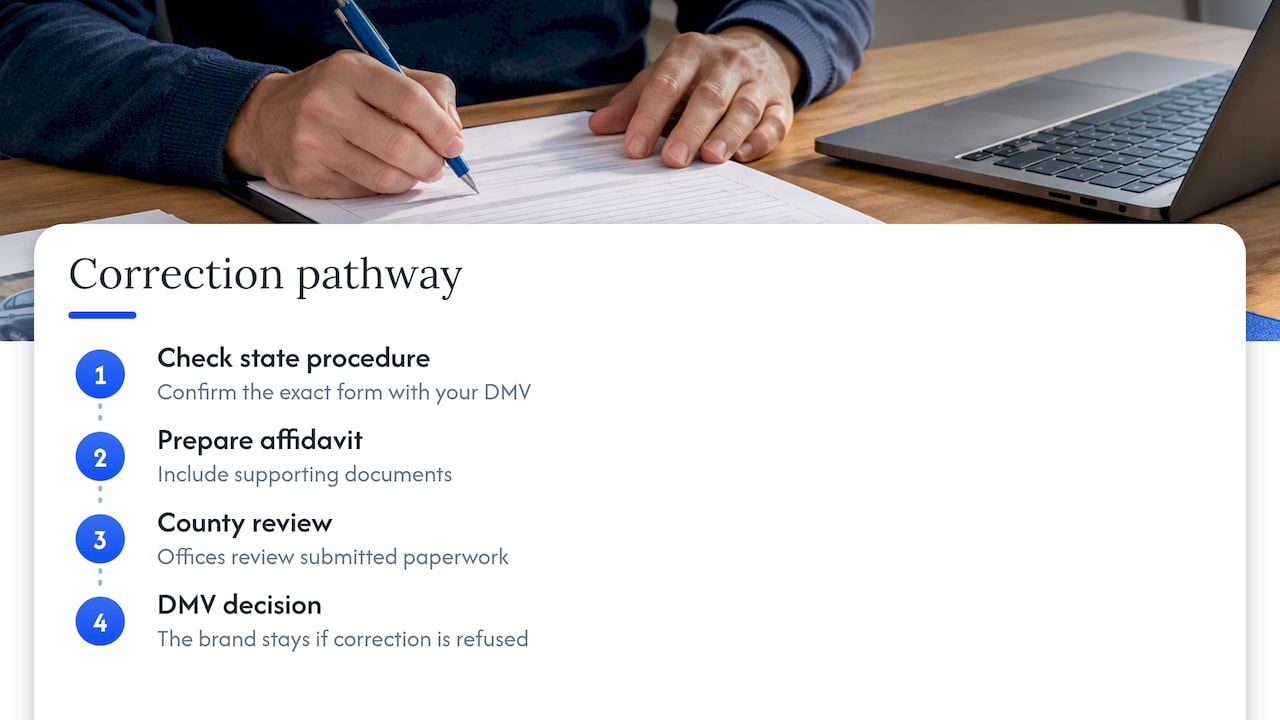
The pathway is usually an affidavit plus supporting documents. Georgia, for instance, requires Form T-107 or T-107A with supporting documents for corrections or title reissuance. Other states use their own forms, so confirm the exact one with your DMV. California’s DMV publishes procedures for reporting errors in odometer mileage.
If the DMV refuses a correction, the brand stays. You can still sell, but expect a lower price and more questions. Document the history honestly, attach your evidence, and disclose the brand upfront. A buyer who hears it from you trusts you more than one who finds it later.
How can you spot tampering before you buy?
Start with the car itself, then the paper trail:
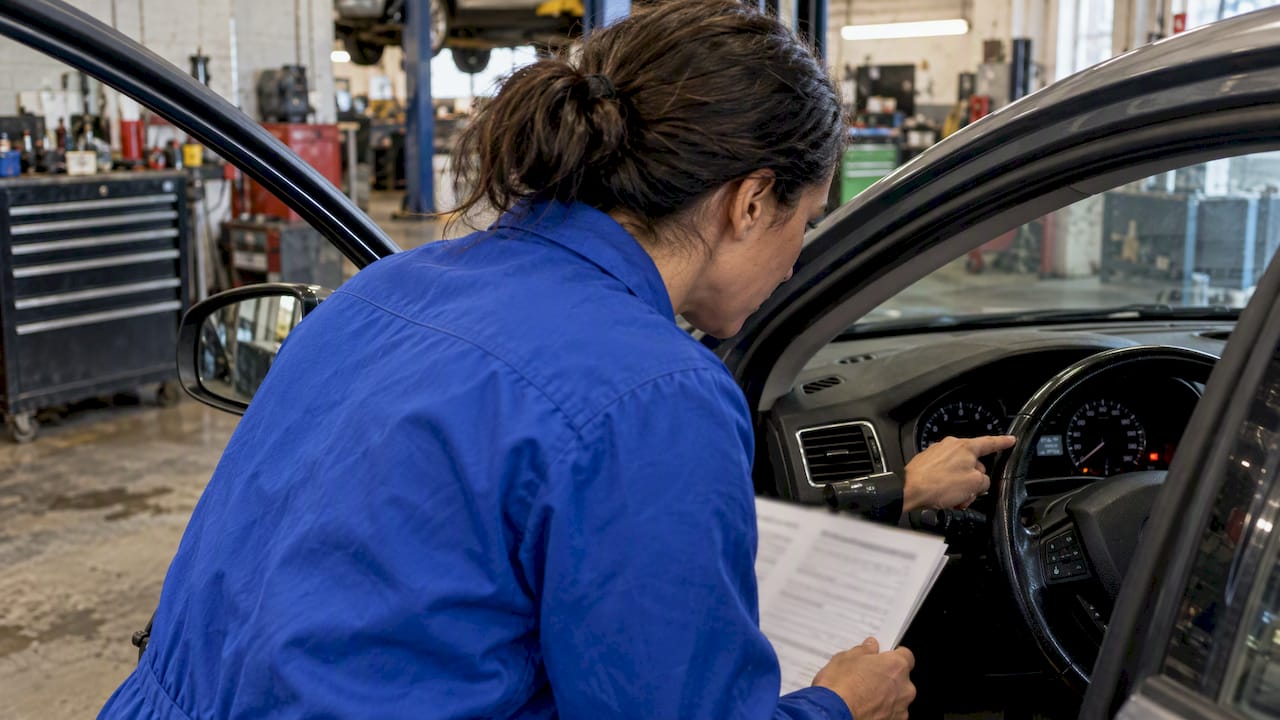
- Check pedal rubber, seat bolsters, steering wheel wear, and tires against the claimed mileage.
- Look for oil-change stickers and service records that match the dash.
- On mechanical odometers, watch for misaligned digits, a known sign of tampering.
- Examine the title chain. A recently issued title on an older vehicle is a red flag, and the Justice Department notes that vehicles are sometimes moved through auctions or other states to obscure history.
- Run NMVTIS and commercial history reports, and look for mileage that goes down or climbs in odd jumps.
Digital dashboards have no moving parts to inspect, so lean harder on documents. NHTSA recommends a layered approach: physical checks, maintenance records, and professional history reports together. The cost of skipping this is real, since inflated mileage brings higher taxes, insurance, and maintenance costs beyond the purchase price.
What legal remedies and penalties apply?
The federal Odometer Act, found in 49 U.S.C. § 32705, requires written mileage disclosure on transfer. Federal law provides penalties for odometer misrepresentation. Read the statute or consult a consumer attorney about possible remedies and exact amounts.
States add their own enforcement. Wisconsin treats altering an odometer to hide true mileage as illegal under state and federal law, and penalties vary by state. State DMVs and attorneys general can investigate complaints.
The evidence needed for a civil claim depends on the circumstances, so consider consulting a consumer attorney. Check the applicable deadline promptly, since waiting could affect your options.
How do we handle odometer paperwork for sellers?
We handle the paperwork for the sale. For sellers with messy titles or an urgent need for cash, a handled sale beats a long correction process. We come to you, guarantee the offer at pickup, and pay the same day.
Why careful paperwork beats a fast fix
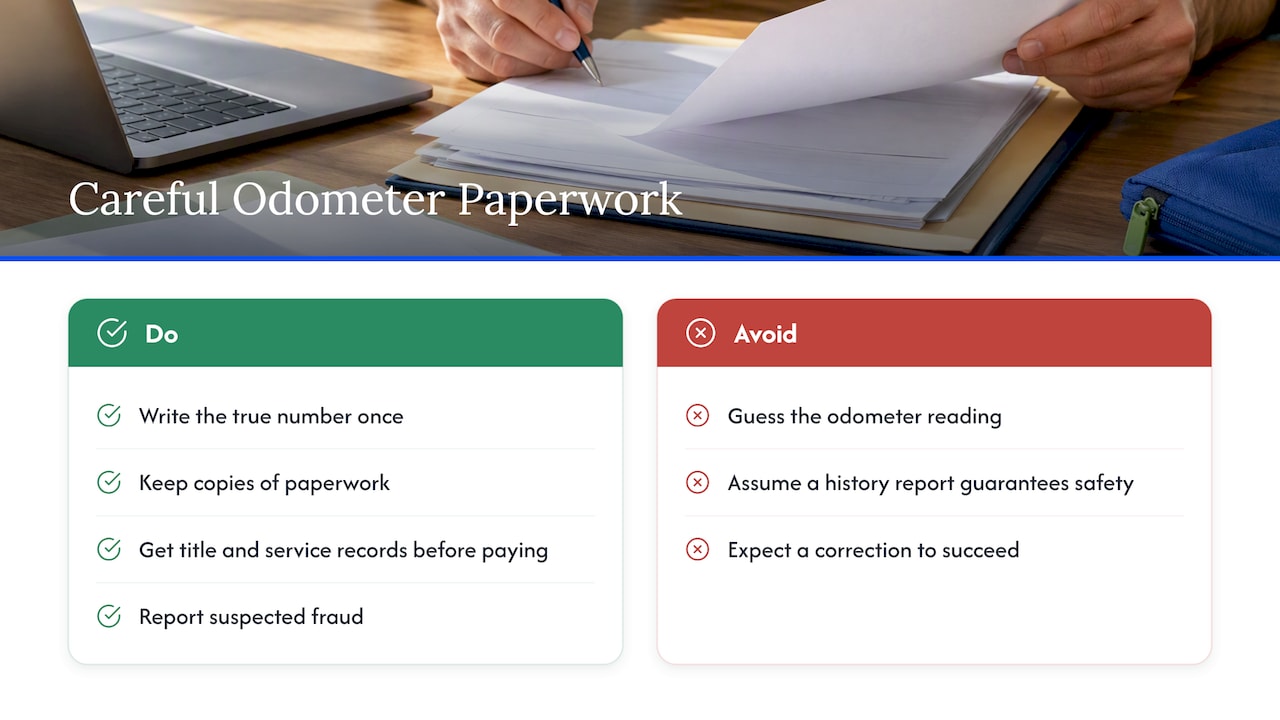
Here is my view. Most people treat an odometer problem as a fraud story, but the more common culprit is a rushed form. A guessed number or a smudged box creates a brand that can follow a car for good. The conventional advice, “run a history report and you’re safe,” also falls short on digital dashboards, where the report may be the only thing standing between you and a rolled-back reading.
So prioritize in this order. Sellers: write the true number, once, cleanly, and keep copies. Buyers: demand the title and service records before money changes hands, not after. If you already hold a discrepancy, weigh the cost honestly. A correction can take time and may still fail. Reporting suspected fraud is worth doing regardless. And if you simply want the car gone, a clean cash sale with documented history is a legitimate choice, not a surrender.
— Eric
How can we help if odometer or title problems complicate your sale?
When a private sale stalls over mileage or title questions, we make it simple. We make a guaranteed cash offer, pick the car up at your location, and handle the paperwork. This fits sellers with urgent cash needs, high-mileage cars, or missing or messy titles who don’t want to wait on DMV corrections.
- Guaranteed offer, paid at pickup
- On-site pickup and payment at pickup
- Paperwork handled for you
See how we file NJ odometer disclosures or read our guide to selling a high-mileage car. When you’re ready, sell your car with us and get your offer today.
This article is general information, not a substitute for advice from a qualified lawyer. Consult a qualified legal professional about your own circumstances before acting on anything here.
FAQ
What does an odometer discrepancy mean?
It means the mileage shown on the odometer, title, and records doesn’t match. States often brand the title “Not Actual” in that case. The cause can be a clerical error, a broken odometer, or tampering.
How do I get an odometer disclosure statement?
The statement is usually part of the title or a reassignment form, and your state DMV supplies any separate version. The seller fills in the exact mileage and follows the state DMV’s signing instructions. Federal law requires the written disclosure on transfer unless an exemption applies.
Can I sell my car if the odometer is broken?
Yes. You generally must disclose that the reading isn’t accurate, typically by marking the “not actual” box on the odometer statement. Be honest and document the situation, since guessing a number can create legal trouble.
Can I get a bill of sale from the dealership?
Dealers normally provide sale documents, and some states require a properly assigned title before a dealer can sell. The Maine Attorney General advises buyers not to proceed until the dealer shows the title.