Close Quickly: Sell a Liened Car in NJ With a $15 DO-22 or Fast Cash
Yes, you can sell a car with a lien in New Jersey, but the lien needs to be satisfied or handled at closing before the title can legally change hands. The fastest safe routes are a bank payoff at closing, a neutral escrow arrangement, or having the seller secure a payoff and lien release ahead of time. For formal verification, New Jersey’s MVC and its DO-22 title/lien search exist for exactly this reason, and a short checklist of documents to bring makes the process painless either way.
TL;DR:
- Nearly all private lien sales in New Jersey require the lien to be satisfied or released before the title can be transferred legally.
- Using a certified search through Form DO-22 for $15 provides proof of lien status, which is crucial to avoid future repossession risks.
- The three safest closing options are meeting at the lender’s bank for direct payoff, using an escrow service, or having the seller pay off the lien before listing the vehicle.
- After payoff, obtaining a lien satisfaction letter on lender letterhead and submitting it with the title ensures a smooth reissue of a clean title within 7 to 30 days.
- Lenders refusing to release a lien after full payoff can lead to serious delays, and escalating to consumer protection authorities may be necessary if paperwork stalls.
Table of Contents
- Car Lien Sale NJ Basics: What a Lien Means for Buyers and Sellers
- How to Check Lien Status in NJ Before You Buy or Sell
- Safe Ways to Sell a Car With an Active Lien in NJ
- Getting the Lien Released and a Clean Title From NJ MVC
- Repossession vs. Tax Liens: Don’t Mix Up the Paperwork
- Red Flags and a Quick Closing Checklist
- What We’ve Seen Handling These Deals in New Jersey
- Want the Lien Handled Without the Back and Forth? Here’s the Faster Route
- Where to Verify the Details Yourself
- Sources
- FAQ
Car Lien Sale NJ Basics: What a Lien Means for Buyers and Sellers
A lien is the lender’s legal claim on a vehicle’s title until the loan behind it is paid off in full. The car isn’t fully yours (or fully the seller’s to hand over) until that claim disappears from the title record. This is the root of nearly every complication in a car lien sale NJ transaction.
Here’s the part that surprises a lot of first-time buyers: if a lien stays attached after a sale closes, the lender can still repossess the vehicle from whoever’s driving it. That’s not a hypothetical. It’s the actual legal exposure a buyer takes on when a seller says “don’t worry about the loan, I’ll handle it” and doesn’t.
Worth separating from the start:
- Auto liens attach to a specific vehicle because of an unpaid loan and get cleared through the lender and NJ MVC.
- Municipal tax liens attach to real property (like a house) over unpaid property taxes and follow an entirely different auction and certificate process.
NJ MVC’s own lien guidance is clear that a lien remains on a title until it’s formally satisfied, which is why “the loan’s almost paid off” isn’t the same as “the lien is gone.”
How to Check Lien Status in NJ Before You Buy or Sell
Don’t take a seller’s word for it. New Jersey lets you pull an official record through the Title/Lien Search (Form DO-22), and it’s worth the small cost for the peace of mind alone.
Here’s the process:
- Download and complete Form DO-22 from the MVC.
- Attach a copy of your driver’s license.
- Include a $15 check per vehicle (mail-only submission, no online option currently).
- Mail the packet to the MVC’s Certified Information Unit.
- Wait for the certified response showing the current owner and lienholder on file.
The $15 fee for a certified search is genuinely cheap insurance. Compare that to the cost of buying a car that gets repossessed three weeks later because a lien never got cleared. The DO-22 instructions also note that if you’re requesting a search on someone else’s behalf, you need separate authorization or court documentation attached, so don’t skip that step if you’re a buyer checking a seller’s car rather than your own.
A verbal “it’s paid off” from a private seller isn’t proof of anything. A certified DO-22 result is the kind of paper trail that protects both sides if a dispute ever comes up later.
Safe Ways to Sell a Car With an Active Lien in NJ
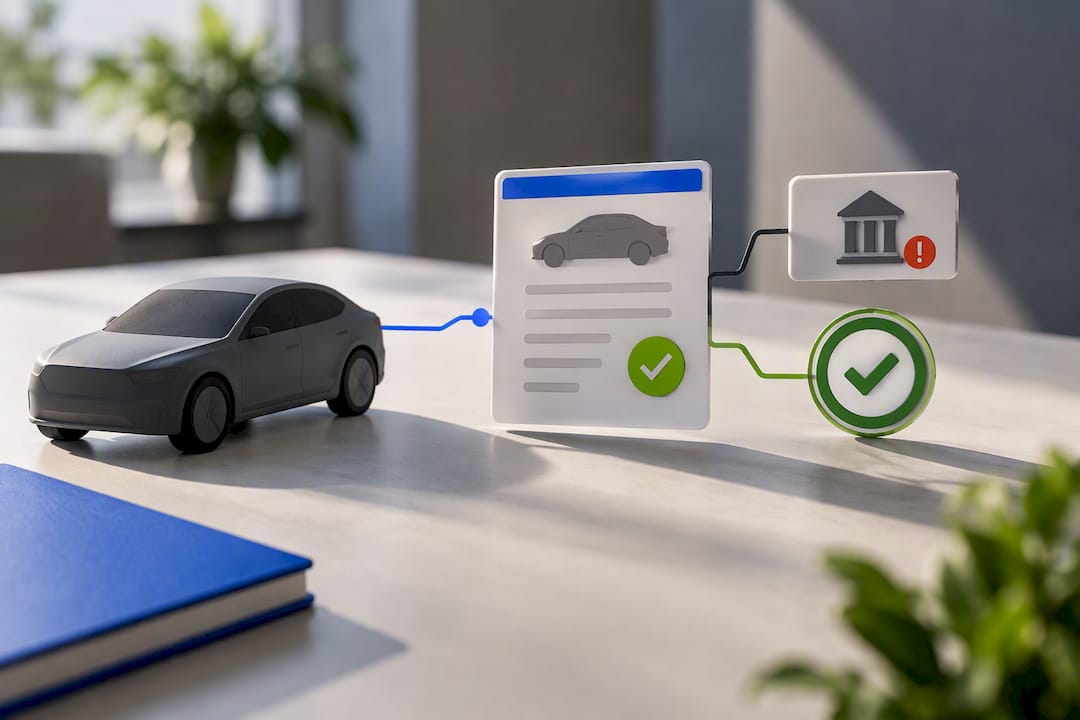
Three closing methods cover almost every real-world private sale involving a lien, and each fits a different situation.
Option A: Meet at the buyer’s bank or credit union. The buyer’s funds move directly to the lienholder for payoff, the lender confirms the balance is clear, and the buyer walks away with proof of payment same day. This works best when both parties are local and the payoff amount is straightforward.
Option B: Use a neutral escrow service. Escrow holds the buyer’s funds, pays the lender directly, waits for confirmation of the lien release, then releases the title and any remaining equity to the seller. This is the safer choice for larger balances, remote buyers, or any deal where trust between strangers is thin.
Option C: Seller pays off the lien first, then sells. The seller gets the release recorded before ever listing the car. Clean and simple for the buyer, but it means the seller is fronting the payoff themselves, which isn’t always realistic if they were counting on sale proceeds to cover it.
Whichever route you pick, collect the same core documents at closing:
- The original title, ideally already endorsed with a lien satisfaction
- A signed bill of sale
- An odometer disclosure statement
- Proof the lender was actually paid (receipt, wire confirmation, or payoff letter)
Pro Tip: If the payoff balance is large or the lender is dragging its feet on paperwork, loop in an attorney or your county’s consumer affairs office before you hand over cash. It’s far cheaper than untangling a bad closing after the fact.
Getting the Lien Released and a Clean Title From NJ MVC
Once the loan is paid, the lien doesn’t vanish automatically. You need a specific document trail to get NJ MVC to reissue a clean title.
- Request a written payoff quote from the lender, often a 10-day payoff figure, and confirm which payment methods trigger the fastest release.
- Get the lien satisfaction letter right. It must be on lender letterhead, dated and signed, and include the VIN, both owner names, and lender contact information. If the lienholder is an individual rather than a bank, that letter also needs to be notarized.
- Submit to NJ MVC either the title itself endorsed with the lien satisfaction, or the title plus the satisfaction letter attached.
- Pay the fee. A standard title reissue runs $60, and financed vehicles with a lien on record can run $85; a duplicate title adds another $60 if the original is lost.
Lien releases typically land somewhere between 7 and 30 days. Lenders enrolled in New Jersey’s electronic lien and title (ELT) system often update records within 7 to 15 business days, since the release happens digitally between the lender and MVC with no paper letter needed. Lenders still working on paper can take the full 30 days to mail a release. If a lender goes quiet past that window, send a written demand first. If that doesn’t move things, state consumer protection offices or the CFPB are the next step.
Repossession vs. Tax Liens: Don’t Mix Up the Paperwork
Two very different processes get lumped together under “car liens,” and confusing them wastes time.
- Repossession happens when a lender seizes the vehicle after default. NJ MVC requires specific OS/SS forms, including a Notice of Seizure and an Application for Repossession Certificate, filed by mail to the MVC’s Special Title/Repossession Unit. Fees follow the same $60/$85 structure as a standard lien release.
- Municipal tax-lien sales involve unpaid property taxes on real estate, not vehicles, and run through a completely separate certificate-auction system under different legal rules entirely.
If you’re buying a formerly repossessed vehicle, the title chain looks different from a standard private sale, and it’s worth confirming which paperwork path the seller actually went through before you assume a clean transfer.
Red Flags and a Quick Closing Checklist
Watch for these before you commit to any car lien sale NJ deal:
- An unsigned or undated lien satisfaction letter
- A seller who can’t or won’t give you direct lender contact information
- Refusal to meet at a bank or use escrow for the payoff
- A title status that’s stuck on “pending” with no explanation
A tight closing sequence: (1) get the written payoff quote, (2) confirm the lender will send a recorded release or update the ELT record, (3) schedule the bank or escrow closing, (4) build in mailing time for paper releases, (5) bring the title, satisfaction letter, and $60 fee to MVC.
Pro Tip: If a lender flat out refuses to release a lien after full payoff, that’s a consumer protection complaint waiting to happen, not something to just accept and walk away from.
What We’ve Seen Handling These Deals in New Jersey
. Most sellers we talk to have never dealt with a lien release before, and the gap between a textbook bank-payoff closing and a real one is usually the lender’s response time, not the paperwork itself.
— Eric
Want the Lien Handled Without the Back and Forth? Here’s the Faster Route
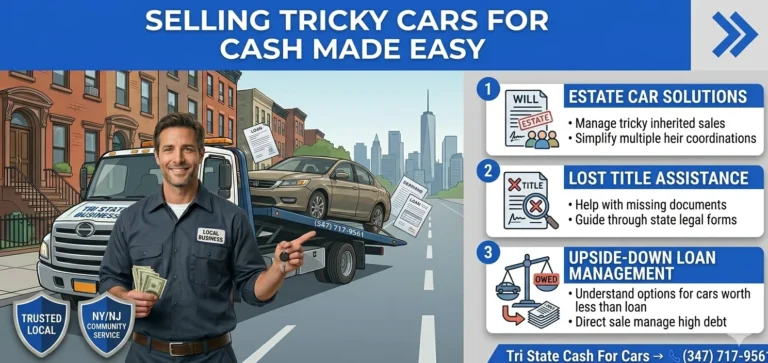
There are services that send a representative to you, make a cash offer, and handle lien paperwork and title transfer as part of vehicle pickup within the tri-state area.
This route fits best when you need cash fast, the car doesn’t run, the title is lost, or the lien situation is messier than a simple bank payoff can untangle in an afternoon. Instead of chasing a lender for a satisfaction letter and mailing forms to MVC yourself, some buyers handle that coordination and pay at pickup. If you’re ready to see what your vehicle is worth, get your cash offer here and find out how quickly a liened car sale can actually close.
Where to Verify the Details Yourself
For the forms and fees covered here, go straight to the source: NJ MVC’s liens page covers satisfaction requirements, the DO-22 search request explains certified searches, and the repossession and title unit page lists OS/SS forms for seized vehicles.
Sources
FAQ
Can I transfer a car title if there’s a lien in NJ?
No, not directly. The lien has to be satisfied first, either through the title endorsed with a lien satisfaction or the title plus a signed satisfaction letter, before MVC will reissue a clean title.
What are the lien laws in New Jersey?
New Jersey law treats a lien as the lender’s legal claim on the vehicle title until the loan is repaid in full. NJ MVC won’t remove that lien from its records without a valid satisfaction letter or an ELT update from the lender confirming payoff.
How do I get a lien-free title in NJ?
Get a written payoff quote, pay off the balance, then submit the endorsed title or satisfaction letter to MVC along with the $60 title fee (or $85 if the vehicle still shows a lien on record during processing). Releases typically take 7 to 30 days depending on whether the lender uses electronic or paper processing.
Can I get a title with just a bill of sale in NJ?
A bill of sale alone doesn’t clear a lien or replace a title. It supports a sale as proof of transaction, but the title itself, along with lien satisfaction documentation, is what MVC actually needs to reissue ownership.
What if a car sale falls through because of a lien problem?
If a lender is refusing to release a lien after payoff or paperwork gets stuck, escalate with a written demand, then involve your state consumer protection office or the CFPB if that doesn’t resolve it. Selling to a cash-for-cars service can sidestep this risk, as they handle lien documentation directly as part of the sale.