Avoid $2,000 NY Fines: Sell Flood Damaged Cars for Cash in NY/NJ/CT
The fastest lawful way to sell a flood-damaged car is through a cash buyer who handles pickup, paperwork, and payment on the spot. Expect a steep discount off clean-title value, but expect cash at pickup and no towing hassle. Start now: pull your title and ID, and take clear photos showing the water line on the seats, floor, and dashboard.
TL;DR:
- Selling a flood-damaged car through local cash buyers offers the fastest payment, often with on-the-spot cash and free towing, but at a steep discount.
- The car’s water level dictates its value, with dashboard-level flooding indicating severe electrical and electronic damage that significantly lowers price.
- Disclosing flood damage in writing before sale is legally required in all states to avoid fines and civil penalties, and NMVTIS records are checked by most buyers.
- Getting multiple offers helps establish a realistic value, as rebuild and parts buyers often price flood cars differently based on their intended use.
- Using a direct cash buyer that handles pickup and paperwork on-site reduces the risks of scams and guarantees a quick, legal transfer of liability.
Table of Contents
- Quick Selling Options and When Each Makes Sense
- Step-by-Step Checklist to Sell Fast and Legally
- What Affects Price and How to Set Realistic Expectations
- Legal Must-Dos: Disclosure, Title Branding, and NMVTIS
- How Tri State Cash For Cars Makes a Fast, Safe Sale Possible
- How to Verify Buyer Legitimacy to Avoid Scams
- Steps to Transfer Liability and Ownership Quickly and Legally
- Tax Implications and Reporting Requirements When Selling a Flood-Damaged Car
- When Speed Should Beat Chasing a Few Extra Dollars
- Get an Immediate Offer and Schedule Pickup With Tri State Cash For Cars
- Sources
- FAQ
Quick Selling Options and When Each Makes Sense
Speed and price pull in opposite directions with a flood car, so pick your venue based on which one matters more right now.
- Local cash buyers / direct pickup services: the fastest route, often paying on the spot with free towing included. Best when the car doesn’t run, you need money today, or you’d rather skip listing headaches entirely.
- Salvage yards: straightforward for cars with no realistic rebuild future. They typically pay by weight or usable parts, which works fine for older, low-value vehicles but rarely tops what a specialized buyer offers.
- Salvage auctions or online salvage networks: can fetch more money because rebuilders and parts dealers bid against each other. The tradeoff is time. Listing, waiting for auction dates, and handling logistics can stretch a sale out for weeks.
- Private sale to a project buyer: rebuild-minded buyers sometimes pay more for a car with strong bones, but you’ll need patience, a solid disclosure, and a buyer who trusts your paperwork.
- Insurance total loss, owner-retained salvage: if your insurer declared the car a total loss and you kept it, you can still sell it, but the title will carry a salvage or flood brand permanently.
Specialized buyers including online instant-offer services and salvage companies regularly buy flood-damaged cars as-is, often covering towing themselves. If your car is a non-runner sitting in a driveway, a resource on moving a non-running car walks through what pickup actually looks like.
Step-by-Step Checklist to Sell Fast and Legally
Follow this order and you’ll avoid the two things that kill flood-car sales: engine damage from a bad restart, and legal exposure from a sloppy disclosure.
- Do not try to start the engine. A submerged engine can suffer hydrolock, where water trapped in the cylinders causes catastrophic damage the moment you crank it. Document the car’s condition with photos instead.
- Gather your paperwork. You’ll need the title in your name (or a salvage certificate if the state already issued one), a government ID, all keys, service records, and any insurance or claim documents tied to the flood event.
- Write a short disclosure statement. Note the date of the flood, a description of the water height, and any repairs attempted. Have the buyer sign it and keep a copy for yourself.
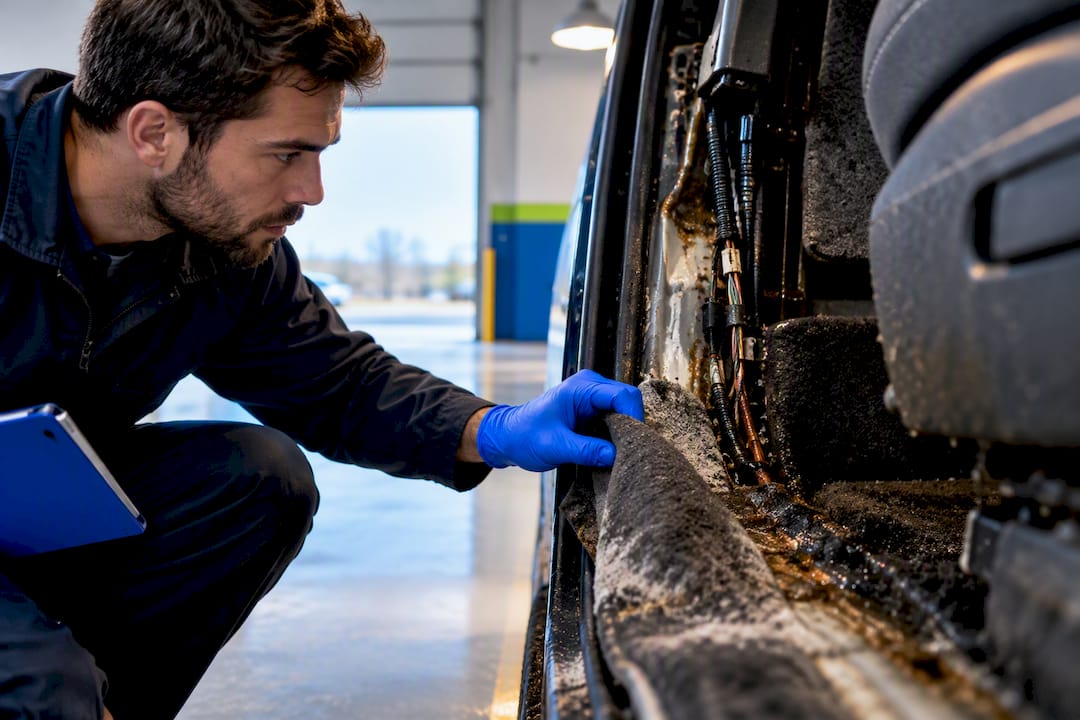
- Photograph the water line clearly. Shoot the floor mats, seat fabric where water soaked in, and the dashboard if water reached that high. Buyers use these photos to gauge the real damage level before quoting a price.
- Compare two or three quick offers. Give each buyer the same facts (mileage, water height, whether it runs) and ask for a written offer that states the payment method and confirms payment happens at pickup, not after.
- At pickup, verify everything before handing over keys. Confirm the payment amount matches the written offer, sign the title transfer and bill of sale, and watch for last-minute deductions that weren’t part of the original quote.
Pro Tip: Ask for the buyer’s written offer to include an expiration date and the exact payment method (cash, cashier’s check, or instant transfer). A vague verbal quote is where “surprise deductions” sneak in at pickup.
For a deeper walk-through on documentation and pricing tactics, see this guide on selling a damaged car fast.
What Affects Price and How to Set Realistic Expectations
Water height is the single biggest price factor. A car flooded to the floor mats is a different animal than one submerged past the dashboard.
- Water level: floor-level flooding usually means upholstery and carpet damage. Dashboard-level flooding usually means the electronics, wiring harness, and computer modules are compromised too.
- Engine and subsystem submersion: if water reached the intake or exhaust, expect major mechanical concerns beyond cosmetic damage.
- Electronics exposure: modern cars pack dozens of computer modules low in the chassis. Water exposure here often means expensive, hard-to-diagnose failures down the road.
- Visible mold: mold growth signals the car sat wet for days, which worries buyers more than a quick dunk that got dried fast.
- Age and parts demand: an older car with in-demand parts can still hold decent scrap or parts value even with heavy damage.
Getting multiple quick offers from different buyer types tends to surface a better number than accepting the first quote, since buyers weigh flood damage differently depending on whether they’re parting the car out or reselling it whole. Most flood cars sell for a fraction of clean-title value. Treat any offer close to book value with suspicion rather than excitement.
Legal Must-Dos: Disclosure, Title Branding, and NMVTIS
Selling a flood-damaged car is legal in every U.S. state as long as you disclose the damage in writing before the sale. NHTSA warns that skipping disclosure isn’t just a courtesy violation. In New York, for example, failing to disclose known flood damage can carry fines up to $2,000, on top of possible civil suits.
- Your written disclosure should state the flood date, water height, and any repair attempts, and both parties should sign and keep a copy.
- “As-is” language on a bill of sale does not erase your legal duty to disclose known damage. Courts generally treat concealment separately from an as-is clause.
- Buyers will almost certainly check NMVTIS records before finalizing a purchase, since flood and salvage brands get logged there and are hard to hide.
- If your state already issued a salvage certificate, expect the buyer to require that document. Most won’t complete the purchase without it.
If your car already carries a salvage brand, the process for legally selling a salvage title car has a few extra steps worth reading before you list it anywhere.
How Tri State Cash For Cars Makes a Fast, Safe Sale Possible
Tristatecashforcars sends someone to your location, gives you a cash offer, and handles the paperwork on-site, including cars that don’t run or have flood damage. That model matters here because flood cars generate more buyer objections than almost any other category. Handling pickup and paperwork in one visit removes most of that friction, and liability transfers the moment you sign at pickup rather than dragging out over a private-sale back-and-forth.
Sellers typically just need their title (or salvage certificate), ID, and clear photos of the water damage ready before the pickup team arrives. For readers digging into title-specific steps in New Jersey, the guide on selling a salvage-title car in NJ covers state-specific plate and title requirements worth knowing beforehand.
How to Verify Buyer Legitimacy to Avoid Scams
Flood-damaged cars attract more scam attempts than a typical used-car sale, mostly because sellers are motivated to move fast and skip due diligence. A few checks protect you before keys change hands.
Confirm the buyer has a real business address and a working phone number, not just a text-only contact. A legitimate buyer answers direct questions about their pickup process, payment method, and paperwork without dodging.
Never accept a personal check, especially one written for more than the agreed price with a request to refund the difference. That’s a classic overpayment scam. Insist on cash, a verified cashier’s check, or an instant electronic transfer you can confirm before the buyer leaves with the car.
Get the offer in writing, including the exact dollar amount, payment method, and pickup date. A buyer who refuses to put numbers in writing and only wants to “finalize details in person” is a red flag.
Watch for last-minute renegotiation. Some disreputable buyers show up, inspect the car again, and try to knock down the agreed price on the spot, betting you won’t want to reschedule. Requiring a written offer with a stated validity window, as noted earlier, is your best defense against this tactic.
If a deal feels rushed in a way that benefits the buyer more than you, slow down. A legitimate cash buyer wants the transaction documented as much as you do.
Steps to Transfer Liability and Ownership Quickly and Legally
Liability doesn’t transfer the moment you agree to a price. It transfers when the title and paperwork are properly signed over, so getting this sequence right protects you from tickets, tolls, or accidents involving a car you no longer own.
Start with the title itself. Sign it over to the buyer, filling in the sale price and date exactly as your state’s DMV requires. If the car carries a salvage certificate instead of a standard title, that document transfers the same way.
Complete a bill of sale alongside the title. This should list both parties’ names, the vehicle identification number, sale price, and the flood disclosure language discussed earlier. Keep a signed copy for your own records, ideally photographed on your phone before you leave the pickup site.
Record the odometer reading if your state requires a separate odometer disclosure statement, which most do for vehicles under a certain age.
Notify your state’s DMV of the sale, either through an online release-of-liability form or a mailed notice, depending on your state’s process. This step is what officially removes your name from ownership records and protects you from future liability tied to the vehicle.
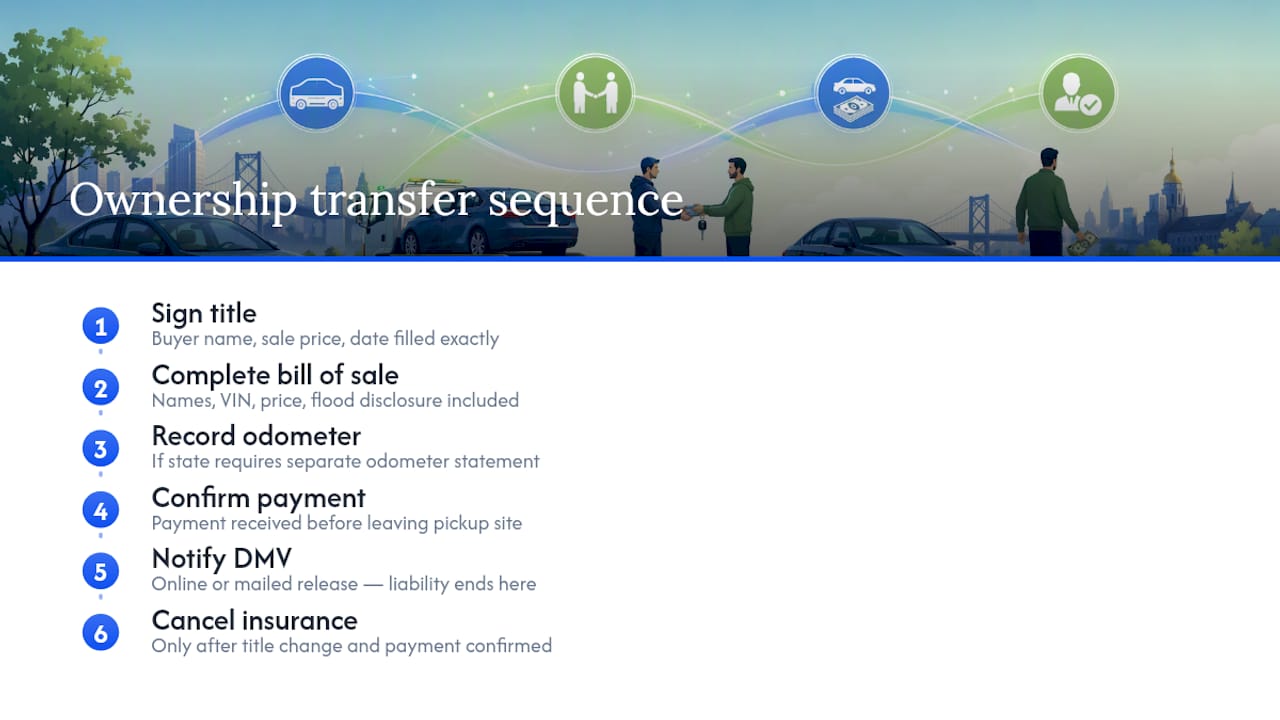
Cancel your insurance only after the title has changed hands and payment is confirmed. Canceling too early leaves you uninsured if anything happens before pickup.
Tax Implications and Reporting Requirements When Selling a Flood-Damaged Car
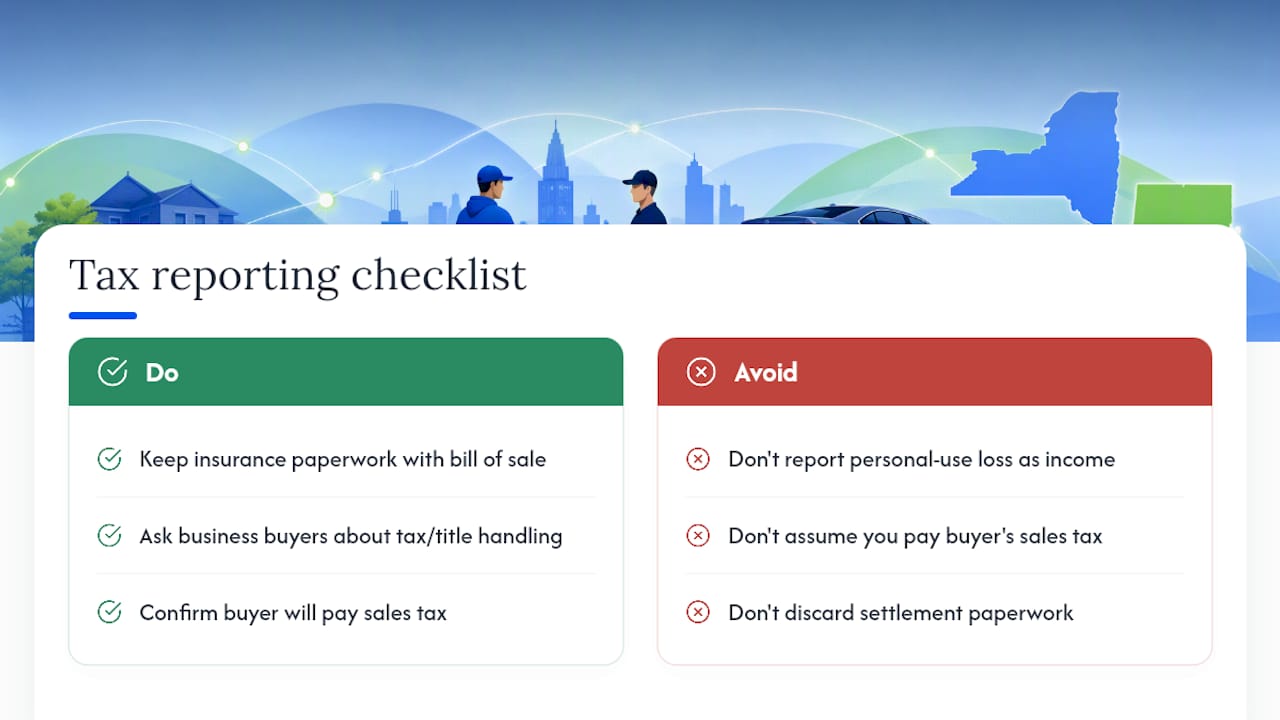
Most individuals selling a personal-use flood-damaged car at a loss owe no income tax on the sale. Vehicles almost always sell for less than their original purchase price, and the IRS doesn’t allow you to deduct a loss on personal-use property, but it also doesn’t tax a sale that nets you less than you originally paid.
Where taxes do come into play is sales tax, and that responsibility typically falls on the buyer, not you as the seller, when the vehicle is registered in most states. The buyer pays sales tax based on the purchase price when they title the car in their name.
If you received an insurance payout for the flood damage before selling the car, that payout itself is generally not taxable income since it’s compensation for a loss rather than earnings. Keep your insurance settlement paperwork and the bill of sale together in case questions come up later about how the vehicle’s value was determined.
Selling to a business buyer rather than a private individual doesn’t usually change your personal tax obligations, though it’s worth asking the buyer directly if they handle sales tax and title transfer as part of their process, since specialized buyers often manage that paperwork for you.
When Speed Should Beat Chasing a Few Extra Dollars
Take the fast cash offer when the car has no comprehensive insurance coverage, when you need money now, or when the damage runs past the dashboard. Chasing a rebuild buyer only makes sense when the car clearly has parts or mechanical value worth the wait. Either way, the first move is the same: pull the title, take honest photos, and request a quote today.
*— Eric
Get an Immediate Offer and Schedule Pickup With Tri State Cash For Cars
A practical alternative to listing a flood car yourself and fielding buyer questions one by one is to use a direct cash buyer that can come to your location, provide a cash offer, and pay the stated price at pickup, avoiding lowball renegotiation once the truck arrives.

Before you call or submit the Sell Your Car form, have your title or salvage certificate, a description of the water level, and a few clear photos ready. That’s the same paperwork this guide already walked you through, and having it ready is what turns a same-day quote into a same-day pickup. If your car is a non-runner sitting since the flood, the process for getting cash for a totaled car covers timelines for owner-retained salvage vehicles too. Reach out today and find out what your flood-damaged car is actually worth.
Sources
Verify state-specific rules before finalizing any sale. Start with NHTSA’s flood vehicle guidance, check title history through NMVTIS, and review FEMA flood insurance resources if your claim documentation needs backup.
FAQ
Is It Illegal to Sell a Flood-Damaged Car?
No, it’s legal in every state as long as you disclose the flood damage in writing before the sale. Skipping disclosure is what creates legal risk. NHTSA notes that concealment can trigger fines, civil suits, or criminal charges, and New York specifically allows fines up to $2,000 for non-disclosure.
How Much Is a Flood-Damaged Car Worth?
Value depends heavily on how high the water reached and whether the electronics and engine were submerged. Cars flooded only to the floor mats hold more value than those flooded past the dashboard, and getting multiple quick offers is the best way to find out what yours is actually worth.
Is a Flood-Damaged Car Worth Buying?
It depends entirely on the buyer’s goals and how thoroughly the car was inspected before purchase. A flood car can work for someone after cheap parts or a rebuild project, but electronics and engine issues from water exposure often surface months later, which is part of why specialized buyers price these cars at a steep discount.
Does Carvana Sell Flood-Damaged Cars?
This article doesn’t cover individual retailer policies. If you’re deciding where to sell a flood-damaged car yourself, a direct cash buyer like Tristatecashforcars that specializes in damaged and non-running vehicles tends to be a faster, more straightforward path than a general used-car marketplace.