6 Ways to Sell a Blown Engine Car in NY/NJ/CT: Cash vs Value, Forms
Yes, you can sell a car with a blown engine, and the fastest route to guaranteed cash is an instant cash-for-cars buyer that offers free pickup and pays on the spot. If you have more time, private sale, part-out, or a salvage auction usually nets more money. Donation works best when speed and a tax receipt matter more than the payout.
TL;DR:
- Instant cash buyers offer free pickup, immediate payment, and typically pay based on parts and scrap weight, making it ideal for quick, hassle-free sales.
- Private sales and salvage auctions can yield higher payouts but require more time, effort, and negotiation compared to instant offers.
- Car value depends more on salvageable parts like catalytic converters and hybrid batteries, with heavier vehicles fetching higher offers regardless of engine condition.
- Legal sale requires a detailed Bill of Sale, proper title transfer, and disclosure of engine failure, with most sales happening “as-is” to limit liability.
- Fast, guaranteed offers are suitable when speed outweighs maximum profit, while private listings or parting out can generate more cash with patience.
Table of Contents
- How Do You Sell a Car With a Blown Engine?
- What Is a Blown Engine Car Worth?
- What Paperwork Do You Need to Sell a Car With a Blown Engine?
- How Do You Get the Best Offer on a Blown Engine Car?
- Which Selling Route Fits Your Situation?
- What to Expect From Tri State Cash For Cars
- When a Guaranteed-Offer Buyer Makes Sense
- Ready to Sell? Here’s Your Next Step
- Sources
- FAQ
How Do You Sell a Car With a Blown Engine?
A blown engine doesn’t strip your car of value. It just changes who wants it and why. Instead of shopping for a driver looking for reliable transportation, you’re selling to buyers who care about parts, scrap metal, or a rebuild project. Six routes cover almost every seller’s situation.
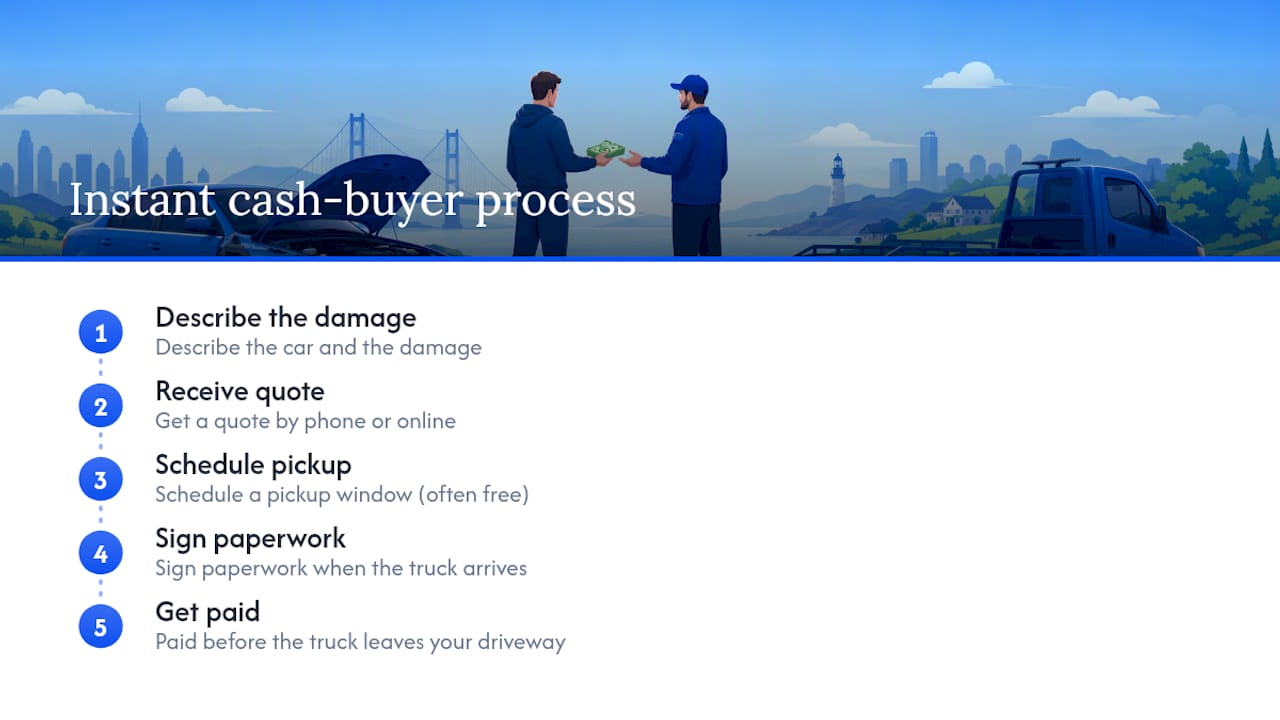
Instant cash buyers are the fastest path. You describe the car and the damage, get a quote over the phone or online, schedule a pickup window, sign the paperwork when the truck arrives, and get paid before it leaves your driveway. Many instant buyers and salvage outlets price these deals on parts and scrap weight, and pickup is typically free. This route is right for anyone who wants the car gone this week without listing it anywhere.
Local salvage and scrap yards work on a similar model but usually require you to bring the car to them, or they charge a smaller fee for towing. Yards value cars by scrap weight and by which parts they can pull and resell, so a car with an intact transmission, good tires, and working electronics tends to earn more than one that’s been picked over.
Online salvage auctions open your car to a national pool of mechanics, rebuilders, and dismantlers. Platforms like Copart list thousands of repairable and salvage vehicles, including cars with blown engines, but you’ll need to register, may face buyer or seller fees, and the process from listing to funded sale usually takes one to three weeks.
Private sale to a mechanic, hobbyist, or repair shop often produces the highest number, especially for vehicles with strong aftermarket demand. Mechanics, hobbyists, and repair shops make up the core buyer pool for these vehicles, because they see rebuild potential where a dealership sees a write-off. The tradeoff is time: photos, listings, calls from tire-kickers, and negotiating with strangers who show up to inspect a car that doesn’t run.
Parting it out yourself means pulling and selling components individually, catalytic converter, alternator, wheels, infotainment unit, and scrapping the shell. This can beat a single lump-sum offer by a wide margin, but it demands tools, storage space, and weeks of listing individual parts online.
Donation is the lowest-effort exit. Charities that accept vehicle donations will often tow non-running cars for free and issue a tax receipt, but the deduction almost never matches even a modest salvage offer. Pick this route when convenience and a charitable cause matter more than maximizing cash. Readers weighing a non-running sale in general will find similar tradeoffs covered in this guide on selling a non-running car fast.
What Is a Blown Engine Car Worth?
Price depends less on the car’s overall condition and more on what’s left to salvage. A blown engine tanks the drivetrain’s value, but everything else on the vehicle, the catalytic converter, transmission, body panels, tires, and battery pack on a hybrid, still carries resale worth.
The biggest valuation drivers are:
- Vehicle class and weight. Heavier cars yield more scrap metal, which pushes the base offer up regardless of engine condition.
- Catalytic converter type. Converters with higher platinum, palladium, or rhodium content command a real premium, and this swings more than almost any other single part.
- Salvage title vs. junk/non-repairable title. A salvage title (repairable) preserves resale optionality for a buyer planning a rebuild; a junk or non-repairable title limits the car to parts and scrap only, which usually lowers the offer.
- Make and model demand. Popular models with strong aftermarket parts networks sell faster and for more, even with a dead engine.
- Hybrid battery packs. Intact hybrid battery modules can be worth hundreds of dollars on their own to buyers who refurbish or resell them.
Typical ballpark figures put compact sedans with blown engines in the low hundreds of dollars, while SUVs and mid-size trucks land higher because of their added scrap weight and converter value. Full-size trucks and hybrids often command the largest numbers in this category, driven by heavier frames and, for hybrids, the added value of the battery pack.
Missing parts change the math fast. A car with the engine already pulled, the converter removed, or the wheels swapped for steel rims can lose a meaningful chunk of its offer, because buyers are paying for what’s actually still on the vehicle, not what used to be there. If you’re getting multiple quotes, be upfront about anything that’s already been removed. An offer based on an inaccurate description tends to get renegotiated, or canceled, at pickup.
What Paperwork Do You Need to Sell a Car With a Blown Engine?
Selling a car with a bad or blown engine is legal in every U.S. state as long as you disclose the problem, and most of these sales happen “as-is,” meaning the buyer accepts the car’s condition once they’ve been told what’s wrong. Getting the paperwork right protects you from disputes after the tow truck pulls away.
- Write a detailed Bill of Sale. Include both parties’ names, the VIN, sale date, sale price, current odometer reading, a clear “as-is” statement, and a specific line naming the engine failure. Naming the defect explicitly, rather than relying on a generic “as-is” clause, cuts your future legal exposure significantly.
- Transfer the title correctly. Requirements vary by state, some require notarization, others don’t, so check your state DMV’s exact form before the buyer arrives.
- Replace a lost title before the sale, not after. Every state offers a duplicate title process, and starting it early avoids holding up a buyer who’s ready to pay.
- Handle odometer disclosure properly. Federal odometer disclosure rules apply to vehicles from model year 2011 and newer, and tampering with an odometer reading is prohibited nationwide.
- Resolve any lien before transferring title. If you still owe money on the car, you can’t hand over a clear title until the lien is paid off or your lender coordinates the release; some buyers will structure payment around a payoff arrangement.
- File a release-of-liability or notice-of-transfer with your state DMV. Do this promptly after the sale so you’re not on record as the owner if the buyer never re-registers the vehicle.
If your title situation is more complicated, a lost title, an estate sale, or a name mismatch, a dedicated resource on selling a car with a lost title walks through the extra steps.
Pro Tip: Photograph the odometer and every page of the title before handoff. If a dispute ever comes up about mileage or condition at time of sale, you’ll have your own timestamped record, not just the buyer’s word.

How Do You Get the Best Offer on a Blown Engine Car?
Getting a strong, reliable offer starts before you ever talk to a buyer. Buyers price a blown-engine car remotely, based entirely on what you tell them, so the accuracy of your description determines how close the final number sticks to the quote.
Take honest photos, ones that show the engine bay, any missing components, rust or body damage, and the odometer, rather than flattering angles that hide problems. Have your title, current registration, maintenance records, and any diagnostic notes from a mechanic ready to reference; a documented history (even a bad one) makes a buyer more comfortable quoting a firm number instead of a “we’ll see when we get there” range.
Before agreeing to anything, ask buyers:
- Is towing included at no charge, or will it be deducted from my payout?
- Is this offer guaranteed in writing, and how many days is it valid?
- How and when do you pay, cash, check, or electronic transfer?
- What ID and title documents do you need present at pickup?
Watch for vague pickup terms or a buyer who suddenly finds “extra damage” once the truck arrives and tries to shave the number down on the spot. Some buyers advertise free towing but quietly deduct it from the offer, so insist the quote states “towing included, no deduction” in writing before you schedule anything.
If a buyer offers a same-day pickup at a slightly lower number versus a higher offer that requires you to wait a week or coordinate your own tow, decide based on how much the delay actually costs you in storage, parking tickets, or insurance you’re still paying on a car you can’t drive.
Which Selling Route Fits Your Situation?
Match your priority to the route built for it:
- Need cash fast and can’t wait? An instant cash buyer or a local tow-for-cash arrangement gets you paid within days, often the same day. You’ll likely accept a lower number in exchange for certainty and speed.
- Want the highest possible payout and have time? Private sale, parting it out yourself, or a salvage auction usually beats a quick offer, but expect weeks of listing, negotiating, and coordinating with strangers.
- Just want it gone with zero effort? A salvage yard pickup or a charity donation with free towing handles the logistics for you, though donation trades cash for a tax receipt instead.
Pro Tip: If you’re not sure which profile fits, ask yourself one question: what does another week of owning this car actually cost you? If the answer is more than a few hundred dollars in insurance, storage, or hassle, speed usually wins.
What to Expect From Tri State Cash For Cars
Some local businesses buy running and non-running vehicles in New York, New Jersey, and Connecticut, including cars, SUVs, trucks, vans, and commercial vehicles with blown engines or other serious mechanical failures. The process is built around three things sellers with a dead engine usually care about most: a real number upfront, no surprise deductions, and paperwork handled for you.
Here’s the sequence a seller can expect:
- Get an estimate. Describe the vehicle, its damage, and its title status, then receive a cash offer.
- Lock in the offer. Some instant buyers commit to paying the stated price at pickup, so the number you agree to is the number you’re paid, without a lowball renegotiation once the tow truck shows up.
- Schedule pickup. A team comes to your location, whether that’s a driveway, a repair shop, or a parking lot, and handles the paperwork on-site.
- Get paid. Cash payment often happens shortly after pickup, which matters if you’re trying to close out a sale without chasing a check or waiting on a bank transfer.
Sellers should have the title (or documentation for a lost title) and a valid ID ready at pickup to keep the process moving. This walkthrough doesn’t include a side-by-side comparison against other cash-for-cars operators; it’s meant to explain how this particular process works for a seller weighing it against private sale, auction, or donation. For a broader regional look at getting cash quickly in this area, see this guide on selling a car for cash in New York and New Jersey.
When a Guaranteed-Offer Buyer Makes Sense
A guaranteed, in-person offer solves the single biggest frustration in this whole process: the fear that a number quoted over the phone won’t survive contact with the actual tow truck. Sellers dealing with a blown engine are usually juggling something else, an insurance decision, a move, a replacement vehicle purchase, and certainty is worth real money to them, even if it’s not the absolute top dollar the car could theoretically fetch. That said, if you’ve got weeks to spare and a model with strong demand among rebuilders, listing it privately or parting it out yourself will likely put more total cash in your pocket than any single quick offer.
— Eric
Ready to Sell? Here’s Your Next Step
If speed and a guaranteed number matter more than squeezing out every last dollar, start with an instant estimate on the Cash for Clunkers Near Me page, where some services provide guaranteed cash offers and fast pickup for running and non-running vehicles across New York, New Jersey, and Connecticut.
Before you schedule anything, confirm two things in writing: that the offer is locked at the stated price, and that towing is included with no deduction at pickup. Have your title and a valid photo ID ready, and be upfront about the engine failure when you request your quote, since accurate details are what keep the number you’re quoted and the number you’re paid identical. Once pickup is scheduled, payment typically happens on the spot, often within an hour. If you’d rather compare the speed-versus-payout tradeoff first, this breakdown of fast car sale options across the tri-state area lays out what a 24 to 72 hour sale looks like against waiting for a higher offer.
Sources
For the legal specifics behind disclosure, odometer rules, and title transfer, LegalClarity’s breakdown of selling a car with a bad engine covers the state-by-state basics. If you’re weighing an online salvage auction, Copart’s repairable and salvage vehicle listings show what buyers in that market look like. Check your own state DMV’s website for the exact title transfer and notice-of-transfer forms your state requires, since these details vary.
- Can You Sell a Car With a Bad Engine: Disclosure Rules – LegalClarity
- Sell a Car with a Blown Engine — Get Cash Today | U Pull It
- Car With a Blown Engine? Donate It
- Repairable Salvage & Wrecked Vehicles for Sale — Copart
FAQ
How much can you sell a blown engine car for?
Prices vary widely by vehicle class. Compact sedans often bring in a modest amount, while SUVs, mid-size trucks, and full-size trucks or hybrids typically fetch higher values because of added scrap weight, converter value, or battery value.
Is a car with a blown engine worth anything?
Yes. Even with a dead engine, many of its parts such as the catalytic converter, transmission, body panels, tires, and scrap metal still retain resale value, and hybrid battery packs may add extra value
Can you sell a car with a blown engine?
Yes, in every U.S. state, as long as you disclose the defect honestly. Most of these sales happen “as-is,” with the buyer accepting the car’s condition once informed, and a Bill of Sale that names the engine failure specifically protects both parties.
Where can you sell a car with a blown engine?
Your main options are instant cash-for-cars buyers, local salvage yards, online salvage auctions, private sale to a mechanic or hobbyist, parting it out yourself, or donating it to a charity that accepts non-running vehicles. Tristatecashforcars buys blown-engine vehicles directly from owners across New York, New Jersey, and Connecticut with on-site pickup and same-day payment.