US Sellers: Legally Sell a Salvage Title Car, Disclose and Price Right
Yes, you can usually sell a salvage-title car, but you must disclose the title brand in writing before the sale closes. Most states allow it once that disclosure is signed. A few states restrict private sales of unrepaired salvage vehicles to licensed dealers. If you need cash fast, an instant-offer buyer is usually quickest; a private sale with full documentation typically nets more. Either way, keep every paper and never sign over the title until payment clears.
TL;DR:
- Private buyers pay the highest prices but purchase salvage-title cars mainly for projects, requiring weeks of listing and cash-only negotiations.
- Salvage and rebuilt titles typically decrease a vehicle’s value by 20% to 50%, depending on damage severity and repair quality.
- Disclosing the salvage or rebuilt title in writing is mandatory, with additional paperwork like repair receipts and notarized bills of sale crucial for a legal sale.
- Instant-offer services deliver the quickest sale with guaranteed prices, while private sales with full documentation tend to maximize net earnings.
- State-specific rules, such as Nevada’s restrictions on private sales of unrepaired salvage vehicles, must be checked before listing or selling a salvage-title car.
Table of Contents
- Who Buys Salvage Title Cars?
- How Much Is a Salvage Title Car Worth?
- What Paperwork Do You Need to Sell a Salvage Title Car?
- Step-by-Step: How to Sell a Salvage Title Car
- Do State Rules for Salvage Titles Vary?
- How Do You Protect Yourself When Selling a Salvage Title Car?
- What’s the Smartest Way to Sell a Salvage Title Car?
- A Faster Way to Sell a Salvage Title Car
- Verify the Details Before You List
- Sources
- FAQ
Who Buys Salvage Title Cars?
Your buyer pool splits into four groups, each trading price against speed.
- Private buyers pay the most, often hobbyists or mechanics who want a project car, but expect weeks of listings, showings, and cash-only negotiations since financing a salvage-title vehicle is rare.
- Online specialty buyers and instant-offer services move fastest. Many offer free towing and same-day pickup, which explains why so many sellers with a non-running car turn to them despite a lower net price.
- Salvage dealers and rebuilders sit in the middle. They know repair costs and parts values cold, so their offers reflect what the car is actually worth to someone planning a rebuilt title, not sentiment.
- Scrap operations are the last stop for anything beyond repair, where the value is metal weight and usable parts, not roadworthiness.
If your car still runs and looks presentable, a comparison of fast-cash choices versus private sale value helps you see which route actually fits your timeline.
How Much Is a Salvage Title Car Worth?
Salvage and rebuilt titles typically knock 20% to 50% off the clean-title value for the same year, make, and model. That’s a wide range, and where you land inside it depends entirely on damage severity and how well the repairs were done.
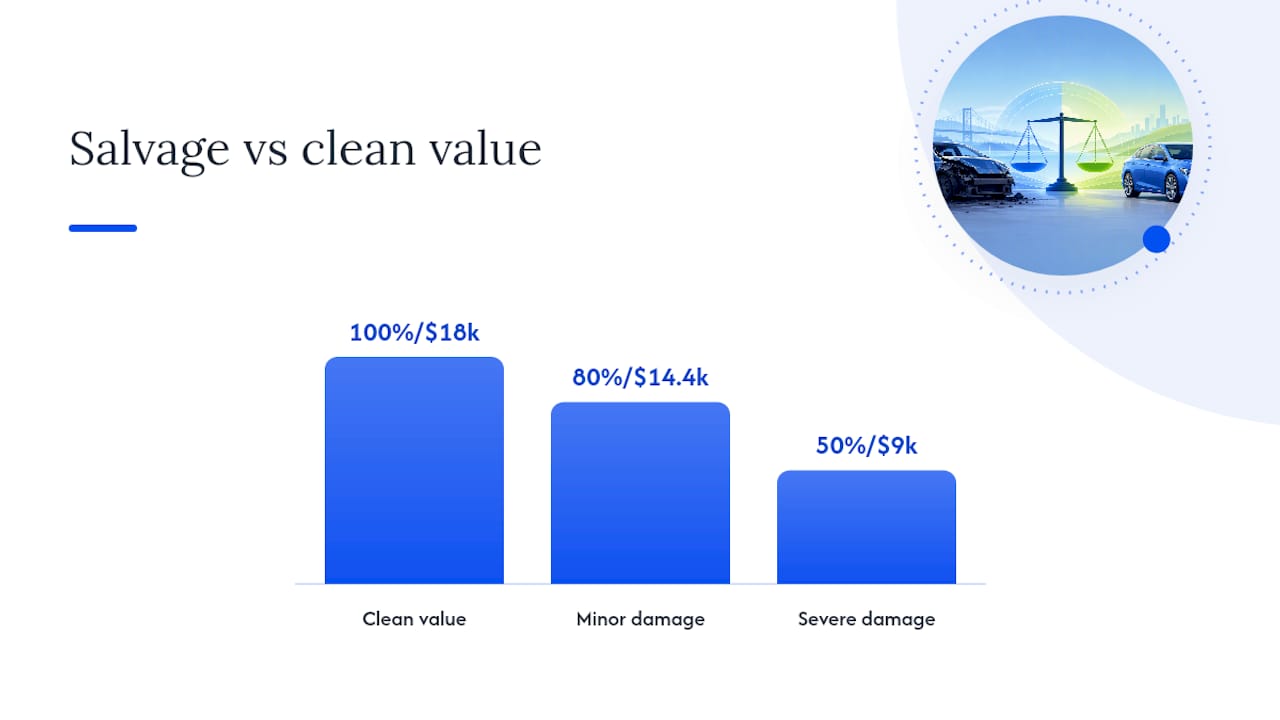
Pro Tip: Pull the clean-title value from Kelley Blue Book or Edmunds first, then apply the discount. A 2020 sedan worth $18,000 clean lands somewhere between $9,000 and $14,400 with a salvage brand, before you even factor in what actually happened to it.
A few things move that percentage:
- Cosmetic or minor collision damage sits at the low end of the discount, closer to 20%.
- Frame damage, flood, or fire history pushes it toward 50% or worse, even after repairs.
- Rebuilt titles with inspection paperwork command a smaller discount than raw salvage titles, because the buyer isn’t gambling on unknown repair quality.
- Junk-only vehicles aren’t priced against clean-title value at all. They’re priced on parts and scrap weight.
Modest repairs sometimes pay for themselves. If a $600 sensor replacement moves your car from “won’t pass inspection” to “runs and drives,” and that shift adds $2,500 to your offers, the math is obvious. If the repair costs more than the value gain, sell as-is instead.
What Paperwork Do You Need to Sell a Salvage Title Car?
Buyers and DMVs both expect a specific paper trail, and skipping a piece can delay or void the sale.
- The salvage or rebuilt title itself, issued by your state’s DMV.
- A state-mandated disclosure form stating the vehicle carries a salvage or rebuilt brand. New York requires this in writing, and skipping it can trigger a fine up to $2,000 plus other penalties.
- A notarized bill of sale that explicitly names the title brand and states the sale is “as-is, no warranties expressed or implied.”
- Repair receipts and inspection reports, if any work was done. These are your best leverage for a higher offer.
- Odometer disclosure, required in nearly every state regardless of title status.
- Lien release, if you financed the car and haven’t fully paid it off.
The disclosure language matters more than most sellers realize. A vague mention of “some damage” isn’t enough. Write the actual title brand, salvage or rebuilt, directly into the bill of sale, matching what consumer checklists recommend for protecting sellers from later disputes.
Pro Tip: Sign the title over only after payment clears, not before. Cashier’s checks can bounce days later; verified funds or cash in hand is the only safe order of operations.
Once the sale closes, file your state’s sale notice with the DMV so the vehicle is no longer registered to you.
Step-by-Step: How to Sell a Salvage Title Car
- Gather your documents and photos. Include the title, repair receipts, and any inspection certificates before you contact a single buyer.
- Get at least two offers. Price differences between buyer types can run several hundred to over a thousand dollars, so one quote tells you nothing.
- Decide whether to repair first. Run the quick math: repair cost versus expected value gain. If it’s close, sell as-is and save the hassle.
- Disclose in writing and complete the bill of sale at closing. Use a payment method you can verify before handing over keys.
- File the DMV sale notice and cancel your insurance once the buyer has the title and the vehicle is gone.
If the car doesn’t run, logistics for non-runners usually mean arranging or paying for towing yourself, unless your buyer is a professional service that handles pickup as part of the deal.
Do State Rules for Salvage Titles Vary?
They do, and the differences aren’t minor. Always confirm with your own state before you list the car.
- Nevada restricts private sales of unrepaired salvage vehicles, limiting transfers to licensed dealers or rebuilders in most cases.
- Rebuilt title requirements differ by state. Some demand a formal inspection and emissions test before issuing a rebuilt brand; others accept notarized repair affidavits.
- Check your state DMV directly, the way you’d check Texas’s salvage brand guidance, and run the VIN through NMVTIS before listing, so you know exactly what’s on record.
How Do You Protect Yourself When Selling a Salvage Title Car?
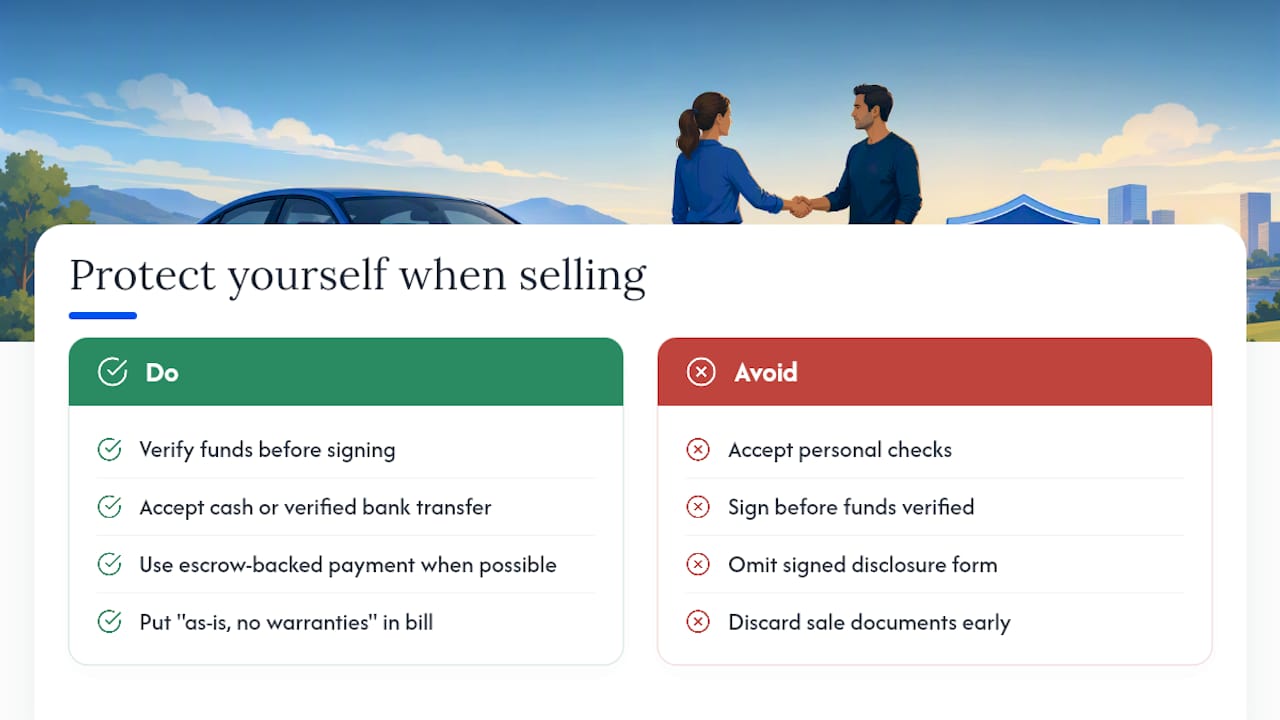
The two biggest risks are a bounced payment and a buyer claiming later you hid something. Both are preventable.
Verify funds before you sign anything. Cash, a verified bank transfer, or an escrow-backed payment confirmed by your bank all beat a personal check. Put the “as-is, no warranties” language directly in the bill of sale alongside the signed disclosure form, matching the practices outlined in guides on as-is car sale transparency.
Pro Tip: Keep copies of everything, the signed disclosure, the bill of sale, the tow receipt if the buyer arranged pickup, for at least a few years. If a dispute ever surfaces, that paper trail is your entire defense.
What’s the Smartest Way to Sell a Salvage Title Car?
If speed is the goal, an instant-offer buyer wins every time. If maximizing dollars matters more, a private sale backed by full documentation almost always beats it. Repair receipts and rebuilt-inspection certificates are the single best lever you have for a higher offer. Whatever route you pick, check your own state’s DMV rules first.
— Eric
A Faster Way to Sell a Salvage Title Car
Private sales and salvage dealers both take time you might not have, especially if the car doesn’t run and you just want it gone. There are direct alternative services for sellers who’d rather skip the listings and back-and-forth negotiations entirely.
Some services send someone to your location, make an on-site cash offer, and handle the paperwork, including the disclosure and bill of sale details covered above. Some services offer a guarantee: the price offered is the price paid at pickup, with no surprise deductions once the tow truck shows up. These services are designed for sellers with non-running or damaged vehicles who need liquidity quickly, rather than waiting weeks for private sale responses. If a non-running vehicle is sitting in your driveway with a salvage brand on the title, check same-day pickup availability and get a cash offer before you commit to a private listing.
Verify the Details Before You List
Confirm your state’s exact disclosure form on its DMV website, run the VIN through NMVTIS, and check current clean-title values on Edmunds or Kelley Blue Book before setting your asking price.
Sources
- Sell a salvage vehicle — salvage vehicle disclosure | NY DMV
- What is the value of a salvage title vehicle? | Edmunds Help
- Salvage titles | Nevada DMV
- Sell a Car with a Salvage Title — CarXplorer
FAQ
Can You Legally Sell a Salvage Title Car?
Yes, in most states, as long as you disclose the salvage or rebuilt brand in writing before the sale. A handful of states, including Nevada, restrict private sales of unrepaired salvage vehicles to licensed dealers.
How Much Should a Salvage Title Drop the Price?
Expect a 20% to 50% reduction off the equivalent clean-title value, with the exact discount depending on damage severity, repair quality, and local demand.
Who Pays the Most for Salvage Title Cars?
Private buyers, particularly hobbyists or mechanics planning their own rebuild, generally pay the most, though the sale takes longer and payment is almost always cash-only.
What Happens If a Dealership Sells You a Car With a Salvage Title?
Dealerships are required to disclose the salvage or rebuilt brand before the sale; failing to do so can expose them to fines and legal claims, and in New York specifically, penalties up to $2,000 for the seller who skips disclosure.