Same Day Cash for Cars After an Accident and How to Transfer Liability
The fastest lawful route to cash after a crash is a direct cash buyer or salvage yard if the car won’t run or you need money now, and a trade-in or private sale if price matters more than speed. Whichever route you pick, keep the signed title, get a bill of sale with the VIN and mileage, and file a release of liability with your state right after the sale. Some cash-for-car services offer same-day pickup and on-the-spot payment for sellers who want the process handled quickly.
TL;DR:
- Selling to a cash buyer or salvage yard requires minimal effort and guarantees quick payment, especially if the car is non-operational or heavily damaged.
- A salvage title significantly reduces a car’s resale value and complicates financing, while a rebuilt title offers limited buyer options and still lowers the price.
- Filing a release of liability immediately after sale protects you from future tickets or accidents tied to the vehicle, and handling proper paperwork prevents disputes.
- Private sales typically yield the highest return but involve more work and patience, making them less suitable if speed is your priority.
- Selling a car with an open insurance claim requires disclosure and coordination with the insurer to maximize payout and avoid legal issues.
Table of Contents
- What Are Your Real Options for an After Accident Car Sale?
- How Much Does an Accident Drop Your Car’s Value?
- What Paperwork Protects You in a Wrecked Car Sale?
- Selling While an Insurance Claim Is Still Open
- Prepping Your Car and Listing for a Faster, Fairer Offer
- When a Fast Cash Sale Is the Rational Choice
- Get a Same-Day Offer From Tri State Cash For Cars
- Sources
- FAQ
What Are Your Real Options for an After Accident Car Sale?
Your choice comes down to three things: how fast you need cash, how much effort you can put in, and how much damage the car has. Each path trades one of those against the others.
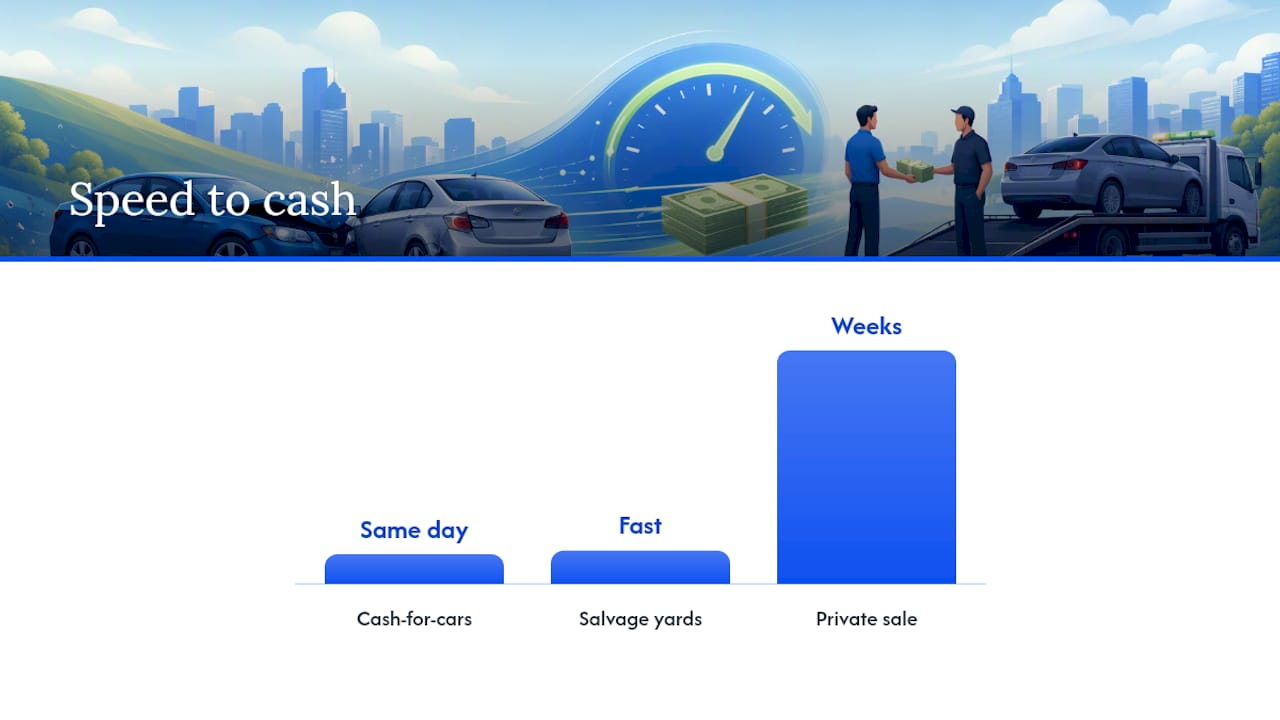
Cash-for-cars buyers send someone to look at the car, make an offer on the spot, and pay at pickup. This is the move when the car doesn’t run, the damage is heavy, or you need the money this week. You’re selling as-is, so there’s no repair work and no back-and-forth with strangers online.
Salvage yards and recyclers move fast too, but they price based on scrap metal and reusable parts, not sentimental value or what you paid three years ago. Most require the title in hand, and towing is often included in the deal, so ask upfront whether the quote already accounts for pickup or if that gets deducted later.
Trade-in at a dealership is convenient if you’re buying another car anyway, and in many states it can lower the sales tax on your next purchase. The tradeoff: dealers tend to lowball post-accident vehicles because they’re reselling to a buyer who’ll run a vehicle history report and see the damage.
Private sale usually nets the highest price, but it demands the most work: photos, listings, buyer screening, VIN disclosure, and enough patience to wait out lowball offers. Expect a longer timeline, sometimes weeks.
Auctions and salvage marketplaces can pull surprisingly strong bids for project cars or vehicles enthusiasts want to rebuild. But you’ll deal with listing fees, shipping logistics, and buyers who negotiate hard on anything with a branded title.
A rough way to choose:
- Need cash today and the car barely runs → cash buyer or salvage yard
- Buying another car soon → trade-in
- Willing to wait for top dollar → private sale
- Have a rare or collectible model → auction or salvage marketplace
For a side-by-side breakdown of these routes, this guide to selling a damaged car fast walks through what each option actually pays out.
How Much Does an Accident Drop Your Car’s Value?
There’s no fixed percentage that applies to every wrecked car. Diminished value depends on the make, the severity of the damage, the repair quality, and how buyers in your area react to a car with an accident on record.
Pro Tip: Pull your own vehicle history report before you list the car. If a buyer finds the accident first, you lose negotiating leverage. If you disclose it upfront with the report attached, you keep it.
Title brands change the math further. A salvage title means an insurer declared the car a total loss; most retail buyers won’t touch it, and financing is nearly impossible to get. A rebuilt title means the car passed a state inspection after salvage repairs, which opens up a smaller pool of buyers willing to pay more than scrap value, but still well under clean-title prices. A clean title with a repaired accident history still sells for less than an identical car with no accident on record, because that history follows the VIN permanently.
If another driver caused the crash, you may be able to file a third-party diminished value claim against their insurer. Rules on this vary significantly by state, and filing before you sell gives you a stronger case than filing after the car has already changed hands.
What Paperwork Protects You in a Wrecked Car Sale?
Skipping paperwork is how sellers end up with someone else’s parking tickets showing up under their name months later. Handle these in order:
- Sign over the title. If it’s lost, most states have a duplicate title process. New Jersey sellers dealing with this specific headache can check the duplicate title checklist for what’s required and how long it takes.
- Write a bill of sale with the VIN, mileage, sale price, and date. This is your proof the sale happened, and it protects both parties if a dispute comes up later.
- Clear any lien. If you still owe money on the car, get a lien release from your lender before or at the time of sale.
- File a notice of transfer or release of liability with your state DMV immediately after the sale. This is the single most important step in the whole process, and it’s the one people skip. Without it, the car is still legally tied to your name for tickets, tolls, and accidents the new owner causes. The California DMV’s release-of-liability guidance lays out the principle clearly, and most states run a comparable process.
- Remove your plates and cancel your insurance once the sale is final, not before.
Keep copies of the signed bill of sale, any repair invoices, and a written disclosure of the damage. If a dispute ever comes up, paper trails win arguments that memory can’t.
Selling While an Insurance Claim Is Still Open
If your claim hasn’t settled, the car’s status matters more than it seems. A repairable claim means the insurer expects the car back on the road; a total loss means they’ve decided repair costs exceed the car’s value and they’ll typically pay out actual cash value.
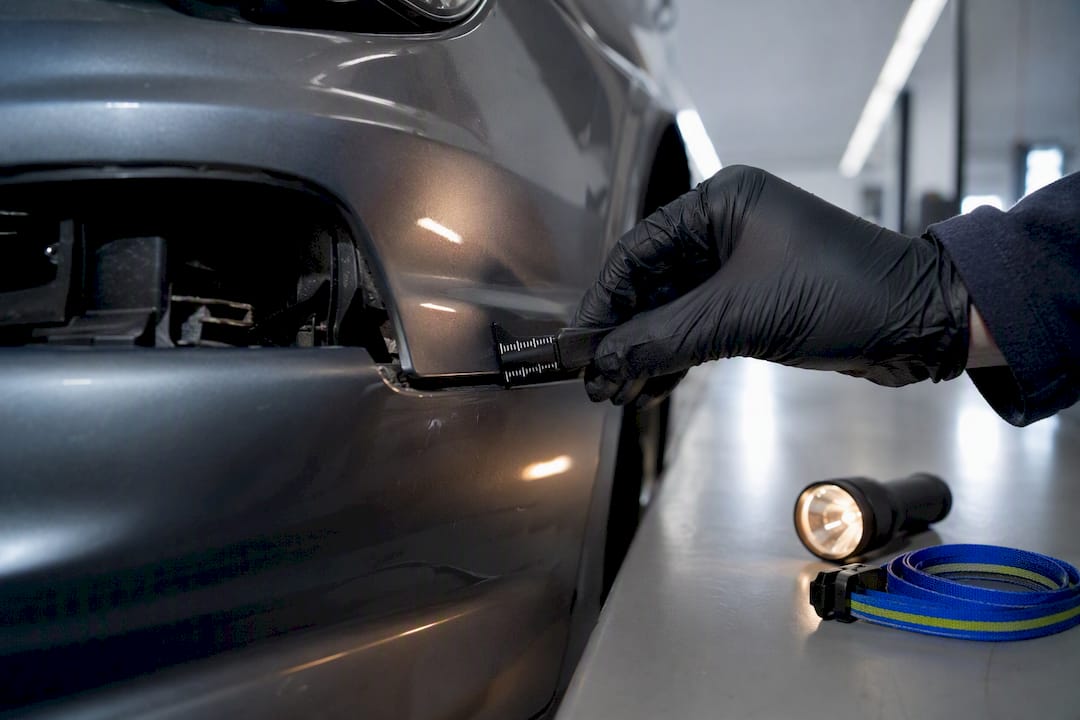
You can sell a car with an open claim, but selling before an adjuster inspects the damage can complicate or shrink your payout. Talk to your adjuster before you accept any offer.
If the insurer declares a total loss but you want to keep the car, ask about an insurer buyback, where you accept a reduced settlement and the car gets a salvage title instead of going to auction. Tri State’s guide to selling a totaled car covers how that keep-versus-surrender decision plays out. Whatever you decide, disclose the open-claim status to any buyer and get every agreement in writing.
Prepping Your Car and Listing for a Faster, Fairer Offer
Get these ready before you contact anyone:
- Clear photos of the VIN, odometer, and every point of damage
- Repair estimates and insurance paperwork, if you have them
- Keys, title (or duplicate title paperwork), and registration in one folder
Pro Tip: Write your disclosure as one plain sentence: “This vehicle was in an accident on [date] with [type of damage]; VIN history report attached.” Attach the actual report. A written disclosure holds up far better than a verbal one if a buyer ever pushes back.
When comparing offers, look at the net number, not the headline figure. Some buyers quote a price then deduct towing fees or “adjust” after seeing the car in person. Major structural repairs rarely pay for themselves before a sale, so unless the fix is cosmetic and cheap, sell as-is.
When a Fast Cash Sale Is the Rational Choice
People assume holding out for a private-sale buyer always nets more money. It doesn’t, once you factor in the weeks of showings, the buyers who vanish, and the ones who lowball a car with any accident history.
If your car doesn’t run, your title has a complication, or you just need the money this week, a guaranteed pay-at-pickup offer removes the risk that a private deal falls through halfway. Speed and certainty aren’t a compromise. For a lot of sellers, they’re the smarter trade.
— Eric
Get a Same-Day Offer From Tri State Cash For Cars
If you’ve read this far, you already know the private-sale grind isn’t for everyone, especially with an accident on the title. Some cash-for-cars services provide onsite visits in several states, offer cash on the spot, handle paperwork, and pay at pickup, sometimes guaranteeing the quoted price.
This works whether your car runs or not, whether the insurer already totaled it and you kept the salvage title, or whether your title paperwork is a mess. Have your ID, the title (or whatever title documentation you have), and your keys ready when we arrive, and we’ll take care of the rest. Get a guaranteed cash offer started today and see what we’ll pay before you commit to anything.
Sources
For the official paperwork, start with your state DMV’s release-of-liability guidance. For claim timing and diminished-value rules, LegalClarity and VPLAW both break down state-by-state nuances. For how salvage-yard offers work, see Progressive’s junkyard selling guide.
- VPLAW: Car selling, insurance and diminished value guidance
- LegalClarity: Can I sell my car with an open insurance claim?
- California DMV: Notice of Transfer and Release of Liability (example DMV guidance)
FAQ
What Is the $3,000 Rule for Cars?
There’s no universal legal rule by that name, but many insurers use a repair-cost threshold, often somewhere around that range on lower-value vehicles, as a rough trigger point for declaring a total loss instead of authorizing repairs. The exact threshold varies by insurer and state, so ask your adjuster what standard applies to your policy.
Is It Hard to Sell a Car That’s Been in an Accident?
It’s harder than selling a clean-title car privately, since buyers pull vehicle history reports and negotiate down once they see accident records. It’s not hard at all through a cash buyer or salvage yard, since those buyers price the damage into their offer upfront.
How Much Does a Car Devalue After an Accident?
There’s no fixed percentage, since the drop depends on the severity of the damage, repair quality, and whether the title gets branded salvage or rebuilt. A car with a clean title and a professionally repaired accident still sells for less than an identical car with no accident history, because that record stays attached to the VIN.
Can You Buy a New Car After an Accident?
Yes, and trading in your damaged car toward that purchase can lower the sales tax you owe in many states, even though the trade-in offer itself will usually be lower than a private sale would bring.