Skip a Second DMV Trip: New York Title Transfer Forms and Notarization
Sell a car in New York and the seller signs the “Transfer by Owner” section on the original title while both parties sign a Vehicle Bill of Sale (Form MV-912). The buyer then takes that title, the bill of sale, a completed DTF-802 if it applies, proof of New York insurance, and ID to a local DMV office to register and title the car. Some out-of-state titles need notarization first, and you cannot register without active NY insurance in hand.
TL;DR:
- Most titles require notarization from out-of-state sellers, and the title must be original, unaltered, and signed by the owner exactly at sale time.
- The buyer must bring the signed title, a fully completed bill of sale, DTF-802 if applicable, proof of NY insurance, and ID to the DMV for registration.
- Filing DTF-802 as a gift with proof of relationship can exempt the transaction from sales tax, but proper documentation is necessary.
- Problematic titles with cross-outs, unresolved liens, or mismatched information often require ordering a duplicate or clearing liens before transfer.
- Using a cash-for-cars service can simplify paperwork handling, especially when dealing with lost, damaged, or out-of-state titles needing notarization.
Table of Contents
- What You Need for a Title Transfer in New York
- How Do You Complete a Car Title Transfer in NY?
- Do You Need to Pay Tax on a Gifted Car in New York?
- What About Out-of-State Titles?
- How Much Does It Cost to Transfer a Title in New York?
- Fixing Common Title Transfer Problems
- When a Cash-For-Cars Service Handles the Paperwork for You
- What Actually Trips Up New Yorkers at the DMV
- Where to Find the Official Forms
- Sources
- FAQ
What You Need for a Title Transfer in New York
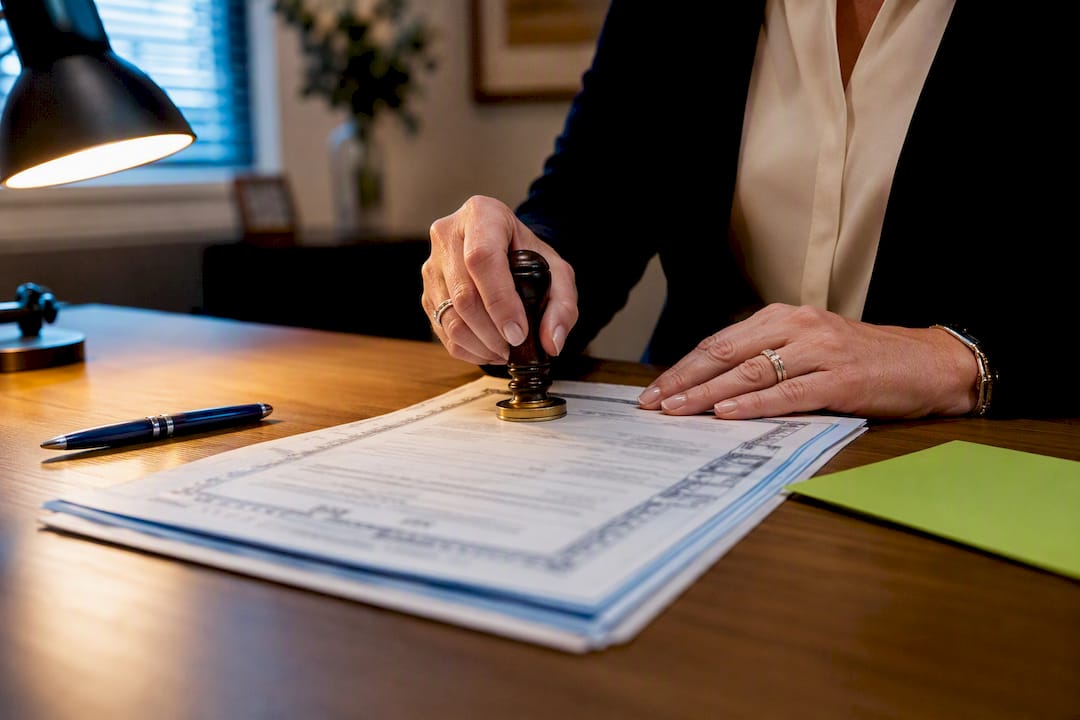
Walking into a DMV office without the right paperwork means walking out empty handed, and title transfer New York rules leave little room for improvising. The DMV will not accept photocopies, and it will not accept a title that has been altered, crossed out, or pre-filled before the actual sale date.
Here’s what has to be in your folder before you go:
- Original Certificate of Title (MV-999): the seller’s signature goes in the “Transfer by Owner” section on the back, filled out only at the moment of sale, never before.
- Vehicle Bill of Sale (MV-912): both buyer and seller sign it, and it should list the sale price, vehicle identification number, odometer reading, and date. The buyer hands the original to the DMV; the seller keeps a copy.
- Statement of Transaction (DTF-802): required for most sales and many gifts, since it documents the purchase price for sales tax. On a gift, mark it “$0” or “GIFT” instead of a dollar figure.
- Odometer and damage disclosure: required for vehicles under a certain age, and it protects the buyer from a rolled-back mileage dispute later.
- Proof of NY insurance and ID: you cannot register the car, even after the title paperwork clears, without an active New York insurance card.
Skip any one of these and the clerk sends you home to try again. That single trip back across town is the most common reason people give up and hand the whole mess to someone else.
How Do You Complete a Car Title Transfer in NY?
Selling privately follows a fairly rigid script, and knowing the order of operations saves you a wasted afternoon.
- At the sale, the seller signs the title. The Transfer by Owner section gets filled out with the buyer’s name and the sale date, never earlier.
- Both parties sign the MV-912. Confirm the seller’s identity matches the name on the title and ask directly whether a lien is still attached.
- The buyer completes DTF-802 if sales tax or a gift exemption applies, and keeps every original document instead of a scan.
- The buyer brings the full packet to a local DMV office, along with proof of NY insurance and a valid ID, and pays the applicable fees.
- The DMV issues a temporary registration document on the spot; the official Certificate of Title is mailed later, since titles are never printed over the counter.
Dealer-handled purchases work differently. A dealership usually processes registration and title paperwork on your behalf when you finance or buy new, but even then, someone still has to visit a DMV office if there is a lien payoff, an address mismatch, or a manual correction needed.
Pro Tip: Photograph or scan every signed document the moment ink hits paper. If a page gets lost in the mail or a DMV clerk questions a signature weeks later, you want your own copy, not a memory of what you signed.
The official Certificate of Title is mailed by the DMV after processing, and it may take several weeks to arrive. Your registration receipt works as temporary proof of ownership in the meantime, so don’t toss it.
Do You Need to Pay Tax on a Gifted Car in New York?
Gifting a vehicle to a relative still means paperwork, and skipping it is how people end up with a surprise tax bill months later.
- File DTF-802 for the gift, marking the transaction as “$0” or “GIFT” rather than leaving it blank.
- Mark the MV-912 the same way, so the sale price field and the tax form match.
- Spouses, parents, and children often qualify for exemptions, but the DMV still wants documentation proving the relationship, not just a verbal claim.
- Transfers between friends, cousins, or unrelated parties usually don’t qualify for the family exemption and get taxed on fair market value.
The paperwork exists because family exemptions are limited, not automatic, and the DMV decides based on what DTF-802 actually says, not on good intentions. Bring proof of relationship, whether that’s a marriage certificate or a birth certificate, and file it with the form rather than assuming the clerk will take your word for it.
What About Out-of-State Titles?
Moving to New York with an out-of-state title, or buying a car titled somewhere else, adds one extra wrinkle: notarization.
- Certain states require notarization on the transfer section before New York will accept the title, including Alaska, Arizona, Hawaii, Kentucky, Louisiana, Mississippi, Montana, Nevada, North Carolina, Ohio, Oklahoma, Pennsylvania, Washington, Wyoming, and Puerto Rico.
- If the title is electronic, contact the issuing state’s motor vehicle agency for a paper printout before your DMV appointment.
- If a lien is still attached, get written payoff confirmation from the lienholder before you try to title the car in New York.
New residents generally need to register within a set window after establishing residency, and NY insurance has to be active before that registration happens. Anyone navigating an out-of-state title transfer should confirm notarization rules first. It’s the single detail that stalls out-of-state buyers more than anything else.
How Much Does It Cost to Transfer a Title in New York?
Sales tax is almost always the biggest line item on a title transfer, not the title fee itself. The DTF-802 form documents the purchase price the DMV uses to calculate that tax, so an inaccurate sale price on the bill of sale creates a mismatch that can flag your paperwork for review.
- Title fee: a flat charge collected at the DMV counter regardless of sale price.
- Sales tax: calculated on the purchase price reported on DTF-802, which is why gift transactions marked correctly avoid this cost entirely.
- Plate and registration fees: vary by vehicle weight class and county, and some counties add their own surcharge on top of the state fee.
- Dealer handling fees: dealerships that process your registration and title paperwork often charge separately for that convenience.
Gifting between qualifying family members can eliminate the sales tax portion outright, which is the biggest reason to file DTF-802 correctly rather than skip it.
Fixing Common Title Transfer Problems
Most rejected transfers trace back to one of four issues, and each has a defined fix.
- A lost or altered title. The DMV will not accept cross-outs, erasures, or any writing beyond the required signatures. If the title is damaged or missing, order a duplicate title before attempting to transfer ownership, not after.
- An unresolved lien. Get the lien release or payoff letter from the lienholder in writing before the sale closes. A verbal “it’s paid off” from the seller isn’t something the DMV will accept.
- A chain-of-title gap. If a title was signed over to you but you never applied to have it retitled in your name, you legally cannot sign it over to a new buyer. You have to title it yourself first, then transfer it again.
- Mismatched information or unpaid fines. A name spelled differently between the title and ID, or an outstanding parking ticket tied to the plate, can stall processing until it’s resolved.
Pro Tip: If your title has even a single crossed-out letter, don’t gamble on the clerk letting it slide. Order the duplicate first. It’s a faster fix than getting turned away and starting the whole appointment over.
When a title is genuinely a mess, ordering a duplicate and rescheduling is sometimes the smarter move. In other cases, a professional buyer who handles this daily can cut through the tangle faster than a DIY attempt.
When a Cash-For-Cars Service Handles the Paperwork for You
Not every seller wants to spend a Saturday at the DMV chasing down a lien release or a duplicate title. Some local cash-for-cars services send someone to your location, make a cash offer, and handle the MV-912 and DTF-802 paperwork directly, sometimes guaranteeing the price stated at pickup with no last-minute renegotiation.
That kind of support tends to matter most in a few specific situations:
- A title that’s been lost, damaged, or signed over incorrectly and needs sorting out before a sale can close.
- An estate vehicle where the paperwork trail is complicated and nobody wants to spend weeks untangling it.
- A seller who needs cash the same day rather than waiting on a buyer to line up financing.
- An out-of-state title that requires notarization or a duplicate before it can transfer in New York.
If your situation checks any of those boxes, a guaranteed cash offer with on-site pickup removes the DMV runaround entirely, since the paperwork gets handled as part of the sale instead of before it.
What Actually Trips Up New Yorkers at the DMV
Three mistakes account for most of the delays I see people run into. First, they let a title sit with a crossed-out signature because “the DMV probably won’t notice.” It notices. Second, they take a seller’s word on a lien instead of getting the release in writing, which turns into a nightmare if that lien surfaces later. Third, they skip the DMV’s online reservation system and end up standing in a walk-in line for two hours over a ten-minute appointment.
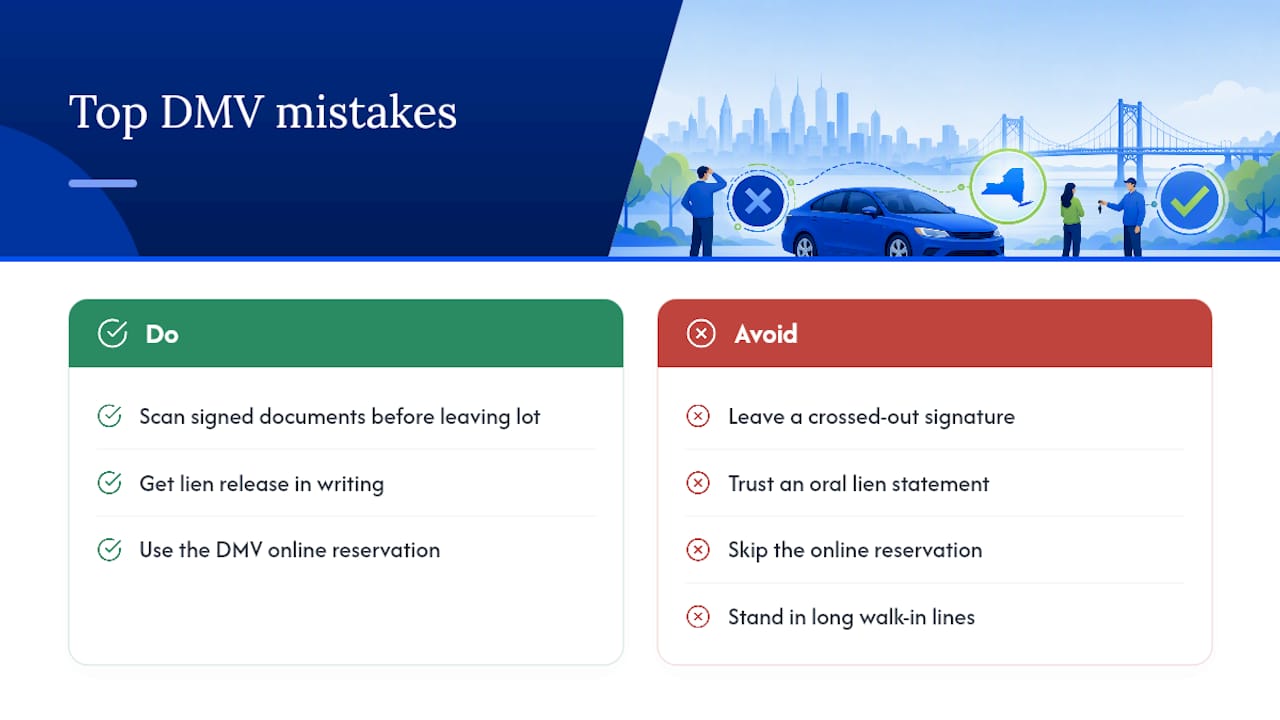
Pro Tip: Scan every signed document on sale day, before you leave the parking lot. A phone photo of the title, bill of sale, and DTF-802 costs you thirty seconds and saves you a DMV callback three weeks later.
None of this is complicated once you know the sequence. It’s just unforgiving if you skip a step.
— Eric
Where to Find the Official Forms
- MV-912 Bill of Sale, for proof of sale.
- DTF-802 Statement of Transaction, for sales tax or gift documentation.
- Register and title a vehicle, for DMV office steps and reservations.
- Replace a title certificate, for duplicate titles.
- Title status tool, for tracking a mailed title.
Sources
- Acceptable proofs of ownership for vehicles | NY DMV
- Register and title a vehicle | NY DMV
- Statement of Transaction (DTF-802) | New York State Department of Taxation and Finance
- Replace a title certificate | NY DMV
FAQ
How Much Does a Title Transfer Cost in NY?
The title fee itself is fixed, but sales tax, calculated from the price on your DTF-802, is usually the largest cost, on top of plate and county registration fees that vary by vehicle and location.
How Do I Transfer My Car Title to a Family Member in New York?
File DTF-802 marking it as a gift, sign the MV-912 the same way, and bring proof of the family relationship. Spouses, parents, and children commonly qualify for a tax exemption, but the DMV wants documentation, not just a verbal claim.
How Can I Transfer My Out-of-State Car Title to New York?
Check whether your state requires notarization on the transfer section first, since several states do. Then bring the title, MV-912, DTF-802 if applicable, proof of NY insurance, and ID to a local DMV office to register and title the vehicle.
What Is the Best Way to Transfer a Car Title to a Family Member?
Treat it exactly like a sale on paper: sign the title’s Transfer by Owner section, complete the MV-912 marked as a gift, and file DTF-802 to document the exemption. Skipping the tax form is the most common reason gift transfers get flagged later.