Get a Better Offer or Same Day Cash: Prepare Your Car for Sale
Detail the car before you photograph it, gather your title and service records before you list it, and pick a selling route that matches your priority: price, speed, or convenience. Do those three things first and you’ll cut weeks off the process. Private sale usually nets the most money, while a dealer trade-in or a cash buyer moves faster if you’d rather skip the back-and-forth entirely.
TL;DR:
- Preparing the car with a detailed clean and gathering all relevant documents can reduce the listing time by several weeks.
- Private sales often yield the highest prices but require significant effort and thorough disclosure of issues upfront.
- Dealer trade-ins and instant online offers prioritize speed but generally provide lower offers than private sales or cash buyers.
- Repair costs should be weighed against their impact on value, with small fixes boosting sale price and large repairs sometimes better sold as-is.
- Meeting buyers in public, verifying payment, and completing proper paperwork are essential steps for a safe and legal transaction.
Table of Contents
- Which Way to Sell Your Car Fits You Best?
- What Documents Do You Need Before Selling a Car?
- Does Detailing a Car Really Increase Its Sale Price?
- Should You Fix Mechanical Issues Before Selling?
- How Do You Set the Right Price for Your Car?
- What Makes a Car Listing Actually Sell?
- How Do You Stay Safe Meeting Car Buyers?
- How Do You Close the Sale and Transfer the Title?
- Final Walk-Through Before the Buyer Arrives
- What Sellers Get Wrong Most Often
- When a Cash Buyer Makes More Sense Than a Private Sale
- Trusted Forms, Pricing Tools, and Consumer Guidance
- Sources
- FAQ
Which Way to Sell Your Car Fits You Best?
Every selling route trades speed for money, and knowing that trade upfront saves you from a bad decision later.
Private sale means listing on your own and dealing directly with buyers. It typically pays the most because you’re selling at retail value, not wholesale, but it takes the most time, effort, and patience.
Trade-in happens at a dealership when you’re buying another car. It’s the most convenient option since it’s bundled into one transaction, but the offer is usually the lowest of the bunch.
Dealer instant offers (many franchise and used-car dealers now run these online) give you a firm number in minutes without requiring a purchase. Speed is decent, but the price still reflects wholesale math.
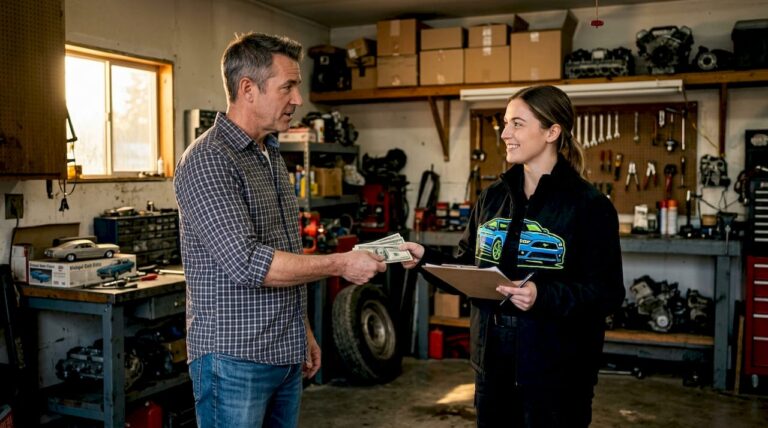
Professional cash buyers send someone to inspect the car and pay on the spot, often within the hour. This route is built for people who value certainty over squeezing out the last dollar, and it works especially well for vehicles that aren’t running well or have complicated titles.
Prep differs by route:
- Private sale: invest in detailing and photos since buyers are comparing you to other listings
- Trade-in: bring service records but skip cosmetic fixes the dealer will redo anyway
- Instant offers: be ready with your VIN and mileage for an accurate online quote
- Cash buyers: have your title and ID ready; condition matters less than paperwork
What Documents Do You Need Before Selling a Car?
Buyers expect proof of ownership and history, and showing up without it kills deals before they start. According to Kelley Blue Book’s step-by-step selling guide, assembling paperwork early is one of the first real steps in preparing a car for sale, not an afterthought you handle at the last minute.
Here’s what to pull together before you list anything:
- The title, with any lien fully released and documented
- Current registration and a bill of sale, using your state’s template if one is required
- Release of liability paperwork, since state procedures vary and skipping this step can leave you on the hook for tickets or accidents after the sale
- Maintenance and service records, including recent repair receipts
- The owner’s manual, spare keys, and any remotes or fobs
- A vehicle history report, especially if the car has ever been in an accident
Disclosing accident history upfront, rather than letting a buyer discover it later, builds the kind of trust that leads to smoother negotiations and fewer walk-aways.
Does Detailing a Car Really Increase Its Sale Price?
Yes, and it’s usually the highest-return move you’ll make in the entire process. A thorough clean before listing photos materially changes how buyers perceive the car, according to Autotrader’s preparation guide, and it can speed up the sale itself. DIY works fine for most cars; a $150 to $250 professional detail makes sense if the interior has stubborn stains, pet hair, or lingering odors you can’t fix with a vacuum and some elbow grease.
Work through it in this order:
- Clear out everything personal — glove box, trunk, center console, seat pockets
- Vacuum every surface, including under the seats and in the trunk
- Shampoo carpets and cloth seats, then let them dry fully before closing the car up
- Track down odor sources — spilled drinks, smoke residue, mildew — and treat them directly rather than masking with air fresheners
- Condition leather seats to remove cracking and restore some shine
- Wash and dry the exterior, then clay bar and polish if the paint has swirls or water spots
- Restore cloudy headlights with a polishing kit; it’s a $15 fix that changes how the whole front end looks
- Clean wheels and tires, including a tire shine product for the photos
- Wipe down door jambs and the trunk seal, areas buyers check when they’re being careful
- Degrease the engine bay with a gentle cleaner and a hose, avoiding electrical components
Pro Tip: Detail the car shortly before taking your listing photos to ensure it looks its best. Dust settles fast, and a car that looked showroom fresh on Tuesday can look neglected by the weekend if you photograph it too early.
Keep a microfiber cloth and glass cleaner in your trunk for quick touchups between viewings. A five-minute wipe-down before each buyer arrives keeps the car looking as good as it did on day one.
Should You Fix Mechanical Issues Before Selling?
It depends on how the repair cost compares to the value it adds, and that math isn’t always in your favor. Run through this checklist first:
- Brake pads and rotors for wear or grinding noise
- Tire tread depth and even wear patterns
- All exterior lights, including turn signals and brake lights
- Fluid levels and any visible leaks
- Dashboard warning lights, especially the check-engine light
- Unusual noises, vibrations, or pulling during a test drive
A quick pre-sale mechanic inspection, often $100 to $150 at an independent shop, gives you a written report you can show buyers. That report alone can justify your asking price and preempt the inevitable “what’s wrong with it” question.
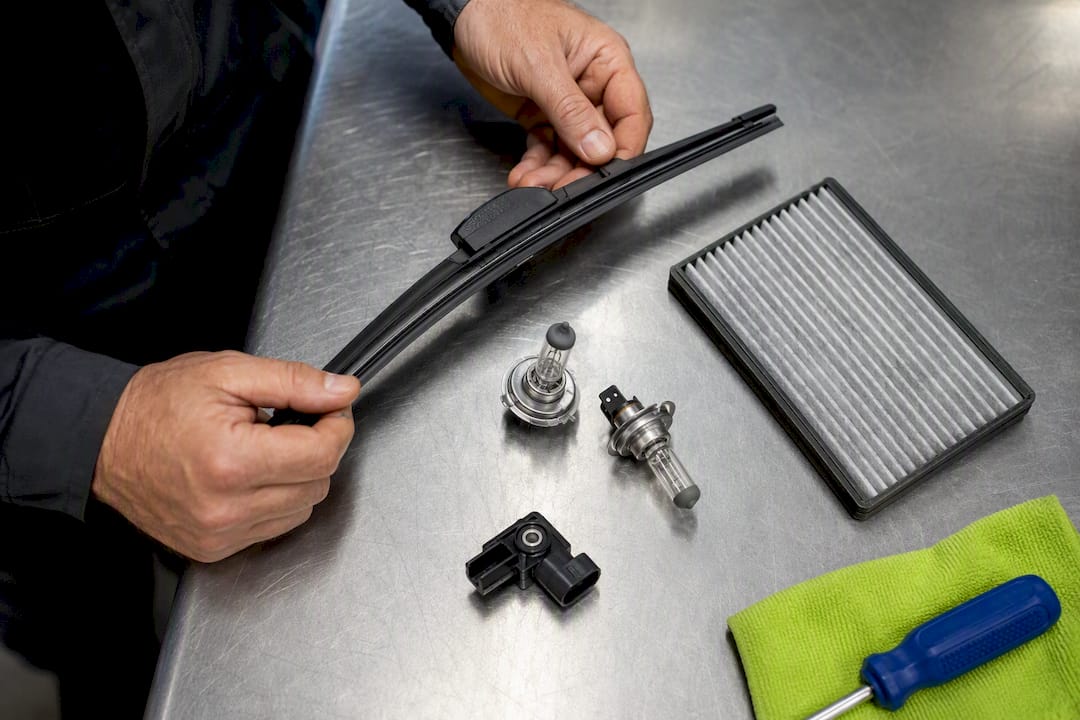
Cheap, high-impact fixes are worth doing every time: bulbs, wiper blades, filters, a low-cost sensor. But if repair costs start approaching what the fix would add to the sale price, selling as-is is often the smarter financial move, since dealers and professional buyers can factor reconditioning into their offer more cheaply than you can. What you can’t do is hide a genuine safety issue. A cash buyer becomes the rational choice once repair estimates climb into the thousands or the car won’t reliably start.
How Do You Set the Right Price for Your Car?
Start with the ranges, not a single number. Pull both the private-sale and trade-in figures from Kelley Blue Book, and check them against Edmunds or NADA for a sanity check, since the three tools don’t always agree exactly.
From there:
- Pull local comparable listings for your exact year, make, and model
- Adjust up or down for mileage, trim level, and condition relative to those comps
- Factor in any recent repairs or new tires as a small premium
- Note any needed repairs as a deduction, and be upfront about them
Decide your walk-away minimum before you post the ad, not during a phone call with a buyer pressuring you. That cushion keeps you from accepting a lowball offer out of fatigue.
What Makes a Car Listing Actually Sell?
Photos and copy do the heavy lifting once the car itself is ready; for tips on creating trustworthy online car listings, see how to list cars online in Albania. Ten shots cover the essentials:
- Front three-quarter view
- Rear three-quarter view
- Direct side profile, driver’s side
- Direct side profile, passenger side
- Engine bay, clean and well-lit
- Odometer reading, clearly visible
- Interior front seats and dashboard
- Interior back seats
- Trunk or cargo area
- Close-up of tire tread on at least one wheel
Shoot in the late morning or early evening when light is soft, against a plain background, not a cluttered driveway or busy street. A listing that hides the car’s real condition backfires the moment a buyer sees it in person.
For copy, list exact mileage, the VIN, and honest condition notes, including anything you’d want to know if you were buying. Highlight maintenance history specifically since organized records reduce buyer hesitation and tend to bring stronger offers. If you’re listing on a marketplace app, use the platform’s own photo tools rather than uploading low-resolution phone shots, and screen callers with a couple of direct questions before agreeing to meet.
How Do You Stay Safe Meeting Car Buyers?
Meet in a public, well-lit location, ideally somewhere with security cameras like a bank or grocery store parking lot, never at your home if you can avoid it. Bring a friend along, and ask to see the buyer’s driver’s license before handing over keys.
For the test drive:
- Ride along every time; never hand over keys and stay behind
- Set a short, specific route rather than letting the buyer choose
- Confirm the buyer has insurance coverage that would apply if something happens
- Watch for reasonable driving, and end the drive early if anything feels off
Verify payment fully before the buyer leaves with the car, not after. Red flags that should end a meeting immediately: a buyer who wants to pay with a personal check for a large amount, pressure to skip the test drive, or anyone who insists on meeting somewhere isolated.
How Do You Close the Sale and Transfer the Title?
Cash and verified cashier’s checks are the safest payment methods. If you accept a cashier’s check, call the issuing bank directly to confirm it’s real before you release the car, since counterfeit checks are a common scam in private sales.
Once payment clears:
- Sign the title over to the buyer and fill in the sale price and date
- Provide a completed bill of sale as a receipt for both parties
- File your release of liability with the state, if your state requires it, so you’re not responsible for anything that happens after the sale
- Remove your license plates if your state requires you to keep them
- Consider holding the title until funds fully clear, especially for bank transfers that can take a day or two to settle
The FTC’s consumer guidance is worth a quick read if you’ve never sold a car before. Transparency protects you as much as it protects the buyer.
Final Walk-Through Before the Buyer Arrives
- Fill the tank or top off enough for a proper test drive
- Check tire pressure on all four tires
- Test every exterior light one more time
- Vacuum any crumbs or debris that snuck in since detailing
- Gather both sets of keys and remotes
- Print or pull up service records on your phone
- Photograph the odometer reading for your own records
- Photograph the VIN plate for your own records
- Have your ID ready to show the buyer
- Confirm your payment verification plan before they show up
Leave the owner’s manual and any extra floor mats in the car. Remove personal items, toll transponders, parking permits, and garage door remotes before the buyer takes possession.
What Sellers Get Wrong Most Often
The biggest mistake is sequencing: detailing the car before listing it, then wondering why the photos aren’t generating calls. Detail first, photograph second. The second most common error is hiding a known issue instead of disclosing it. Buyers who feel misled walk away, and the ones who don’t walk away negotiate harder once they find the problem themselves.
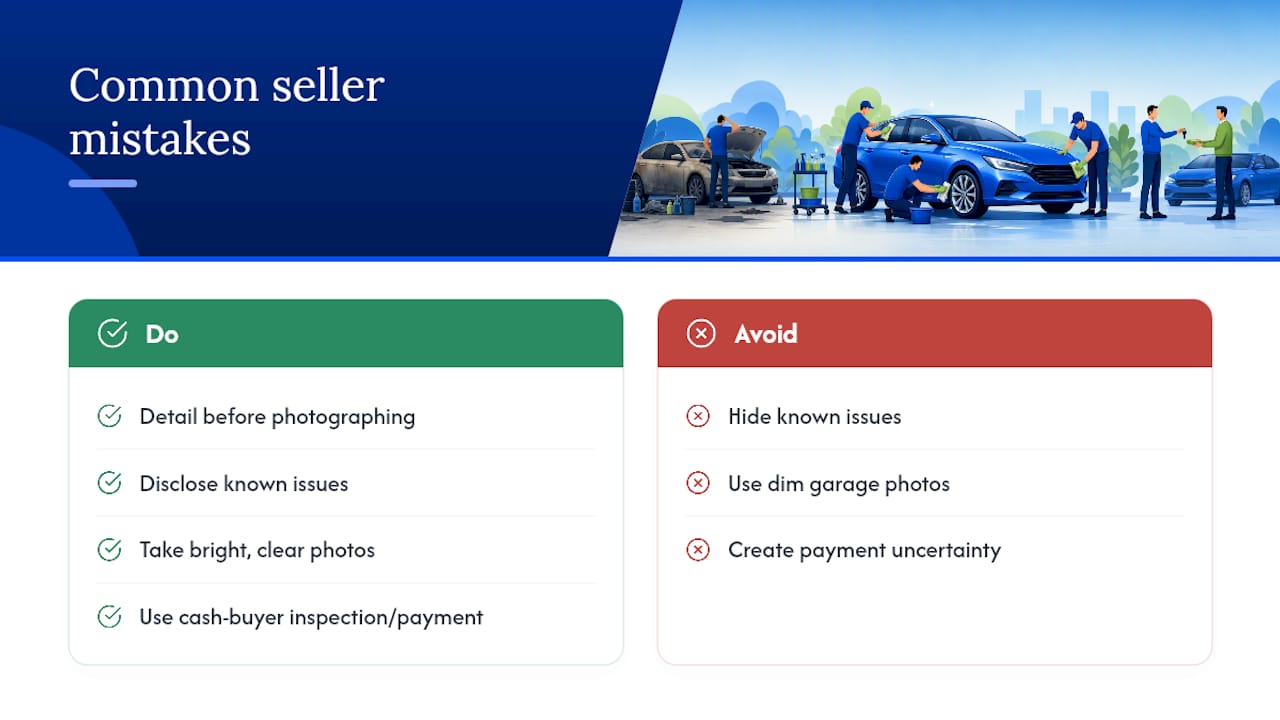
Weak photos are the quiet killer of good listings. A car worth $12,000 photographed in a dim garage looks like a $9,000 car online, and that first impression is nearly impossible to undo once a buyer has already scrolled past.
If you’re weighing a private sale against a faster option, it helps to know what a cash buyer actually offers: an on-site inspection, a guaranteed number, and payment handled before they tow the car away. That combination removes most of the uncertainty that makes private sales drag on.
— Eric
When a Cash Buyer Makes More Sense Than a Private Sale
Some cars aren’t worth the private-sale grind, and that’s fine. A non-running vehicle, a seller who needs cash this week, or someone who simply doesn’t have time to field calls and schedule test drives is better served by skipping the listing process entirely.
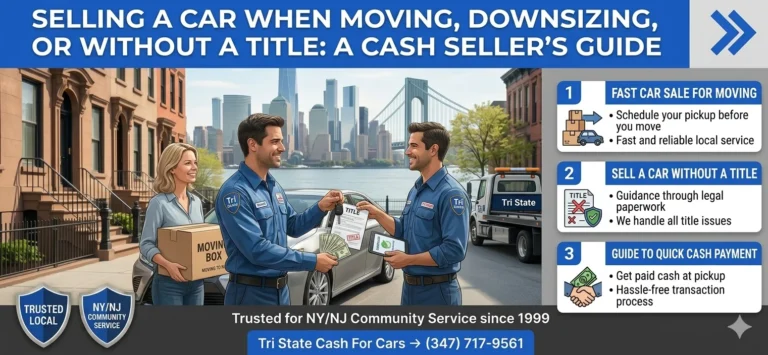
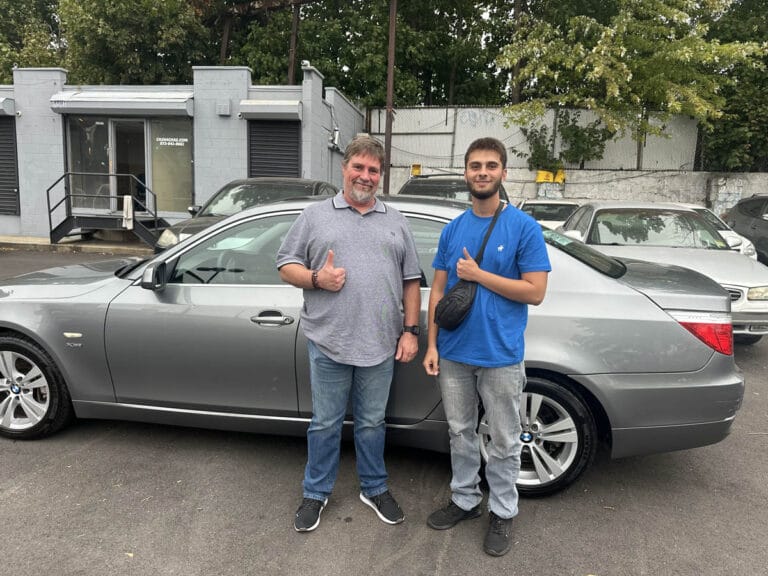
Some cash buyers fill the gap for sellers who want a team to come to their location, inspect the vehicle on the spot, and make a guaranteed cash offer, committing to honoring it at pickup with no last-minute price cuts. Paperwork is handled as part of the visit, and payment often happens the same day, sometimes within the hour. When you’re comparing net proceeds, weigh what a private sale actually costs you in time, detailing spend, and the risk of a deal falling through against a number you know is final the moment it’s offered. If your vehicle isn’t running or you just need this handled quickly, get a guaranteed cash offer and see what pickup looks like for your specific car.
Trusted Forms, Pricing Tools, and Consumer Guidance
- State bill-of-sale templates for legal transfer paperwork
- Kelley Blue Book pricing tool for value ranges
- Tri State Cash For Cars for a guaranteed on-site offer
Sources
- Should you fix your car before selling it? – NerdWallet
- How to Sell a Car: 10 Steps for Success – Kelley Blue Book
- How to Prepare My Used Car for Sale – Autotrader
- Dmv
FAQ
How Do I Prep My Car for Sale?
Detail the interior and exterior thoroughly, fix small cheap issues like bulbs and wipers, gather your title and service records, and take clear photos in good light before you write the listing.
Should I Fix My Car Before Selling It?
Only if the repair cost is small relative to the value it adds; large mechanical repairs often cost more than they return, so selling as-is to a professional buyer is often the better financial call.
What Is the $3,000 Rule for Cars?
There’s no single agreed-upon definition of this rule across the industry, so treat any specific dollar threshold you see online with caution and instead compare your actual repair estimate against your car’s real resale value.
How Much Does a Car Salesman Make on a $10,000 Car?
Dealer profit margins vary widely by vehicle, region, and dealership policy, and no verified standard figure applies across the industry, which is one reason many sellers prefer a direct sale or a transparent cash offer instead.
How Long Does It Take to Sell a Car After Prepping It?
A detailed, well-priced private listing typically sells within one to three weeks, while a dealer trade-in or a professional cash buyer can close the same day.