Best Way to Sell a Car for Parts in New Jersey
TL;DR:
- Selling a non-working car for parts involves either selling it whole to a specialist or dismantling it yourself for higher profits. Preparing proper ownership documentation, tools, workspace, and detailed photos is essential for maximizing earnings. The best method depends on your skills, time, and cash needs, with selling whole offering speed and convenience, and DIY part-out offering higher profits for skilled sellers.
Selling a non-working car for parts is defined as converting a vehicle’s individual components or total scrap value into cash, either by selling the whole car to a specialist buyer or dismantling it yourself to sell parts individually. The best way to sell a car for parts depends entirely on your time, skills, and cash goals. Selling whole to a parts specialist delivers a fair cash offer and vehicle pickup within 24–48 hours, with zero dismantling required. Going the DIY route takes far more effort but can yield significantly higher returns. This guide covers both paths so you can choose the one that fits your situation in New Jersey.
What do you need before selling your car for parts?
Preparation separates sellers who get top dollar from those who leave money on the table. Before you list a single part or call a buyer, get these basics in order.
Ownership and legal requirements:
- Confirm you hold a clear title to the vehicle. New Jersey requires a signed title to transfer ownership legally.
- If the title is lost, apply for a duplicate through the New Jersey Motor Vehicle Commission before proceeding.
- Remove your license plates. In New Jersey, plates stay with the owner, not the car.
- Cancel your insurance only after the vehicle is fully transferred or picked up.
Tools and workspace for DIY sellers:
- Basic hand tools: socket sets, wrenches, screwdrivers, and pry bars
- Safety gear: gloves, safety glasses, and jack stands rated for your vehicle’s weight
- Drain pans for fluids (oil, coolant, brake fluid) to meet New Jersey environmental disposal rules
- A clean, dry workspace with enough room to move around the vehicle safely
Documentation and photography:
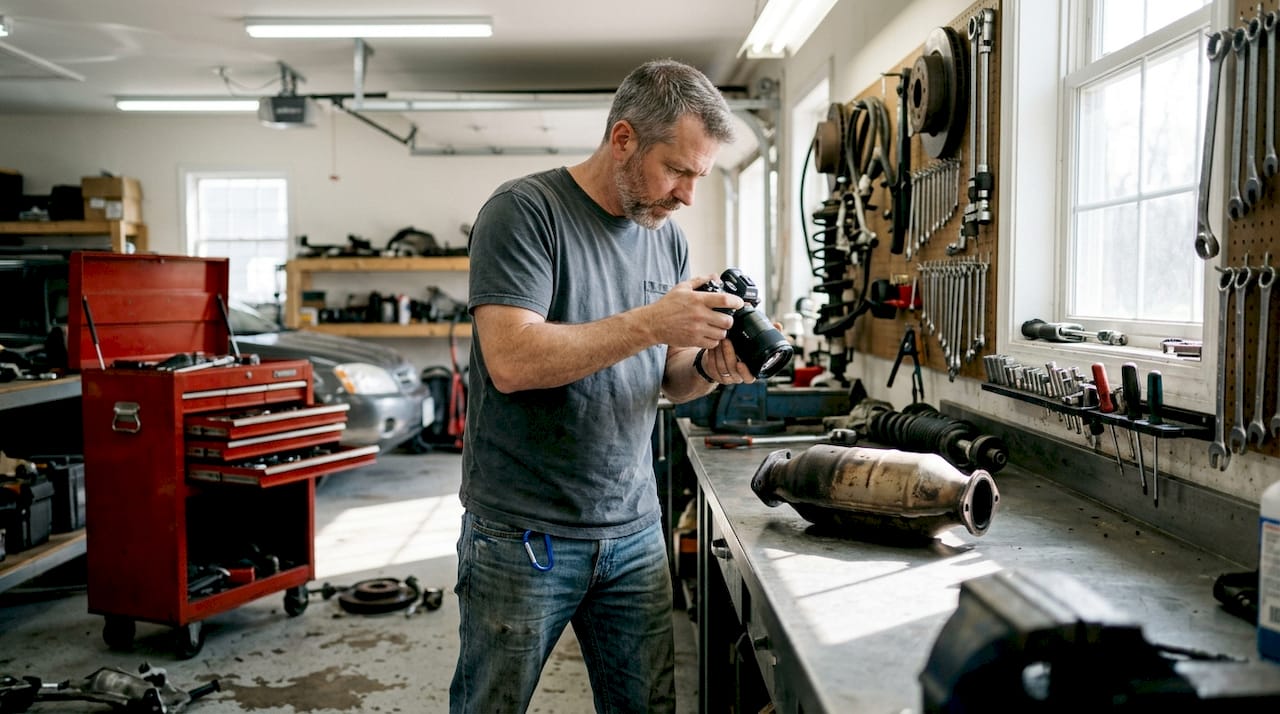
- Photograph the car from every angle before any work begins. Buyers use these images to verify condition.
- Record the year, make, model, trim level, and VIN. This fitment data is critical for online listings.
- Note any known mechanical issues in writing. Accurate condition reports reduce buyer disputes later.
Pro Tip: Take photos in natural daylight. Parts photographed in dim garages consistently attract fewer buyers and lower offers on platforms like eBay Motors.
How to sell your car whole to a specialist buyer
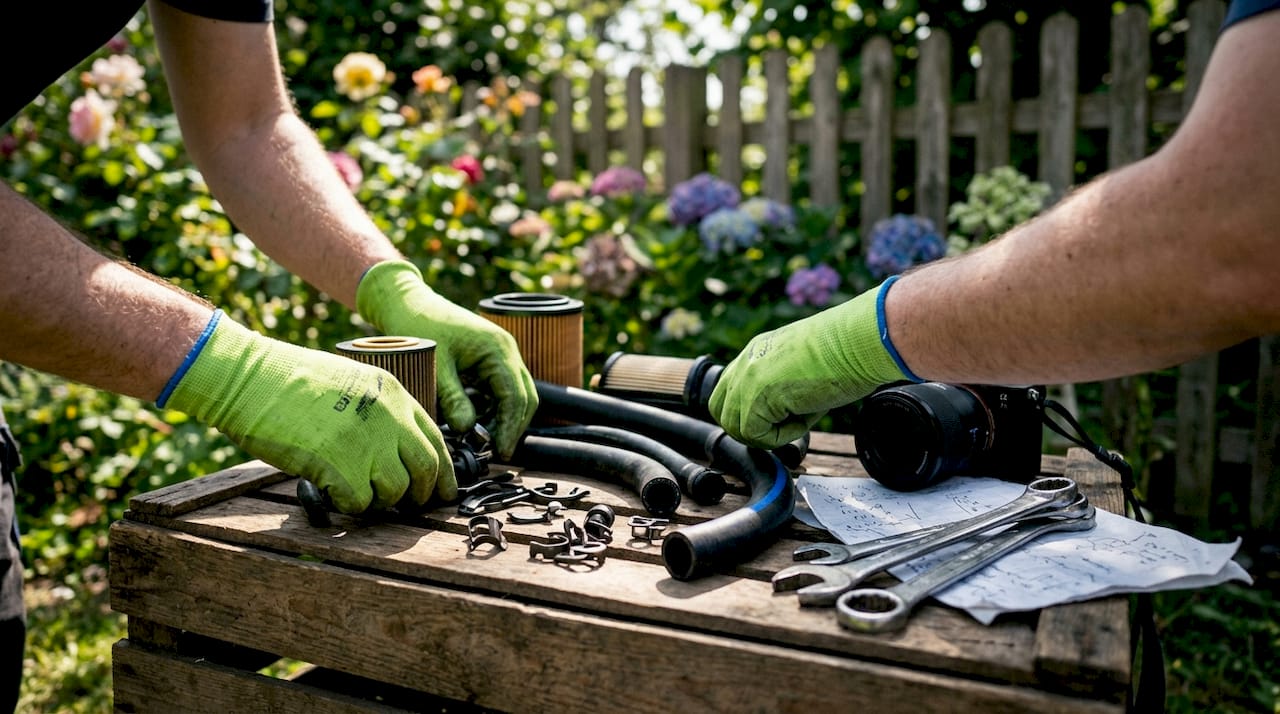
Selling your car whole to a parts specialist or junk car removal service is the fastest path to cash. Specialist buyers complete transactions, including collection, within 24–48 hours, removing all storage and dismantling burdens from you.
Here is how the process works, step by step:
- Gather your vehicle details. Have the year, make, model, mileage, and condition ready before you call or submit an online form. Accurate information gets you an accurate offer.
- Contact multiple buyers. Competing offers from multiple buyers consistently result in higher prices than accepting the first bid. Contact at least two or three services before committing.
- Compare offers carefully. Ask each buyer whether the quoted price is guaranteed at pickup. Tristatecashforcars, for example, commits to paying the stated price when the team arrives, with no last-minute reductions.
- Schedule pickup. Once you accept an offer, confirm the pickup window. Most reputable services offer free towing included in the deal.
- Sign over the title. Hand over the signed New Jersey title at pickup. The buyer handles the rest of the paperwork.
- Collect your cash. Payment is typically made on the spot, often within an hour of the team arriving at your location.
Stripped vehicle shells fetch roughly $100–$300 in scrap metal value alone, but specialist buyers also pay for recyclable components, which pushes the total offer higher. That means even a car with a blown engine or severe body damage has real cash value. For New Jersey sellers who need immediate liquidity without the hassle of storage or negotiation, this method is the clear winner on convenience.
How to dismantle and sell car parts yourself for maximum profit
DIY parting out delivers the highest financial return. Premium parts sell for 20–40% more on platforms like eBay Motors compared to local salvage sales. The tradeoff is real: a full strip-down takes 40–80 hours, including photography, listing, communication, and shipping.
Follow this removal order to protect parts and keep the vehicle stable throughout the process:
- Interior components first. Remove seats, door panels, dashboards, and electronics. These parts are high-demand and easy to pull without heavy tools.
- Under-hood electronics second. Pull the battery, sensors, alternator, and wiring harnesses before tackling mechanical components. Electronics degrade fast if exposed to weather.
- Exterior panels third. Doors, hoods, fenders, and bumpers come off next. Label each panel with its position (driver front, passenger rear) to avoid confusion during listing.
- Engine and transmission last. Heavy drivetrain components come out last to preserve vehicle stability while you work on everything else. You will need an engine hoist and a helper for this stage.
- Scrap the shell. Once stripped, the remaining frame goes to a scrap yard for its metal value.
Identifying which parts to prioritize
Not every part is worth your time. Calculating “time-adjusted value” is the key discipline here. A $500 part that sits unsold for three months is less valuable than a $100 part that sells in three days. Focus on high-demand, fast-turning parts: catalytic converters, alternators, headlights, infotainment screens, and late-model alloy wheels. Check completed eBay Motors listings to see what actually sold, not just what sellers are asking.
Creating listings that convert
On eBay Motors, precise fitment data including year, make, model, and trim is non-negotiable. Missing or wrong fitment data causes returns and negative feedback, both of which hurt your seller rating and future sales. Include OEM part numbers and interchange numbers where available. Write condition notes that describe wear honestly. Buyers reward transparency with faster purchases and better reviews.
For B2B buyers, Car-Part.com targets professional salvage yard buyers, while eBay Motors reaches retail consumers willing to pay shipping for the right part. Listing on both platforms increases your exposure significantly.
| Part category | Avg. demand | Effort to remove | Notes |
|---|---|---|---|
| Catalytic converter | Very high | Low | High scrap metal value; verify fitment |
| Infotainment screen | High | Medium | Include all cables and brackets |
| Alloy wheels (set) | High | Low | Sell as a set for better price |
| Engine/transmission | Medium | Very high | Requires hoist; test-run video helps |
| Body panels | Medium | Medium | Condition is everything; no dents |
Pro Tip: Store small parts in labeled zip-lock bags inside labeled boxes. Losing a bracket or bolt can drop a part’s value by 30% or make it unsellable entirely.
For sellers interested in identifying the most valuable components before starting, reseller strategies for parts can help you prioritize which items to pull first based on current market demand.
Common mistakes when selling a car for parts
Most sellers lose money not from bad luck but from avoidable errors. Knowing these pitfalls in advance keeps your profit intact.
- Underestimating time costs. A full DIY strip-down spans several months of active selling. Factor in the hours before deciding this route is “more profitable.”
- Skipping title verification. Selling a car without a clear title in New Jersey is illegal and can result in fines. Resolve title issues before any transaction begins.
- Poor documentation. Vague listings with blurry photos generate returns and disputes. Every part needs clear photos, accurate fitment data, and an honest condition description.
- Ignoring storage costs. A stripped car sitting in your driveway or a rented lot costs money every week. Include storage in your profit calculation from day one.
- Accepting the first offer. Single-offer transactions consistently pay less than competitive bidding. Always get at least two or three quotes before committing.
- Overlooking liability. A vehicle on your property that injures someone creates legal exposure. Check your homeowner’s insurance policy before storing a stripped car.
“The biggest mistake sellers make is treating their time as free. When you account for 40–80 hours of labor, storage costs, and the months it takes to sell every part, the profit gap between DIY and selling whole often narrows dramatically. Know your number before you pick up a wrench.”
Selling whole vs. DIY parting: which method is right for you?
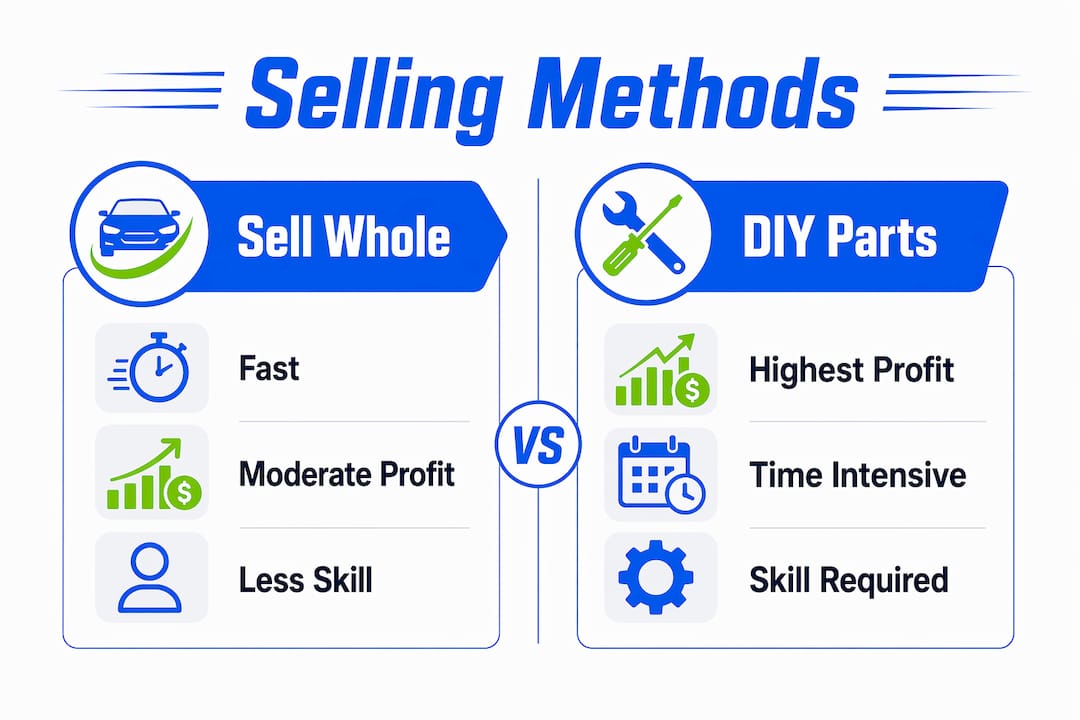
DIY parting offers the highest profit but demands the most time, skill, and space. Selling whole is the fastest option with a lower but guaranteed return. Scrap-only sales yield the least cash but require zero effort beyond a phone call.
| Factor | Sell whole to specialist | DIY part-out | Scrap only |
|---|---|---|---|
| Cash return | Moderate | Highest | Lowest |
| Time required | Hours | Weeks to months | Hours |
| Skills needed | None | Mechanical knowledge | None |
| Space needed | None | Large workspace | None |
| Effort level | Very low | Very high | Minimal |
| Payment speed | Same day | Weeks to months | Same day |
New Jersey sellers with a driveway, basic tools, and mechanical confidence can extract real value from a DIY part-out. Sellers who need cash fast or lack workspace get a better overall deal by selling to a non-running car specialist who handles everything on the same day. The right choice depends on your honest assessment of your time, skills, and storage situation.
For a deeper look at how these options compare in the tri-state area, the junkyard vs. cash-for-cars breakdown covers the trade-offs in detail.
Key Takeaways
Selling a car for parts delivers the best return when you match your method to your actual time, skills, and cash timeline before starting.
| Point | Details |
|---|---|
| Match method to your situation | Choose DIY for maximum profit or sell whole for speed and zero effort. |
| Prepare documentation first | A clear title, accurate fitment data, and good photos are non-negotiable before any sale. |
| Get multiple offers | Collecting at least two or three bids consistently produces better prices than accepting the first offer. |
| Account for time-adjusted value | A fast-selling $100 part often beats a slow-selling $500 part when storage and effort are factored in. |
| Removal order matters | Start with interior and electronics, finish with drivetrain components to protect parts and vehicle stability. |
What I have learned after watching hundreds of New Jersey sellers get this wrong
The most common mistake I see is sellers deciding to part out a car based on the gross number, not the net number. They look up a catalytic converter selling for $400 on eBay Motors and immediately think they have found a gold mine. What they do not account for is the $30 in shipping materials, the two hours of listing and messaging, the 13% platform fee, and the three weeks of storage while waiting for a buyer.
The sellers who actually come out ahead on DIY part-outs are the ones who treat it like a part-time job with a real hourly rate in mind. If your time is worth $25 an hour and a part takes four hours to pull, photograph, list, pack, and ship, that part needs to sell for at least $100 just to break even on labor alone.
My honest advice for most New Jersey car owners: collect three offers from specialist buyers before you even consider picking up a wrench. You might be surprised how close the numbers are once you factor in your time honestly. And if you have a car that runs or has a strong engine, the DIY route makes more sense because the high-value parts are worth the effort. For a dead car with a seized engine and rust damage, selling whole is almost always the smarter financial decision.
The sellers I have seen regret their choice are almost always the ones who chose DIY based on optimism rather than math.
— Eric
Tristatecashforcars makes selling your car for parts simple
Non-working vehicles sitting in New Jersey driveways have real cash value, and Tristatecashforcars exists to turn that value into money in your hand the same day.
Tristatecashforcars sends a team to your location, provides a guaranteed cash offer, and handles all the paperwork on the spot. The price quoted is the price paid at pickup, with no last-minute reductions. Free towing is included. For Brooklyn and surrounding New Jersey sellers, the sell my car Brooklyn page details exactly how the process works from first call to cash in hand. If you want to skip the dismantling, the storage, and the weeks of waiting, cash for cars Brooklyn connects you directly to a fast, fair offer today.
FAQ
What is the best way to sell a car for parts quickly?
Selling the whole vehicle to a specialist parts buyer or junk car removal service is the fastest method. Most services complete the transaction, including free towing and cash payment, within 24–48 hours.
How much can I get for selling a car for scrap in New Jersey?
Scrap value depends on the vehicle’s weight and current metal prices. Stripped shells typically yield $100–$300 in scrap value, but specialist buyers pay more by factoring in recyclable components.
Is it worth parting out a car yourself?
DIY parting is worth it if you have mechanical skills, workspace, and time. Premium parts can sell for 20–40% more online than through local salvage, but a full strip-down takes 40–80 hours of total work.
Do I need a title to sell my car for parts in New Jersey?
Yes. New Jersey law requires a signed title to transfer vehicle ownership legally. If your title is lost, apply for a duplicate through the New Jersey Motor Vehicle Commission before selling.
Where should I list car parts for sale online?
eBay Motors is the best platform for reaching retail buyers willing to pay shipping. Car-Part.com targets professional salvage buyers. Both platforms reward sellers who provide accurate fitment data and clear condition photos.