Best Way to Sell a Classic Car: 2026 Seller’s Guide
TL;DR:
- Private sales earn 10 to 20 percent more than dealer transactions but require significant effort and documentation. Matching the selling channel to your car’s rarity, market, and timeframe is essential for maximizing value and ensuring a safe transaction. Proper preparation, platform selection, and secure closing procedures help sellers avoid pitfalls and achieve a fair, efficient sale.
The best way to sell a classic car is to match your selling channel to your financial goals, timeline, and risk tolerance. Private sales typically net 10–20% more than dealer transactions by cutting out commissions and margins. On a $50,000 vehicle, that gap exceeds $5,000. The three main channels are private sale, dealer consignment, and auction, and each carries a distinct cost structure, timeline, and level of effort. Choosing the wrong one costs you money, time, or both. This guide gives you the framework to choose correctly and execute with confidence.
What is the best way to sell a classic car?
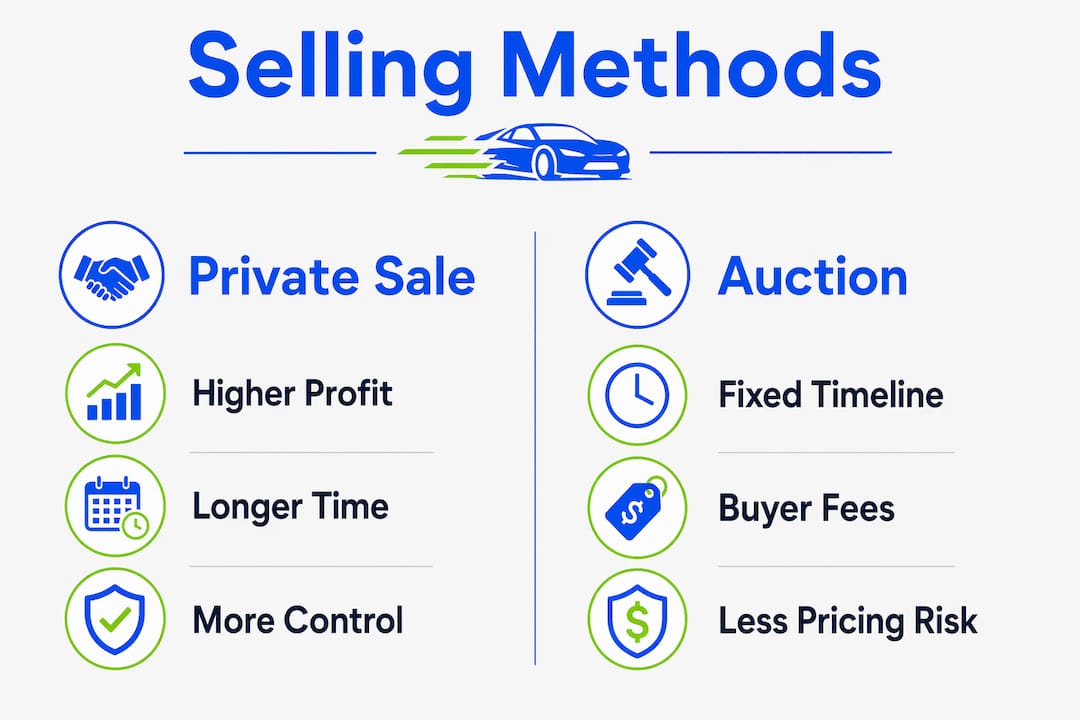
The best way to sell a classic car depends on one question: how much of your time and effort are you willing to trade for a higher return? Private sales deliver the most money but demand the most work. Dealer consignment offers convenience at a measurable cost. Auctions give you a fixed timeline and market-driven pricing, but fees can erode your proceeds significantly.
Consignment fees and auction buyer fees can total up to 20% of the vehicle’s value. On a $150,000 car, a 15% consignment fee alone equals $22,500 before you receive a single dollar. That number reframes the convenience argument quickly.
Auction platforms typically run 7–14 day listing windows and remove the pricing uncertainty that stops many sellers from going private. Some specialist auction platforms charge no seller commission and collect only a buyer’s fee of around 5%. That structure benefits sellers who want a defined end date and are realistic about current market values.
| Method | Typical cost | Timeline | Seller control | Risk level |
|---|---|---|---|---|
| Private sale | Minimal fees | Weeks to months | High | Moderate |
| Dealer consignment | Up to 15–20% | Weeks to months | Low | Low |
| Auction | 5–20% combined | 7–14 days | Medium | Low to medium |
Pro Tip: If your car is rare, numbers-matching, or has documented provenance, private sale almost always wins on price. If you need a clean exit date, auction is the better call.
How to prepare your classic car for sale
Preparation is where sellers leave the most money on the table. Buyers of collector vehicles pay a premium for certainty, and your job is to remove every reason for doubt before the first inquiry arrives.
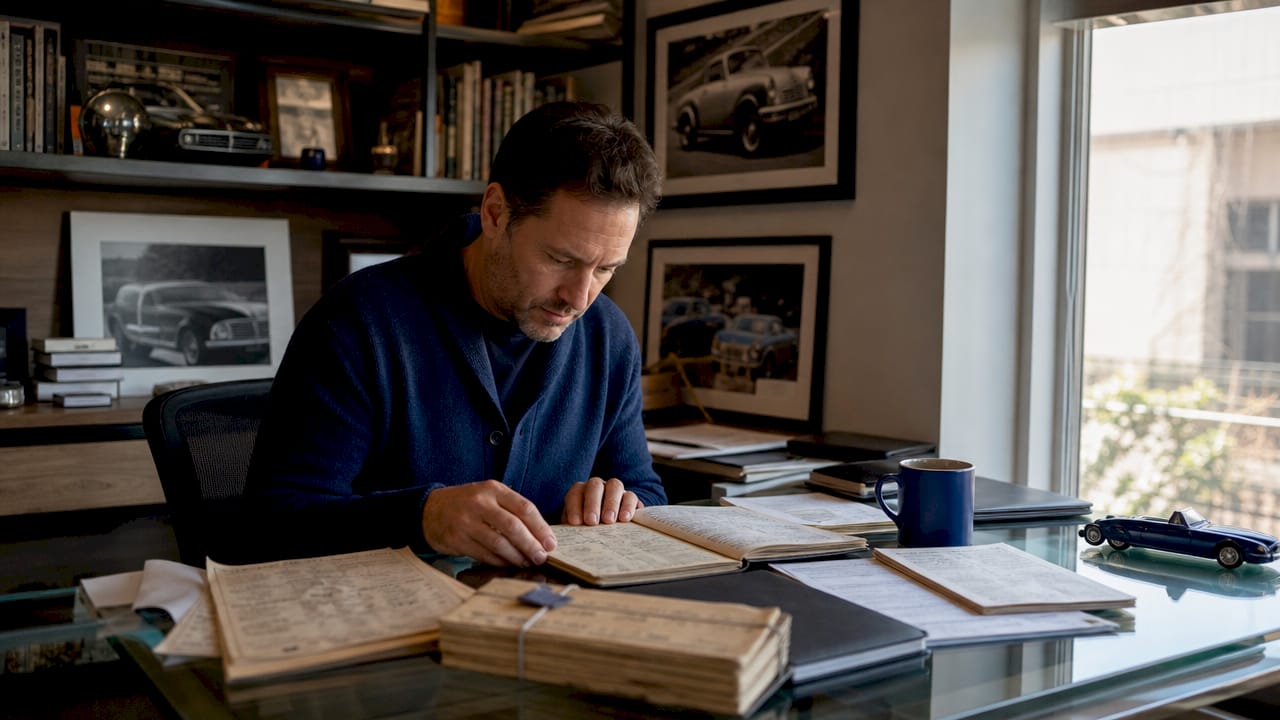
Start with documentation. Build books, professional appraisals, and complete service records justify premium prices and build buyer confidence faster than any sales pitch. A professional appraisal runs $350–$550 but adds pricing credibility that far exceeds its cost. Provenance and a verifiable restoration history often command higher prices even when mechanical condition is comparable to an undocumented car.
Cosmetic detailing matters, but mechanical work requires restraint. Minor repairs beyond basic upkeep rarely increase final sale value and can trigger “project creep,” where costs spiral without a proportional return. Experts recommend stopping major work before full restoration unless you are selling a fully restored vehicle. Clean, honest, and documented beats half-finished every time.
Photography and video are no longer optional for serious sellers. Professional photography and video now cost $300–$1,000 and are considered industry standard for high-value listings. Many sellers in 2026 invest in cinematic-quality video walkarounds to separate their listing from standard classified ads. A buyer in New Jersey or across the country decides whether to fly out and inspect based on what they see in your listing.
Key preparation steps before listing:
- Gather the title, build sheet, window sticker, and all service records
- Commission a professional appraisal from a recognized appraiser
- Detail the exterior, interior, and engine bay thoroughly
- Address only safety-critical mechanical issues, not full restoration work
- Hire a professional photographer for still images and a walkaround video
- Write an honest condition disclosure covering all known issues
Pro Tip: Checking service record completeness before listing gives buyers one less reason to negotiate down. A gap in the maintenance history is the first thing a serious buyer’s inspector will flag.
What platforms work best for selling classic cars online?
Platform selection is not a generic decision. Hemmings carries a 70-year legacy audience built specifically for pre-1980 American and European classics. If your car is a 1967 Ford Mustang or a 1972 BMW 2002, Hemmings puts your listing in front of the buyers most likely to pay full value. Newer platforms and general auction sites attract a broader but less specialized audience, which suits modern classics from the 1980s and 1990s.
Matching your car’s era to the right platform is one of the most underused selling strategies among first-time classic car sellers. A mismatched listing reaches the wrong audience and sits longer, which signals to serious buyers that something is wrong with the car or the price.
Effective marketing steps for selling vintage cars online:
- Choose your primary platform based on your car’s era and buyer demographics
- Write a detailed listing description covering year, make, model, VIN, mileage, modifications, and condition
- Upload a minimum of 40 high-resolution photos covering every panel, the undercarriage, the engine bay, and the interior
- Post a walkaround video of at least three minutes showing the car running
- Share the listing in marque-specific forums, Facebook groups, and regional car clubs
- Set a realistic asking price anchored to recent comparable sales, not wishful thinking
New York sellers have a geographic advantage. The tri-state area hosts a dense network of car clubs, concours events, and enthusiast communities that can generate private-sale interest without any listing fee. Word of mouth inside a marque club often produces the most qualified buyers.
How do you negotiate and close a classic car sale safely?
Negotiation starts before the first offer arrives. Set your floor price privately and commit to it before inquiries begin. Sellers who decide their minimum on the fly almost always accept less than they should. If you are using a private sale channel, consider listing slightly above your target to create room for negotiation without dropping below your floor.
Qualifying buyers protects your time and your car. Ask for proof of funds or a deposit before scheduling an in-person inspection or test drive. Nearly 50% of buyers in 2026 are new to the collector car market, which means many are unfamiliar with standard protocols around deposits, inspections, and title transfers. A professional, structured process filters out casual browsers and protects you from fraud.
“Escrow services and neutral-site transactions are the most reliable way to prevent fraud and theft in private classic car sales. The increase in first-time buyers entering the market makes these protections more necessary than ever.”
Closing steps every seller should follow:
- Accept payment only by wire transfer, cashier’s check verified with the issuing bank, or a licensed escrow service
- Conduct test drives only with a valid driver’s license on file and a signed liability waiver
- Complete the title transfer at a neutral location such as a DMV office or through an attorney
- Confirm your state’s bill of sale requirements before the transaction date
- Cancel insurance only after the title has transferred and payment has cleared
For New York sellers, the DMV title transfer process requires a completed MV-912 form and a signed bill of sale. Completing this correctly on the day of sale prevents disputes and protects both parties.
Key Takeaways
The best way to sell a classic car is to choose the right channel, prepare your documentation thoroughly, and protect yourself during negotiation and closing.
| Point | Details |
|---|---|
| Private sale yields the most | Private sales net 10–20% more than dealer transactions, but require significant time and effort. |
| Documentation drives price | Build books, appraisals, and service records justify premium pricing and reduce buyer hesitation. |
| Platform must match the car | Hemmings suits pre-1980 classics; newer platforms work better for modern collector vehicles. |
| Fees erode auction proceeds | Combined consignment and auction fees can reach 20% of vehicle value, so factor this in early. |
| Protect yourself at closing | Use escrow services, verify funds, and complete title transfer at a neutral location. |
What I’ve learned from watching sellers get this wrong
The most common mistake I see is sellers treating a classic car transaction like a standard used-car sale. They skip the appraisal, shoot photos on a phone in a driveway, and list on the first platform they find. Then they wonder why serious buyers ghost them after the first message.
The 2026 market has more first-time buyers than at any point in the past decade. That sounds like good news, and in some ways it is. But it also means more buyers who do not know how to read a condition report, do not understand what a numbers-matching car means, and will lowball you based on fear rather than actual value. Your documentation and presentation are what separate you from that conversation.
The other mistake is over-restoring before selling. I have watched sellers spend $15,000 on a mechanical refresh that added maybe $4,000 to their final sale price. The market rewards honest, documented originality far more than it rewards recent work that buyers cannot verify. Stop the work, document what you have, and let the car speak for itself.
For New York and New Jersey sellers specifically, the local enthusiast community is an underused asset. A listing posted in the right regional club newsletter or Facebook group can reach 50 serious buyers before a national platform listing gets its first view. Use your geography.
— Eric
Selling your classic car in New York just got simpler
Classic car owners in New York and New Jersey who want a fast, fair exit without the complexity of private listings or auction timelines have a direct option worth knowing about.

Tristatecashforcars sends a team to your location, evaluates your vehicle, and provides a guaranteed cash offer with no last-minute changes at pickup. The process takes under an hour, and all paperwork is handled on-site. For owners who have already explored the full range of selling options and want certainty over negotiation, Tristatecashforcars delivers a clear, documented offer with same-day payment. Get your cash offer in Brooklyn or anywhere across the tri-state area without the wait.
FAQ
How much more does a private sale earn versus a dealer?
Private sales typically net 10–20% more than dealer transactions. On a $50,000 vehicle, that difference exceeds $5,000.
What documents do I need to sell a classic car?
The title, a signed bill of sale, and any service records are required at minimum. Build books, professional appraisals, and restoration receipts significantly strengthen your asking price.
Is auction a good option for selling a classic car?
Auction works well when you want a fixed timeline and are realistic about market value. Specialist platforms may charge no seller commission and only a buyer’s fee of around 5%.
How do I avoid scams when selling a classic car privately?
Use a licensed escrow service for payment and conduct the transaction at a neutral location. Escrow and neutral-site closings are the most reliable protection against fraud, especially given the rise of first-time buyers in 2026.
Which platform is best for listing a pre-1980 classic car?
Hemmings is the preferred platform for pre-1980 American and European classics, backed by a 70-year legacy audience of serious vintage vehicle buyers.