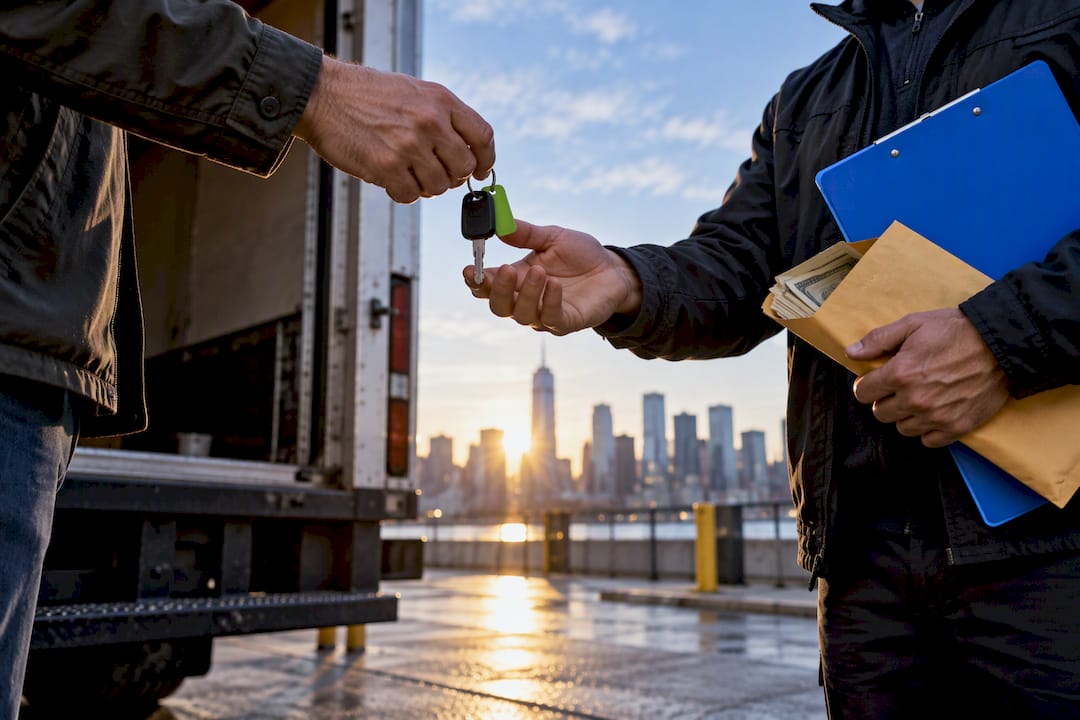
Get Same Day Cash When Selling Commercial Vehicles in New York
The fastest way to sell a commercial vehicle in New York is through a local cash buyer that sends a team to your location, gives a guaranteed offer, and handles the paperwork on-site. Payment happens at pickup, often within the hour, and the buyer typically manages the title transfer. Before that appointment, confirm you have your title certificate and photo ID ready, since missing ownership documents are the top reason a same-day sale falls apart.
TL;DR:
- Selling to a local cash buyer for immediate payment typically requires a clear title and photo ID, with offers usually lower than private sales but completed on the same day.
- Proper paperwork includes signing over the title, completing an MV-912 bill of sale, and possibly attaching a lien release, with fees handled by the buyer after transfer.
- Vehicle valuation depends on weight class, condition, mileage, and title status, while registration fees are based on weight and incur additional surcharges for diesel vehicles over 8,501 pounds.
- In New York City, trucks must follow designated routes, avoid parkways without permits, and confirm accessible pickup locations to prevent access issues during sale.
- Tri State Cash For Cars guarantees same-day payment and handles paperwork on-site, making it ideal for urgent sales without waiting for private buyers or auctions.
Table of Contents
- Quick Options to Sell a Commercial Vehicle in NY
- Step-by-Step Paperwork for a New York Title Transfer
- What Determines Your Offer: Valuation and Fee Factors
- Pickup Logistics: Planning Around NYC Truck Rules
- How Tri State Cash For Cars Handles New York Pickups
- When Speed Beats Price for New York Sellers
- Get a Same-Day Cash Offer From Tri State
- Sources
- FAQ
Quick Options to Sell a Commercial Vehicle in NY
Choosing how to sell comes down to what you value more: speed or the last few hundred dollars of resale value. Each route has a different rhythm, and picking the wrong one for your situation costs time you probably don’t have.
- Cash buyer with on-site pickup: Best for urgent cash needs, non-running vehicles, or a single truck or van you want gone today. Timeline is often same-day. Paperwork burden is low since the buyer typically handles titling. Net proceeds are usually lower than a private sale but arrive immediately with no listing risk.
- Private sale: Fits owners with time to screen buyers and negotiate. Timeline runs one to several weeks. You handle the MV-912 Bill of Sale and title transfer yourself, and payment can be inconsistent if a buyer backs out mid-deal.
- Dealer trade-in: Works when you’re buying a replacement vehicle simultaneously. Fast, but offers tend to run lower since the dealer builds in resale margin.
- Auction or brokered remarketing: Better suited to fleet operators or high-value trucks moving multiple units. Timelines stretch to weeks, but competitive bidding can push net proceeds higher for well-maintained equipment.
If your vehicle doesn’t start, has been sitting for months, or you simply need liquidity now, the cash-buyer route solves the problem fastest. Fleet managers offloading five box trucks at once, or someone selling a nearly-new refrigerated van, usually get better numbers from an auction or a broker who can market to buyers who need that exact configuration.
Step-by-Step Paperwork for a New York Title Transfer
New York doesn’t let you skip the documentation just because the deal is fast. Getting these steps right the first time is what actually makes a same-day sale possible.
- Locate your title certificate. This is the core proof of ownership. If it’s missing, you’ll need a duplicate before any legitimate buyer can complete the purchase, since a bill of sale alone is not acceptable proof of ownership without it.
- Complete the transfer section on the back of the title. Sign it over to the buyer with the sale date and odometer reading filled in accurately.
- Fill out an MV-912 Vehicle Bill of Sale. This form records the buyer and seller signatures, VIN, sale date, and purchase price, and most buyers will want it even when a title is present.
- Attach a lien release if one exists. Any outstanding loan on the vehicle needs a lender-issued release before the title can transfer cleanly.
- Use a DTF-802 instead of MV-912 for gifts or $0 transactions. This applies if you’re transferring the vehicle to a family member or business partner rather than selling it outright.
- Bring valid photo ID to the pickup or signing. Buyers, including cash-purchase companies, will ask for this to confirm you’re the person on the title.
On fees: the buyer, not the seller, normally handles titling and registration after purchase, including the $50 title fee when a new title is issued. If your title is lost or damaged, apply for a duplicate before scheduling any pickup. Confirm with your buyer exactly what proof of ownership they’ll accept. A signed price receipt cannot substitute for a missing title, and paperwork mismatches, not price disagreements, are the leading cause of a promised same-day pickup falling through.
What Determines Your Offer: Valuation and Fee Factors
Buyers price commercial vehicles differently than passenger cars. Weight class, condition, and title status carry more weight than a shiny paint job.
- Weight and vehicle class: A box truck in the 10,000 to 14,000 pound range prices differently than a 26,000-pound straight truck, since parts, buyers, and resale markets vary by class.
- Condition and mileage: High engine hours or heavy wear on commercial-duty components (lift gates, PTOs, refrigeration units) drags value down faster than mileage alone.
- Title status: A clean title moves faster and commands a better offer than a salvage or rebuilt title.
- Commercial conversions: Custom bodies, plows, or specialty racks can add value if functional, or subtract it if they need repair.
Statistic callout: New York’s commercial registration fees run on a weight-based schedule from $7.00 to $259.00 for vehicles up to 18,000 pounds, and diesel vehicles over 8,501 pounds carry an additional 3.25% surcharge on that fee.
These registration costs mostly land on the buyer’s future ledger, not your payout today. Don’t judge a cash offer against what you paid annually to register the truck. Sales tax and county use taxes follow the same logic: they’re the next owner’s cost to plan for, not a deduction from what you’re owed at pickup.
Pickup Logistics: Planning Around NYC Truck Rules
Selling inside New York City adds a layer most sellers outside the five boroughs never think about. NYC enforces a designated Truck Route Network that restricts where commercial vehicles can travel, and most parkways are off-limits to trucks entirely. Trailers around 53 feet generally can’t move on city streets outside specific interstate connectors without a permit.
Before your buyer arrives, work through this short list:
- Confirm the exact address and whether the vehicle is street-parked, in a lot, or behind a locked gate.
- Check that the pickup route avoids parkways and any street with posted truck restrictions.
- Note if you need a parking permit or curb clearance for a flatbed or tow truck to load safely.
- Identify who will be on-site to hand over keys and sign paperwork.
Pro Tip: Call your buyer a day ahead and ask directly whether their pickup crew has confirmed truck-route access to your address, and whether an oversized load needs a permit or a different staging location nearby.
How Tri State Cash For Cars Handles New York Pickups
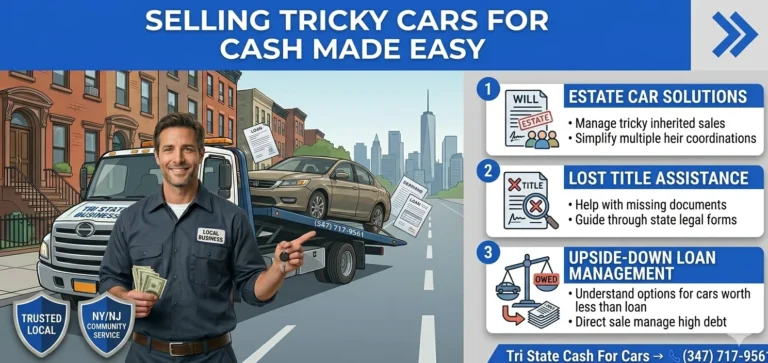
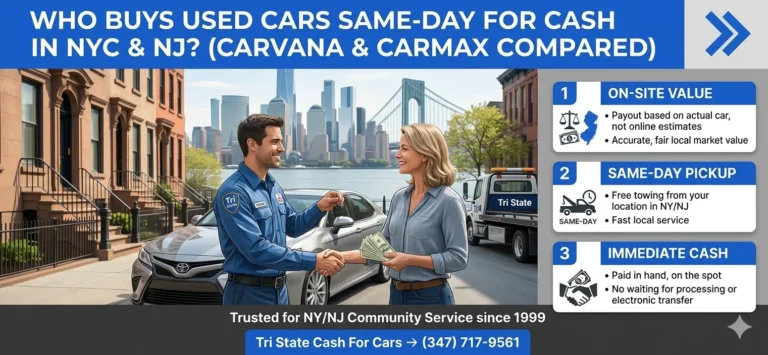
Tri State Cash For Cars sends a team directly to your location, delivers a guaranteed cash offer at pickup, and manages the paperwork on-site, with same-day payment for sellers across NYC, Brooklyn, and the broader tri-state area. That structure removes the two biggest failure points covered above: missing documents and access problems.
Before your appointment, confirm three things with any buyer, including Tri State: what proof of ownership they’ll accept if your title isn’t in hand, whether there’s any limit on oversized or non-running pickups, and the exact dollar amount guaranteed at pickup. For the appointment itself, have ready: the signed title transfer section, a completed MV-912, your keys, and current registration if the buyer asks for it. Sellers dealing with an out-of-state title should sort that out first, since it can add a step to an otherwise same-day sale.

When Speed Beats Price for New York Sellers

Price and speed pull in opposite directions, and the honest answer to “which one wins” depends on your situation, not a formula. If the vehicle doesn’t run, you need cash now, or you’re selling one unit rather than a fleet, a guaranteed cash offer usually beats waiting on a private buyer who may never show up with the money.
Auctions and private listings make more sense when you have time, a clean title, and a vehicle in demand. But New York City’s access rules are the wild card most sellers underestimate: a theoretical higher offer means nothing if the buyer can’t get a hauler to your block. I’d rather take a guaranteed number today than gamble on a bigger number that depends on a permit clearing in time.
— Eric
Get a Same-Day Cash Offer From Tri State
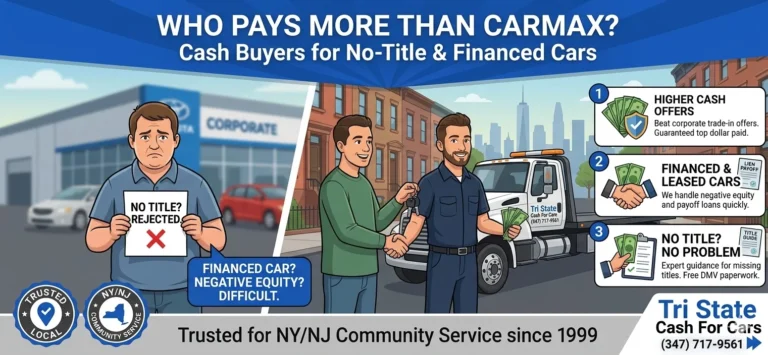
Tri State Cash For Cars is built for exactly the scenario this guide walks through: a seller who wants a guaranteed number, a team that shows up, and paperwork handled without a second DMV trip. Unlike a private listing or a dealer trade-in, there’s no waiting on financing, no negotiating over a low trade value, and no juggling forms alone.
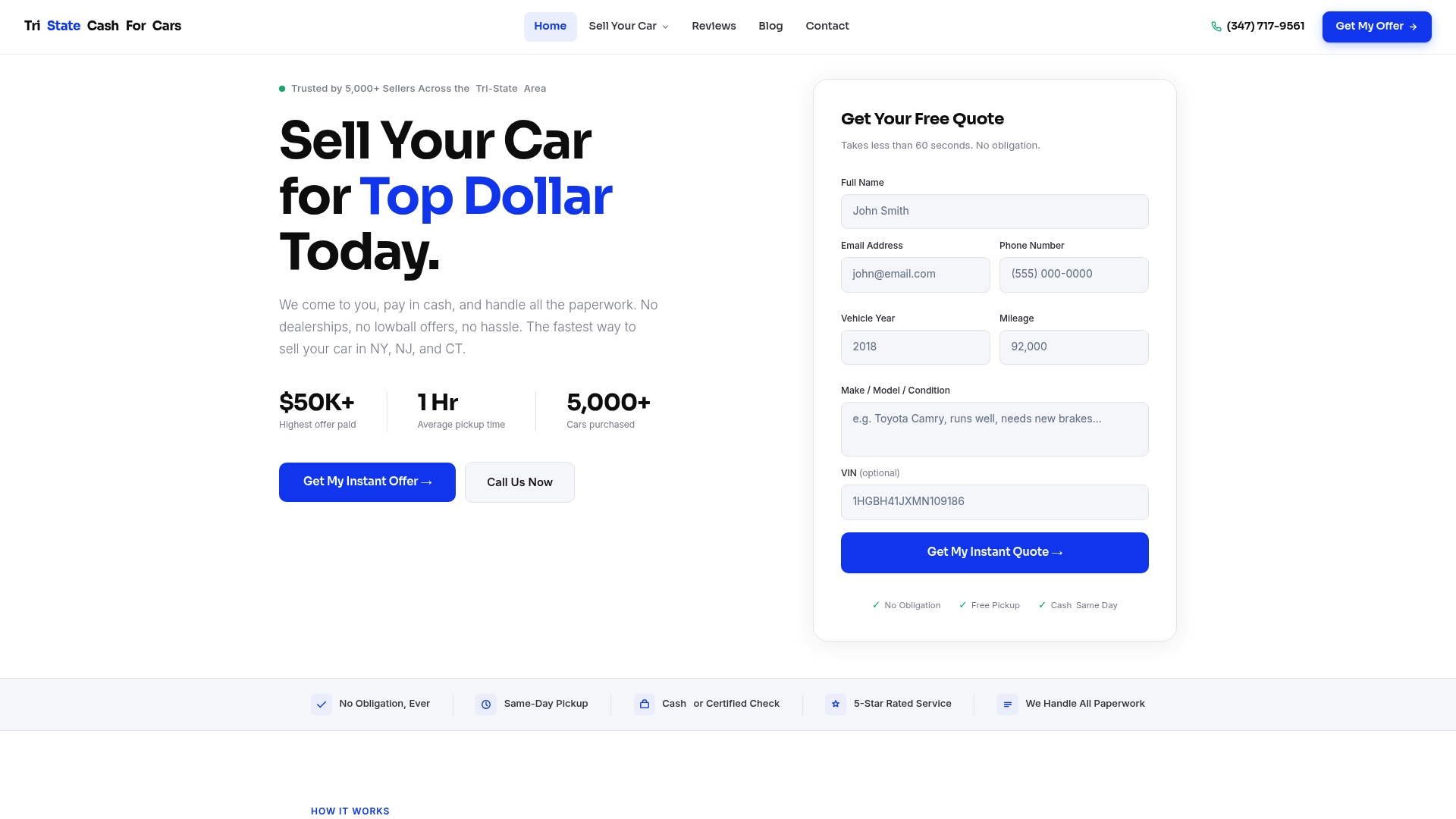
The process can be consistent across various locations in the tristate area: a visit, a cash offer at pickup, and payment the same day. If you’re ready to move a truck, van, or commercial vehicle without the runaround, get a quote and schedule your pickup today.
Sources
Confirm the details directly with New York’s own agencies before you finalize a sale. The NY DMV’s title transfer and ownership proof pages and NYC DOT’s truck route guidance cover forms, fees, and access rules that affect nearly every commercial sale in the city.
- Buy, Sell, or Transfer Vehicle Ownership | NY DMV
- Commercial vehicle registration fees, vehicle use taxes and supplemental fees | NY DMV
- Trucks | NYC DOT
FAQ
Where can I sell a used commercial vehicle in New York?
You can sell privately, trade in at a dealer, use an auction or broker for fleet vehicles, or sell directly to a cash buyer offering on-site pickup. A local cash buyer like Tri State Cash For Cars is generally the fastest path when you need same-day payment and don’t want to manage the paperwork yourself.
What are the commercial vehicle restrictions in New York City?
NYC restricts trucks to a designated Truck Route Network, keeps most parkways off-limits to commercial vehicles, and generally prohibits trailers near 53 feet on city streets outside specific interstate connectors without a permit. Always confirm your pickup address sits on an accessible route before scheduling a sale.
Can I sell my commercial vehicle for $1 in New York?
You can list any price on a bill of sale, but a nominal price like $1 can draw sales tax scrutiny and complicate title transfer. For a true gift or zero-cost transfer between family or business partners, New York provides the DTF-802 form instead of the standard MV-912.
How much does it cost to register a commercial vehicle in NY?
Registration fees run on a weight-based schedule from $7.00 to $259.00 for vehicles up to 18,000 pounds, with a 3.25% diesel surcharge on vehicles over 8,501 pounds. These costs apply to the vehicle’s next owner, not to what you receive when you sell it.
How much does Tri State Cash For Cars pay for a commercial vehicle?
Tri State provides a guaranteed cash offer at pickup based on the vehicle’s weight class, condition, mileage, and title status, so pricing varies by vehicle. Current offers and quotes are available directly through the Tri State Cash For Cars website.