Two Checks Before Selling a Frame Damaged Car for Fast Cash
You can buy or sell a frame-damaged car safely, but only after two steps: pull an NMVTIS history report and get an independent structural inspection. If the damage checks out and you just need to convert the vehicle into cash quickly, selling to a professional buyer like Tristatecashforcars is usually faster and less risky than a private sale.
TL;DR:
- Verifying a frame-damaged car requires a NMVTIS vehicle history report and an independent structural inspection to ensure safety and accurate damage assessment.
- Most cars with frame damage, especially those with a salvage or rebuilt title, sell at 30% to 50% below comparable clean-title vehicles and often face limited financing options.
- Repair costs vary significantly, with minor straightening being cheaper than full structural replacement, but insurers tend to total heavily damaged vehicles rather than repair them.
- Buying or selling should prioritize solid documentation, including repair estimates and VIN consistency, to avoid safety risks and legal issues.
- Selling to a professional vehicle buying service offers a fast, transparent alternative to auctions and private sales, with cash paid at pickup after a simple inspection.
Table of Contents
- What Frame Damage Actually Means for Your Car Sale
- How Frame Damage Hits Resale Value and Insurance Coverage
- Where Frame-Damaged Cars Get Bought and Sold
- How to Verify History and Spot Red Flags Before You Buy or Sell
- Choosing the Right Way to Sell a Frame-Damaged Car
- How Tri State Cash For Cars Evaluates a Frame-Damaged Vehicle
- How to Accurately Assess the Severity of Frame Damage
- Repair Options and What Frame Damage Repair Actually Costs
- The Real Risks and Safety Concerns of Buying a Frame-Damaged Car
- Frame Damage’s Long-Term Effect on Performance and Vehicle Life
- What Actually Matters When You’re Dealing With a Frame-Damaged Car
- Get a Fast Cash Offer for Your Frame-Damaged Car
- Sources
- FAQ
What Frame Damage Actually Means for Your Car Sale
Frame damage refers to structural harm to the parts of a vehicle that hold it together and absorb crash forces. What that means for your car’s value and safety depends heavily on how the vehicle is built in the first place.
Most cars built since the 1990s use unibody construction, where the body and frame are one welded structure. Trucks, SUVs, and some larger vans still use body-on-frame construction, with a separate steel frame supporting a body bolted on top. Unibody cars can suffer frame damage that’s technically repairable, but insurers frequently total these vehicles anyway when the repair bill approaches the car’s market value.
Common damage patterns show up in predictable places:
- A, B, or C pillar damage from side impacts, which can compromise roof strength and airbag deployment
- Strut tower damage from front or rear collisions, affecting suspension geometry and alignment
- Frame rail bends or kinks from head-on impacts, which throw off crash-energy distribution
- Rust-through at load-bearing points, especially in older vehicles from northern climates that see heavy road salt
Here’s the part a lot of sellers gloss over: “repairable” doesn’t mean “restored to factory crash performance.” A shop can straighten a frame rail and pass an alignment check, yet the metal’s fatigue characteristics and crumple-zone behavior may never match what the vehicle had before the crash.
How Frame Damage Hits Resale Value and Insurance Coverage
Frame damage changes two things almost immediately: the title and the insurance conversation. When an insurer determines that repair costs exceed a set percentage of the car’s value, usually somewhere between 70% and 100% depending on the state, they total the car and the state issues a salvage or rebuilt title. That brand follows the vehicle permanently and shows up on every future title search.
The practical effects for a seller include:
- Steep resale discounts. Buyers expect frame-damaged or salvage-titled cars to sell well below clean-title comparables, often by 30% to 50% depending on severity and repair quality.
- Financing headaches. Many lenders won’t finance a salvage or rebuilt-title vehicle at all, which shrinks your buyer pool to cash buyers only.
- Insurance friction. Some insurers decline comprehensive or collision coverage on rebuilt-title cars, or charge higher premiums to offset the unknown structural risk.
Statistic Callout: Insurers commonly total a car once repair estimates cross the threshold set by state total-loss formulas. A vehicle worth $12,000 with a $9,000 frame-repair estimate is a textbook total-loss case in most states, even if the car could theoretically be fixed.
If you’re negotiating a sale, use documented repair estimates as leverage. A buyer who sees a professional shop’s written assessment of the damage and repair scope will trust the price more than a seller who just says “it’s fine now.”
Where Frame-Damaged Cars Get Bought and Sold
Frame-damaged vehicles move through a few distinct channels, and each one comes with its own tradeoffs.
Salvage auctions and dealer-only auction platforms list thousands of frame-damaged vehicles at any given time, but most require registration, buyer deposits, and often a licensed dealer or exporter account. Listings on sites like AutoBidMaster show damage codes and title status, but you’re on your own for transport, mechanical risk, and auction fees that can add hundreds of dollars to a “winning” bid.
Online salvage marketplaces and classified listings are more accessible to regular buyers, though you need to know how to read the damage codes and title language (salvage, rebuilt, flood, or frame damage disclosed). Private-party sales work too, but sellers carry full disclosure responsibility and buyers should expect a slower process with more back-and-forth negotiation.
Local recyclers and salvage yards will take a frame-damaged car quickly, but their offers reflect scrap and parts value, not market value. A professional buyer service sits between these options: faster than a private sale, and typically a stronger offer than a yard, since the company can resell or part out the vehicle at a higher margin.
How to Verify History and Spot Red Flags Before You Buy or Sell
Skipping verification is how buyers end up stuck with a car they can’t safely drive or resell. Work through these steps in order.
- Run an NMVTIS report first. NMVTIS is the only database insurers and salvage yards are federally required to report total-loss and salvage determinations to, which makes it more reliable than most commercial history sites for catching brand titles. Still, NMVTIS coverage isn’t exhaustive, and gaps in reporting mean a clean NMVTIS result isn’t a guarantee, so pair it with a standard vehicle history report too.
- Book an independent structural inspection. Ask the shop to specifically check frame straightness with a measuring system, look for corrective welds versus factory welds, confirm four-wheel alignment specs, and verify any airbag or seatbelt pretensioner replacements were done correctly.
- Cross-check repair records against the VIN. Every receipt, alignment printout, and parts invoice should reference the same VIN as the title and registration. Mismatches are a common sign of a car swapped from a different vehicle or a title-washing attempt.
Watch for these red flags during a test drive or paperwork review: uneven panel gaps, a car that pulls to one side even after an alignment, missing repair documentation for obvious prior damage, or odometer numbers that don’t match transfer records.
Pro Tip: Bring a printed copy of any repair estimate or inspection report to the negotiating table. A documented $4,000 repair estimate is a far stronger bargaining chip than just saying the price feels high.
Choosing the Right Way to Sell a Frame-Damaged Car
Your best-selling route depends almost entirely on the math between repair cost and resale value.
Repairing and reselling only makes sense in narrow cases, usually when the frame damage is minor and repair costs are low relative to the car’s value, and even then you’re gambling on how buyers will react to a rebuilt title. For most owners, that math doesn’t work out.
Selling as-is privately can net a higher price than a yard or auction, but you carry full disclosure responsibility. Skipping disclosure isn’t just risky, it can expose you to legal claims from an unhappy buyer later.
Selling to a recycler or salvage yard is the fastest option but nets the least money, since yards price based on scrap and parts value. Selling directly to a professional vehicle buying service tends to land in between: faster than a private sale, with the company handling paperwork and title transfer, and often a better net return than a yard.
Whichever route you pick, have these documents ready before you start: the title (even if salvage or rebuilt), any repair receipts or shop estimates, and your NMVTIS or vehicle history report. Sellers who show up with clean documentation close deals faster and avoid last-minute price renegotiation.
How Tri State Cash For Cars Evaluates a Frame-Damaged Vehicle
The offer process is built around speed and transparency. A seller describes the vehicle, including any known frame or structural damage, and receives a cash offer. If accepted, a team comes to the seller’s location, inspects the car on-site, handles the paperwork, and pays at pickup, typically within about an hour of arrival.
For sellers dealing with a frame-damaged car, the appeal is straightforward: no repair guesswork, no listing photos, no negotiating with strangers who ghost after a lowball offer. The buyer commits to honoring its quoted offer at pickup, so there’s no surprise renegotiation once the vehicle is on the truck.
How to Accurately Assess the Severity of Frame Damage
Severity assessment comes down to three questions: where the damage is, how far it extends, and whether the repair would restore structural function or just cosmetic appearance.
A shop assessing severity will start with a frame measuring system that compares the car’s current dimensions against factory specifications. Deviations of a few millimeters near mounting points can be within tolerance; deviations of an inch or more near a frame rail or strut tower usually signal the vehicle needs major structural work, not a quick fix.
Location matters as much as magnitude. Damage to a bumper-mounted crumple zone is often less serious than damage that reaches the passenger compartment’s structural pillars, since the pillars are what protect occupants in a rollover or side impact. A collision center evaluation should specifically note whether the damage stayed contained to a sacrificial crumple zone or intruded into the safety cage.
Ask the inspecting shop for three specific outputs: a printed alignment readout showing before-and-after measurements, a written note on whether any welds are factory or aftermarket, and confirmation of whether airbags or seatbelt pretensioners were deployed and replaced. A verbal “it’s fine” from a seller or even a shop isn’t an assessment. A documented, measured comparison against factory tolerances is.

Repair Options and What Frame Damage Repair Actually Costs
Repair approaches split into two categories: cosmetic straightening and full structural replacement, and the price gap between them is significant.
Minor frame rail bends can sometimes be corrected with hydraulic straightening equipment at a collision center, a process that realigns the metal without replacing it. This is the cheaper option when it’s viable, but it still requires post-repair alignment verification and, ideally, a second inspection to confirm the fix held under real-world stress.

More severe damage, especially anything involving a torn or cracked frame rail, unibody rail sections, or strut towers, often requires cutting out and welding in new structural sections. This work demands specialized equipment and certified technicians, and costs climb fast once you’re replacing metal instead of straightening it. It’s exactly this cost curve that pushes insurers toward declaring a total loss rather than authorizing a full structural rebuild.
Whatever the repair path, get a written estimate broken down by labor and parts, not a single lump number. A vague estimate makes it harder to negotiate a sale price later and harder to spot if a shop is cutting corners on structural work versus cosmetic patching.
The Real Risks and Safety Concerns of Buying a Frame-Damaged Car
The biggest risk isn’t the damage itself, it’s buying a car where the repair quality is unknown or the damage was never disclosed at all.
A poorly repaired frame can fail differently in a second collision than an undamaged frame would, potentially compromising crumple-zone behavior and airbag timing exactly when you need them to work. That’s the core safety argument for insisting on a documented, professional inspection rather than trusting a clean-looking paint job or a seller’s assurance.
There’s also a financial risk layer. Buyers who skip an NMVTIS check can end up with a car that’s been salvage-branded in one state but not properly re-titled after crossing state lines, a practice sometimes called title washing. And under the FTC’s Used Car Rule, dealers are required to post a Buyers Guide disclosing known damage and warranty status. If a dealer sold you a car without disclosing known frame damage, that Buyers Guide is your first piece of evidence in a complaint or dispute.
Buyers should also weigh resale risk. Even a well-repaired frame-damaged car carries a permanent title brand that will suppress its resale value for as long as you own it, regardless of how well the repair holds up.
Frame Damage’s Long-Term Effect on Performance and Vehicle Life
Frame damage doesn’t just affect crash safety, it can shorten how long the car stays reliable to drive day to day.
A structurally compromised frame changes how weight and stress distribute across the vehicle. That often shows up first as uneven tire wear or a car that won’t hold an alignment setting, since the mounting points for suspension components are no longer sitting exactly where the manufacturer designed them to sit. Drivers sometimes notice a persistent pull, unusual road noise, or vibration that alignment shops can’t fully correct because the underlying geometry problem is metal, not adjustment.
Over time, stress concentrates at the repair point more than it would across an undamaged frame. That can accelerate fatigue cracking or rust formation at weld seams, particularly in regions with heavy road salt exposure. None of this means a repaired car will fail imminently, but it does mean the vehicle’s realistic lifespan and resale window are both shorter than an equivalent car that was never structurally damaged.
What Actually Matters When You’re Dealing With a Frame-Damaged Car
Most advice on this topic overcomplicates a decision that really comes down to two numbers: the cost of verifying the car, and the cost of getting it wrong. A $150 inspection and a free NMVTIS check are cheap insurance against a five-figure mistake, yet plenty of buyers skip both because the seller “seemed honest.”
The conventional wisdom tells sellers to fix the car and list it for top dollar. In practice, that only pencils out when repair costs are genuinely low relative to the car’s value, which is rarer than most sellers assume once you factor in labor rates and the discount buyers still apply to a rebuilt title. For everyone else, the faster and more realistic path is accepting the title brand, gathering solid documentation, and choosing a selling channel that matches how quickly you need the cash.
If speed and certainty matter more to you than squeezing out the last few hundred dollars, selling to a professional buyer is the more rational choice, not a fallback. The reader should prioritize documentation first, channel second. A well-documented car sells faster in every channel, including a private sale.
— Eric
Get a Fast Cash Offer for Your Frame-Damaged Car
This service is an alternative to auction fees, transport headaches, and stalled private-sale negotiations, offering a guaranteed cash offer, paid at pickup, with no last-minute renegotiation. If you’ve already run your NMVTIS check and gathered your repair documentation, you’re ready to get a number.
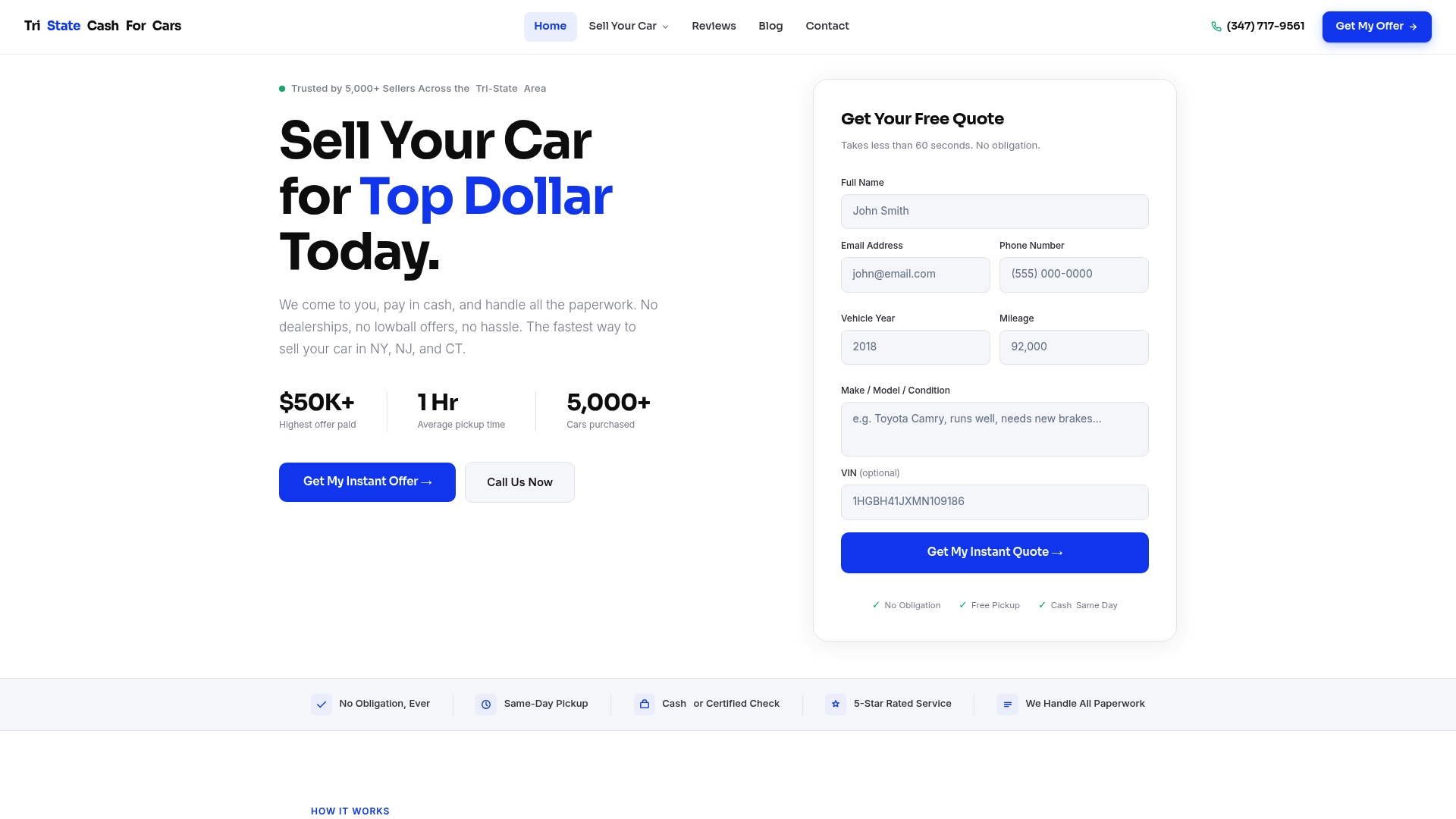
Before you request an offer, have three things ready: your VIN, a few clear photos of the damage, and your title status (clean, salvage, or rebuilt). These are used to generate an offer quickly, and if accepted, a team comes to your location the same day or next, inspects the vehicle on-site, handles the title paperwork, and pays in cash at pickup, typically within about an hour of arrival. There’s no published flat price since every offer is based on your specific vehicle, but the process itself stays consistent from the first call to the moment you’re paid.
If you’re ready to see what your frame-damaged car is worth, start your offer request here and skip the auction fees and stranger negotiations entirely.
Sources
- Car Frame Damage: How to Know if it Happens and What to Do — Kelley Blue Book
- Understanding an NMVTIS Vehicle History Report — VehicleHistory (BJA/OJP)
- Answering dealers’ questions about the revised Used Car Rule — FTC
FAQ
Is It Legal to Sell a Car With Frame Damage?
Yes, selling a frame-damaged car is legal in every state as long as you disclose the damage and title status honestly. Dealers face additional rules under the FTC’s Used Car Rule, which requires a posted Buyers Guide disclosing known damage and warranty terms.
Is It Okay to Buy a Car With Frame Damage?
It can be okay if the damage is well documented, professionally repaired, and priced to reflect the title brand and repair history. Always verify with an NMVTIS report and an independent structural inspection before agreeing to a price.
What Should I Do if a Dealership Sold Me a Car With Undisclosed Frame Damage?
Start by checking whether the dealer’s Buyers Guide disclosed the damage, since that document is central to any dispute under the FTC’s Used Car Rule. If the damage was concealed, get a written repair estimate and contact your state’s attorney general or consumer protection office to file a complaint.
How Much Does Frame Damage Devalue a Car?
Frame damage and a resulting salvage or rebuilt title typically cut resale value by 30% to 50% compared to a clean-title equivalent, depending on severity and repair quality. If you want to skip the negotiation entirely, selling to a professional cash buyer often nets a more predictable result than listing it privately.