Same Day Cash: Sell Your Commercial Vehicle in NJ
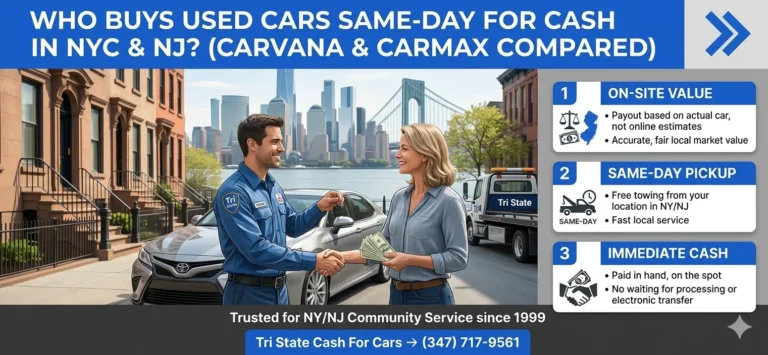
The fastest fair way to sell a commercial vehicle in New Jersey is through a local on-site cash buyer that handles the paperwork for you, such as Tristatecashforcars. You can usually get a quote within hours and payment at pickup the same day or on a schedule you set, though that speed typically comes with a slightly lower number than a patient private sale would eventually fetch.
TL;DR:
- Selling to a local on-site cash buyer typically provides an immediate quote within hours and same-day payment, ideal for urgent cash needs or non-running vehicles.
- Preparing clear photos of the VIN, odometer, damage, and maintenance records can significantly speed up valuation and increase the chances of a quick offer.
- Necessary documentation includes a signed title, current registration, odometer disclosure if required, and a bill of sale to avoid delays during the transfer process.
- Offers are based on market value minus condition, salvage, repairs, and fees, with written confirmation and proof of funds essential to avoid scams.
- Auctions may yield higher sale prices for specialty equipment but involve longer waits, buyer premiums, and stricter removal deadlines than direct cash sales.
Table of Contents
- How to Sell a Commercial Vehicle in NJ Quickly
- How to Prepare Your Truck or Van for a Faster Offer
- What Documents Do You Need to Sell a Commercial Vehicle in NJ?
- How Buyers Price Your Commercial Vehicle (and How to Compare Offers)
- What Happens When You Sell to an On-Site Cash Buyer
- Should You Sell Your Commercial Vehicle at Auction in NJ?
- Tax Implications and Fees When You Sell a Commercial Vehicle in NJ
- How to Handle a Lien or Outstanding Loan on the Vehicle
- How to Avoid Scams When Selling Your Commercial Vehicle
- Where to Advertise a Commercial Vehicle for Sale in NJ
- Legal Requirements for Selling a Commercial Vehicle in NJ
- What NJ Sellers Get Wrong About Selling a Commercial Vehicle Fast
- Sell Your Commercial Vehicle to Tristatecashforcars
- Sources
- FAQ
How to Sell a Commercial Vehicle in NJ Quickly
Every route to selling a truck, van, or fleet vehicle in New Jersey trades speed against price. Knowing which lever matters most to you narrows the choice fast.
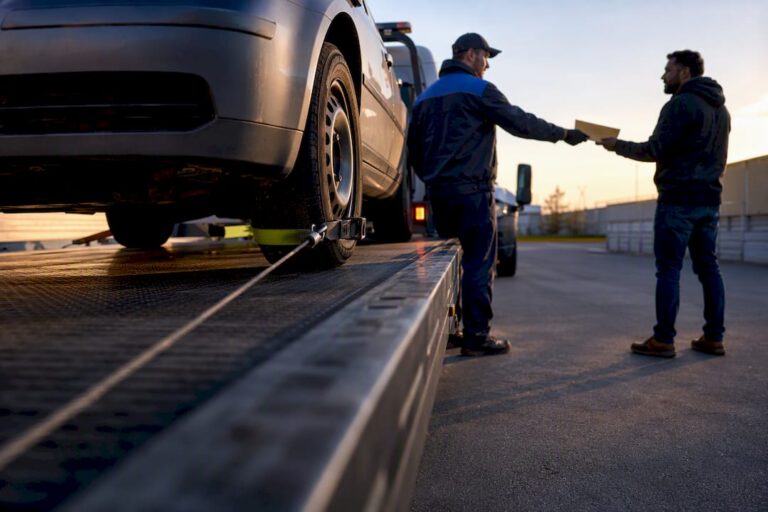
An on-site cash buyer is the quickest path. You send photos, get an offer within hours, and the buyer typically arrives at your location, handles the title transfer, and pays on the spot. This route suits owner-operators who need cash now, sellers with non-running trucks, and fleet managers offloading two or three units without the hassle of separate listings.
A dealer trade-in works only if you’re buying a replacement vehicle from that dealer. It’s convenient, folded into one transaction, but dealers routinely offer less than a cash buyer because they’re pricing in resale margin and inspection risk.
Commercial or state auctions can produce a higher gross sale price for specialty trucks or well-maintained equipment, but you wait weeks for a sale date, pay a buyer premium baked into the terms, and handle removal logistics yourself.
Private sale through classifieds or trucking marketplaces often nets the highest price on paper, but expect a longer sales cycle, tire-kicker calls, and the full weight of title paperwork and buyer vetting landing on you.
- Urgent cash need or non-running vehicle: on-site cash buyer
- Downsizing a small fleet fast: on-site cash buyer or bulk quote
- Salvage or no-title unit: on-site cash buyer with title-workaround experience
- Maximum possible price, no time pressure: private sale or specialty auction
How to Prepare Your Truck or Van for a Faster Offer
Buyers price faster and higher when you remove their guesswork before they ever see the vehicle in person.
- Photograph the VIN plate and odometer clearly. These two shots alone let a buyer start a real valuation instead of a rough estimate.
- Shoot a short video of the engine running. A clip showing the engine idle and rev, with audible sound, speeds up valuation and increases the odds of a same-day offer from cash buyers.
- Capture damage honestly. Close-ups of dents, cab wear, and bed or box damage build trust and cut down on lowball counteroffers during inspection.
- Pull together maintenance records. Recent service invoices, DOT inspection reports, and any fleet work orders show a buyer the vehicle wasn’t neglected, even if it looks rough.
- Skip cosmetic fixes that don’t move value. New tires or a fresh paint job rarely pay for themselves on a commercial unit; a working alternator or a fixed brake line often does.
- Arrange tow logistics ahead of time if the vehicle doesn’t run. State plainly in your listing or quote request that it’s a non-runner, and confirm whether the buyer provides the tow.
Pro Tip: Take your engine-running video before you make any repairs. Buyers who see a rough-sounding engine that still turns over will often factor that into the offer rather than assume the worst and lowball you outright.
What Documents Do You Need to Sell a Commercial Vehicle in NJ?
New Jersey requires a specific paper trail, and having it ready before a buyer arrives is the single biggest thing you can do to avoid a delayed payment.
- NJ certificate of title, signed over to the buyer at the point of sale
- Current registration, even though it doesn’t transfer with the sale
- Odometer disclosure statement, required on most vehicles under 16 years old with mileage
- Bill of sale, documenting the price and date for both parties’ records
The titled owner generally needs to sign the title, though many buyers, including on-site cash services, will coordinate directly with a lender if there’s a loan payoff involved rather than requiring the owner to physically visit a bank branch. If your title is lost, held by a lender, or was never issued cleanly, you have options: a lender payoff letter, a duplicate title request, or in rare cases a bonded title through the state. Our guide to selling without a clean title walks through each scenario. For anything you can’t resolve yourself, the New Jersey Motor Vehicle Commission is the authoritative source on titling rules and requirements.
How Buyers Price Your Commercial Vehicle (and How to Compare Offers)
Every buyer runs roughly the same mental math, even if they don’t show it to you: they start from a market number for your vehicle’s make, model, and mileage, then subtract for condition, salvage history, title complications, and any repairs they expect to make before resale.
A quick worksheet keeps you from comparing apples to oranges when offers come in different shapes:
Gross offer minus known fees minus estimated repairs minus transport or processing costs equals your estimated net cash.
Payment method matters too. On-site cash buyers commonly pay in cash, cashier’s check, or wire transfer at pickup, and legitimate buyers can typically prove funds or show payment within the same visit. Auction buyers, by contrast, often require certified funds days in advance of removal.
Watch for these red flags before you commit to any buyer:
- An offer that’s dramatically below every other quote you’ve received, with no explanation
- Any request for a fee, deposit, or “processing charge” from you before they’ll pay
- A verbal-only offer with nothing in writing, even a text or email confirming the number
- Pressure to sign before you’ve had a chance to review the paperwork
Buyers who won’t put a number in writing before pickup are the number one source of seller complaints in this space, and it’s worth treating any resistance to documentation as a warning sign rather than a minor inconvenience.
What Happens When You Sell to an On-Site Cash Buyer
Selling to a service like Tristatecashforcars follows a predictable sequence: you submit details and photos, get an offer within hours, schedule a pickup time that works for you, and receive payment when the vehicle changes hands. There’s no listing to manage, no strangers calling to negotiate, and no waiting on a dealership finance office.
- The offer you receive is the offer you get paid at pickup, with no last-minute renegotiation based on a “second inspection”
- Paperwork, including title transfer, is handled on-site rather than left for you to mail in later
- Vehicles with missing titles, salvage history, or mechanical failures are still eligible, which matters for older commercial units that have been through hard use
- This route fits sellers who need cash within a day or two, who own a non-runner nobody wants to tow to a lot, or who simply don’t want to manage a private-sale listing
Our full walkthrough of how the cash-for-cars process works in the Tri State area covers the same process in more detail if you want to see every step before you request a quote.
Pro Tip: If your commercial vehicle has been sitting unregistered for months, don’t wait to “fix it up” before requesting a quote. Ask first. A rough number costs you nothing and often changes your prep plan entirely.
Should You Sell Your Commercial Vehicle at Auction in NJ?
New Jersey runs its own state surplus vehicle auctions through the Treasury’s Distribution and Support Services, listing retired state vehicles and heavy equipment both online and in person. Commercial auction houses run similar timed sales for privately consigned trucks, trailers, and equipment.
Both formats sell strictly “as-is,” and most commercial listings carry a buyer premium around 15%, which cuts into your net even when the hammer price looks strong. Auctions can pay off for specialty trucks or equipment in active demand, but expect a longer timeline than a direct sale, plus removal logistics that fall on you or the winning bidder within a tight window.
If you’re weighing auction consignment, check before you commit:
- Inspection windows and whether bidders can view the vehicle in person before bidding closes
- Accepted payment forms, since most auctions require certified funds, not personal checks
- Removal deadlines, which are often measured in days, not weeks, after the sale closes
- Storage or default fees charged if the vehicle isn’t removed on schedule
Tax Implications and Fees When You Sell a Commercial Vehicle in NJ
Selling a commercial vehicle you own personally or through a business carries different tax exposure than a routine used-car sale, and it’s worth understanding before you sign anything.
If the vehicle was used for business and depreciated on your taxes, selling it above its depreciated book value can trigger a taxable gain reported to the IRS, separate from any New Jersey sales tax question. That’s a conversation for your accountant, not a used-vehicle buyer, since the specifics depend on how you structured ownership and depreciation.
On the sales-tax side, when you sell a vehicle privately in New Jersey, you as the seller don’t collect sales tax. The buyer pays New Jersey’s sales tax when they register the vehicle, calculated on the purchase price stated on the bill of sale. If you sell to a licensed dealer or a cash buyer who resells the vehicle, that transaction is typically exempt from consumer sales tax on your end, since it’s a business-to-business or wholesale-style purchase.
There’s no separate state fee simply for “selling” a titled vehicle in New Jersey. The costs sellers actually encounter are administrative: a small fee if you need a duplicate title, notary costs in some transactions, and any lien-release paperwork from a lender. None of these are large, but skipping them can delay your payment if a buyer’s paperwork process gets held up waiting on a document you could have prepared in advance.
How to Handle a Lien or Outstanding Loan on the Vehicle
Most commercial vehicles bought with financing still carry a lien when the owner decides to sell, and that lien has to be cleared before the title can transfer cleanly.
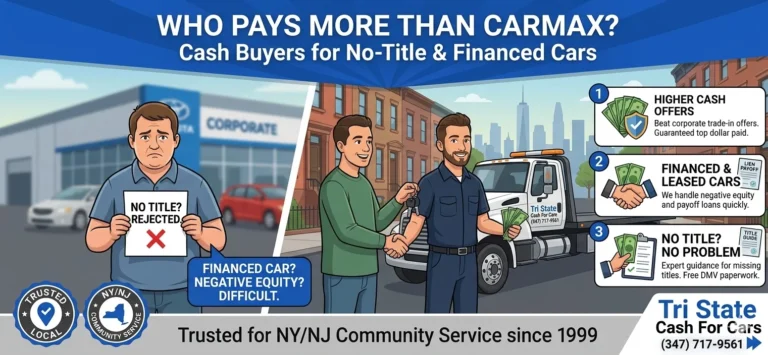
Start by calling your lender and requesting a current payoff amount, valid through a specific date, since interest accrues daily. Reputable buyers, including on-site cash services, routinely handle this by paying the lender directly for the payoff amount and giving you the remaining balance as your cash. That protects you from the risk of collecting full payment yourself and then owing the lender separately.
If the sale price is less than what you owe, you’re underwater, and the lender must still be paid in full before the lien releases, meaning you’d need to cover the difference out of pocket or negotiate directly with the lender. This is more common on newer commercial vehicles that depreciate faster than the loan balance drops, especially in the first two or three years of ownership.
Once the payoff clears, the lender issues a lien release, which either comes attached to the title itself or as a separate document you present to the buyer or the New Jersey Motor Vehicle Commission. Don’t sign the title over until you have written confirmation the lien is satisfied, or you risk a buyer discovering an active lien after the sale closes, which can unwind the whole transaction and leave you chasing a refund.
How to Avoid Scams When Selling Your Commercial Vehicle
Commercial vehicles attract a specific kind of scammer: someone posing as a fleet buyer or exporter who wants your truck moved before payment fully clears.
Never release a vehicle, keys, or title based on a check alone until it has actually cleared your bank, not just been deposited. Cashier’s checks can be counterfeited convincingly enough to fool a teller for a day or two before the forgery surfaces. Wire transfers you initiate and confirm directly with your bank are far harder to fake.
Be wary of any buyer who negotiates entirely by text or email and refuses a phone call, offers to pay more than your asking price and asks you to refund the difference, or wants to send a third party to pick up the vehicle who isn’t the person who negotiated the deal. All three are classic patterns in vehicle-sale fraud.
Verify a business buyer’s legitimacy the same way you’d vet any commercial transaction: check for a real business address, a working phone line answered as that company, and reviews or a track record you can find independently rather than only on the buyer’s own website. Legitimate on-site cash buyers will typically give you a written offer, confirm payment method before pickup, and won’t pressure you to skip standard title paperwork to “save time.”
Where to Advertise a Commercial Vehicle for Sale in NJ
If you’re leaning toward a private sale rather than a direct cash offer, where you list matters more for commercial vehicles than it does for passenger cars.
Trucking-specific marketplaces reach buyers who actually understand GVWR ratings, CDL requirements, and commercial titling, which cuts down on wasted calls from buyers who can’t legally or practically operate what you’re selling. General marketplaces like Facebook Marketplace still work, especially for lighter-duty vans and pickups used commercially, but expect more tire-kickers and lowball offers from private buyers comparing your truck to a personal vehicle price point.
Local NJ trade groups, contractor forums, and even word of mouth within your industry often move commercial equipment faster than a public listing, since buyers already understand the vehicle’s working condition and use case. If you do list publicly, lead with the specs that matter most to a commercial buyer: GVWR, hours or mileage, most recent DOT inspection date, and whether the vehicle comes with any attached equipment or lift gates.
Whatever platform you choose, our tips for selling on Facebook Marketplace fast apply just as well to a work van or light truck as they do to a passenger car.
Legal Requirements for Selling a Commercial Vehicle in NJ
New Jersey classifies vehicles by weight and use, and that classification affects what a buyer needs to know before they can legally operate what you’re selling.
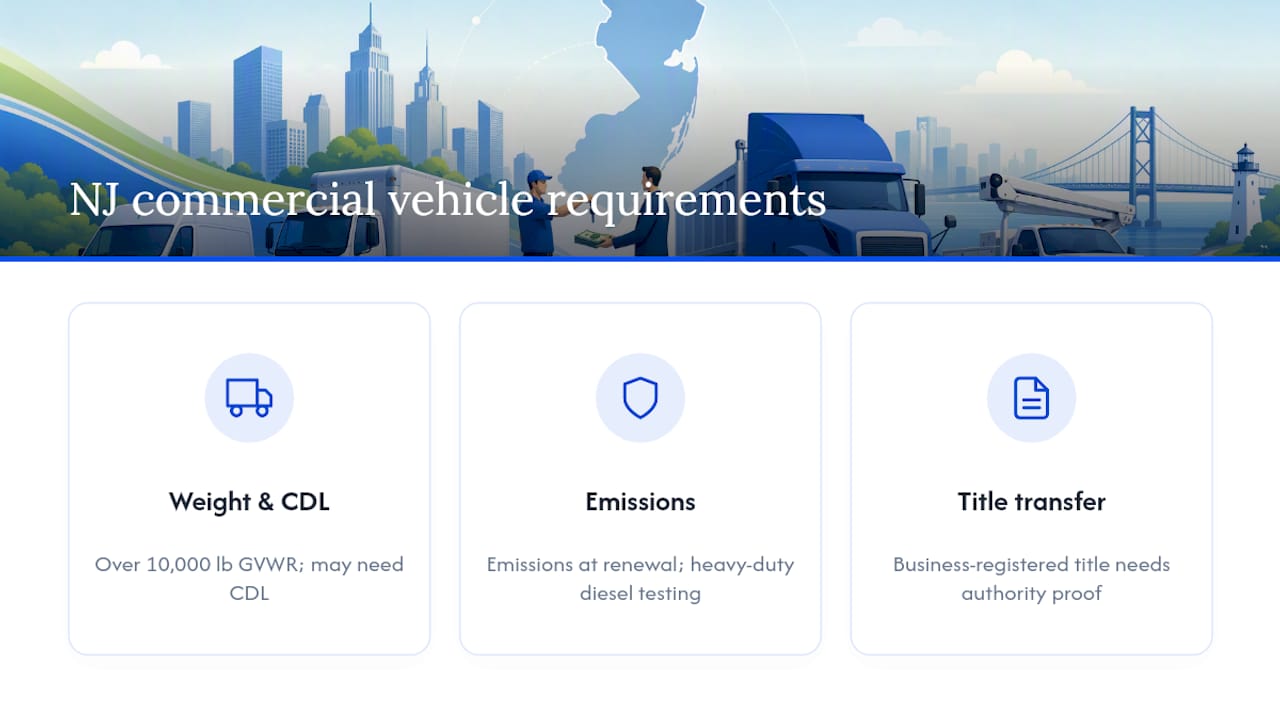
Vehicles over 10,000 pounds GVWR generally fall under commercial registration rules, and some require the buyer to hold a Commercial Driver’s License depending on weight class and cargo type. As the seller, you’re not responsible for verifying the buyer’s license, but disclosing the vehicle’s weight class and any special endorsement requirements upfront saves you from a buyer backing out mid-sale after discovering they can’t legally drive it home.
New Jersey requires emissions inspection for most vehicles at the point of registration renewal, and commercial vehicles above certain weight thresholds fall under separate heavy-duty diesel testing rules rather than the standard passenger-vehicle inspection. An expired inspection doesn’t prevent you from selling the vehicle, but it becomes the buyer’s responsibility to pass before they can register and legally operate it, so mentioning the vehicle’s current inspection status in your listing avoids a dispute after the sale.
If the vehicle is currently registered under a business name rather than an individual, the title transfer paperwork needs to reflect that entity correctly, which sometimes requires additional documentation proving you have authority to sell on the company’s behalf. This trips up more sellers than any other single step in a commercial title transfer.
What NJ Sellers Get Wrong About Selling a Commercial Vehicle Fast
Most advice about selling a vehicle fast treats commercial units like oversized cars, and that’s the core mistake. A pickup truck used for a landscaping business or a box van that’s been running a delivery route for six years doesn’t sell like a sedan. Buyers who understand fleet vehicles look past cosmetic wear straight to maintenance history, title cleanliness, and whether the vehicle runs reliably enough to work tomorrow.
The conventional wisdom to “list it everywhere and wait for the best offer” ignores what that wait actually costs a working owner. Every week a commercial vehicle sits unsold is a week of insurance, storage, and depreciation with no offsetting use. For most NJ owner-operators and small fleets, the math favors a fast, fair cash offer over a marginally higher number three weeks later.
If there’s one thing to prioritize first, it’s documentation, not detailing. A clean title, current registration, and honest maintenance records get you a faster, more accurate offer than a fresh wash and wax ever will. Buyers price uncertainty harshly. Remove it early, and you’ll see that reflected in the first number you get.
— Eric
Sell Your Commercial Vehicle to Tristatecashforcars
If speed and a guaranteed number matter more than squeezing out the last few hundred dollars through a private listing, Tristatecashforcars is built for exactly that trade-off. Unlike a dealer trade-in or a consignment auction, there’s no waiting on a sale date, no buyer premium eating into your total, and no separate step to arrange title paperwork after the fact. The offer you’re given is the offer you’re paid at pickup, guaranteed, whether your truck runs perfectly or hasn’t started in months.
The process is simple: send details and photos of your commercial vehicle, get a cash offer, and schedule pickup at your location whenever it works for you. Tristatecashforcars serves owners across New Jersey, New York, and Connecticut, and handles title transfer, missing-title situations, and salvage history as part of the deal rather than as a separate hurdle. If you’re ready to see what your truck, van, or fleet vehicle is worth, get your cash offer now and find out how fast this can actually move.
Sources
- Auctions: New Jersey Distribution and Support Services
- Sell My Semi Truck in New Jersey | Cash Offers — Big Ugly Truck
- Trucking Company Auction — AJ Willner Auctions
FAQ
What Is Considered a Commercial Vehicle in NJ?
New Jersey generally classifies a vehicle as commercial based on its use and weight, including trucks, vans, and trailers registered for business purposes and vehicles over 10,000 pounds GVWR that require commercial registration.
Does the Seller Need to Be Present for Title Transfer in NJ?
The titled owner typically needs to sign the title over to the buyer, but many cash buyers, including Tristatecashforcars, coordinate directly with lenders on payoffs so you don’t need to visit a bank branch separately.
How Much Does It Cost to Register a Commercial Vehicle in NJ?
Registration costs vary by vehicle weight class and use, and the New Jersey Motor Vehicle Commission publishes current fee schedules; sellers themselves don’t pay a registration fee since that responsibility transfers to the buyer.
Can You Park Commercial Vehicles in Residential Areas in NJ?
Rules vary by municipality, and many New Jersey towns restrict overnight parking of large commercial trucks or trailers on residential streets, so check local ordinances rather than assuming statewide rules apply.
Is an Auction or a Cash Buyer Better for Selling a Commercial Vehicle Fast?
An on-site cash buyer is faster and more predictable for most sellers, since auctions carry buyer premiums, inspection windows, and removal deadlines that stretch the timeline well beyond a same-day cash sale.