Sell Fast in New York: Use MV-912, DTF-802, or Get Same Day Cash
Use New York DMV form MV-912 as your vehicle bill of sale. It records the sale price, date, and identities of buyer and seller, but it does not replace the signed title required to transfer ownership. If the vehicle is a gift, list the purchase price as $0 and pair MV-912 with Form DTF-802 so the state has a clean tax record of the transaction.
TL;DR:
- The MV-912 form must be filled out completely and accurately, especially the VIN, sale date, and signatures, to avoid rejection at the DMV.
- Completing the vehicle transfer requires both the signed MV-912 and the signed title, with the transfer section on the back of the title being the official document.
- For gift transactions, listing a purchase price of $0 and submitting DTF-802 helps avoid sales tax issues while ensuring proper documentation.
- Most DMV delays happen when the seller neglects to fill out the transfer section on the title or when the paperwork lacks signatures or correct VINs.
- Using professional services like Tristatecashforcars can speed up the process and handle paperwork for estate, lost-title, or high-value sales, avoiding DMV delays.
Table of Contents
- What Information Belongs on the New York Bill of Sale
- Completing the Transfer: From Signature to Registration
- Gifts and Sales Tax: Why DTF-802 Matters
- Notarization, Missing Titles, and Other Wrinkles
- What to Bring to the DMV: A Quick Checklist
- A Faster Alternative When Paperwork Isn’t What You Want to Deal With
- Why a Bill of Sale Matters Beyond Cars
- Common Mistakes That Get a Bill of Sale Rejected
- Private Sales Versus Dealer Sales: Different Paperwork Paths
- Where to Get a Blank New York Bill of Sale
- The Paperwork Isn’t the Hard Part. Knowing What’s Actually Required Is.
- Sources
- FAQ
What Information Belongs on the New York Bill of Sale
MV-912 only works as proof of sale if every field is filled in correctly, and the NY DMV is specific about what it wants to see. Skipping a line or guessing at a VIN character is the fastest way to get sent back to the DMV counter with a rejected application.
The form needs these details, in full:
- Vehicle year, make, model, and the complete VIN (or HIN for boats)
- The exact date the sale took place
- Purchase price, written as a dollar figure, or $0 if the vehicle changed hands as a gift
- Printed names of both buyer and seller, plus their handwritten signatures
- Odometer reading, if you want to document mileage at time of sale
- “As-is” language, if the seller wants to disclaim responsibility for future mechanical issues
Make two copies once everything is signed. The buyer keeps the original to bring to the DMV, and the seller holds onto a duplicate as their own proof the sale happened, complete with price and date, in case a dispute or tax question comes up later.
Pro Tip: Write the VIN on the bill of sale by copying it directly off the title certificate, not off the dashboard or window etching. A single transposed digit between those two documents can stall a title application for weeks.
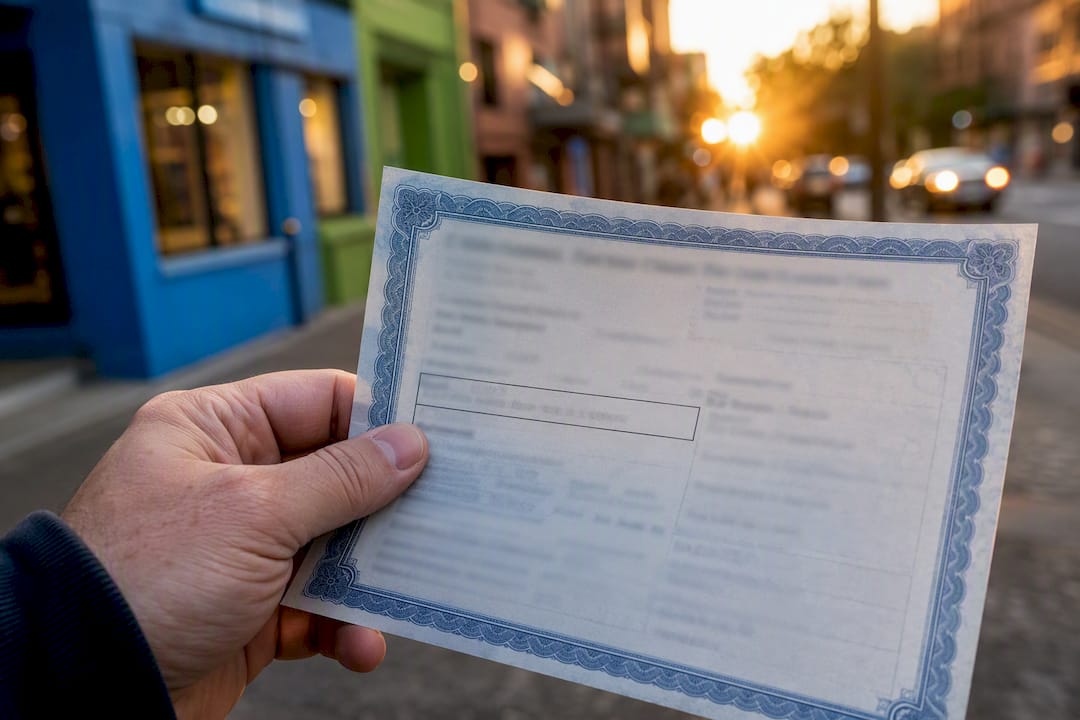
Completing the Transfer: From Signature to Registration
A signed MV-912 is only half the job. The title certificate itself has to change hands correctly, and New York has a specific order of operations for that.
- The seller signs the transfer section on the back of the title certificate. This is separate from the bill of sale, and the DMV treats it as the real transfer document — a bill of sale alone won’t satisfy a title application.
- The buyer collects the original signed title, the completed MV-912, and, if the vehicle needs a new registration, form MV-82. MV-82 is the standard registration and title application used at DMV offices statewide.
- The buyer brings proof of insurance and valid photo ID to the DMV, along with payment for title and registration fees, which vary based on vehicle classification and local county surcharges.
- The DMV reviews the paperwork and processes the new title and registration, typically the same day for in-person visits with complete documentation, though mail-in applications can take several weeks.
Most delays happen because someone shows up with a bill of sale but no signed title, or the seller forgot to fill out the transfer section on the back of the certificate. Bring both, every time, and the DMV visit tends to move fast.
Gifts and Sales Tax: Why DTF-802 Matters
Gifting a car to a family member still requires paperwork, and skipping it can create tax problems for the recipient down the road. If the vehicle is genuinely a gift, mark the purchase price as $0 on MV-912, then complete DTF-802, the Statement of Transaction used by the Department of Taxation and Finance.
Here’s what happens with that paperwork behind the scenes:
- The DMV and the Department of Taxation and Finance cross-reference the purchase price you list to calculate sales tax owed at registration
- A $0 price on a genuine gift generally exempts the transfer from sales tax, but DTF-802 is what documents that exemption officially
- Listing a lower price than what actually changed hands to dodge tax isn’t a gray area. It’s the kind of discrepancy that invites an audit or penalty once the state notices a mismatch between the bill of sale and the vehicle’s market value
Recording the honest number protects both sides of the transaction. It’s not worth the risk to save a few hundred dollars in tax.
Notarization, Missing Titles, and Other Wrinkles
Most New York vehicle sales don’t need a notary anywhere near the paperwork. MV-912 generally doesn’t require notarization for standard private sales, though some sellers choose it anyway for extra protection on a high-value deal.
A few situations complicate things:
- High-value private sales — notarizing signatures on MV-912 isn’t mandatory, but it gives both parties a stronger paper trail if a dispute surfaces later
- Out-of-state titles — some transfers involving vehicles previously titled outside New York call for notarization or added verification steps, so check DMV guidance for the specific state involved before assuming standard rules apply
- Lost titles — if the seller can’t locate the original title, it needs to be replaced through the DMV before the sale closes, not worked around with the bill of sale as a substitute
- Estate, lien, or salvage situations — these carry their own disclosure requirements and supporting documents beyond a standard MV-912
Pro Tip: If you’re buying a car from an estate sale or a seller who’s vague about where the title is, ask to see it before you hand over any money. A missing title should be resolved before cash changes hands, not after.
Selling a car with a lost or complicated title gets easier with a step-by-step guide for lost title and estate sales, especially if the vehicle also carries a salvage brand.
What to Bring to the DMV: A Quick Checklist
Walking into a New York DMV office without the full packet is the single most common reason people leave without finishing their transfer. Bring all of the following:
- Original signed title certificate (or transferable registration, if that’s what the seller has)
- Completed MV-912 bill of sale
- MV-82 registration/title application
- DTF-802, if the vehicle was gifted or the transaction needs tax verification
- Proof of insurance and a valid photo ID
- Payment for title and registration fees, which vary based on vehicle classification and county
New York operates dozens of DMV offices across the state, and procedures for appointments and accepted payment methods vary by county. Check your local office’s page before you drive over, since some locations require appointments while others still take walk-ins.
A Faster Alternative When Paperwork Isn’t What You Want to Deal With
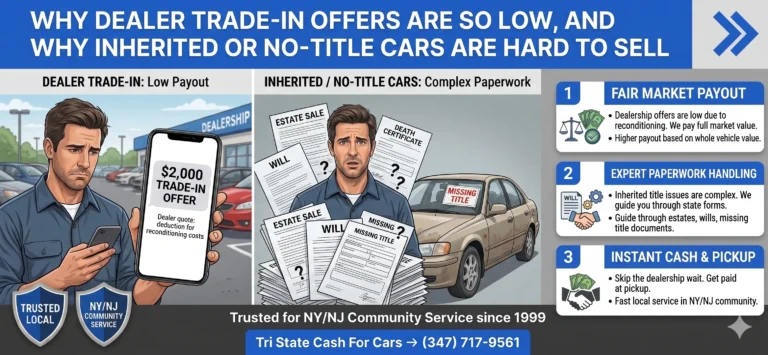
Not every seller wants to spend an afternoon at the DMV chasing signatures and double-checking VIN digits. If your priority is speed and certainty over doing the paperwork yourself, Tristatecashforcars offers a more direct path for New York vehicle owners.
The process looks different from a private sale in a few key ways:
- A team comes to your location, appraises the vehicle on the spot, and gives you a guaranteed cash offer
- Tristatecashforcars handles the transfer paperwork, so you’re not filling out MV-912 or MV-82 alone
- Payment and pickup typically happen the same day, often within about an hour of the offer being accepted
- This route works particularly well for estate sales, lost-title situations, or sellers who simply want cash in hand without a DMV visit
You still walk away with a signed bill of sale and transfer documents for your own records, but someone else is doing the legwork of getting them right.
Why a Bill of Sale Matters Beyond Cars
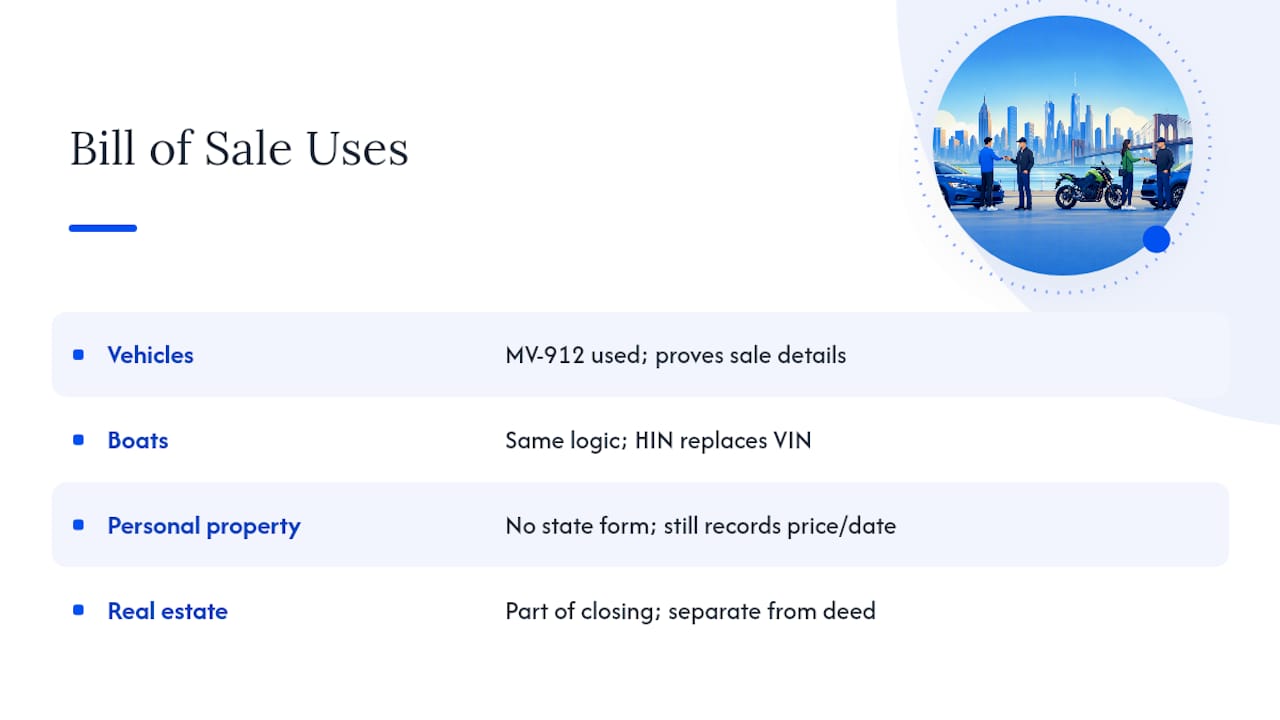
MV-912 gets most of the attention because vehicle sales are the most common use case, but the underlying document, a bill of sale, is a general legal tool for any private property transaction in New York. Boats use the same basic logic, substituting a Hull Identification Number (HIN) for a VIN, and the DMV’s guidance on bills of sale explicitly covers watercraft alongside cars and trucks.
Personal property sales, furniture, equipment, firearms, even livestock in some transactions, benefit from the same structure: names, dates, price, and signatures. New York doesn’t require a state-specific form for most non-vehicle personal property sales the way it does for cars, but the same principle applies. Without a signed document establishing price and date, a seller has no defense against a later claim of “I never agreed to that” or “the item was defective when I bought it.”
For real estate, the “bill of sale” terminology shows up differently, usually as part of a closing package covering fixtures and personal property included in a home sale, separate from the deed itself. It’s a narrower document there, but it serves the same core purpose: proving what changed hands and for how much.
The common thread across every version is that a bill of sale is evidence of a transaction, not a legal transfer of title or ownership on its own. For real estate, the deed transfers ownership. For vehicles, the title does. The bill of sale just backs up the story with a paper trail everyone signed.
Common Mistakes That Get a Bill of Sale Rejected
The DMV counter sees the same errors on repeat, and most of them are easy to avoid if you know what to check before you show up.
Leaving the VIN incomplete or transposing a digit tops the list. A 17-character VIN has zero room for typos, and a single wrong character can make the DMV flag the vehicle as a mismatch with title records. Listing a purchase price that seems implausibly low compared to the vehicle’s condition is another red flag, since it can trigger a tax review even when the sale was legitimate.
Forgetting signatures is more common than it sounds. Both buyer and seller need to sign, and a bill of sale with only one signature isn’t valid proof of a completed transaction. Some sellers also fill out MV-912 thinking it replaces the title transfer, then show up at the DMV without the actual signed title, which stalls the whole process.
Date errors cause quieter problems. If the bill of sale date doesn’t roughly align with when insurance or registration changes happen, it can raise questions about when liability actually shifted from seller to buyer. And skipping DTF-802 on a gifted vehicle, assuming $0 on MV-912 is enough by itself, leaves the transaction under-documented for tax purposes even though no money changed hands.
Private Sales Versus Dealer Sales: Different Paperwork Paths
A private sale between two individuals relies almost entirely on MV-912 alongside the signed title. There’s no dealer paperwork trail, no manufacturer’s certificate of origin, and no dealer-issued temporary registration, so the bill of sale carries more weight as the primary proof of the transaction’s terms.
Dealer sales work differently. A licensed dealer typically issues Form MV-50, the Retail Certificate of Sale, instead of MV-912. MV-50 serves a similar function but comes from a business with its own DMV dealer license number, and it often includes financing or trade-in details that a private-party bill of sale never touches. If you’re buying from a dealer, you generally won’t fill out MV-912 at all.
The line matters most for used-vehicle transactions where a private seller is technically operating like an informal dealer, flipping several vehicles a year. New York treats that differently for tax and registration purposes, and repeated private sales of that kind can draw scrutiny for operating without a dealer license. For the overwhelming majority of one-off private sales between neighbors, family members, or Facebook Marketplace buyers, MV-912 remains the correct form.
Where to Get a Blank New York Bill of Sale
You don’t need to buy a bill of sale template from a third-party site. The official MV-912 PDF is free, downloadable directly from the DMV, and it’s the version DMV staff expect to see. Print it, fill it out by hand or digitally, and get both signatures before the sale closes.
If you’re selling a boat, the same MV-912 structure applies with a HIN substituted for a VIN, since New York doesn’t issue a separate boat-specific bill of sale form. For general personal property outside of vehicles, a simple written document covering the same basics, item description, price, date, and both signatures, holds up fine without needing an official state template.
The Paperwork Isn’t the Hard Part. Knowing What’s Actually Required Is.
Most confusion around a New York bill of sale doesn’t come from the form itself, MV-912 is short and self-explanatory; for broader help with buying and selling vehicles, see this Makina ne Shitje Shqipëri – Udhëzuesi i Plotë për Blerje. It comes from sellers assuming the bill of sale does more than it actually does. It doesn’t transfer title. It doesn’t waive sales tax on its own. It’s a receipt with legal weight, not a substitute for the title certificate the DMV actually cares about.
The conventional advice online tends to treat MV-912 as the whole story, when the signed title transfer section is doing the real legal work. That’s the part people forget, and it’s the part that gets applications rejected at the counter.
If you’re selling privately and comfortable with paperwork, do it yourself: fill out MV-912 accurately, sign the title’s transfer section, and bring everything to the DMV in one trip. But if you’re dealing with a lost title, an estate situation, or you just want cash without spending a Saturday at a DMV counter, a guaranteed cash offer with paperwork handled for you is a legitimate shortcut, not a compromise. Prioritize accuracy on the required fields first. Everything else is negotiable.
— Eric
Sources
Every form referenced in this guide comes directly from New York State agencies:
- Buy, Sell, or Transfer Vehicle Ownership | NY DMV
- DTF-802: Statement of Transaction — New York State Department of Taxation and Finance
FAQ
Is a Bill of Sale Required in New York?
New York doesn’t legally mandate a bill of sale for every private vehicle sale, but the DMV recommends MV-912 and typically requires it as proof of sale when the buyer titles and registers the vehicle.
How Do I Get a Bill of Sale for a Car in New York?
Download the official MV-912 form directly from the NY DMV website, fill in the vehicle details and sale terms, and have both buyer and seller sign it.
Can You Register a Car in NY With Just a Bill of Sale?
No. The DMV requires the original signed title certificate (or other acceptable proof of ownership) along with the bill of sale; MV-912 alone does not satisfy title and registration requirements.
Does a Bill of Sale Need to Be Notarized in New York?
Notarization of MV-912 is generally optional for standard private vehicle sales in New York, though it’s sometimes recommended for high-value transactions or certain out-of-state title situations.
What Happens if the Bill of Sale Lists the Wrong Purchase Price?
Listing an inaccurate purchase price can trigger a tax audit or penalty, since the DMV and Department of Taxation and Finance use that figure, alongside DTF-802 for gifts, to calculate sales tax owed.