Scrap Weight Calculator: Estimate Your Junk Car Value and Add $200–$400
Most non-running vehicles sell for somewhere between $150 and $750, with heavier trucks and SUVs and cars carrying intact catalytic converters landing on the higher end of that range. The fastest way to confirm your number is running the scrap-weight formula below or requesting three quotes from different buyer types. Skipping the converter removal and keeping the car complete typically adds another $200 to $400 on top of that baseline.
TL;DR:
- Online buyers and pickup services generally pay more, as they resell parts before scrapping, often providing $100 to $300 more than local yards.
- Keeping the catalytic converter in place can add between $150 and $350 to the offer, depending on size and vehicle type.
- Having a clean title and gathering necessary paperwork before selling helps avoid discounts and speeds up the transaction process.
- Selling in spring or early fall may yield slightly higher prices due to seasonal demand increases for scrap steel.
- Using the scrap-weight formula and requesting three quotes ensures the best possible price, especially when the car is complete with engine, converter, and title.
Table of Contents
- Quick Estimate Method: The Scrap-Weight Formula
- Typical Junk Car Value Ranges By Vehicle Type
- What Actually Drives A Buyer’s Offer
- How To Get The Most Cash For Your Car
- What Buyers Expect And The Paperwork You’ll Need
- Environmental Rules And Legal Considerations For Junk Car Disposal
- Handling Hazardous Materials Before Pickup
- When A Pickup Service Beats Selling Parts Yourself
- Get A Guaranteed Cash Offer Without The Runaround
- Where These Numbers Come From
- Sources
- FAQ
Quick Estimate Method: The Scrap-Weight Formula
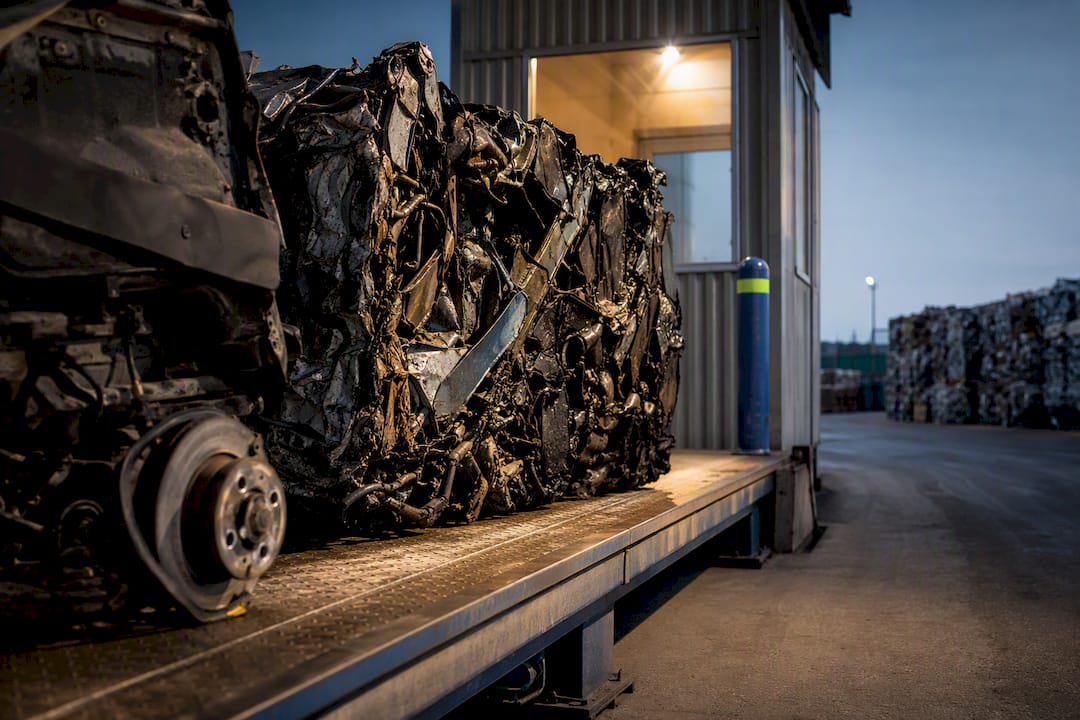
Every scrap yard in the country runs some version of the same math. The base formula is: vehicle weight in pounds divided by 2,000, multiplied by the current scrap price per ton. That gives you the raw metal value before anyone talks about parts.
From there, buyers add money back in for anything resalable. A working engine, a transmission in decent shape, and especially the catalytic converter all push the number up. None of that shows up in the base formula, which is why two cars of identical weight can price hundreds of dollars apart.
Here’s how it plays out with real numbers, using a mid-range scrap steel price of $180 per ton:
- Midsize sedan (3,300 lbs): 3,300 ÷ 2,000 = 1.65 tons. 1.65 × $180 = $297 base scrap value. Add $150 to $250 for an intact catalytic converter and a running engine, and you’re looking at roughly $450 to $550 total.
- Full-size pickup (5,200 lbs): 5,200 ÷ 2,000 = 2.6 tons. 2.6 × $180 = $468 base scrap value. Trucks often carry larger converters and more resalable steel, so add $200 to $350, landing near $650 to $800.
These are baselines, not guarantees. Local demand and the specific buyer you call will move the final number.
Typical Junk Car Value Ranges By Vehicle Type
Where your car lands in the $150 to $750 range depends heavily on size, weight, and what’s still attached to it. Heavier vehicles carry more scrap steel by definition, and larger engine bays tend to house bigger, more valuable catalytic converters.
- Compact cars: typically $150 to $350, running or not, since lighter weight caps the scrap value ceiling.
- Midsize sedans: usually $250 to $550, with condition and converter status driving most of the spread.
- Full-size sedans and SUVs: commonly $350 to $650, reflecting the extra weight and often larger parts inventory.
- Pickup trucks: frequently $400 to $750 or more, since trucks combine high weight with in-demand components.
- Minivans: generally $250 to $500, similar to midsize sedans but with slightly more scrap weight.
A car with a missing catalytic converter, blown engine, or stripped parts will sit at the bottom of its band. One with a running engine, intact converter, and clean title moves toward the top. Regional scrap steel prices also shift year to year, and some sellers see modest premiums in spring and early fall when scrap demand ticks up.
What Actually Drives A Buyer’s Offer
Weight sets the floor. Everything else is negotiation.
Scrap yards weigh the car (or estimate its weight from the make and model) and run the formula above to set a baseline. From there, the catalytic converter usually does the heaviest lifting on the upside. It’s frequently the single most valuable component on a non-running car, sometimes worth more than the rest of the scrap metal combined depending on the vehicle.
Title status matters more than people expect. Many buyers will still take a car without a title, but they typically knock money off the offer to cover the extra paperwork and DMV steps on their end.
Statistic Callout: Getting three separate quotes and keeping the car complete rather than pulling parts first commonly adds an extra $200 to $400 to the final offer compared to accepting the first number you hear.
- Running condition adds value even on an otherwise scrap-bound car.
- Missing parts (wheels, battery, catalytic converter) subtract from every buyer’s offer.
- A clean title speeds up the sale and avoids a paperwork discount.
How To Get The Most Cash For Your Car
A little prep work before you make a single call changes the outcome more than most sellers realize.
- Call at least three buyer types. Compare a local scrap yard, an online junk car buyer, and a cash-for-cars service, since online buyers often pay $100 to $300 more than yards because they can resell parts before scrapping.
- Leave the catalytic converter in place. Pulling it before you get a full-car quote almost always costs you money, since it’s typically the most valuable single part.
- Gather your paperwork first. Have the title, registration, and ID ready so the sale doesn’t stall.
- Clear out personal belongings. Buyers inspect before paying, and a cluttered car slows down pickup.
- Time it if you can. Selling in spring or early fall sometimes catches a small seasonal bump in scrap prices.
Pro Tip: Call for quotes on the same day. Scrap and part prices shift, and comparing offers collected a week apart isn’t a fair comparison.
What Buyers Expect And The Paperwork You’ll Need
Most buyers ask for the title, a government-issued ID, and sometimes the registration or a lien release if the car was financed. State rules vary on selling without a title, and while many buyers still accept the vehicle, expect a reduced offer to cover their extra administrative work. Getting a duplicate title through your state’s DMV before you sell, when it’s feasible, usually pays for itself.
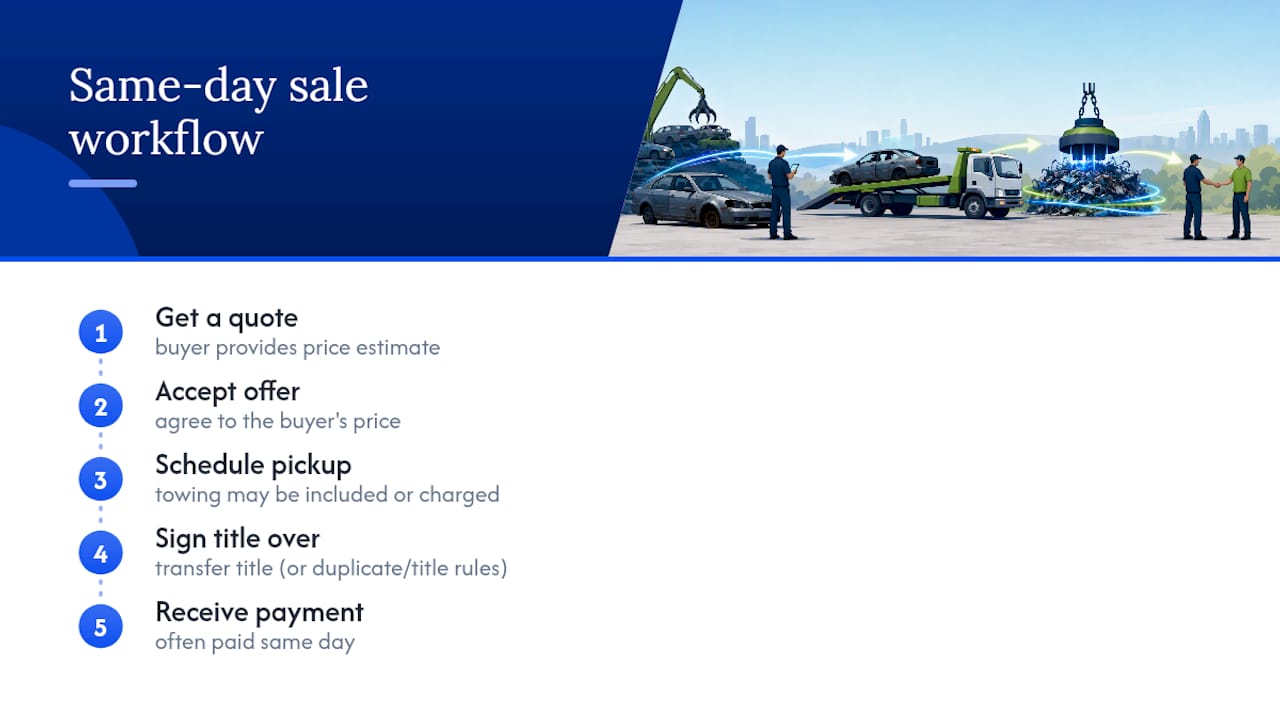
Towing arrangements differ by buyer. Local yards sometimes charge you for pickup on low-value vehicles, while online buyers and dedicated pickup services often include towing in the offer. The typical workflow runs quote, accept, schedule pickup, sign the title over, and get paid, often same day. For NJ sellers specifically, state paperwork rules for no-title sales are worth checking before you call anyone.
Environmental Rules And Legal Considerations For Junk Car Disposal
Junk cars aren’t just scrap metal. They’re rolling containers of fluids and materials that federal and state regulators treat as part of the broader recycling and hazardous-waste system, not household trash.
The EPA’s recycling guidance treats vehicle recovery as part of the national materials recovery stream, which is why licensed scrap yards and auto recyclers follow specific drainage and disposal protocols before a car gets crushed or shredded. Motor oil, transmission fluid, coolant, brake fluid, and gasoline all have to be drained and handled separately rather than left to leak into soil or waterways.
Most states also require a licensed dismantler or scrap facility to process the vehicle, not just anyone with a flatbed and a buyer. Selling to an unlicensed operator can leave you legally exposed if that car gets abandoned or improperly stripped later, since the title transfer is what shifts liability off your name. That’s one more reason a clean, documented sale matters as much as the price you get.
Batteries get a separate rule in nearly every state: they’re classified as hazardous waste and can’t legally go into regular scrap without proper handling. Reputable buyers already have a system for this. If a buyer seems uninterested in your title, your battery, or where your fluids are going, that’s worth treating as a red flag rather than a convenience.
Handling Hazardous Materials Before Pickup
You don’t need to drain your own car before selling it, but knowing what’s inside helps you understand why some offers come in lower than others.
A typical non-running vehicle holds several fluids that count as hazardous waste once removed: engine oil, coolant, brake and transmission fluid, and residual gasoline. Licensed yards and recyclers have permitted systems for draining and disposing of these safely, which is part of why working with an established buyer matters more than chasing the single highest number from a stranger.
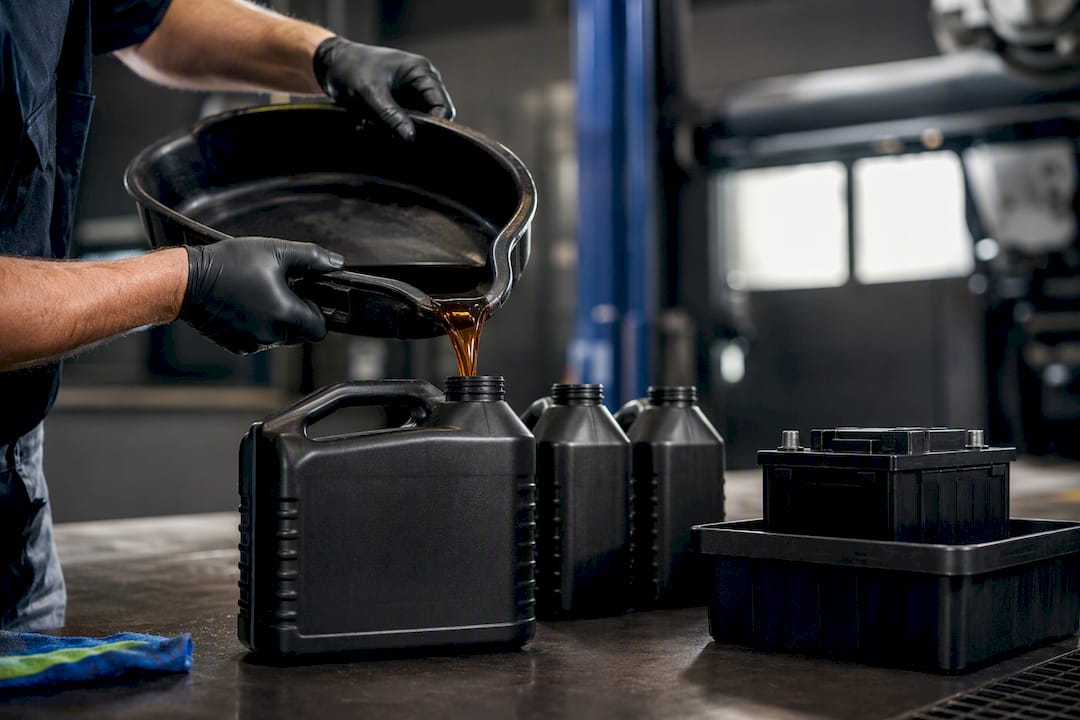
The car battery is the other major item. Lead-acid batteries are recyclable at a high rate, but they have to go through the proper channel rather than the regular scrap stream, since lead and sulfuric acid are both hazardous if mishandled. Most junk car buyers factor the battery into their process automatically, and reputable ones will remove it themselves rather than asking you to.
If your car has a leak you’re already aware of, mention it when you call for quotes. Buyers would rather know upfront, and it saves you from a surprise deduction at pickup. You’re never expected to personally drain fluids or pull hazardous parts before a sale. That’s the buyer’s job once the vehicle is legally in their hands, and it’s one more argument for choosing a buyer who handles it correctly rather than one who cuts corners.
When A Pickup Service Beats Selling Parts Yourself
Parting out a car or selling components privately can net more money on paper, since labor and buyer trust are the real cost most sellers don’t want to absorb. If you’ve got a garage, tools, and weeks to spare, that route can work. Most people don’t have that runway.
A pickup service makes more sense when your car is taking up space you need back, you’re not equipped to meet strangers to sell a transmission, or the paperwork alone feels like a second job. Speed and a handled title transfer are worth real money to a lot of sellers, even if the top-line number lands a bit under what a patient parts seller might squeeze out over a month.
— Eric
Get A Guaranteed Cash Offer Without The Runaround
This service pays the price it quotes, at pickup, with no surprise deductions once the truck shows up. That’s the real gap between this and a lot of the local offers floating around: the number on the phone is the number you get paid, and it handles the paperwork for you.
If your car is sitting non-running, missing a title, or just taking up space you need back, a local cash-for-cars service may send a team to you, hand you a cash offer on the spot, and can put money in your hand within the hour once you accept. That works whether the car runs, doesn’t run, or is missing parts entirely. Many sellers use this route specifically because it skips the private-sale hassle and the lowball dealership trade-in offer. Ready to see your number? Get your cash offer today and schedule pickup on your own timeline.
Where These Numbers Come From
The scrap-value ranges and formula above draw from published junk car value calculators and pricing guides, along with the EPA’s recycling and material recovery guidance. Local scrap-price feeds shift these numbers regionally, so treat the ranges here as a starting point, not a final quote.
Sources
- EPA — Reduce, Reuse, Recycle
- Junk Car Value Calculator — What’s My Junk Car Worth? (2026) — U-Pull-It
- How Much Are Junk Cars Worth? Full Value Guide — Car Amaze
FAQ
How much is a car worth for scrap?
Most junk cars sell for roughly $150 to $750, based on weight, scrap steel price per ton, and whether the catalytic converter and engine are intact. Heavier vehicles and trucks tend to land at the higher end.
Who pays the highest price for a junk car?
Online junk car buyers and dedicated pickup services often beat local scrap yards because they can resell usable parts before scrapping the rest, sometimes paying $100 to $300 more for the same vehicle. Getting three quotes is the only reliable way to know who’s paying the most for your specific car.
What is the $3,000 rule for cars?
There’s no universal legal or industry standard called the “three-thousand-dollar rule.” If you’ve seen the phrase, it’s likely referring informally to a rough price threshold some sellers use to decide between scrapping a car and repairing or selling it privately, but it’s not a defined guideline.
How do I estimate junk car value myself?
Divide your car’s weight in pounds by 2,000, then multiply by the current scrap price per ton to get a base figure. Add $150 to $350 if the catalytic converter and engine are intact, since those are typically the biggest value boosters beyond raw scrap weight.