Selling a Car From an Estate in New York: Steps and Paperwork
If a family member has died and left a car behind, you can sell it in New York, but only the person with legal authority over the estate can sign the title. That is usually an executor or administrator holding paperwork from Surrogate’s Court. For one low-value vehicle with no probate, a shorter next-of-kin route exists. This guide explains which route fits your situation, what to gather, and how to close the sale without leaving the heirs exposed.
TL;DR
- An executor or administrator with Letters Testamentary, Letters of Administration, or a Voluntary Administrator’s affidavit signs the title as the estate’s representative.
- If there is a single vehicle worth $25,000 or less and no probate, a different DMV form (MV-349 or MV-349.1) may let family transfer it without Surrogate’s Court letters.
- No title? The estate must first get a duplicate in the deceased owner’s name before ownership can move.
- Get a bill of sale (MV-912) and keep copies of every document. The buyer handles registration and sales tax.
- We buy estate vehicles in New York for cash, running or not, and handle the paperwork at pickup.
Table of Contents
- Who can legally sell a deceased person’s car in New York
- Pick your route: full estate or small-estate shortcut
- What the executor or administrator signs
- A step-by-step plan
- What the buyer needs from you
- Common roadblocks and how to handle them
- Selling channels compared
- Our perspective: what we see on estate sales
- Getting a cash offer for an estate vehicle
- A short checklist before you sell
- FAQ
- Sources
Who can legally sell a deceased person’s car in New York
A car does not belong to the family in general. It belongs to the estate, and someone has to be authorized to act for it. New York’s Surrogate’s Court decides what happens to a person’s property when they die, and the DMV follows its paperwork.
In practice, three kinds of people can sell:
- An executor, named in the will and confirmed by the court, who receives Letters Testamentary.
- An administrator, appointed by the court when there is no will, who receives Letters of Administration.
- A voluntary administrator, for smaller estates, who signs an affidavit instead of going through full administration.
The DMV states that an executor or administrator with legal authority shown by Surrogate’s Court documents may transfer an estate vehicle. For one vehicle worth $25,000 or less, the same page describes a statutory route for a surviving spouse or, when there is no spouse or the spouse is disqualified, surviving children under 21.
If you are not sure which category you fall into, ask the Surrogate’s Court clerk in the county where the person lived, or an estate attorney. Selling before you know is the most common way families end up with a buyer who cannot register the car and a sale that has to be unwound.
Pick your route: full estate or small-estate shortcut
The right paperwork depends on how many vehicles there are, what the car is worth, and whether probate is happening.
| Situation | Typical route | Key document |
|---|---|---|
| Estate in probate or administration | Executor or administrator signs the title | Letters Testamentary or Letters of Administration |
| Small estate, voluntary administration | Voluntary administrator signs the title | Voluntary Administrator’s affidavit |
| One vehicle, $25,000 or less, no will to probate, no Letters sought, no surviving spouse or minor child | Next of kin transfer | MV-349 |
| One vehicle, surviving spouse or guardian | Affidavit route | MV-349.1 |
| More than one vehicle, or value over $25,000 | Treated as estate property | Surrogate’s Court authority required |
Two details trip people up.
First, the shortcut is narrow. The DMV says MV-349 may be used for one vehicle worth $25,000 or less, and only when there is no surviving spouse or minor child, no will to be offered for probate, and no Letters secured or planned. It cannot be used for more than one vehicle or a more valuable one.
Second, the DMV is explicit that with more than one vehicle, or one worth over $25,000, the vehicle is estate property and MV-349 and MV-349.1 cannot be used. So if a parent left a daily driver and a classic in the garage, you are in the full-estate lane for both.
The surviving-spouse affidavit has its own checklist. MV-349.1 requires the properly completed title or transferable registration, a copy of the death certificate, and notarization, and it generally covers the one vehicle being transferred under the statute.
What the executor or administrator signs
Once authority is settled, the title is the heart of the sale. The DMV tells estates to submit a copy of the Letters Testamentary, Letters of Administration, or Voluntary Administrator’s affidavit along with the decedent’s title, transferred by the person legally authorized to sign.
How you sign matters. According to the same DMV page, the executor or administrator signs the title and writes beneath the signature “Executor of the Estate of” or “Administrator of the Estate of,” followed by the deceased owner’s name. Do not sign the deceased person’s name yourself, and do not sign only in your own name.
The back of the title also needs attention. Section 1 on the reverse must be completed, including the odometer and salvage-disclosure statements. Read the odometer figure off the dash, not from memory or an old inspection sticker. An error here can mean a rejected transfer at the buyer’s DMV visit.
For processing, the DMV accepts photocopies of the Letters or affidavit. Keep the originals. You will likely need them for the bank, insurers, and other estate business, and Surrogate’s Court generally issues certified copies on request, which are worth ordering in a few extras.
A step-by-step plan
1. Confirm your authority
Decide which row of the table above describes you. If you hold Letters, keep copies on hand. If you are relying on MV-349 or MV-349.1, make sure you truly meet its conditions before listing or calling a buyer.
2. Find the title and check for a lien
Look in the home office, a safe, a glove box, or with the bank. If the car was financed, the title may show a lienholder. A paid-off loan still shows on the title until you have the original lien release. Without it, the DMV says the lien stays on the new title, although a lien does not prevent registration. If the loan is not paid off, the lender must be paid from the sale proceeds or beforehand, so call them for a payoff figure.
3. Replace a missing title first
No title is common after a death. The DMV’s rule is that the estate must first obtain a duplicate title in the deceased owner’s name using MV-902 before transferring ownership. Our walkthrough of the duplicate title process in New York covers the form and timing, and our guide to selling a car without a title in NY compares the options when waiting is not practical.
4. Get an honest value
Estate sales go wrong when an exhausted family accepts the first number or waits so long that insurance, storage, and parking tickets pile up. Get at least two offers, including one from a buyer who will quote on the specific condition of the car. If the value is near $25,000, know that the number decides which paperwork route you are in, so use a realistic figure rather than a hopeful one.
5. Write up the sale
The DMV says a sale generally needs both proof of sale and proof of ownership, and its official bill of sale is MV-912. Under the DMV’s general sale rules, the seller signs the ownership-transfer section of the title and signs MV-912, and the buyer signs MV-912 as well. In an estate sale, the seller is the executor, administrator, or authorized family member, signing in that capacity. Take photos of the signed title and bill of sale before the buyer leaves.
6. Be paid, then hand over keys
Do not release the car, keys, or signed title before payment clears or cash is counted. Record the amount on the bill of sale. If the money goes into the estate account rather than a personal one, say so to the executor or attorney handling the estate, since that is how the proceeds are accounted for to the heirs.
7. Close out the loose ends
The buyer registers the car. The DMV says the buyer is responsible for registering and titling the vehicle at a local DMV office and paying sales tax or proving an exemption. On your side, handle the plates and insurance cancellation and keep your records. Our guide to reporting a car sale in NY walks through plates, title, and bill of sale, and the title transfer forms and notarization guide can save you a second trip to the DMV.
What the buyer needs from you
It helps to know what the other side will submit, because anything you leave out comes back to you as a phone call. The DMV lists these for the buyer: the transferred original title or transferable registration, form MV-82, proof of identity, the applicable authority document, proof of sales tax, insurance, and fees.
From the estate’s side, that means a complete package:
- The original title, signed with the executor or administrator wording
- A copy of the Letters or affidavit
- The completed Section 1 with the odometer reading
- The lien release, if there was a loan that is now paid
- A signed MV-912 bill of sale
Hand these over at the sale, not later. A buyer holding an incomplete set cannot register, and you cannot easily fix it once the car is gone.
Common roadblocks and how to handle them
The car does not run
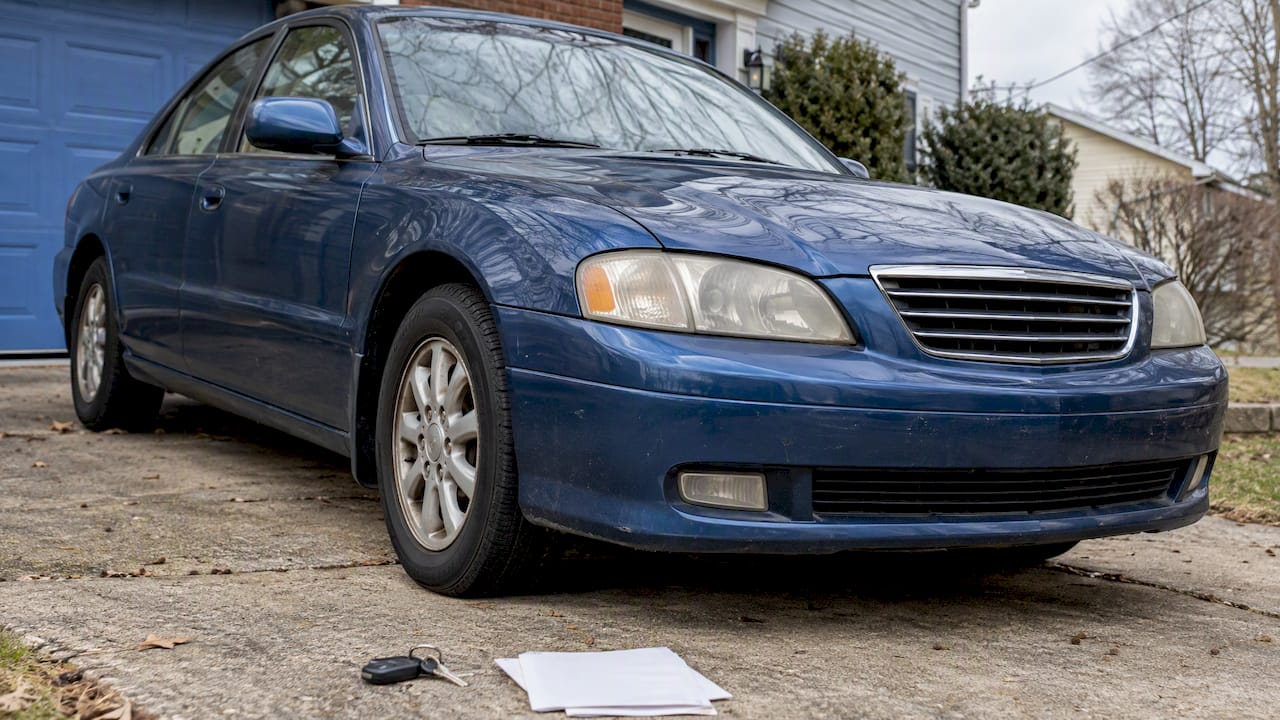
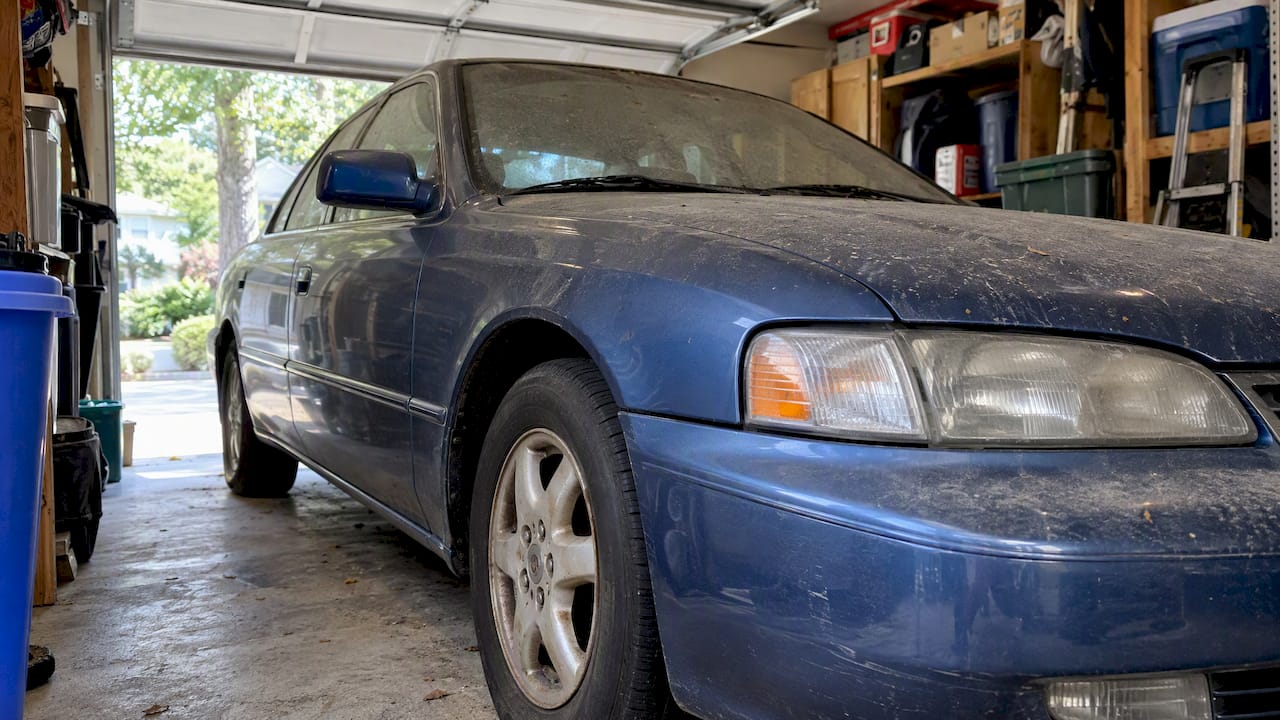
A car that has sat in a driveway or garage for months is normal in an estate. Its condition affects price, not eligibility. You do not need to jump-start it or spend money on repairs before selling. Tell the buyer honestly what is wrong, and ask whether they pick up and tow as part of the offer so you are not paying for it separately.
The registration expired
Registration usually lapses while the estate sorts itself out. That does not stop a sale, though it can affect how the car is moved. See our page on selling in NY with expired registration for how towing buyers handle it.
Unpaid tickets or fees
Leftover parking or camera tickets are another common surprise. Our guide to selling a car in NY with unpaid tickets explains what to check before you hand over the keys.
The heirs disagree
If siblings do not agree on whether to sell, or on who keeps a sentimental car, do not sell yet. Speak with the estate attorney. The executor has legal authority, but selling over family objections without advice can create disputes that cost more than the car. A sale is easy to do and hard to undo.
The car is in another state
Some estates include a car parked in New Jersey or Connecticut. The rules there differ, and what is described here applies to New York-titled vehicles. Check the other state’s motor vehicle agency before you sign anything.
Selling channels compared
Families usually have four options. None is right for everyone.
| Option | Strength | Trade-off for an estate |
|---|---|---|
| Private sale | Potentially the highest price | Weeks of listings, strangers at the house, scams, and liability for every test drive |
| Dealer trade-in or purchase | One stop | Offers often reflect the dealer’s resale margin, and non-running cars can be refused |
| Donation | Simple, may offer a tax deduction | No proceeds for heirs; ask the estate’s tax preparer before choosing it |
| Cash buyer with pickup | Fast, handles condition and paperwork | Compare more than one quote; confirm the offer is guaranteed in writing |
Speed matters more for estates than for ordinary sales. Every month the vehicle sits, the estate may still be paying insurance, and the car loses value in storage. For a wider look at the choices, see our cash seller’s guide for NY and NJ.
Our perspective: what we see on estate sales
Most families who call us about an estate car are not looking for a bargain hunt. They want it handled correctly, by someone who will not make a hard week harder. The cars are often older, haven’t moved in a while, and come with an incomplete folder of paperwork.
That is the situation we are set up for. We buy cars in New York, New Jersey, and Connecticut whether they run or not, with or without a title, and we come to you. Our offer is guaranteed, so the price we quote is the price we pay at pickup. We handle the paperwork on our end, and sellers typically have cash in hand within an hour of pickup.
Our advice is simple. Settle the authority question first, because that is what determines whether the sale holds up. Then get the title or start the duplicate. Then get a firm number. Do not let anyone talk the estate into a price “subject to inspection” that shrinks at your driveway. If you want to read about harder cases, our guide on selling a tricky car for cash covers lost titles and estates in more depth.
— Eric
Getting a cash offer for an estate vehicle
If the estate is ready to sell, request a guaranteed offer from Tri State Cash For Cars. We send a team to the car’s location in New York, quote the price, and pay that amount at pickup. Have the title or duplicate request, the executor’s or administrator’s authority document, and any lien information ready, and we will tell you what else is needed for your situation. If you are in the city, our pages on selling a car for cash in NYC and cash for cars in Brooklyn explain local pickup.
A note on the legal side: we are not your lawyer. If the estate involves more than one vehicle, a car worth near $25,000, a contested will, or a lien you cannot resolve, talk to an estate attorney or the Surrogate’s Court clerk before you sign the title.
A short checklist before you sell
- Do you know whether you are an executor, administrator, voluntary administrator, or next of kin using MV-349?
- Do you have the original title, or a duplicate request underway?
- Is Section 1 of the title complete, with an accurate odometer reading?
- Have you checked for a lien and obtained the release if the loan is paid?
- Do you have copies of the Letters or affidavit for the buyer?
- Is the MV-912 bill of sale ready, with the sale amount written in?
- Have you photographed everything before handing it over?
FAQ
Can I sell my late father’s car if there is no will?
Yes, but the person selling needs authority. Without a will, the court can appoint an administrator, who receives Letters of Administration. If the estate is small, a voluntary administrator’s affidavit may do the job. For a single car worth $25,000 or less with no probate, the MV-349 route may apply. Confirm with the Surrogate’s Court clerk or an estate attorney before signing.
Do I need to go through probate to sell an estate car in New York?
Not always. The DMV allows next of kin to transfer one vehicle worth $25,000 or less using MV-349, but only if there is no surviving spouse or minor child, no will to be probated, and no Letters secured or planned. Once there are multiple vehicles or the value is higher, the car is estate property and you need Surrogate’s Court authority.
What if the title is missing?
The estate must first obtain a duplicate title in the deceased owner’s name using form MV-902, then transfer ownership. Do this early, since it adds time. Some cash buyers can work with missing-title situations, so ask what documents they accept before assuming the sale is stuck.
Who pays sales tax and registers the car after an estate sale?
The buyer does. They register and title the vehicle at a local DMV office and pay sales tax or prove an exemption. The estate’s job is to deliver a properly signed title, the authority document, a bill of sale, and a lien release if applicable.
Can an estate sell a car that does not run?
Yes. Condition changes the price, not the legal process. The same title and authority requirements apply. Many families sell non-running estate cars to a buyer who tows them, which saves repair costs and the effort of moving the car.
Sources
- If a Family Member Has Passed Away | NY DMV
- MV-843: Transfer of Ownership When the Vehicle Owner Is Deceased | NY DMV
- MV-349: Transfer of Vehicle Registered in Name of Deceased Person | NY DMV
- MV-349.1: Affidavit for Transfer of Motor Vehicle | NY DMV
- Buy, Sell, or Transfer Vehicle Ownership | NY DMV
- When Someone Dies | New York Courts