How to Sell a Leased Car in NY: Buyout, Paperwork, Tax
You can sell a leased car in New York, but not the way you sell a car you own. The leasing company holds the title, so the car has to be bought out and titled in your name before an ordinary buyer can take it. The only exception is when your lessor lets a third party complete the buyout for you. Below is the order of operations, the forms, what it costs and how to tell whether the sale is worth it.
TL;DR
- A leased car belongs to the lessor until it is bought out. New York’s DMV says the title must be in your name before you sell.
- Ask your lessor for a payoff quote, then compare it with what the car sells for. Taxes and fees come out of your profit.
- At the DMV you bring the MV-82 or MV-82TON, DTF-802, MV-912, the lease buyout agreement, ID, any lien release and a $50 fee.
- If the car is worth less than the payoff, selling usually costs you money. Finishing the lease or returning the car may be cheaper.
- Once the title is yours, selling for cash is straightforward, and we can pick up the car and handle the paperwork.
Table of Contents
- Why a leased car can’t be sold like any other
- Step 1: Get a payoff quote and check your equity
- Step 2: Buy out the lease
- Step 3: Title the car in your name at the DMV
- Sales tax when you buy out and then sell
- Step 4: Sell the car
- Your selling options compared
- Other ways out of a lease
- What we see at Tri State
- Selling your bought-out car to us
- A checklist before you commit
- FAQ
- Sources
Why a leased car can’t be sold like any other
When you lease, you pay to use the car. You do not own it. The leasing company is the titled owner, and a buyer can’t register a car the seller doesn’t own. That is why dealers and private buyers will ask for a title with your name on it, and why “sell my leased car” really means “buy it out, then sell it.”
The New York DMV’s lease buyout page states the sequence plainly: you title the vehicle in your name first, and the sale comes after. A Reddit thread on the same question lands in the same place, with the lien release and a new title as the steps before any resale.
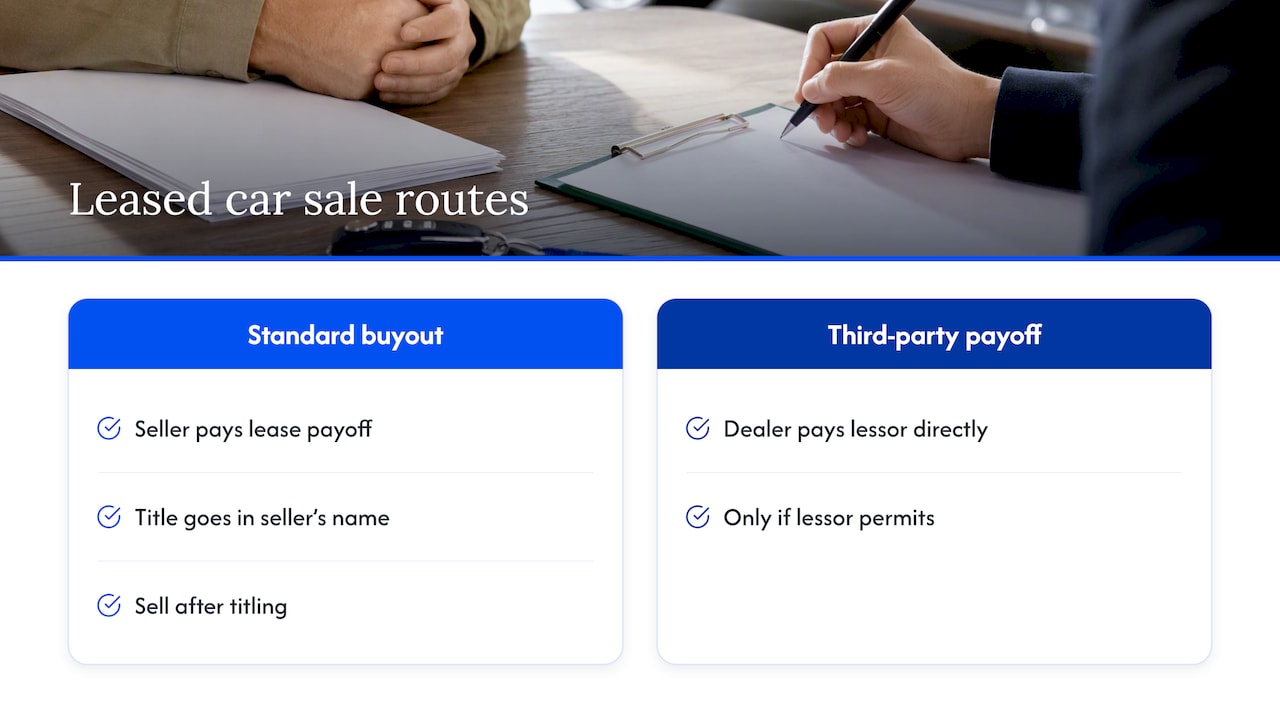
One exception matters. Some lessors allow a third party, such as a dealer, to pay off the lease directly. Others restrict it. Lease equity guidance notes that a third-party buyer is only an option if the lessor permits it. Otherwise you may need to buy the car yourself and confirm how long the title release takes before you sell. Kelley Blue Book makes the same point about lessors that restrict third-party buyouts.
The first call you make is to your leasing company, not to a buyer.
Step 1: Get a payoff quote and check your equity
Equity is the gap between what the car is worth and what it costs to buy out. Positive equity means the car would sell for more than the payoff. Negative equity means you would pay in to sell it.
Call or log in to your lessor and request a current payoff quote. KBB explains that this quote can include the residual value, remaining lease payments, a purchase-option fee, sales tax, registration and title fees and other charges the lease allows. Ask for the quote in writing, with the date it expires.
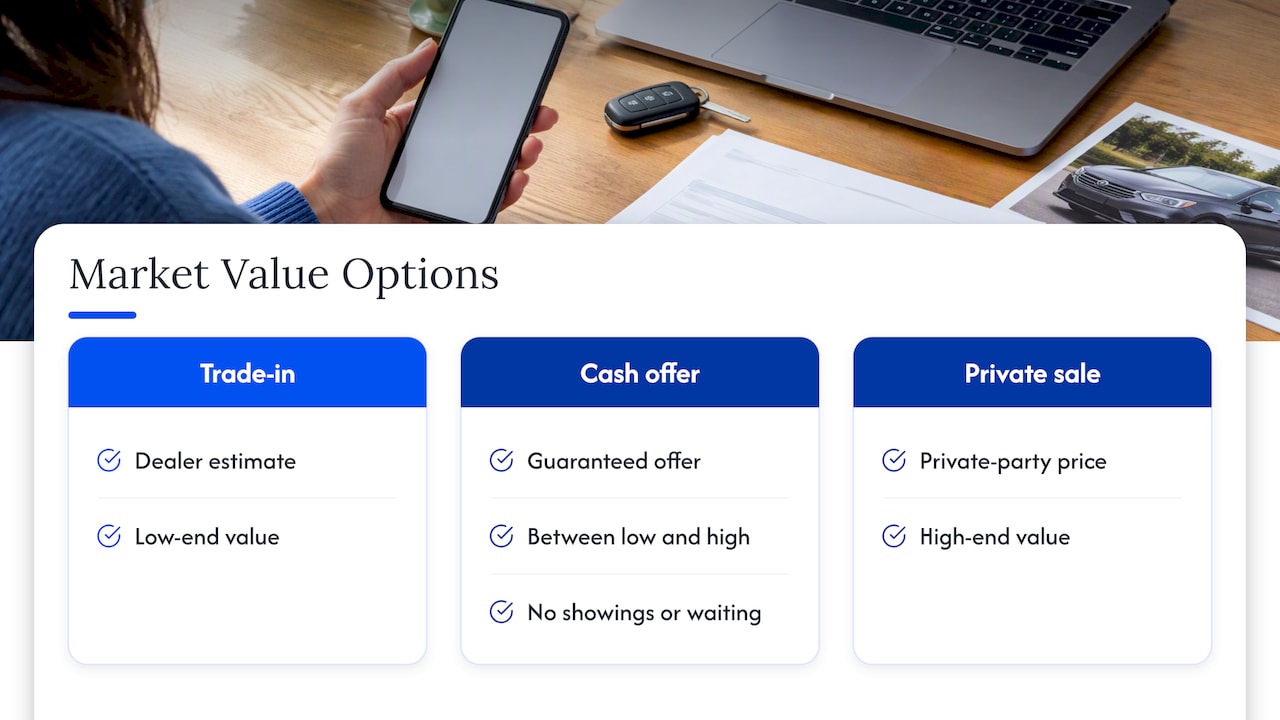
Then get a realistic market value. A trade-in estimate from a dealer is the low end. A private-party price is the high end. A guaranteed cash offer from a buyer who comes to you sits between them for many cars, and it comes with no showings and no waiting.
One detail that trips people up: the quote should be for the buyer who will actually acquire the car. According to My Lease Equity, you should confirm whether a different buyer needs a different quote. A quote for you and a quote for a dealer can differ.
A worked example
The numbers below are made up, only to show the arithmetic.
| Item | Amount |
|---|---|
| Payoff quote from the lessor | $24,000 |
| Sales tax and fees due at titling (your estimate) | $1,900 |
| Total cost to own the car | $25,900 |
| Cash offer for the car | $27,500 |
| Net equity | $1,600 |
The same car with a $25,000 offer would leave you $900 short. That is why transaction costs, including sales tax paid on a buyout, must be subtracted from sale proceeds before you call the equity positive.
If the number comes out negative, hold off. Lease End, a lease-equity company, advises finishing the lease as planned rather than rolling negative equity into a new loan or lease, which can get expensive.
Step 2: Buy out the lease
You have two common ways to fund the buyout: pay cash from savings, or take a loan from a bank or credit union. Either way, the money goes to the lessor, and the lessor sends you the paperwork that proves the sale to you.
Ask the lessor for these, because the DMV will want them:
- A lease buyout agreement (sometimes called a purchase agreement or bill of sale from the lessor)
- The title, or the electronic title information, with the buyer and seller sections completed
- A lien release, if a lien is recorded
If a lender finances the buyout, they may become the lienholder. Then you will need that lien released before you can hand a clean title to the next buyer.
Step 3: Title the car in your name at the DMV
This is the step people skip in their planning, then get stuck on. Per the NY DMV, to title a vehicle you bought from a leasing company you bring:
- Form MV-82 (Vehicle Registration/Title Application) or MV-82TON, depending on your situation
- Proof of identity
- The title with the required buyer and seller information
- The lease buyout agreement
- Form DTF-802 (Statement of Transaction)
- Form MV-912 (Vehicle Bill of Sale)
- Any applicable lien release
- The $50 title fee
Bring everything in one trip. If you want a deeper walkthrough of how title transfers and signatures work in New York, our guide to title transfer forms and notarization covers it, and the New York bill of sale and DTF-802 page explains the two forms most people confuse.
Check the DMV page for the current form versions and fee before you go, because they can be updated.
Sales tax when you buy out and then sell
This is the part that surprises people. When you buy out a lease, the DMV expects you to complete the DTF-802 and be ready to pay New York State sales tax when you title the car.
Why is there tax on a car you’ve been paying for? Leasing is taxed differently from buying. Under Tax Law section 1111(i), as described in the Department of Taxation and Finance’s dealer guide, sales tax on long-term motor vehicle leases is generally based on total receipts for the lease period and collected at the start or at registration. The DMV also says that if tax was not paid on all lease payments to the lessor, it is settled at registration.
What you owe at buyout depends on the lease, the payoff and your county’s rate. Ask the DMV or the Tax Department before you assume a figure, and ask your lessor whether the payoff quote already includes tax. Then put the answer in your equity math, as in the table above.
Step 4: Sell the car
Once the title is in your name, you are an owner like any other. The DMV’s rules for selling a car you own are short: sign the transfer of ownership section on the title and give the buyer a completed Vehicle Bill of Sale (MV-912). The buyer takes those documents to the DMV to title and register the car in their name.
A few practical notes:
- Keep a copy of the signed bill of sale and the title before handing them over.
- Remove your plates. Our guide to reporting a car sale in NY walks through plates, title and bill of sale, and our private seller paperwork guide covers the order to do things in, including insurance.
- If the title was lost or hasn’t arrived, a duplicate title fixes that, and the no-title page explains your options.
Your selling options compared
After buyout you have three real paths. We describe them by type, not by company.
| Option | Speed | Effort | Typical result |
|---|---|---|---|
| Dealer trade-in | Same day | Low | Often the lowest offer, because the dealer needs resale margin |
| Private sale | Days to weeks | High: listing, calls, test drives, scams to screen | Highest asking price, but not guaranteed |
| Cash car buyer with pickup | Same day | Low | A fixed offer, paid on pickup |
Our options-to-sell guide goes deeper on the trade-offs. If your lessor allows a dealer to pay off the lease directly, a trade-in can save you the DMV trip. Ask the dealer to show the payoff and the offer as separate numbers so you can see what you are really getting.
Other ways out of a lease
Selling is not always the right move. Here are the alternatives and what New York law says about them.
Terminate early
The New York Attorney General says you may end a lease after 50% of its scheduled term if all payments due are paid. Early-termination charges are limited by law, and certain fees must be reasonable and disclosed in the lease. Under Personal Property Law section 341, liability is capped and may include unpaid rentals, a reasonable disposition fee, and a formula based on adjusted capitalized cost, accrued depreciation and realized value.
Return the car at lease end
If you are near the end of the term and the car is worth less than the payoff, returning it is usually the cleanest choice. The AG notes that a disposition fee must be stated in the lease, or the lessor may charge the actual cost of selling the car instead. Read your lease for that number before you decide.
Transfer the lease
Some lessors permit a transfer to another driver. Rules and fees vary by lessor, and you may stay liable depending on the terms. Get the transfer terms in writing from the lessor.
What we see at Tri State
Here is our view, from buying cars from New York owners every day.
Most leased-car sellers call us too early. They want a quote on a car that still sits under a lessor’s name. We can’t pay you on a car you can’t legally transfer, and neither can anyone honest. So we tell people to start with the payoff letter, not with us.
The sellers who come out ahead do three things. They get the payoff in writing, they price the tax and fees into the math before they commit, and they line up the sale before the DMV visit, so the car isn’t sitting in their name accruing insurance and registration costs. A buyout is a short bridge. Cross it fast.
We also tell people when not to sell. If the car is worth less than the payoff, selling means writing a check to leave. Sometimes finishing the lease is the better deal.
When the numbers do work, speed matters, and that is where we fit. We guarantee our offer and pay the stated price at pickup. We come to you, we handle the paperwork, and you can have cash in hand within an hour. We work with cars that run and cars that don’t, and our step-by-step buying process explains how a sale works, including when a loan is involved.
— Eric
Selling your bought-out car to us
Once the title is in your name, request an offer from Tri State Cash For Cars. We serve New York, New Jersey and Connecticut. You get a guaranteed offer, and we come to your location, finish the paperwork and pay at pickup. If you need advice on preparing the car first, our prepare-your-car guide shows what is worth doing and what isn’t.
If the car was a company vehicle, see our page on selling a company car in New York. If your registration lapsed during the lease, the expired registration page explains how that affects a sale.
A checklist before you commit
- Read your lease for early-termination, disposition and purchase-option terms.
- Request a written payoff quote and note its expiry date.
- Ask whether your lessor allows a third-party buyout, and how long title release takes.
- Estimate sales tax and fees with the DMV or the Tax Department.
- Get at least one real offer for the car, not just an online estimate.
- Subtract all costs from the offer. Proceed only if equity is positive.
- Gather the DMV documents in one folder: ID, MV-82, DTF-802, MV-912, buyout agreement, title, lien release.
- Lock in your buyer before you title the car.
FAQ
Can I sell my leased car in NY without buying it out?
Only if your lessor allows a third party, such as a dealer, to complete the payoff for you. Many lessors restrict this, and then you must buy out and title the car yourself first. Ask your lessor which applies before you talk to buyers.
Do I pay sales tax if I buy out my lease and sell the car?
Plan on it. The DMV tells buyers to file the DTF-802 and be ready to pay New York State sales tax when titling the car after a lease buyout. The amount depends on your lease and payoff, so confirm it and subtract it from your sale proceeds.
What does the DMV charge to title a bought-out leased car?
The DMV lists a $50 fee, in addition to any sales tax due. Check the DMV page for current forms and fees before your visit.
What if my leased car is worth less than the payoff?
That is negative equity, and selling means paying the difference out of pocket. In that case, finishing the lease or returning the car is often cheaper than rolling the shortfall into a new loan. Check your lease’s disposition fee and mileage terms first.
Sources
- Change Name on Title After Lease Buyout | NY DMV
- Register a Leased Vehicle | NY DMV
- Buy, Sell, or Transfer Vehicle Ownership | NY DMV
- Leases & rentals | New York Attorney General
- N.Y. Personal Property Law Section 341
- Publication 839: A Dealer’s Guide to Sales and Use Tax | NY Tax Department
- End of Car Lease Options | Kelley Blue Book
- Lease Equity Check: Compare Payoff With Vehicle Value
- How to Find (and Maximize) Your Car’s Lease Equity