Car Buying Services: 6 Steps to Sell Safely, Even With a Loan
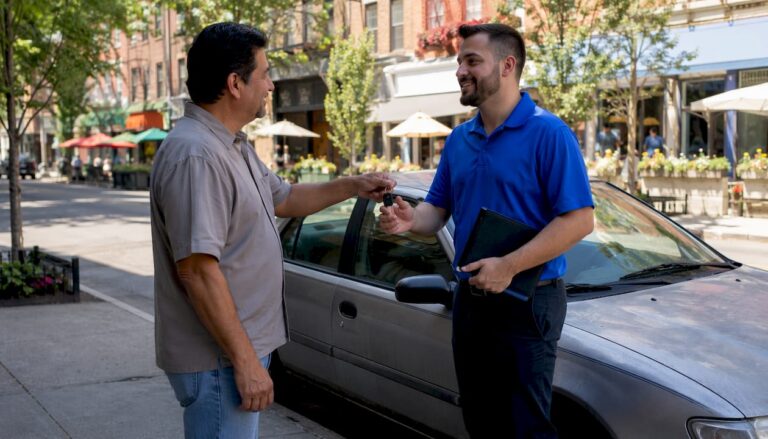
Selling to a cash buying service means you get a guaranteed offer, a scheduled pickup, paperwork handled on the spot, and payment the same day the vehicle changes hands. The process favors certainty over haggling: you know the number before anyone shows up. Below, we walk through each step, the documents to gather, how liens get resolved, and the safety checks that keep payment legitimate, drawing on guidance from the FTC and CFPB, plus a real-world example from Tri State Cash For Cars.
TL;DR:
- Have the title, matching photo ID, current registration, keys, and lender contact details ready; obtain an official payoff statement before requesting a quote.
- A lender’s payoff figure can exceed the monthly statement because it includes daily interest and fees; sellers must cover any shortfall or negotiate timing.
- Reject overpayment checks and refund requests: banks may take weeks to detect fraud, so verify payment has cleared before handing over the title.
- Clear title and no lien often allow payment within an hour; loan payoffs or title issues can extend the sale to 24 to 72 hours.
Table of Contents
- How the sale moves from quote to pickup
- Documents and details to have ready before you call
- How liens and loan payoffs get resolved
- Payment methods and how to avoid scams
- What happens on-site during pickup
- How Tri State Cash For Cars runs this process
- When a cash buying service makes the most sense
- Ready to sell? Here’s how to start
- FAQ
- Sources
How the sale moves from quote to pickup
The sequence is short, but each step matters for getting an accurate offer and a clean handoff.
- Request a quote. Give the year, make, model, mileage, general condition, and whether the car runs; photos or a short video speed this up.
- Get a valuation. Most services price the car from your description and images; some add a brief on-site inspection for higher-value or questionable-condition vehicles.
- Receive a guaranteed offer. A guaranteed offer is locked once the vehicle matches your description, unlike a conditional quote that can shift after inspection.
- Schedule pickup. You pick a time and location, and the buyer confirms what to have ready, including title and ID.
- Final inspection and signing. At pickup, the buyer checks the vehicle against your description, signs the bill of sale with you, and handles the title transfer.
- Get paid. Payment happens at the point of handover, not days later.
The gap between a guaranteed offer and a conditional one is where most seller frustration comes from. A guaranteed number means no renegotiation once the car matches what you described; a conditional quote leaves room for the buyer to adjust after a closer look.
Documents and details to have ready before you call
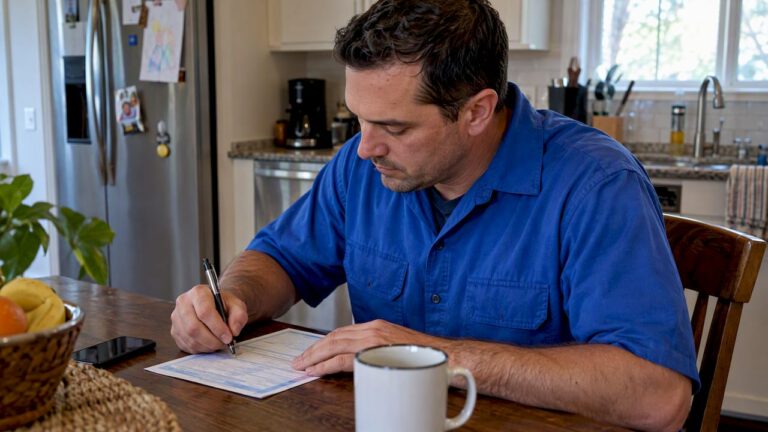
Gathering paperwork before you contact a buyer shaves real time off the process. Missing documents are the most common reason a sale stalls between offer and pickup.
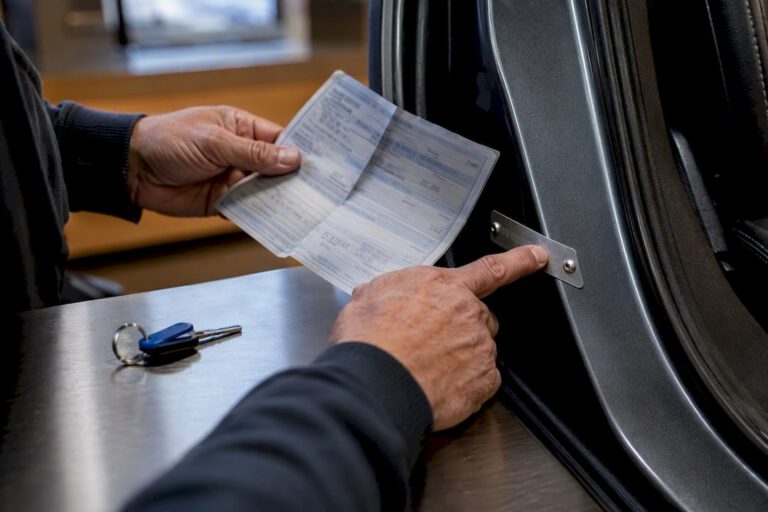
- Vehicle title or proof of ownership; if it is lost, most states let you request a duplicate from the DMV, which a buyer can walk you through.
- A valid photo ID that matches the name on the title or registration.
- Current registration and all sets of keys.
- Lender contact information if you still owe money on the car.
- A recent official payoff statement if there is a lien, along with any maintenance records that support the car’s condition.
Pro Tip: Pull your payoff statement before you request a quote, not after you accept one, since loan figures can change daily with interest.
Having these ready also helps a preparation checklist work in your favor: accurate mileage, condition notes, and service history reduce the chance of a price adjustment at pickup.
How liens and loan payoffs get resolved
If you still owe money on the car, the payoff amount, not your last statement balance, is what matters. The CFPB notes that payoff figures often include daily interest and fees, so they can run higher than what your monthly statement shows.
- A legitimate buyer contacts your lender directly to confirm the exact payoff amount before finalizing payment.
- If the payoff exceeds your sale price, you have options: cover the difference out of pocket, roll the shortfall into a new loan, or negotiate with the lender on timing.
- Lien verification can add a short delay to the timeline, since the buyer needs a written payoff figure before releasing funds.
- Once the lien clears, the title transfers free of the loan, which protects both sides of the sale.
Buyers who handle this coordination directly tend to close faster than sellers trying to manage lender calls themselves.
Payment methods and how to avoid scams
Legitimate cash buyers pay you at pickup and never ask you to refund any part of the payment afterward. The FTC warns that fake-check and overpayment schemes specifically target online car sellers, and banks can take weeks to catch a fraudulent check, by which point the scammer has already collected a “refund” from you.
Statistic: Banks can take weeks to detect a fake check, long after a scammer has disappeared with any funds you returned. That delay is exactly why in-person, verified payment at pickup matters.
- Watch for a check written for more than the agreed price, paired with a request to send back the difference.
- Be wary of urgent pressure to act fast, third-party payment sites you’ve never used, or a buyer who won’t meet in person.
- At pickup, confirm cash is complete and genuine, or confirm a bank transfer has fully cleared before handing over keys and title.
- Get a signed bill of sale on the spot as proof of the transaction.
If anything feels off, stop the handover and contact your lender or review FTC scam guidance before proceeding. Our guide to common selling scams covers more red flags specific to vehicle sales.
What happens on-site during pickup
Pickup is usually the fastest part of the whole process once the paperwork is in order.
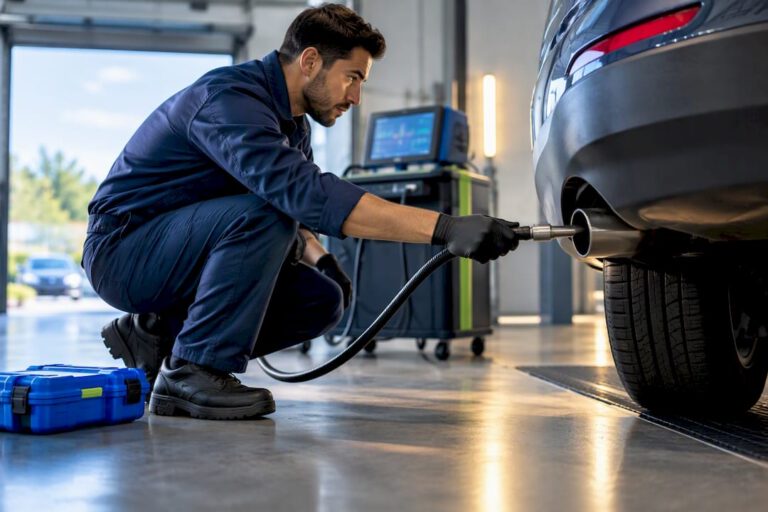
- The buyer does a final walk-around to confirm the car matches what was described, checking body condition, mileage, and whether it runs.
- You sign a bill of sale, endorse the title, and complete an odometer disclosure where your state requires one.
- For a straightforward sale with clear title and no lien, inspection to payout often takes under an hour.
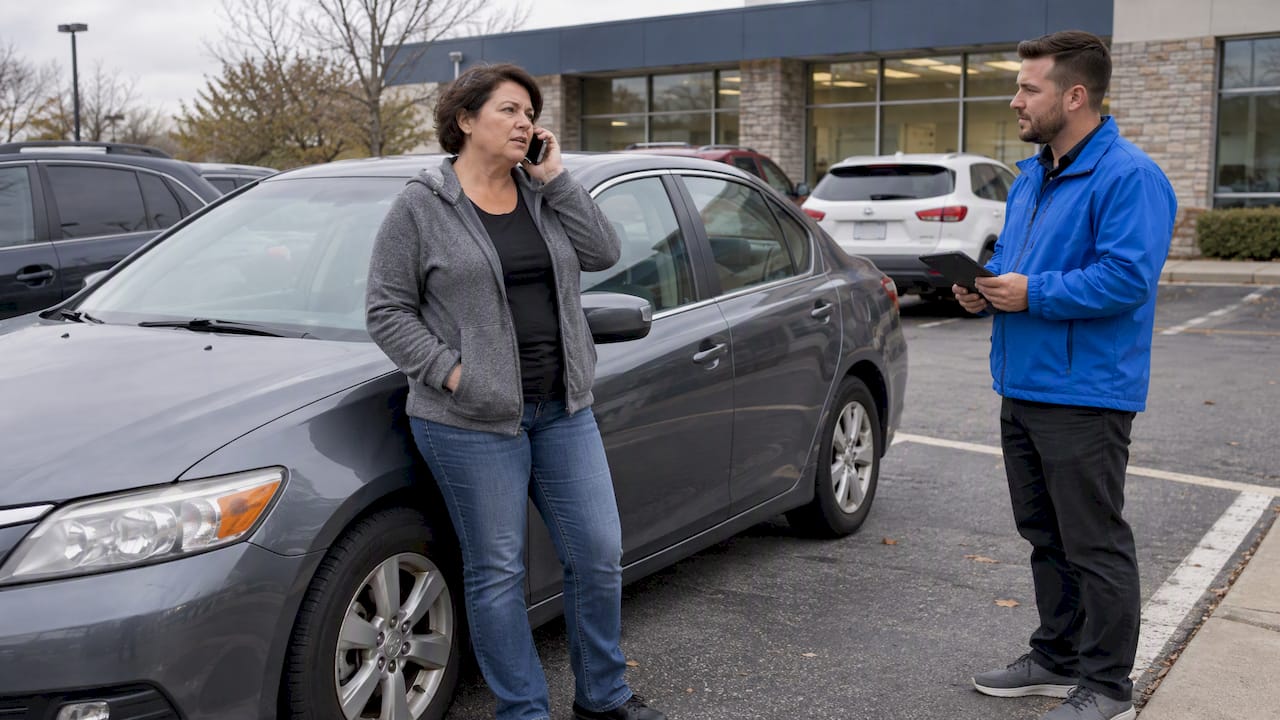
- Loan payoffs, missing titles, or out-of-state registrations can stretch that timeline while the buyer verifies the extra paperwork.
Sellers with a lost title or a non-running vehicle can usually still sell; our guide to moving a non-running car covers how towing and title research typically work in those cases.
How Tri State Cash For Cars runs this process
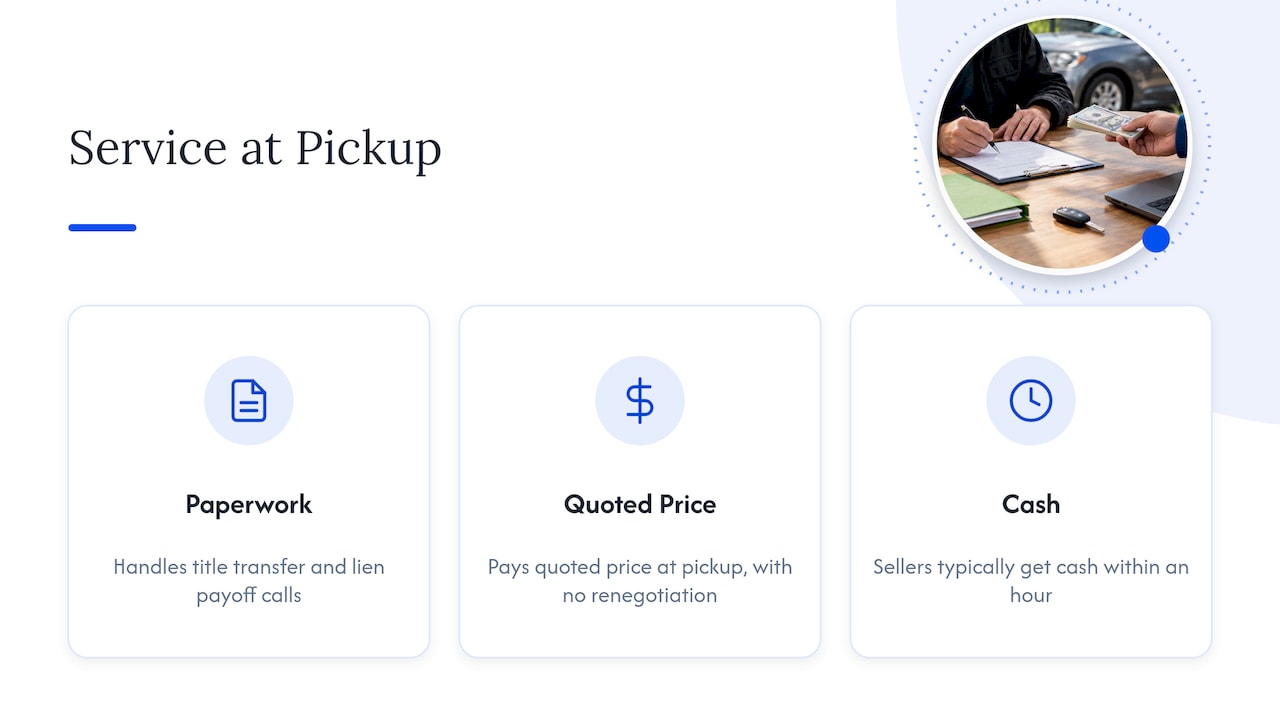
Our on-site team gives you a guaranteed cash offer and handles the paperwork directly, so you aren’t left managing title transfer or lien payoff calls on your own. We commit to paying the price we quote at pickup, with no last-minute renegotiation once your vehicle matches its description. Sellers typically walk away with cash in hand within an hour of the team arriving. For more detail on what to expect before we show up, our step-by-step selling guide and blog cover preparation tips and regional specifics for sellers across the area we serve.
When a cash buying service makes the most sense
Speed and certainty matter most when you need funds now, your car won’t start, or you’d rather skip the risk of a private-party deal gone wrong. A guaranteed offer removes the back-and-forth haggling of a private sale, and a documented process with lender coordination cuts out most of the fraud risk the FTC warns about. If none of that urgency applies to you, a private sale or trade-in might still get you more, but for anyone prioritizing a fast, verified payout, this route tends to be the simpler one. For deeper reading on preparation and scams, our blog has more.
— Eric
Ready to sell? Here’s how to start
If you want a guaranteed price and same-day pickup without the back-and-forth of a private sale, requesting a guaranteed offer is the fastest way to find out what your car is worth.
- Request a quote online or by phone with your car’s year, make, model, and condition.
- Get a guaranteed offer before scheduling pickup.
- Choose a pickup time that works for you, often the same day.
Start by visiting our Sell Your Car page to request your quote and lock in a pickup time.
FAQ
How long does selling to a cash buying service take?
Most straightforward sales, with a clear title and no lien, go from quote to payment the same day, often within an hour at pickup. Complications like loan payoffs or title issues can extend that to 24 to 72 hours.
What documents do I need to sell my car for cash?
You’ll typically need the title or proof of ownership, a valid photo ID, current registration, and your lender’s contact information if you still owe money on the car. A recent official payoff statement speeds things up if there’s a lien.
Can I sell a car that still has a loan on it?
Yes, but the buyer needs your official payoff amount, which the CFPB notes can differ from your monthly statement balance. If the payoff exceeds the sale price, you’ll need to cover the difference or negotiate with your lender.
How do I avoid getting scammed when selling my car?
Never accept a check for more than the agreed price or refund any portion of a payment, since this is a common fake-check scam pattern. Insist on payment completed in person at pickup, and get a signed bill of sale as proof.
Do I need a vehicle history report to sell my car?
No, and you should be cautious if a buyer asks you to purchase one for them, since the FTC has flagged this as a common scam pattern. If you want one for your own records, stick to NMVTIS-approved providers.