Cash for Junk Cars: Get the Most in New Jersey
TL;DR:
- Selling a junk car in New Jersey involves getting multiple quotes, preparing proper documents, and choosing a direct buyer who guarantees no hidden fees.
- Most sellers receive payment within a week, with cash at pickup being the most secure option.
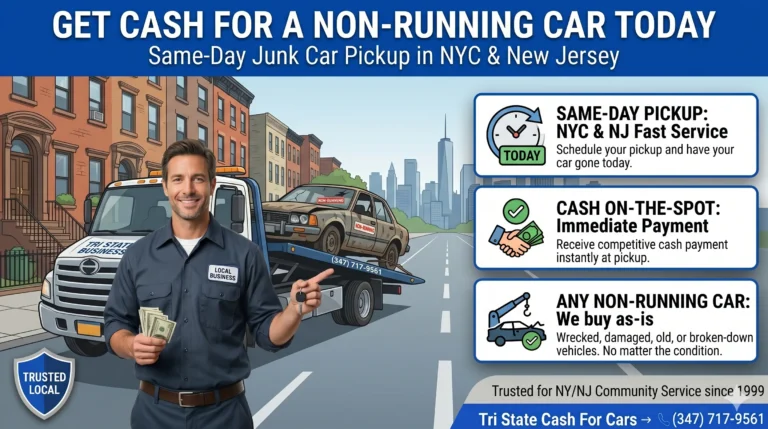
Cash for junk cars is the process of selling an unwanted vehicle for immediate money through competitive offers, free towing, and same-day payment. New Jersey sellers can realistically expect payouts ranging from $200 to $1,500+ depending on vehicle weight, condition, and which parts hold value. The industry term for this transaction is “vehicle liquidation,” though most buyers and sellers simply call it junking a car. Getting the best result requires three things: proper documentation, multiple quotes, and a direct buyer with no hidden fees.
What do you need before you sell your junk car?
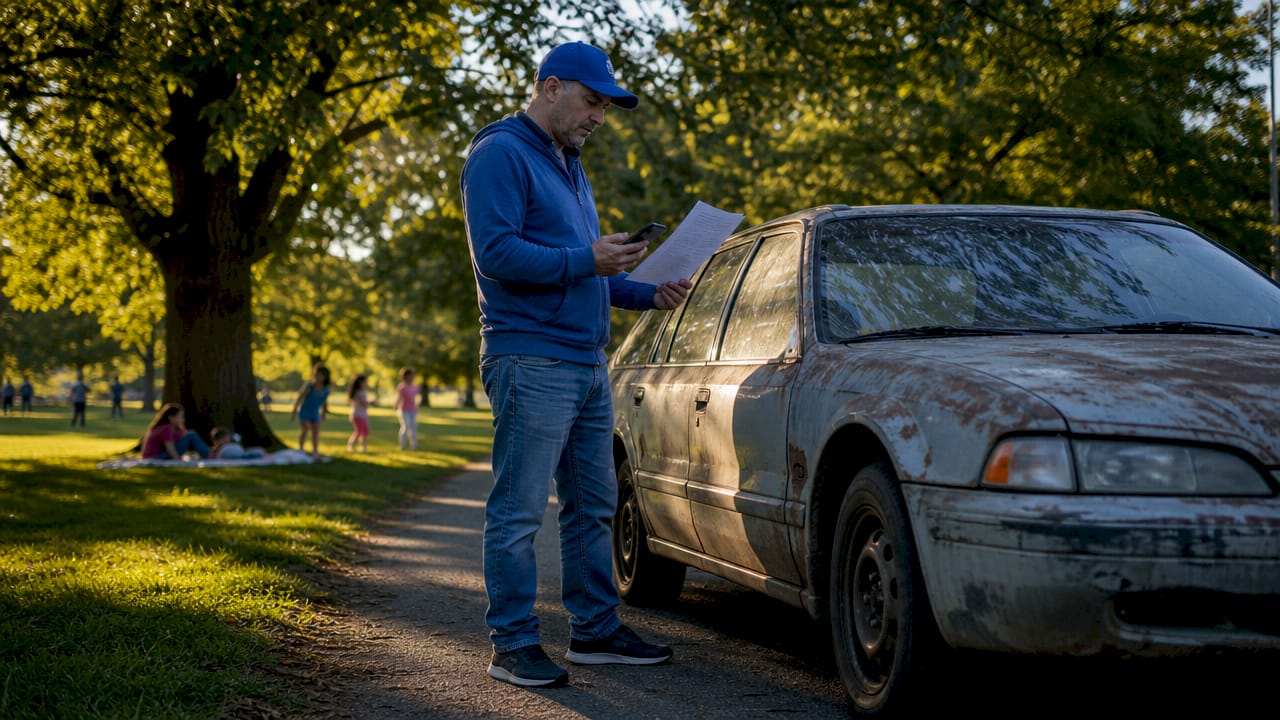
Preparation separates sellers who get top dollar from those who leave money on the table. Having your title and government ID ready before you call a buyer speeds up the entire process and keeps your offer from dropping at pickup.
Here is what to gather and do before you contact any buyer:
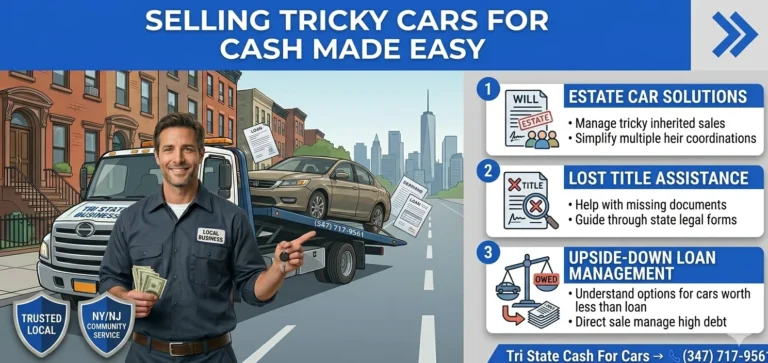
- Vehicle title. This is the single most important document. Selling without a title limits your buyer pool and almost always lowers your payout. If you lost your title, the New Jersey Motor Vehicle Commission can issue a duplicate before you sell.
- Government-issued photo ID. Every legitimate buyer requires this to verify ownership and complete the paperwork legally.
- Remove all personal belongings. Check the trunk, glove box, under seats, and door pockets. Buyers take the car as-is once the deal closes.
- Know your catalytic converter status. Catalytic converter theft is a real risk in New Jersey. A missing converter can reduce your offer by $200 to $1,400 overnight. Confirm it is still on the vehicle before scheduling pickup.
- Check local NJ regulations. New Jersey requires sellers to cancel the vehicle’s registration and return the license plates to the MVC after the sale. Skipping this step can leave you liable for tolls or violations tied to the vehicle.
Pro Tip: If your title shows a lienholder, contact your lender first. You cannot legally transfer ownership until the lien is released, and reputable buyers will not proceed without a clean title.
Sellers who handle these steps before calling a buyer consistently report faster pickups and fewer last-minute offer reductions. Preparation is not optional. It is the difference between a smooth transaction and a frustrating one.
How do you compare offers and choose the best buyer?
Getting one quote and accepting it is the most common mistake New Jersey sellers make. Comparing three to five quotes typically saves sellers $200 to $400, which is real money for a car you no longer want.
Follow this process to evaluate buyers properly:
- Get at least three quotes within the same day. Scrap metal prices shift weekly. Quotes gathered days apart are not comparable. Call or submit online forms to multiple buyers in one session.
- Understand what drives the offer. Buyers calculate value using three factors: scrap metal weight (priced per ton), salvageable parts demand, and resale potential. A running 2015 Honda Accord fetches more than a crushed 2003 Ford Taurus because parts demand differs sharply.
- Identify brokers versus direct buyers. Middlemen often require callbacks and subcontract towing to third parties. Direct recyclers pay more because they cut out the commission layer. If a buyer says they will “call you back with a number,” that is a broker signal.
- Ask about hidden fees upfront. Legitimate buyers include free towing in the quoted price. Any buyer who mentions a towing charge, processing fee, or administrative cost after quoting you is reducing your net payout without telling you directly.
- Check buyer reputation. Look for Google reviews that mention actual pickup experiences, not just the quote process. A buyer who ghosts you after scheduling costs you time and delays your cash.
Pro Tip: Local recyclers in New Jersey often beat national aggregator prices by $100 to $200 because they have lower overhead and direct access to regional parts markets. Always include at least one local buyer comparison in your quote round.
Comparing national aggregators with local recyclers consistently produces a $200 to $400 variance in final offers. That gap exists because national platforms take a cut before passing the job to a local yard anyway. Going direct removes that layer entirely.
What happens from accepting an offer to getting paid?
The timeline from quote to cash is shorter than most sellers expect. Once you accept an offer, the process moves fast.
| Step | Action | Typical Timeline |
|---|---|---|
| Accept the offer | Confirm verbally or in writing; provide title and ID details | Day 1 |
| Schedule towing | Buyer arranges free pickup at your location | Within 2–3 days |
| Vehicle inspection | Buyer confirms condition matches the quote | At pickup |
| Sign over title | You sign the title and any bill of sale | At pickup |
| Receive payment | Cash, check, or bank transfer depending on buyer | At pickup or within 48 hours |
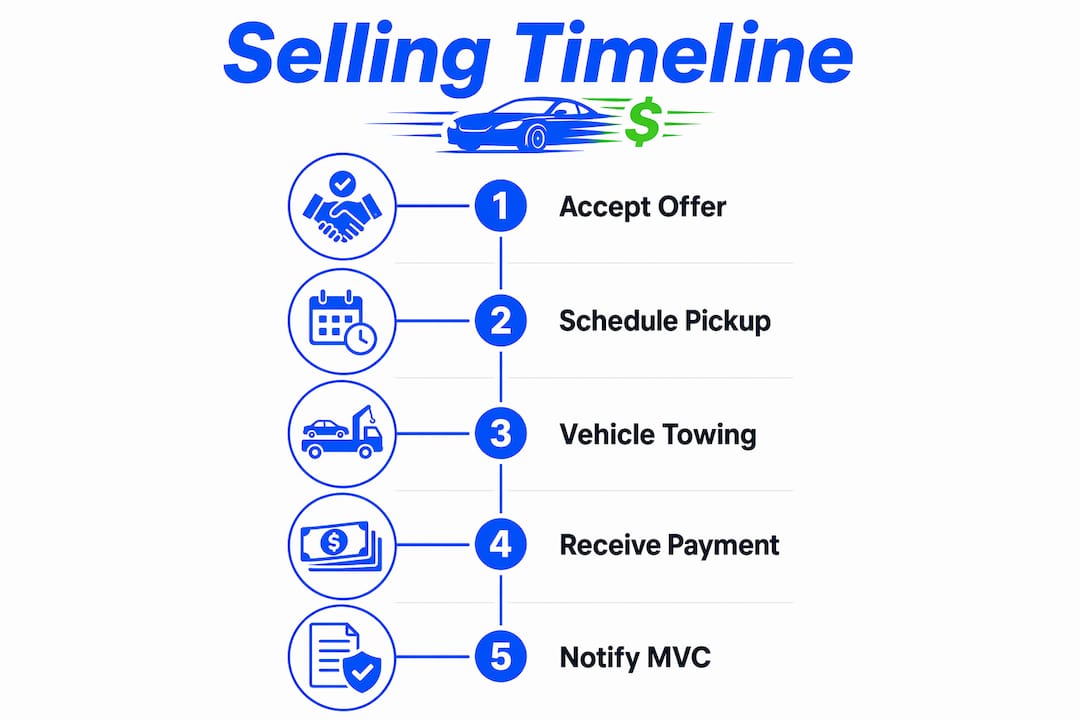
The full timeline from quote to payment runs 24 to 72 hours for payment, plus two to three days for towing scheduling. That means most New Jersey sellers have cash in hand within a week of their first call.
Payment method matters. Cash at pickup is the most common and the most secure. Checks require a bank visit and a waiting period. Bank transfers are convenient but add a day. Always confirm the payment method before scheduling pickup so there are no surprises when the tow truck arrives.
At pickup, the buyer’s team handles all paperwork. Your job is to hand over the signed title, collect your payment, and confirm the transaction is complete. Tristatecashforcars, for example, guarantees the quoted price at pickup with no last-minute reductions. That kind of commitment is what separates reputable buyers from those who low-ball you at the curb.
After the car leaves, notify the New Jersey MVC, cancel your insurance, and return your plates. These steps protect you from future liability tied to the vehicle.
Common mistakes that cost you money when selling your junk car
Most sellers who get low offers made at least one of these mistakes. Knowing them in advance puts you in a stronger position.
- Selling without the title. Buyers who accept title-free vehicles pay significantly less because their resale and recycling options are limited. Get a duplicate title from the NJ MVC before you sell.
- Trying to dismantle parts yourself. Removing parts rarely increases your total payout and often reduces it. A catalytic converter is worth $400 to $1,400 intact. Sold separately as a removed part, it fetches a fraction of that. Buyers price the whole car with all components included.
- Accepting the first offer. One quote gives you no negotiating power. Three to five quotes give you real market data and the ability to push back.
- Ignoring the fine print on fees. Some buyers quote high and then deduct towing, processing, or title transfer fees at pickup. Ask every buyer directly: “Is towing included in this price, and are there any other fees?”
- Waiting to time the scrap metal market. Monthly scrap price swings affect your payout by only $15 to $40 per car. That is not worth the risk of theft, weather damage, or a missing catalytic converter while you wait.
Timing the scrap market is a losing strategy for individual sellers. The monthly price movement is too small to matter, but the risks of waiting, including theft and damage, are real and immediate. Sell when you are ready, not when you think prices will peak.
The sellers who get the best results treat the process like a simple negotiation. They prepare their documents, collect multiple quotes, ask direct questions about fees, and move quickly once they find a fair offer.
Key Takeaways
Getting the most cash for your junk car in New Jersey requires your vehicle title, at least three competitive quotes, and a direct buyer who guarantees the quoted price at pickup with no hidden fees.
| Point | Details |
|---|---|
| Title is non-negotiable | Selling without a title limits buyers and lowers your offer significantly. |
| Get three to five quotes | Comparing offers typically saves sellers $200 to $400 on the final payout. |
| Avoid dismantling parts | Selling the car intact, especially with the catalytic converter, maximizes total value. |
| Confirm no hidden fees | Ask every buyer if towing and processing are included before you agree to anything. |
| Move fast after accepting | The quote-to-cash timeline runs 24 to 72 hours, so delays only create risk. |
What I have learned after years of watching sellers leave money behind
Most sellers walk into this process thinking the car is worth almost nothing. That assumption costs them. A 2008 Chevy Silverado with a blown engine still has a working transmission, intact catalytic converter, and usable body panels. Buyers know exactly what those parts are worth. Sellers who do not ask questions accept whatever number they hear first.
The biggest mistake I see is sellers going through a national broker platform because it feels easier. Those platforms exist to collect a fee, not to get you the best price. Direct recyclers consistently pay more because they are the ones actually buying the car. The broker is just a middleman with a website.
I also hear sellers talk about waiting for scrap prices to rise. That logic sounds reasonable until you realize the monthly swing is $15 to $40 per car. Meanwhile, your car sits in the driveway accumulating risk. One stolen catalytic converter wipes out months of theoretical price gains.
The sellers who do best are the ones who treat this like any other transaction: prepare the paperwork, get competing offers, ask direct questions, and close the deal with a buyer who puts the agreed price in your hand at pickup. No drama, no surprises.
— Eric
Tristatecashforcars makes selling your junk car straightforward
New Jersey sellers who want a guaranteed offer without broker fees or surprise deductions have a direct option. Tristatecashforcars sends a team to your location, handles all the paperwork, and pays the quoted price at pickup with no last-minute changes.
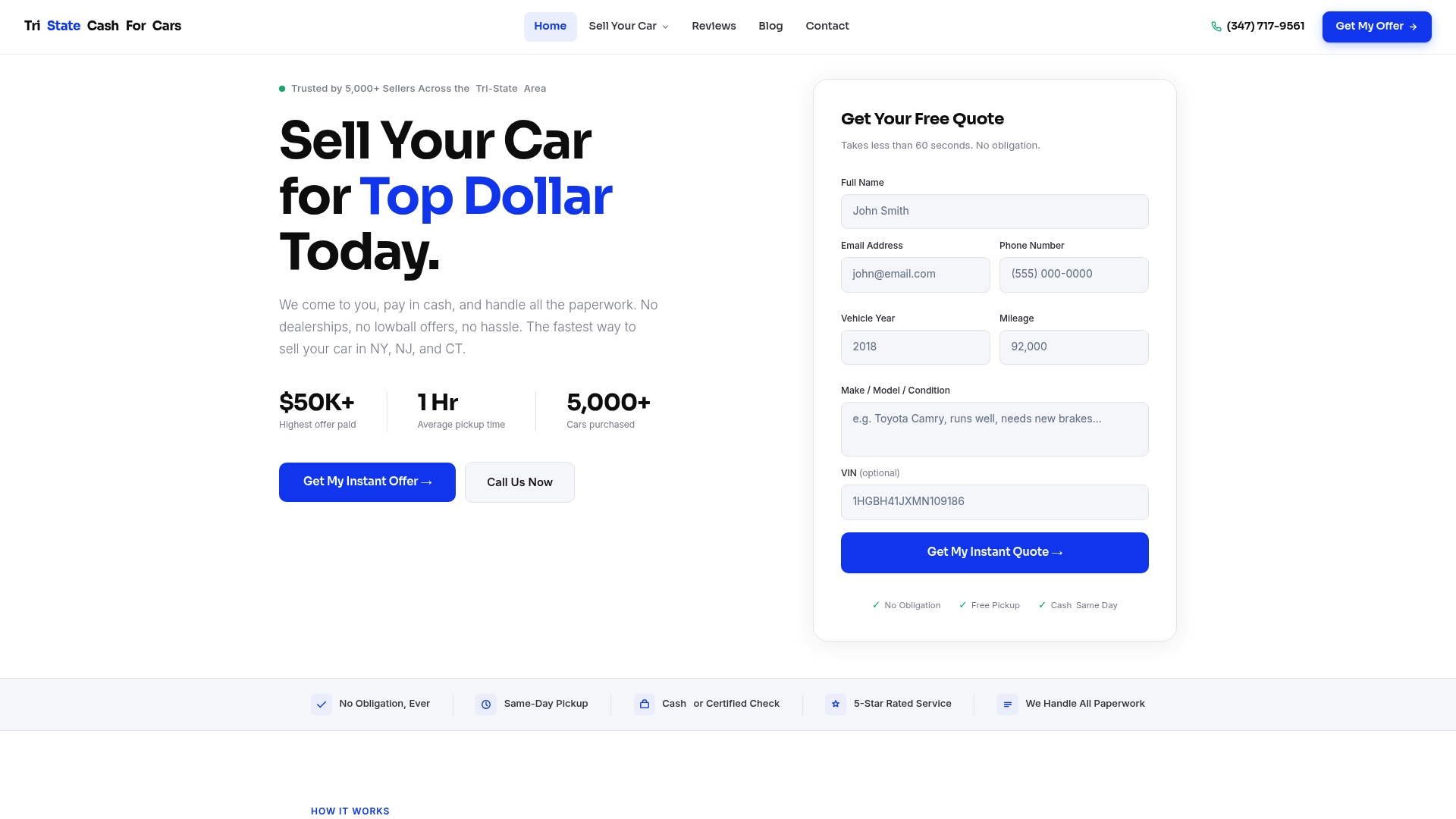
The process starts with a quick quote, either by phone or online. Pickup is scheduled within two to three days, and payment happens on the spot. There are no hidden towing fees and no callbacks from third-party dispatchers. For sellers in Brooklyn, the cash for cars Brooklyn page covers local pricing and scheduling details. For a full picture of your selling options across New York and New Jersey, the sell your car guide walks through every method available to you.
FAQ
How much can I get for my junk car in New Jersey?
Most junk cars fetch between $200 and $750 in scrap value, while complete vehicles with high-demand parts can reach $800 to $1,500 or more. The final number depends on vehicle weight, condition, and current parts demand in your area.
Do I need the title to sell my junk car?
Yes. Title possession directly affects your buyer pool and offer price. Selling without a title limits your options and almost always results in a lower payout. New Jersey sellers can get a duplicate title from the MVC before selling.
How long does it take to get paid for a junk car?
The typical timeline runs 24 to 72 hours from quote to payment, plus two to three days for towing scheduling. Most sellers in New Jersey have cash in hand within a week of their first call.
Is free towing standard when selling a junk car?
Reputable buyers include free towing in the quoted price. If a buyer quotes a price and then mentions a towing or processing fee, that fee is coming out of your payout. Always confirm towing is included before you agree to a pickup.
Should I remove parts before selling my junk car?
No. Dismantling parts yourself rarely increases your total payout and often reduces it. Buyers price the whole vehicle, including the catalytic converter, which is worth far more intact than removed and sold separately.