How to Sell an Old Car: Get Paid Fast and Fairly
The best way to sell an old car depends on what you value most: the highest possible price, the least effort, or cash in hand quickly. A private sale can bring more money but costs you time and risk. A dealer is convenient but may pay less. A cash buyer that comes to you sits in the middle, and it suits cars that are old, high-mileage, damaged or not running. This guide walks through each route, how to set a realistic price, the paperwork and how to get paid safely.
TL;DR
- Look up your car’s value in at least one pricing tool, then collect two or three real offers on the same honest description.
- Private sales can pay more but bring more work, more paperwork and more scam risk. Dealers and cash buyers trade some money for speed.
- Sign the title and a bill of sale, record the odometer reading, and cancel insurance and registration the way your state requires.
- Never accept a check for more than the price and send money back. That is a known scam.
- We buy cars in New York, New Jersey and Connecticut, running or not, and pay the quoted price at pickup.
Table of Contents
- Know what your old car is worth before anyone makes an offer
- The four main ways to sell an old car
- Get ready: a short checklist that raises offers
- Selling an old car that does not run
- How to get and compare fair offers
- Paperwork: what to sign and what to cancel
- Get paid safely
- Our perspective
- Sell your old car with Tri State Cash For Cars
- FAQ
- Sources
Know what your old car is worth before anyone makes an offer
An offer means little until you know the range. The Better Business Bureau suggests using reputable valuation websites such as Kelley Blue Book, Edmunds or NADA Guides, then checking what dealers and private sellers are asking for the same make, model, year and mileage.
Two details change the number you see:
- Trade-in versus private party value. Progressive notes that these tools give a range that is typically lower for dealer trade-ins and higher for private sales. Experian advises sellers to look at the private party value and to price slightly above average if they want room to negotiate.
- Condition. Be honest when you fill in the tool. An old car with a bad transmission, a failed inspection or body damage sits at the bottom of the range, and buyers will find out anyway.
Before you start, decide two numbers: the price you would love to get, and the lowest you will accept. The BBB recommends negotiating from a firm bottom line. It stops you from taking a rushed deal you regret later.
A quick worked example
Say your 2008 sedan with 160,000 miles shows a private party range in a pricing tool. A dealer will usually offer toward the low end because it needs room to recondition and resell. A private buyer may pay near the top, but only if the car runs, looks clean and has its records. If it needs repairs, a buyer who purchases cars as they are can be the more realistic comparison, because you skip the repair bill and the weeks of listing.
The four main ways to sell an old car
The BBB compares three standard methods: private sale, selling to a dealer or trading in, and online car-selling services. A fourth route, a local cash buyer that comes to your address, blends the speed of the last two with fewer steps for you.
| Method | Price potential | Effort | Paperwork | Main risk |
|---|---|---|---|---|
| Private sale | Highest | High: photos, ads, messages, test drives | You handle it | Scams and no-shows |
| Dealer sale or trade-in | Often lower | Low | Dealer handles it | Less profit |
| Online selling service | Often lower | Low: quick quote | Mostly handled | Less profit, online fraud |
| Local cash buyer with pickup | Fair, set by condition | Low: one call or form | Handled at pickup | Check the quote is guaranteed |
Private sale
You set the price and talk to buyers directly. The BBB says this route may bring a higher price but takes more effort for advertising and screening buyers, leaves paperwork to you and carries a high risk of scams. For a car in good shape with a clean title, it can be worth it. For an old car with quirks, expect more tire-kickers and more haggling.
Dealer or trade-in
It is straightforward: you drive in, they appraise, they handle the paperwork. The cost is that you may leave money on the table. If a dealer’s number feels low, our guide on raising a low dealer trade-in offer shows what to say and how to get a second number the same day.
Online selling services
These give you a quick quote and handle most paperwork. Chase describes the typical process: a valuation survey using your VIN and mileage, an offer that stays valid for several days, and a physical check of the car’s condition before the paperwork is finished. If the car in person does not match the survey, the offer can change. Our piece on closing the gap in instant offer accuracy explains how to describe your car so the number holds.
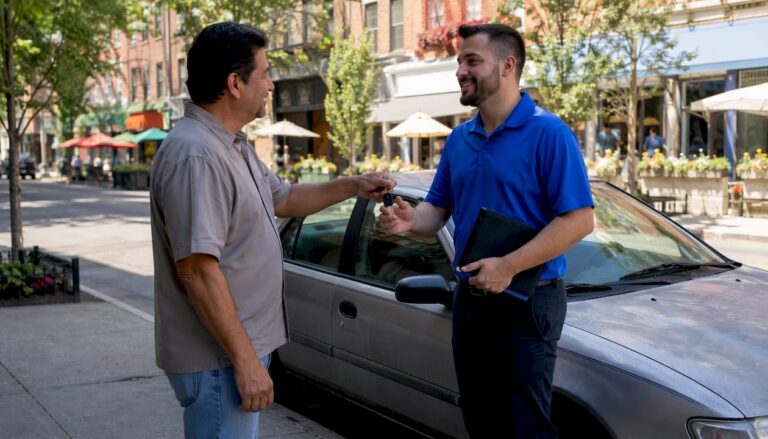
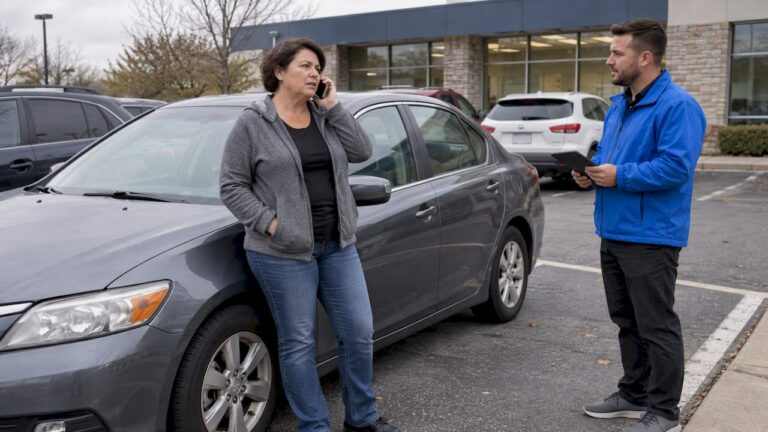
A local cash buyer who comes to you
This is what we do. We send a team to your location, give you a cash offer, and handle the paperwork. If you are comparing a national online buyer with a local one in our area, this comparison for NY and NJ sellers lays out the differences.
Get ready: a short checklist that raises offers
Preparation costs little and shows buyers you cared for the car. The BBB suggests cleaning the car, making reasonable repairs or planning to sell as is, and gathering maintenance records, title or loan information, registration and warranty details. Take photos from several angles inside and out.
A practical order:
- Find the title. Check whether it is in your name and whether a lender holds a lien. If the title is missing, start a duplicate request with your state now, since it can take time.
- Pull your records. Oil changes, brake work and tire receipts all help a private buyer trust the car.
- Clean it. Vacuum, wash, remove personal items and check the glove box and trunk.
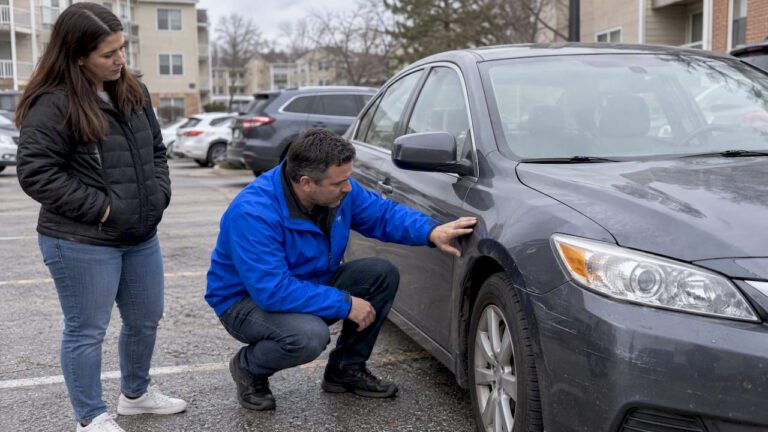
- Photograph it honestly. Show dents and stains as well as the good angles. Surprises at pickup cost you trust.
- Write down the facts. VIN, mileage, known problems, number of keys.
Our prepare-your-car-for-sale guide goes deeper on what is worth fixing and what is not. As a rule, do not pay for a repair that costs more than it adds to the offer.
Selling an old car that does not run
A car that will not start still has value, to a buyer who repairs it, sells parts or resells it wholesale. Capital One lists six routes for a non-running car: trade it in, sell it yourself, use online buyers, ask mechanics and repair shops, try scrap yards, or donate it.
Whichever you choose, the habits that protect your price are the same:
- Describe the problem honestly: won’t start, no transmission, flood or accident damage.
- Get two or three quotes on the identical description, so the numbers compare fairly.
- Ask each buyer the same questions: is the quote guaranteed, who pays for towing, when do I get paid?
- Leave the car whole. Removing the battery, wheels or catalytic converter lowers offers and can cause disputes at pickup.
We buy vehicles whether they run or not. Read how to sell a non-runner fast for fair cash and what happens on the day in getting cash at pickup for a non-running car. If the damage came from an accident, see selling a damaged car fast. For a branded title, the rules on disclosure matter, covered in selling a salvage title car legally.
What about donating?
Donation feels simple, but the tax result may differ from what people expect. A summary of IRS rules says that if the charity sells the vehicle, your deduction is generally limited to the gross proceeds of the sale. If you want cash today, donating will not provide it. If you are considering a deduction, ask a tax professional what applies to your return.
How to get and compare fair offers
A fair offer is one you can compare. Use this routine:
- Pick your reference range from a valuation tool, using the right condition.
- Request two or three offers using the same description, mileage and photos.
- Ask what is included. Is towing free? Are there fees deducted at pickup? Is the price the one you will actually be paid?
- Check how long the offer is valid and what could change it at inspection.
- Choose on the total: price, speed and certainty together.
Certainty matters as much as the headline figure. An offer that drops at the curb is not a better offer than a slightly lower one that is paid as quoted. For what to confirm before you say yes, see our guide to a guaranteed car offer and how to avoid odometer and title surprises. If speed is your priority, fast car sale options in NY, NJ and CT compares quick cash with waiting for more money. For high-mileage cars specifically, see selling a high mileage car.
Paperwork: what to sign and what to cancel
Paperwork is where old-car sales most often go wrong, usually because the seller skips a step and stays responsible for the car.
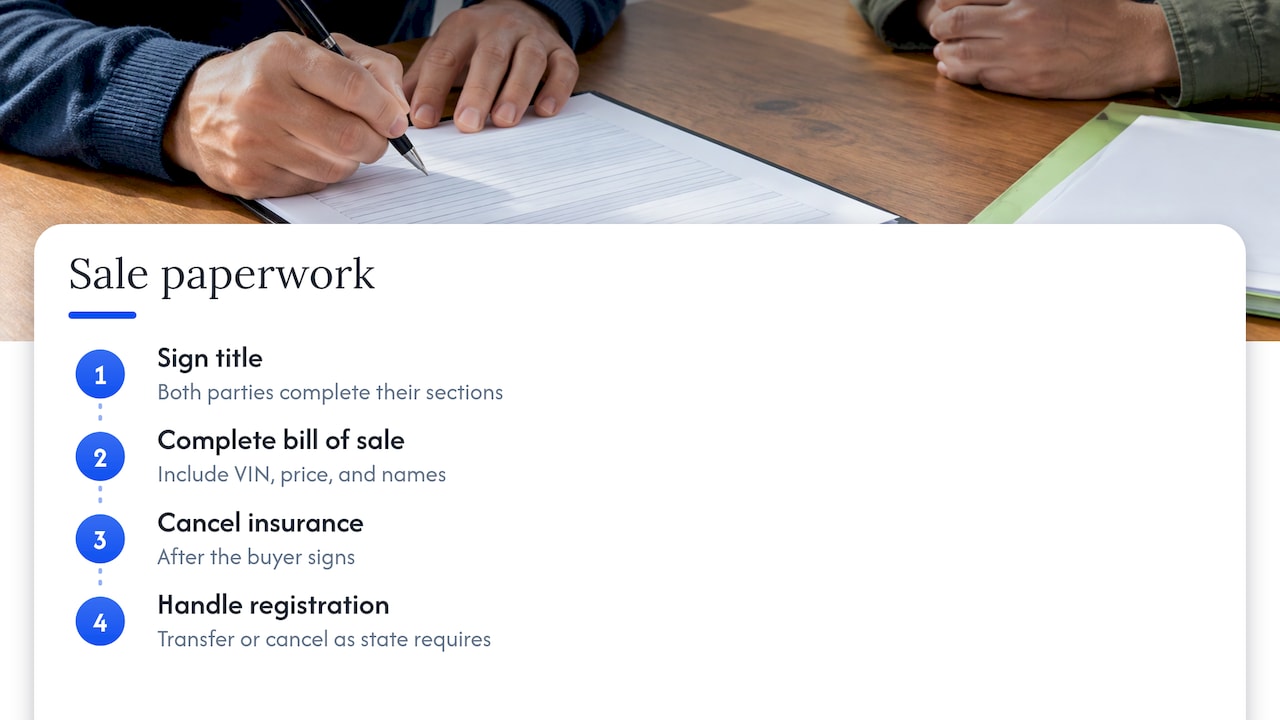
The BBB lists the finishing steps: sign over the title with both parties completing their sections, complete a bill of sale with the VIN, price and names, cancel your insurance after the buyer signs, and transfer or cancel your registration as your state requires.
Odometer disclosure
Federal rules require you to tell the buyer the mileage. Under 49 CFR Part 580, a seller must give the purchaser a written statement of the odometer reading at transfer, and must note it if the reading is known to differ from the miles actually traveled.
New York specifics
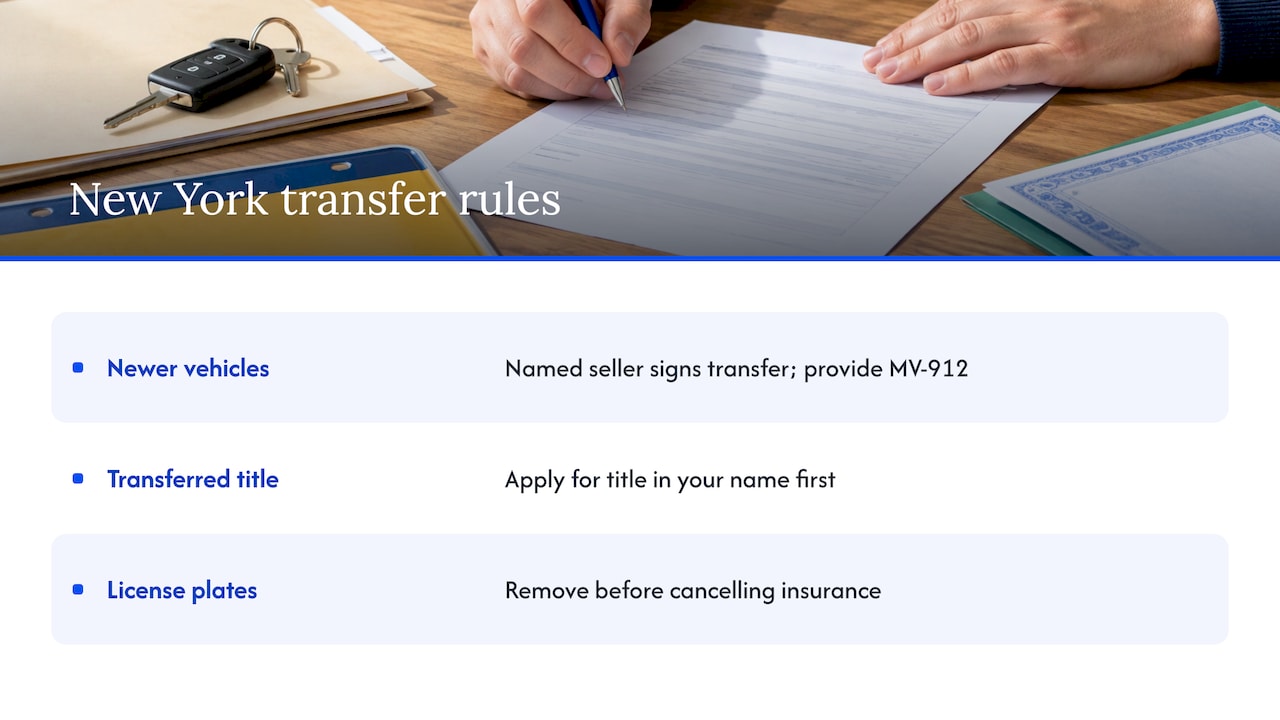
New York’s DMV explains that for newer vehicles the seller named on the proof of ownership must sign the transfer section and provide a Vehicle Bill of Sale (MV-912). It also says a seller holding a title that was transferred to them by someone else cannot use it to pass on ownership. They must first apply for a title in their own name. Our NY car sale paperwork guide covers the order of steps, including why plates come off before insurance is cancelled.
New Jersey and Connecticut
Requirements differ by state, so confirm the current steps on your state motor vehicle agency’s website before the sale. If you are not sure what to sign on the day, this pickup paperwork checklist shows what a buyer should hand you and what you should keep.
Get paid safely
The payment moment is where scammers act. The FTC warns that if someone sends a check for more than the selling price and asks you to send money back, it is a scam. Never use money from a check to buy gift cards or money orders, send cryptocurrency or wire money to anyone who asks.
Safer habits:
- Meet in daylight at a public place, or have the buyer come to you with another person at home.
- Do not hand over keys or title until payment is confirmed and in your hands.
- Be wary of buyers who will not see the car but want to pay at once, or who invent a shipping agent.
- Keep a copy of the signed bill of sale and a photo of the odometer.
For more warning signs, read how to spot and avoid car selling scams. The BBB also suggests checking a buyer’s reputation on BBB.org before you deal.
Our perspective
Most people who call us about an old car have already tried the usual routes. A dealer lowballed them, a listing drew a week of messages, or the car simply will not run. They are not looking for a lecture on market values. They want a number they can trust and the car gone.
That is why we built our service around certainty. We come to you, give you a cash offer, handle the paperwork, and our guarantee is that we pay the stated price at pickup. No surprises at the curb. For sellers who need liquidity, we aim to get cash in your hand within an hour.
Our view is that an old car’s value is not only the price. It is also the days you do not spend answering strangers, the repair bill you skip and the risk you avoid. We make our offers with that in mind, and we believe they beat what many local dealers will offer.
Eric
Sell your old car with Tri State Cash For Cars
If your old car has become more hassle than it is worth, we can take it off your hands. We buy cars, SUVs, trucks, vans and commercial vehicles in New York, New Jersey and Connecticut, running or not, with or without a title. We give you an instant offer, come to your location and handle the paperwork.
Get your cash offer from Tri State Cash For Cars and see what your car can bring today. In Brooklyn or the city, see how we work in NYC.
FAQ
What is the best way to sell an old car?
It depends on your priority. A private sale tends to pay the most but takes the most effort and carries scam risk. A dealer or cash buyer is faster and handles the paperwork, though you may accept less than a patient private sale would bring. If you need money soon or the car does not run, a buyer who picks up is usually the practical choice.
Can I sell an old car without a title?
It can be possible, but it depends on the buyer and your state’s rules. Without a title, ownership can be hard to prove, so start by asking your motor vehicle agency about a duplicate. We buy vehicles with or without a title in our service area, and we can explain what your situation needs before pickup.
How much should I ask for an old car?
Start with a pricing tool and use the private party value if you are selling yourself. Experian suggests pricing a little above average to leave room to negotiate. Know your minimum before you begin, and describe the condition honestly so the number holds up at inspection.
What do I do with my plates and insurance after the sale?
Follow your state’s rules. The BBB advises cancelling insurance only after the buyer signs the bill of sale, and transferring registration or notifying the DMV if required. In New York, the order matters, so check our NY paperwork guide first.
Sources
- BBB: How to sell a car to a trustworthy, honest buyer
- Progressive: How to Sell a Car Privately
- Experian: How to Sell Your Car to a Private Party
- Chase: How to Trade in a Car Online
- Capital One: How to Get Rid of a Car That Doesn’t Run
- LegalClarity: Automobile Donation Tax Deductions
- NHTSA: Odometer disclosure interpretation
- NY DMV: Acceptable Proofs of Ownership for Vehicles
- FTC: Fake check scam targets online car sellers