Selling a Car Without Registration: What You Need
Yes, in most cases you can sell a car that has expired registration, missing plates or no registration at all. Registration is not what proves you own the car. The title does. If you hold the title (or can get a replacement, or qualify for a New York alternative), you can sign the car over, even if the tags lapsed years ago.
What changes is the paperwork, the plates and how the buyer moves the car. This guide covers the rules in New York and New Jersey, where we buy cars, and points to a few other states for comparison.
TL;DR
- Expired registration usually does not stop a sale. In most states it does not affect legal ownership or your ability to sign the title over.
- Proof of ownership is the real requirement. In New York that is normally a certificate of title, or a transferable registration for 1972 and older models.
- Remove your plates and registration sticker before the buyer leaves, and keep your insurance until the plates are surrendered.
- Lost plates in New York need a police report before you surrender the registration at the DMV.
- A buyer who picks the car up solves the “I can’t drive it” problem. We buy cars with or without a title, running or not, in NY, NJ and CT.
Table of Contents
- Registration and title are two different things
- What you need in New York
- What you need in New Jersey
- Selling without plates
- The practical problem: how does the car move?
- Step by step: selling a car with no current registration
- Mistakes that cost sellers money
- Our perspective
- Sell your car with expired registration, for cash
- FAQ
- Sources
Registration and title are two different things
People mix these up, and it causes most of the worry about this topic.
- Title: the legal document that says who owns the vehicle. It does not expire.
- Registration: the state’s permission to operate the vehicle on public roads, shown by plates and a sticker. It expires, and it stays with the plates, not with the sale.
When the registration lapses, the car does not become unsellable. It becomes a car that cannot be legally driven on public roads until someone registers it. The next owner registers it in their own name anyway, so your expired history is irrelevant to them.
The catch is the word “most.” Rules are set by each state. Washington, for example, allows a sale with expired registration but requires a valid title, and accepts a replacement title or a specified affidavit. It also asks for a bill of sale unless the price and date appear on the title. Other states have their own versions of the same idea: the title carries the sale, and the registration does not.
What you need in New York
New York is where most of our sellers are, so it gets the detail.
Proof of ownership
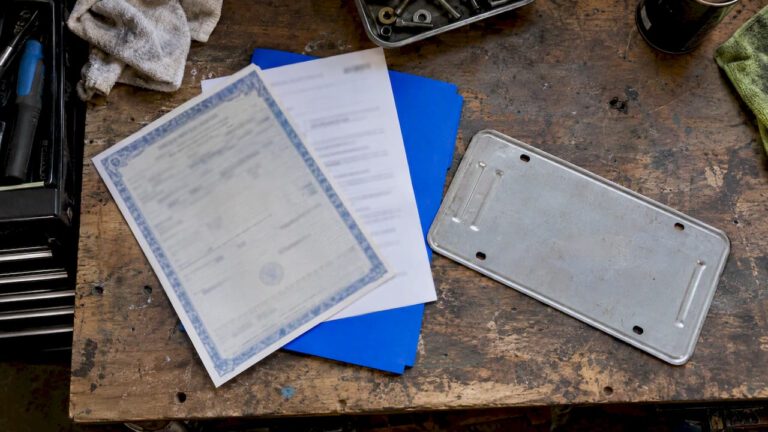
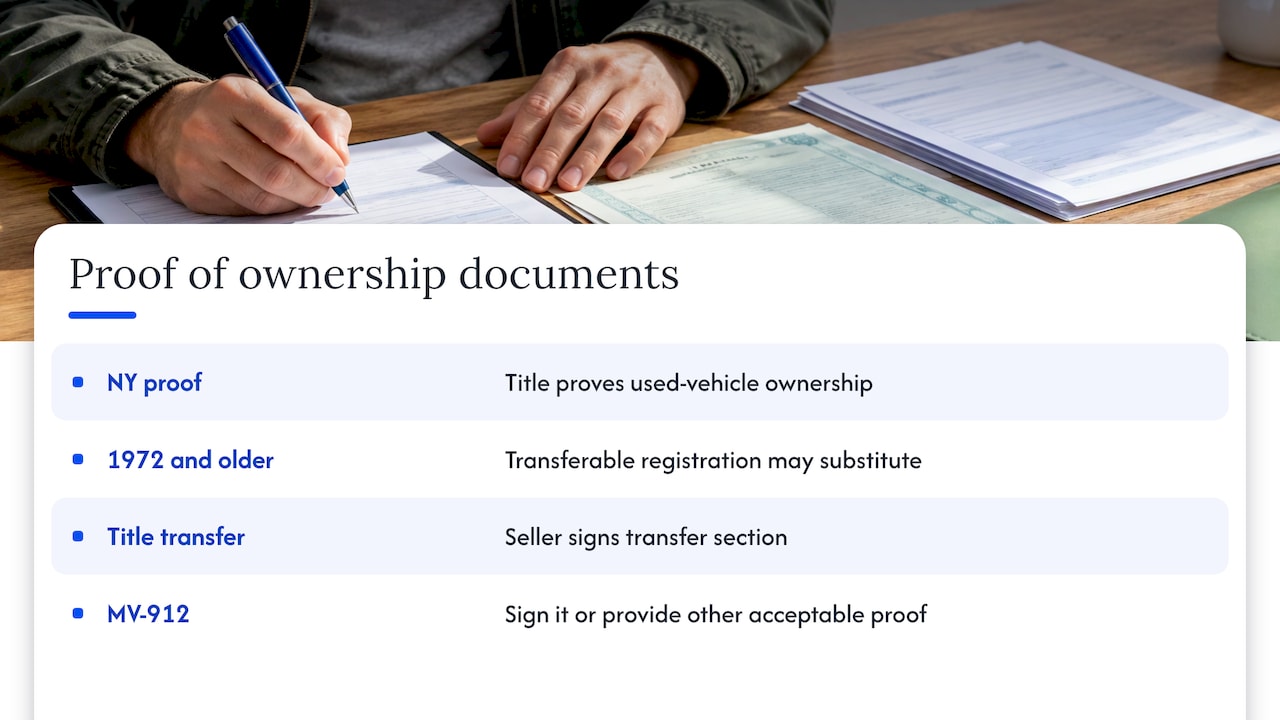
The NY DMV says a certificate of title is the proof of ownership for a used vehicle sold privately. For 1972 and older models, a transferable registration can serve instead. So if your car is from that era and the registration is the only document you have, check its status before you panic.
To transfer, the seller completes and signs the title transfer section and signs an MV-912, or provides other acceptable proofs of ownership and transfer. Our page on what the DMV accepts as proof of ownership walks through the options, and our guide to the MV-912 and related forms covers the bill of sale.
If the registration is lost or expired
For a vehicle that uses a transferable registration, the owner can apply for a duplicate at a DMV office and still transfer ownership even if that registration is expired. If the car is a newer one, the title is what counts. If that is the document you are missing, see our walkthrough on selling a car without a title in NY.
Non-titled vehicles
Some older vehicles have no title. For a New York non-titled transfer, the former owner gives the new owner a completed MV-51B and a bill of sale, or a completed MV-51. Cars made before 1968 may have no title and use a bill of sale.
If you want a plain-English look at the expired-registration case specifically, we cover it in selling a car with expired registration in NY.
What you need in New Jersey
NJ keeps it simple. The MVC says the seller signs the title and gives the buyer a bill of sale showing the buyer’s name and address, the sale date, the mileage and the sale price. The buyer then transfers the title and gets plates in their name.
The seller’s job on plates: remove and surrender them, unless you are moving them to another vehicle. Our NJ plate removal and surrender guide lays out the timeline, and the three NJ sale forms are worth reading before any MVC visit.
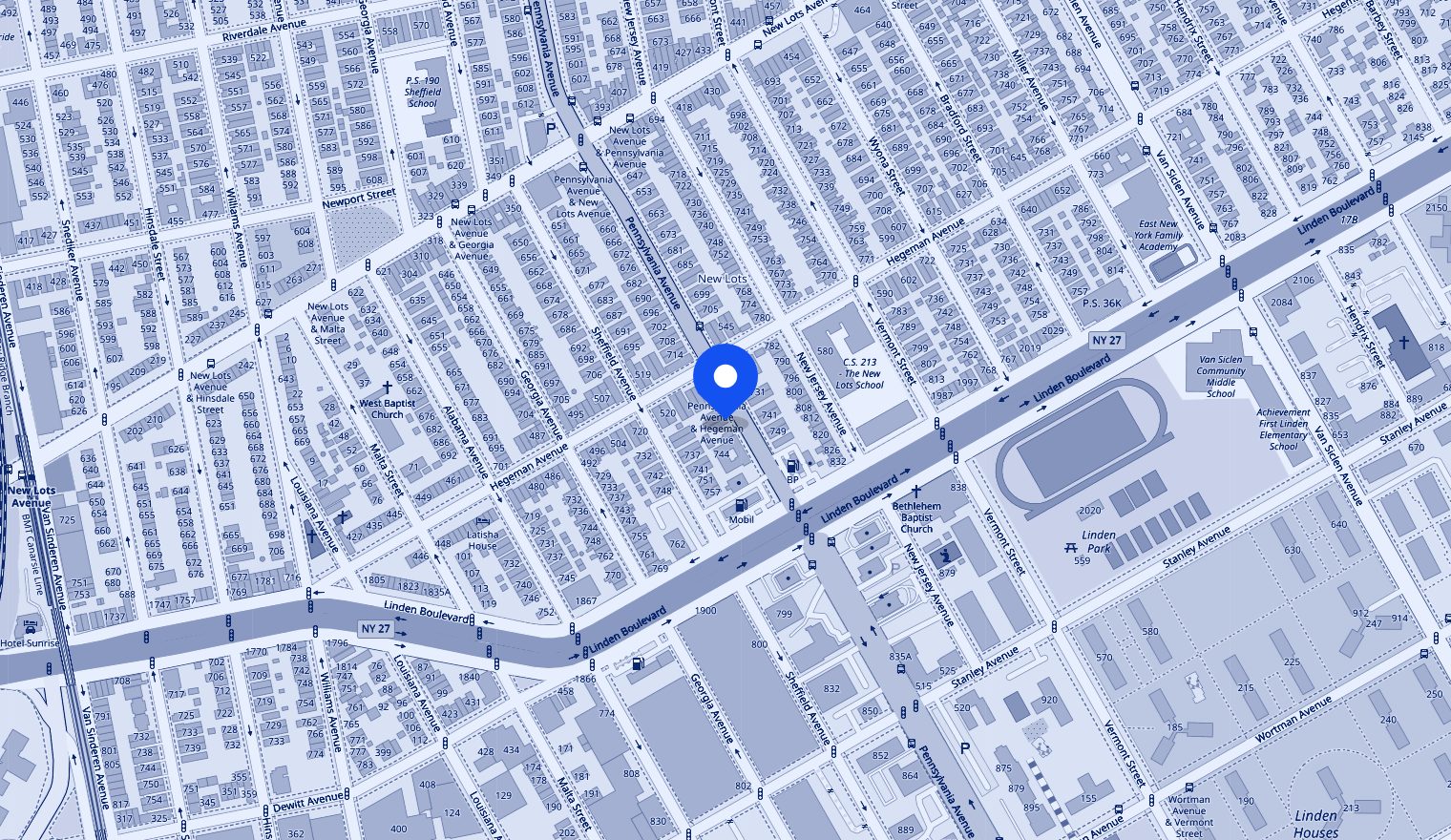
Selling without plates
Missing plates are a separate issue from missing registration, and a fixable one.
Plates you removed on purpose
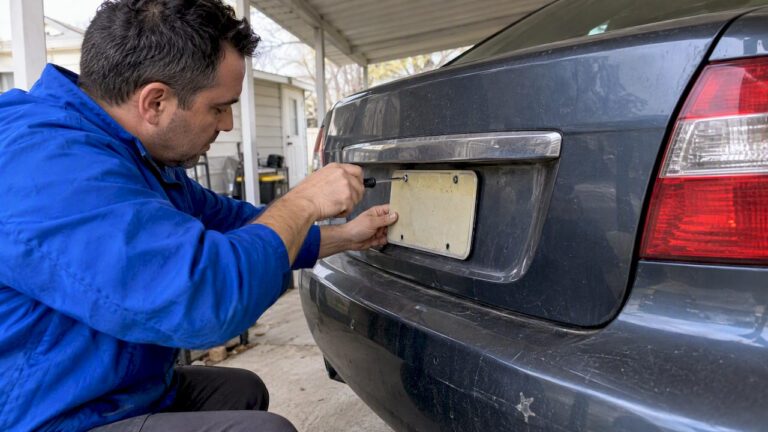
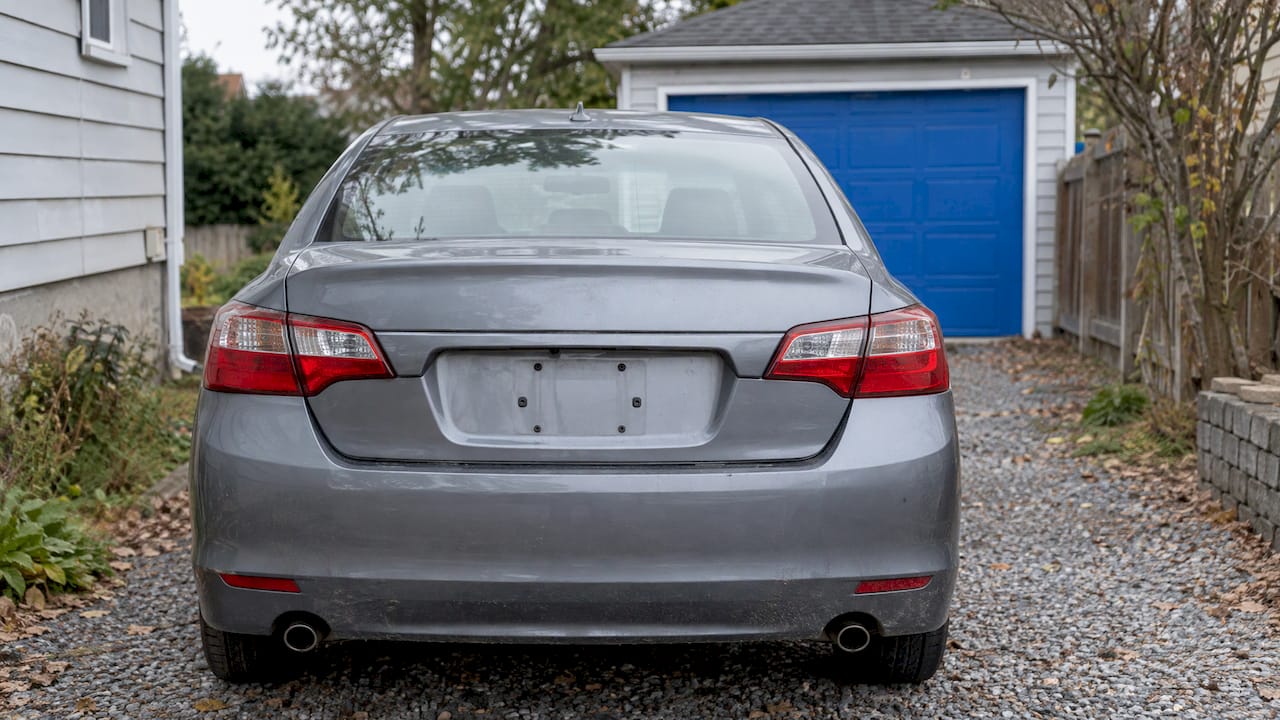
This is the normal case. In New York, take off the plates and the windshield registration sticker before the sale. The DMV notes this can prevent parking tickets that are not yours. A car with no plates at pickup is not a problem for a buyer who tows or collects it.
Plates that are lost or stolen
In New York, if both plates (or the single plate issued to the vehicle) are lost, stolen or destroyed, notify the police, get a report, and bring it to the DMV to surrender the registration. Do this before you sell, or at least right after. It puts on record that the plates are no longer in your control, which matters if someone misuses them.
Plates and your insurance
Order matters here. Before you cancel liability insurance in New York, surrender the plates and registration, or the DMV will suspend the registration and can suspend your driver’s license. The DMV also says to keep insurance in place until the plates are surrendered, so you avoid a lapse. Our NY sale paperwork guide is built around this sequence: plates first, insurance second.
The practical problem: how does the car move?
An unregistered car cannot be driven on public roads, and that is where private sales go wrong. A buyer who takes a test drive in your unregistered car can get pulled over, and you may be left with a mess. In New York, a buyer must register a newly acquired vehicle before driving it on public highways.
Some states give buyers a short window. Indiana, for example, lets someone who buys from an individual drive the car for up to 72 hours, by the most direct route, to storage, an emissions station or a registration branch, while carrying the title. That is an Indiana rule. Do not assume your state has the same one. Check your own DMV or MVC before you let anyone drive away.
The cleaner options for an unregistered car:
- Sell to a buyer who comes to you and takes the car away without driving it on public roads.
- Keep the car parked, show it standing still, and let the buyer inspect it on private property.
- Restore registration first, only if the cost makes sense for the sale price.
Option 1 is why many owners with lapsed tags come to us. See what happens when you sell in NY with expired registration for how pickup works.
Step by step: selling a car with no current registration
- Find your title. Check your files, glovebox and lender paperwork. If you owe money, the lender may hold it.
- If it’s missing, replace it. In NY, see our guide on the duplicate title and MV-35 options. Other states have their own duplicate-title process.
- Gather the transfer forms. In NY that means the signed title and MV-912, or the non-titled forms above. In NJ, the signed title and a bill of sale with the required details.
- Write the bill of sale. Include the date, price, mileage, buyer’s name and address, and both signatures. Keep a copy.
- Remove plates and sticker. Do it at handover, not before, so the car stays identifiable during the sale.
- Report the sale. Our guide to reporting a car sale in NY covers plates, title and bill of sale. Washington, as another example, requires a report of sale within 5 days.
- Surrender plates, then handle insurance. Cancel coverage only after the DMV has the plates.
Mistakes that cost sellers money
- Letting the buyer drive it unregistered. Any ticket or accident can come back to you if the sale isn’t documented.
- Leaving plates on the car. Parking and toll violations can follow the plates.
- Skipping the bill of sale. Without a dated record, you can’t show when ownership changed.
- Cancelling insurance first. In NY that can trigger registration and license suspension, as noted above.
- Assuming another state’s rules apply. Rules in California, Arizona or Washington differ from NY and NJ. What works in one state does not carry over automatically.
Our perspective
Most people who call us about an unregistered car assume they have a problem. Usually they have a paperwork question and a logistics question, and both are solvable.
The paperwork question is whether you can prove you own the car. The logistics question is how it leaves your driveway without anyone driving it illegally. A buyer who comes to the car, makes an offer, and handles the forms removes most of the risk that a private listing creates.
That is how we work. We send a team to your location, give you a cash offer, and handle the paperwork. Our guarantee is simple: we commit to paying the price we quote at pickup. For sellers with expired tags, missing plates or an old car that has sat for a while, we think that is the safest and fastest path.
Eric
For a closer look at what to sign on the day, see our car pickup paperwork guide.
Sell your car with expired registration, for cash
If your registration has lapsed or the plates are gone, you don’t need to fix everything first. Tri State Cash For Cars buys cars, SUVs, trucks, vans and commercial vehicles in New York, New Jersey and Connecticut, running or not, with or without a title. We come to you, give you an offer, handle the paperwork, and pay at pickup. Many sellers tell us they want cash in hand within the hour, and that is what our process is built for.
Start on our sell your car page and tell us about the vehicle. If you are in the city, our NYC cash offer page has local detail. If you want to know how our offer works before you call, read about our guaranteed car offer.
FAQ
Can I sell an unregistered car?
Usually yes. Registration and ownership are separate, and in most states expired registration does not affect your ability to sign the title over. You need proof of ownership, and the buyer must not drive the car on public roads until it is registered. Check your own state’s rules, because they differ.
Can I sell a car in New York with no registration?
Yes, if you can prove ownership. The NY DMV treats a certificate of title as proof of ownership for a used private sale. You sign the title transfer section and an MV-912, or provide other accepted proofs. Older non-titled vehicles use different forms, such as the MV-51B.
What if I lost my license plates before selling?
In New York, report them to the police, get a report, and take it to the DMV to surrender the registration. Do not cancel your insurance until that is done. Then you can sell the car without plates, and the buyer registers it in their own name.
Do I need a bill of sale if the registration is expired?
Yes, keep one. New Jersey requires the seller to give the buyer a bill of sale with the date, mileage, price and the buyer’s details, and a dated copy protects you in any state. Our NY bill of sale guide shows what to include.
Do I need to file anything after the sale?
In most states, yes. Remove the plates, file the state’s notice of sale or release of liability where one exists, and keep your bill of sale. In NJ, remove and surrender the plates unless you transfer them to another vehicle. Washington requires a report of sale within 5 days.
Sources
- Sell a vehicle | Washington State Department of Licensing
- NJ MVC | Transferring Vehicle Ownership
- Can You Sell a Car With Expired Registration?
- Chapter 3: Owning a Vehicle | NY DMV
- Buy, Sell, or Transfer Vehicle Ownership | NY DMV
- Proof of Ownership is Not Available | NY DMV
- MV-51B: Statement of Ownership for Non-Titled Vehicles
- VTL 401: No Registration/Expired Registration
- Lost, Stolen or Destroyed Plates | NY DMV
- Surrender Your Vehicle Plates and Registration | NY DMV
- Insurance Lapses | NY DMV
- Driving a newly purchased vehicle without plates | Indiana BMV