On-Site Car Appraisal: Get a Cash Offer at Your Door
An on-site car appraisal means someone comes to where your car is parked, looks it over, photographs it and puts a number on it. If you want to sell the car, the most useful version of that visit ends with a cash offer you can accept on the spot, not a report you wait days for. In New York, New Jersey and Connecticut, we send a team to your location, make the offer and handle the paperwork, and we guarantee we will pay the price we quote when we pick the car up.
The phrase covers two very different services, and picking the wrong one costs you time. This guide explains both, what happens during the visit, how to prepare, and which paperwork you need in New York and New Jersey.
TL;DR
- An on-site appraisal is a visit to your car by a person who inspects, photographs and values it. A certified appraisal report is a document; a buyer’s on-site offer is a price you can take today.
- Certified reports are built for insurance, court, estate or financing purposes, and typically take 3 to 5 days, with rush options sometimes available at extra cost.
- If your goal is to sell, a buyer who values the car at your door and pays at pickup gets you from question to cash in one visit.
- Have the title (or a plan for a duplicate), your ID, plates and keys ready. New York and New Jersey each have specific seller steps.
- Get the amount in writing before the visit and confirm it is the amount paid at pickup.
Table of Contents
- Two things called an on-site appraisal
- Appraisal report or cash offer: which one you need
- What happens during an on-site visit
- How a cash offer is worked out, and how to judge it
- Prepare your car and paperwork
- Non-running, damaged or older vehicles
- Paperwork for sellers in New York and New Jersey
- From offer to cash: how fast it can go
- Selling safely at your door
- Ready to sell? Book the visit
- Our view: why the visit should end in a payment
- FAQ
- Sources
Two things called an on-site appraisal
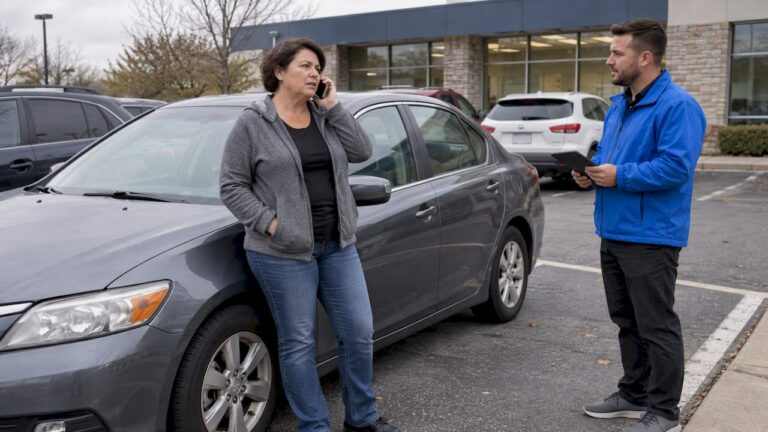
Search this phrase and you will mostly find independent appraisal firms. Their model is straightforward: a certified inspector travels to the vehicle’s location, grades its condition, photographs it and later issues a written valuation. Another firm describes the same sequence: an expert comes to the vehicle, collects your contact and vehicle details, grades condition and takes photos.
Those reports have real uses. Appraisals are common in divorce, estate and civil matters, and a documented one can support a request to revise a total-loss insurance offer. If someone else (a court, an insurer, a lender) will rely on the number, ask that party what documentation or inspection they require before you order anything.
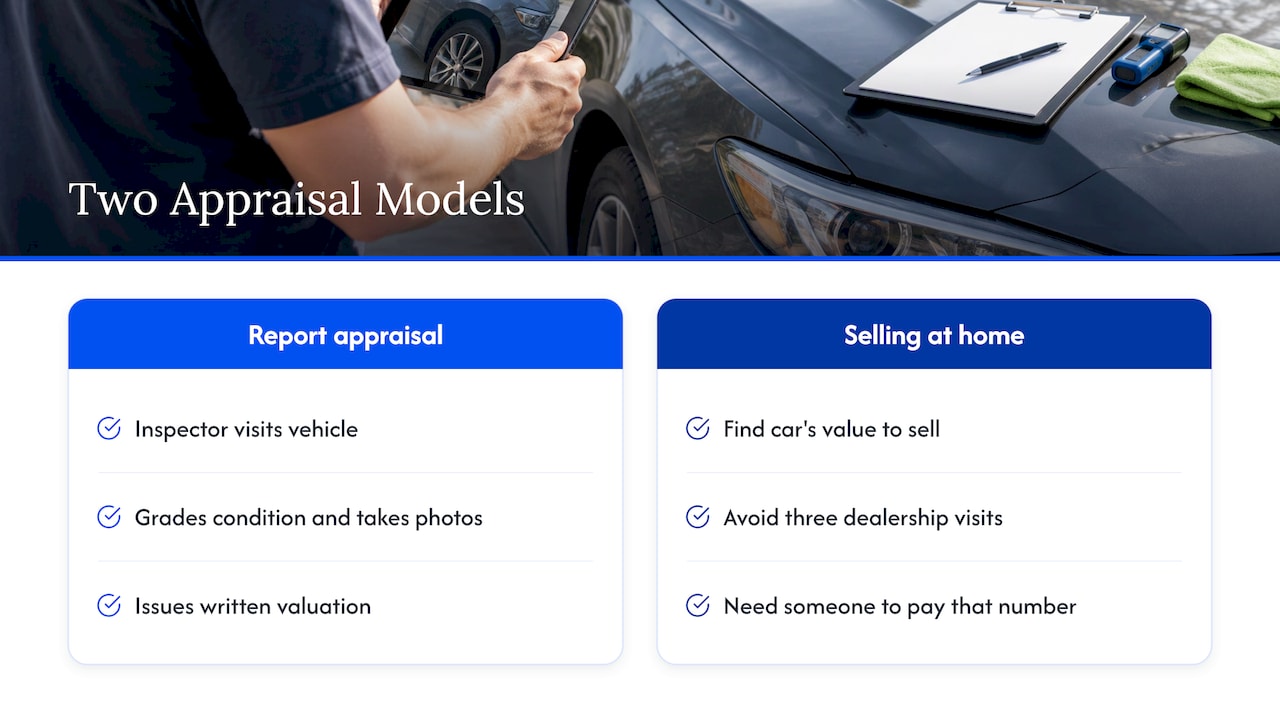
But most people who type “on-site car appraisal” or “mobile car appraisal” are not heading to court. They want to know what the car is worth so they can sell it, and they would rather not drive it to three dealerships or meet strangers from online listings. For that reader, the appraisal is only the first half of the job. The second half is someone willing to pay that number.
Appraisal report or cash offer: which one you need
| Certified appraisal report | On-site cash offer from a buyer | |
|---|---|---|
| What you receive | A written valuation document | A price you can accept the same visit |
| Typical use | Insurance claims, legal matters, financing, estates | Selling the car |
| Timing | Usually 3 to 5 days; rush may cost extra | Same visit |
| Does it sell the car? | No, you still need a buyer | Yes, payment happens at pickup |
| Paperwork | You handle it | We handle it for you |
If you are deciding between them, ask one question: will anyone other than me need to see this number? If yes, a certified report is the right tool. If the only audience is you and the person buying the car, skip the report and get a real offer.
What happens during an on-site visit
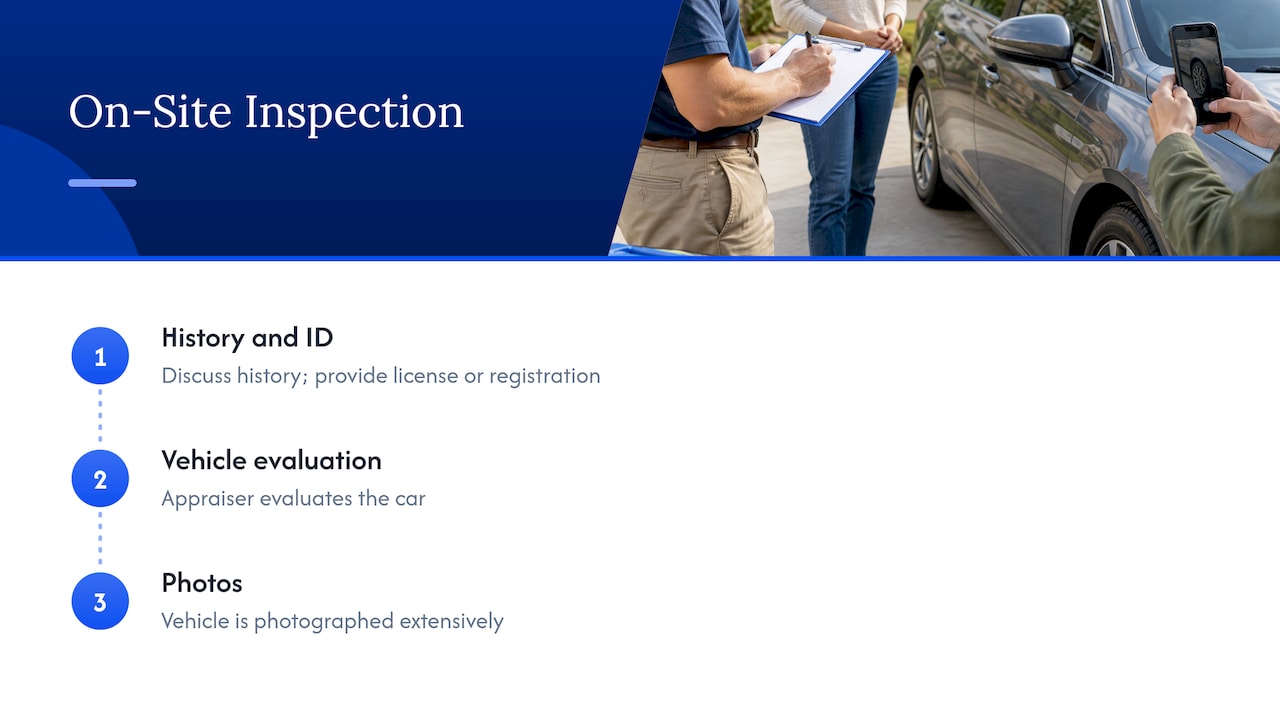
Whether the visit is for a report or an offer, the inspection follows the same pattern. At an appraisal appointment, the appraiser discusses the vehicle’s history, asks for the license or registration, evaluates the car and photographs it extensively. Expect the following.
Identification and history
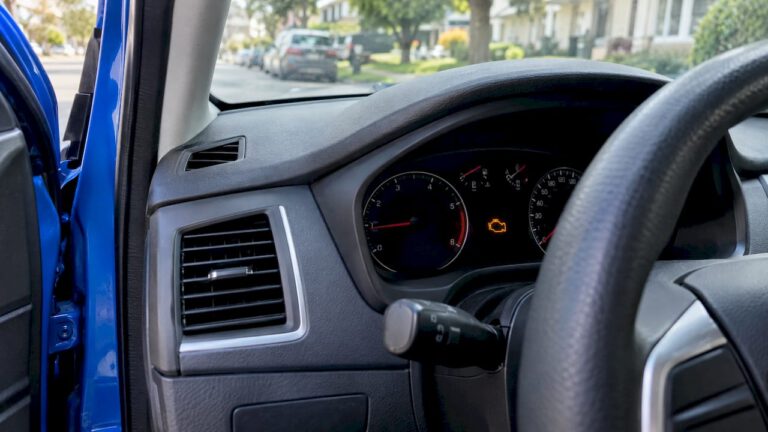
The inspector confirms the VIN, the mileage and who owns the car. They will ask about accidents, repairs, how long you have owned it and whether it has any warning lights. Answer plainly. A car described accurately gets a number that holds up when the buyer arrives at pickup.
Exterior, interior and tires
Body panels, paint, glass, wheels and tires are walked around and photographed. Interior wear, smells, electronics and the dashboard are checked. These items drive most of the difference between two cars of the same year and model.
Mechanical condition
Many appraisers look for visible leaks and listen to how the engine runs, but they are not always doing a full mechanical workup. One appraisal firm says it does not inspect the engine, transmission or other systems and recommends a certified mechanic for that. That is normal for a valuation: the appraiser grades what can be seen and documented.
Photos and the number
The photos and notes become the basis for the value. A report adds comparable vehicles and a stated method. In a cash purchase, the value becomes the offer.
How a cash offer is worked out, and how to judge it
A fair offer comes from the same inputs an appraiser uses: year, make, model, trim, mileage, condition, accident history, how in-demand the car is locally, and what it will cost to sell or reuse it. Two cars that look identical online can be worth different amounts after a walk-around, which is exactly why a visit beats a form-only estimate.
To judge any offer, whoever makes it, use three tests:
- Is it specific? It should name your exact vehicle and condition, not a range.
- Is it in writing? Get the amount by text or email before the visit.
- Is it the amount paid? The number quoted should be the number in your hand at pickup, with no deductions added afterward.
That third test is where many sellers get burned: a high phone quote that shrinks at the curb. Our guarantee is built around it: we commit to paying the stated price at pickup. If you want to understand why some instant quotes drift, our piece on closing the gap in instant offer accuracy walks through it, and the page on odometer and title surprises before pickup covers the details that most often change a number.
If a dealer’s trade-in figure feels low, you do not need to accept it. Our guide on raising a low dealer trade-in offer gives you scripts for the conversation.
Prepare your car and paperwork
Preparation takes less than an hour and makes the visit faster and the inspection cleaner.
The car
- Wash it and vacuum the interior. Appraisers recommend a clean car and parking it outdoors so it can be inspected in daylight.
- Gather service records and receipts for parts and labor. Recent tires, brakes or a new battery are worth documenting.
- Take your belongings out, including the glove box, trunk and any toll tag.
- Have all the keys and fobs together.
The documents
- The title, signed where required (see the state rules below).
- A government photo ID that matches the name on the title.
- Your registration and, if there is a loan, the lender’s name and your account details so the payoff can be handled.
- The license plates, which you may need to remove depending on the state.
A clear explanation of the whole sequence from first call to payment is on our page about how pickup sales work from home.
Non-running, damaged or older vehicles
An on-site visit is often the best route for a car that cannot be driven to a lot. We buy cars, SUVs, trucks, vans and commercial vehicles whether they run or not, and we buy damaged and older vehicles. You describe the condition, we come to the car, and the offer reflects what we find. You do not need to arrange a tow or a ride.
When describing a non-runner, be exact about the problem: does it not start, does it start but not move, is there body damage, are keys missing? Each answer changes the value, and accurate answers are what keep the quoted price and the final price the same.
Paperwork for sellers in New York and New Jersey
The appraisal gives you a value. The sale itself runs on state paperwork, and each state asks the seller for different things.
New York
The seller must sign the transfer section of the title and a Vehicle Bill of Sale (MV-912). The buyer then has to title and register the vehicle at a local DMV office and pay sales tax or show proof of an exemption. Our walkthroughs on MV-912 and same-day cash, title transfer forms and notarization and private seller paperwork and plates cover each form.
If the title is lost, you can apply for a duplicate using form MV-902. Only the duplicate may be used to sell, transfer or trade the vehicle. The full process is in our duplicate title guide, and our page on selling a car without a title in NY explains the options.
New Jersey
The seller signs the seller’s section on the back of the title and must remove the plates and surrender them to a motor vehicle agency, unless transferring them to another vehicle. A title reassigned by a New Jersey seller or dealer must be transferred within 10 working days of the sale, or a $25 penalty applies. See our guides on removing plates after a sale, finishing a title transfer in six steps and what to sign before the buyer drives away.
When we buy your car, we handle the paperwork. You still need to bring the documents above and sign where the state requires you to.
From offer to cash: how fast it can go
The fastest path has four steps:
- Describe the car and share photos or details so we can quote it.
- Receive the offer in writing.
- Meet our team at your location at a time that suits you. We inspect the car against the description.
- Sign and get paid. We pay the stated price at pickup, and the process is built to put cash in your hand within an hour.
For a comparison of timelines, see our page on fast car sale options in NY, NJ and CT and the overview of how a car buying service works step by step, even with a loan.
Selling safely at your door
A buyer coming to you is convenient, but it is still a transaction with a stranger. The Better Business Bureau advises sellers to beware of overpayment scams and unusual payment methods such as cryptocurrency or gift cards, meet in public places, get the agreed price in writing, complete a bill of sale and follow their state’s title and registration rules. It also notes a release of liability may be required.
In practice:
- Agree the price in writing before anyone arrives.
- Complete the bill of sale at the handover and keep a copy.
- Never hand over the title before payment is confirmed.
- Keep a photo of the signed title and the plate receipt for your records.
Ready to sell? Book the visit
If you want a value you can act on today, we come to you, look at the car, make a cash offer and handle the paperwork. We buy running and non-running vehicles in New York, New Jersey and Connecticut, with or without a title. The offer is guaranteed: we pay the quoted price at pickup.
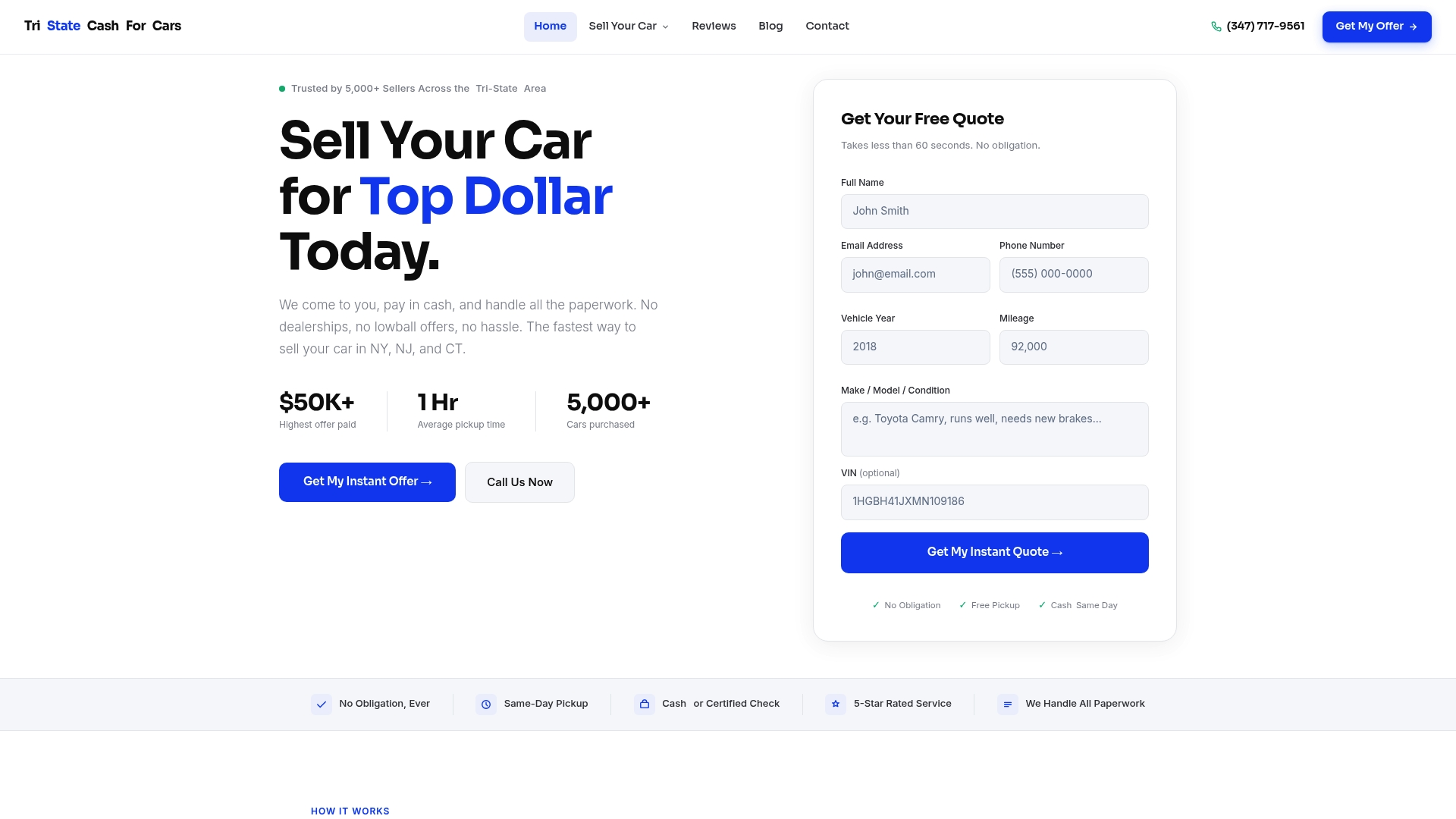
Get your offer at tristatecashforcars.com and tell us the car, its condition and where it is parked. If you are in the five boroughs, our Brooklyn page covers the local rules.
Our view: why the visit should end in a payment
Most of the sellers we meet do not want a report. They want the car gone, a fair number, and the paperwork done correctly. An appraisal that ends with a PDF leaves them with the hardest parts still ahead: finding a buyer, answering strangers, and getting through the DMV.
That is why we built the on-site visit around the sale. Our team comes to your location, makes a cash offer and handles the paperwork, and we pay the price we quote at pickup. We think a stated price should mean something, and sellers should not have to wonder whether it will change at the curb.
The same goes for cars that do not run. Owners of damaged or older vehicles are often told to arrange a tow first and hope for the best. We would rather come to the car.
Eric
FAQ
Can I get an appraisal on my car at home?
Yes. Certified inspectors and buyers both travel to the car’s location, whether that is a driveway, an office lot or a street space. If you are selling, ask for an offer that comes with the visit so the valuation and the sale happen together.
What should I not say to an appraiser?
Nothing you say should be untrue, and you do not need to guess. Share the car’s history honestly, including accidents and warning lights, and let the inspection do the rest. Accurate details keep the quoted price and the final price the same.
Can a car that does not run be appraised on site?
Yes. An inspector can photograph and grade a non-running car where it sits. We buy running and non-running vehicles in New York, New Jersey and Connecticut and pick them up from your location.
How long does an on-site appraisal take?
The inspection itself is usually short, but a certified written report typically takes 3 to 5 days, with faster delivery sometimes available for an extra charge. A cash offer from a buyer is made at the visit, and payment follows at pickup.
Sources
- Mobile Auto Appraisers: FAQ
- America’s Auto Appraisers: Onsite Vehicle Appraisals
- Aprazio: Will insurers and courts accept an online car appraisal
- Auto Appraisal Network: Getting your car appraised
- BP Appraisals: Frequently Asked Questions
- Caesar’s Appraisals: FAQ
- NY DMV: Buy, Sell, or Transfer Vehicle Ownership
- NY DMV: MV-902 Application for Duplicate Title
- NJ MVC: Transferring Vehicle Ownership
- BBB: How to sell a car to a trustworthy, honest buyer