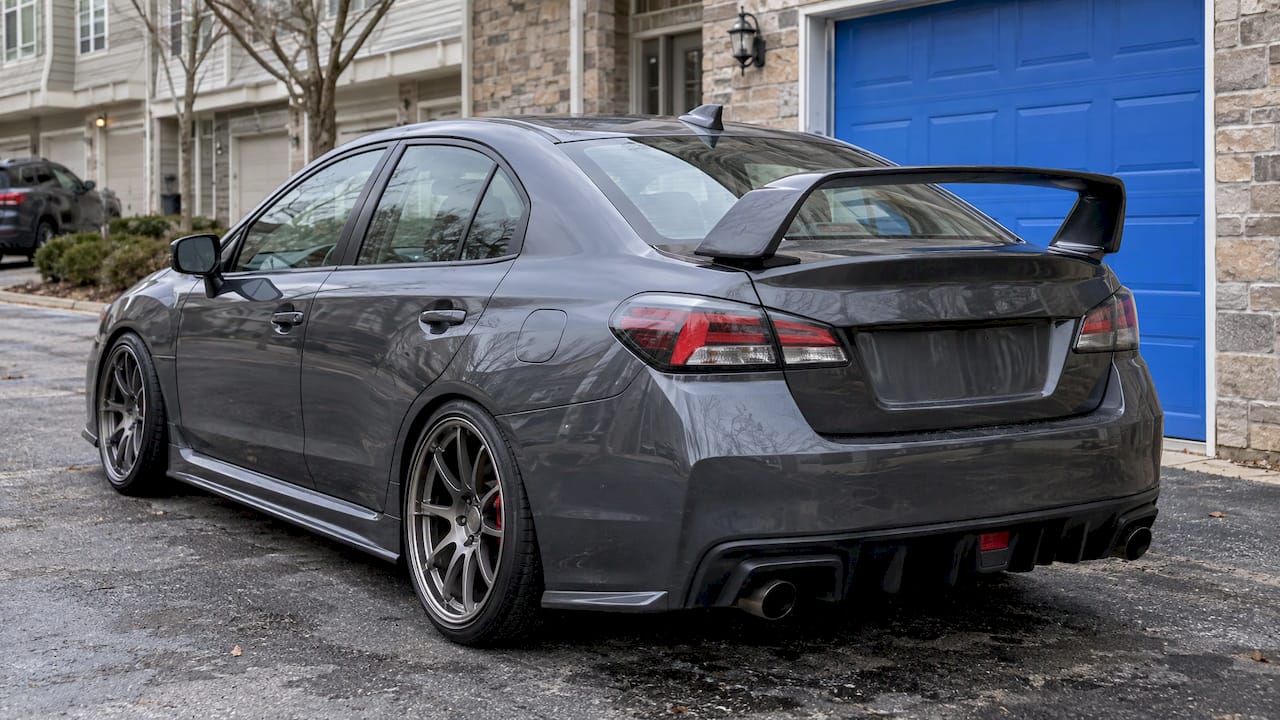
Selling a Car With Aftermarket Mods: What It’s Worth and How
Most aftermarket mods add far less to a sale price than they cost you, and the way you sell decides how much of that you get back. Dealers usually price a modified car as a stock car that needs work. Private buyers pay more only if they happen to want your exact build. If you want a firm number, a clean sale and money in hand, the simplest route in New York, New Jersey and Connecticut is a guaranteed cash offer. We send a team to your location, state the price, handle the paperwork and pay at pickup.
TL;DR
- Mods rarely return what you paid. Buyers pay for the whole car’s condition, records and appeal, not the parts list.
- A dealer trade-in is the weakest place to sell a modified car, because the dealer will usually return it to stock before resale.
- Tell every buyer about every mod. Keep receipts, a mod list and any original parts you still have.
- Fixed offers matter most with a modified car. Ask for a price that is guaranteed at pickup, not one that can change at the door.
- We buy running and non-running cars in NY, NJ and CT, with or without a title, and pay at pickup.
Table of Contents
- Do mods raise or lower what your car is worth?
- Why a trade-in is usually the worst fit
- Three ways to sell a modified car
- Should you put the car back to stock first?
- What to document and disclose
- Paperwork for a modified car
- How to compare offers on a modified car
- Where we fit
- Get a guaranteed cash offer for your modified car
- FAQ
- Sources
Do mods raise or lower what your car is worth?
For most cars, they lower the offer or leave it flat. Customizations will likely reduce trade-in value, because a dealer plans to return the vehicle to stock before reselling it. Edmunds also does not publish its True Market Value pricing for cars with aftermarket parts, because the quality and resale contribution of those parts cannot be reliably standardized.
That is the key idea: no pricing guide has a line for your coilovers, your wheels or your tune. A buyer has to decide what they are worth, and most buyers decide low.
A few things shape how the offer comes out:
- Condition and workmanship. Buyers pay for the car’s condition, the quality of the work, the paperwork and how easily it could be reversed. Parts themselves rarely return their full purchase price.
- Taste. Mods are personal. A big spend does not mean the next owner will value what you chose.
- Reversibility. Bolt-on parts are easy to undo. Cut panels, drilled holes, engine swaps and permanent paint or wrap work are not.
- Safety and legality. Anything that touches emissions, lighting, ride height, tint or exhaust noise can make a buyer cautious, because they inherit the problem.
One mindset helps. The money you already spent is gone. A buyer cannot be asked to refund it, so price the car on what it is worth today, not on what the mods cost.
Why a trade-in is usually the worst fit
A dealer trade-in is a simple transaction for the dealer: take the car, fix it up to a standard retail unit, resell it. Anything unusual is a cost to them. In a trade-in, aftermarket parts may get little or no valuation, while the same parts sold separately are likely worth much more than the dealer would credit.
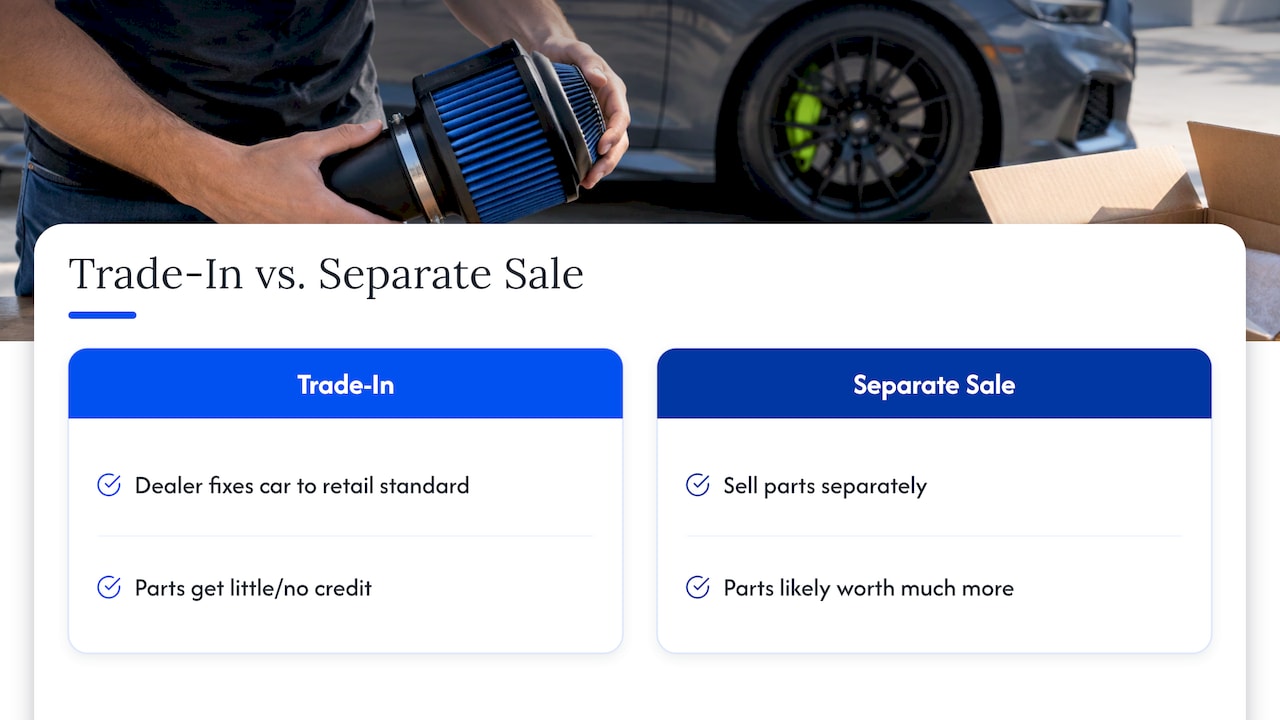
That gap is why so many modded-car owners walk away from a trade-in quote feeling shortchanged. If that is where you are, our guide to raising a low dealer offer walks through what to do next.
Three ways to sell a modified car
There are three routes, and each trades money against time and effort.
| Route | What it takes | Best when |
|---|---|---|
| Sell to a cash buyer who comes to you | One quote, one pickup, paperwork handled | You want a fixed price and a quick, clean sale |
| Sell privately to an enthusiast | Weeks of listings, messages, test drives and haggling | The build is rare, coherent and well documented |
| Trade in at a dealer | Little effort, usually the lowest credit for mods | You are buying another car from that dealer |
A private sale can recognize mods better than a trade-in. Guidance on this point says private sales give you a better chance of recovering aftermarket value, but you have to find a buyer who values your exact build. Selling a modified vehicle as-is works best when the build is cohesive, professionally documented and aimed at a niche market that wants those very parts.
If your car is not that car, or you do not want to spend weeks finding that one buyer, a guaranteed cash sale is the better fit. Your car does not need to be perfect, it does not need to run, and you do not need to field strangers’ questions about your exhaust.
Should you put the car back to stock first?
Sometimes. It depends on three things: whether you still have the original parts, how easily the mods come off, and how quickly stock versions of your car sell.
Returning to stock can broaden the pool of buyers and the removed parts can often recover some of their cost when sold on their own. But it costs labor, time and the risk that old parts are worn or missing hardware. Before you start, compare:
- The car’s realistic value with the mods and without them.
- What the removable parts would fetch used.
- The labor to take them off and refit the originals.
- How much of your own time you will spend selling pieces.
If the numbers are close, or the mods are not easily reversed, do not rework the car. Sell it as it sits. You can also keep the best parts for your next build and sell the car without them.
If you are short on time, there is no need to do any of this. We buy cars in whatever configuration they are in, running or not, so you can skip the wrench work.
What to document and disclose
Whoever buys your car, put the modifications on the table. A buyer who finds an undisclosed tune or cut spring after the sale is a buyer who comes back angry. A buyer who sees an honest list trusts you more, even when the car is unusual.
A useful package includes:
- A complete mod list with part names, brands and part numbers, plus install dates and cost. A simple modification log should record the installer and any quirks such as tuning notes.
- Receipts and shop records. Installation invoices, professional shop records and dyno sheets matter most to informed buyers who worry about prior abuse.
- Photos of the car and of each major modification, including any work that is hidden under the car or hood.
- A list of original parts you still have. Exhaust, wheels and suspension you kept are worth listing because they widen the buyer pool to people who want to go back to stock.
- Calibration details for any tune, in case a buyer asks what software the car runs.
When you ask us for an offer, give the same honest picture: what has been changed, whether the car runs and what you know about its condition. A price built on accurate facts is a price that holds at your door. For tips on photos and a short prep list, see our page on preparing your car for sale.
Paperwork for a modified car
A modified car changes hands on the same paperwork as any other, and the state, not the buyer, sets those rules. For a private sale, learn your state’s requirements. Many state DMV sites offer a template bill of sale.
A few practical points for the tri-state area:
- Title. The title is normally what proves you own the car. If yours is missing, we can still buy the car without a title.
- Plates. In New York, the order matters: plates come off before you cancel insurance. Our New York paperwork guide lays out the sequence.
- Inspection and emissions. If a mod made the car fail inspection, you do not have to fix it to sell. We have a page on selling a car that failed inspection in NY, and another on selling with the check engine light on, which is a common result of an aftermarket tune or exhaust.
- Project cars. Half-finished builds sell too. See selling a project car.
- Brand history. If the car has a salvage brand, disclosure rules are stricter. Our salvage title guide covers how state rules differ.
For what to sign at the handover, see car pickup paperwork.
How to compare offers on a modified car
With a modified car, two quotes that look the same can be very different. A few questions tell you which one you can count on.
- Is the price guaranteed at pickup? A number that shifts when the buyer sees the car is not an offer, it is an opening bid. Our guarantee is that we pay the stated price at pickup.
- Were the mods part of the quote? An offer given without knowing about your build is likely to change. Give the buyer the full list up front.
- When do you get paid? Ask whether payment is at pickup or days later.
- Who does the paperwork? A buyer who leaves the forms to you hands you the work.
- Any fees? Ask whether any amount comes out of the price. We charge no hidden fees.
Our guide on avoiding odometer and title surprises shows what can go wrong between a quote and a handshake. If you are weighing speed against price, fast car sale options in NY, NJ and CT compares them.
Where we fit
A modified car is an awkward sale for most buyers. A dealer wants a stock car. A private buyer wants your exact build, and the search for that person takes time. We are built for the owner who wants none of that.
Here is what we do for you:
- Offer. You tell us about the car and we give you a cash offer, guaranteed.
- Pickup. We send a team to your location in New York, New Jersey or Connecticut.
- Paperwork. We handle it for you.
- Payment. We pay the stated price at pickup, and you can have cash in hand within an hour.
That works for cars that run and cars that do not, and for sellers with or without a title.
Our view on modded cars
People come to us after a build that cost thousands and a trade-in quote that did not reflect it. That is the hard part about mods: you spent real money, but the market pays for the car, not the receipts.
We would rather you take a real number and move on than wait for the one buyer who loves your wheels. Selling a car should not take over your month. Our offer is guaranteed at the quoted price and paid at pickup, so you know what you are getting before the team arrives.
Be upfront about what has been changed and we will work from the real car. It makes the offer more accurate and the handover quicker.
Eric
Get a guaranteed cash offer for your modified car
If you want a fixed price, a pickup at your door and the paperwork off your plate, request your offer from Tri State Cash For Cars. Tell us about the car, mods included. We come to you in NY, NJ or CT and pay the stated price at pickup.
Want to see how the visit works first? Read about selling your car from home, or see our page on instant cash offers in New Jersey.
FAQ
Are modded cars worth less?
Usually, yes, to a dealer. Dealers plan to return a modified car to stock before they resell it, so custom work tends to lower trade-in value. A buyer who wants your exact build may pay more, but finding that buyer takes time.
Do I have to tell the buyer about my modifications?
Yes, tell every buyer. Disclosure protects you from disputes after the sale and gives the buyer a fair basis for the price. Keep a written list with part names, install dates and receipts.
Can I sell a modified car that does not run?
Yes. We buy running and non-running cars, including damaged and older vehicles, in New York, New Jersey and Connecticut. We can also buy without a title.
Should I sell the parts separately?
If you kept the originals and the mods come off easily, separate sales can recover part of their cost, though it takes labor and time. If you would rather not spend either, sell the car as it is and get paid at pickup.
How fast can I get paid?
We pay the stated price at pickup, and the process is built so you can have cash in hand within an hour.
Sources
- Edmunds Help: What is the True Market Value on aftermarket parts?
- Edmunds on getting the most money for your trade-in (AP)
- Do Car Upgrades Increase Resale Value? (Defensive Driving)
- How to Modify a Car Without Hurting Resale Value (JD Customs)
- How to sell a modified car (Auto Express)
- How to Sell a Modified Car: Pricing, Paperwork, and Where (Spooled)
- How to Return a Modified Car to Stock for Resale (CarJourney)
- Document Car Build Upgrades: A 2026 Guide for Owners (CarJourney)
- Selling a Modified Enthusiast Car: How to Document Mods (AutoArchive)