Co-Owner Selling a Car in NY: Who Signs and What You Need
If two names are on a New York title, one co-owner can usually complete the sale, because the DMV says only one owner has to sign the title to transfer ownership. The practical risks are different: a lender, a buyer who wants both signatures, an ex-partner who disagrees about the money, or a title that is lost. This guide covers each of those, in the order you will meet them.
TL;DR
- NY DMV guidance says that when two people are listed on a title, either one can sell the vehicle, and only one owner must sign the title certificate.
- The seller completes the transfer section on the title and signs a bill of sale. Get the other owner’s agreement in writing anyway, especially about how the money is split.
- If the other owner can’t sign, a notarized DMV power of attorney can let someone sign for them. If an owner has died, you need different paperwork.
- Take the plates off after the sale. Keep a copy of the bill of sale in case the DMV sends an insurance letter later.
Table of Contents
- The short answer: can one co-owner sell without the other?
- Check how the title reads before you do anything
- Step by step: selling a jointly owned car in New York
- Documents at a glance
- When the other owner can’t or won’t sign
- Splitting the money fairly
- If there is a loan on the car
- If the title is lost
- Plates, registration and insurance after the sale
- Our perspective: get both names on the paper
- Selling to Tri State Cash For Cars
- Common mistakes with co-owned cars
- FAQ
- Sources
The short answer: can one co-owner sell without the other?
On paper, yes. The NY DMV states that if two individuals are listed on the title, either person can sell the vehicle. Its page on vehicles with more than one owner adds that, to transfer ownership, only one of the owners is required to sign the title certificate.
That is the DMV’s position on the paperwork. It is not the same as a safe sale between two people who disagree. A few things sit outside the DMV form:
- The other owner’s financial interest. The DMV doesn’t divide the sale price for you. If you both paid for the car, a seller who signs alone and keeps the cash can end up in a civil dispute.
- The buyer’s comfort. Some buyers, and any business that purchases cars, will ask for both signatures or both owners present because it removes doubt. That is a preference, not a DMV rule.
- Lenders. If there is a loan, the lender’s lien comes first, no matter who signs.
If you are on good terms, the cleanest approach is simple: both owners sign. If you aren’t, a short written agreement about the price and the split protects you far more than the title does.
Check how the title reads before you do anything
Pull out the original title and read the owner line. Note three things:
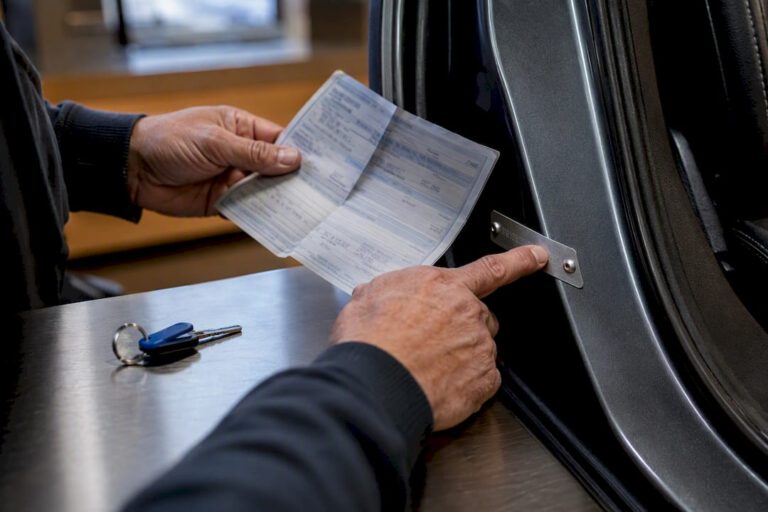
- Both names and their spelling. Your signature must match the way your name is printed. If a name changed through marriage or a legal change, sort that out first, because a mismatch can stall the buyer’s registration.
- Any lienholder. A bank or credit union listed on the title means the loan must be settled before the buyer gets a clean transfer.
- The odometer and damage sections on the back. You will be filling those in.
If you can’t find the title, skip ahead to the lost-title section below. Don’t schedule a buyer until you know where the paperwork stands.
Step by step: selling a jointly owned car in New York
1. Agree on the terms with your co-owner
Decide the asking price, the lowest price you will take, who handles the buyer, and how the money is split. Put it in a text or email at the least. This takes ten minutes and prevents the most common co-owner fight.
2. Gather the documents
The DMV says the seller must complete and sign the transfer-of-ownership section of the title and sign a bill of sale, or provide other acceptable proof of ownership and transfer. If you want a deeper look at what the DMV treats as proof, our page on proof of ownership in NY walks through it.
3. Fill out the title carefully
Write the buyer’s name, the sale date, the price and the odometer reading. Use ink, and don’t cross out or use correction fluid. A damaged title can force a duplicate application, which delays everything.
The back of the title also carries disclosures. The DMV says damage disclosure statements are mandatory on the title for all vehicles regardless of age. For odometer, the DMV requires a disclosure statement for vehicles from the 2011 model year or newer if transferred within 20 years of the year of manufacture.
4. Write a bill of sale
Include the date, price, the VIN, year, make and model, the odometer reading, both seller names and the buyer’s name and address. Add the words “sold as is.” Make two copies and keep one. If you want a template and the form numbers that go with it, see our guide to the bill of sale and DTF-802 in New York.
5. Hand over the car and get paid
Pay attention to how you take payment. Cash on the spot, with the buyer present, is cleanest. If the buyer offers a check, ask to meet at their bank. With two owners, agree beforehand who receives the funds and when the other owner gets their share.
6. Remove the plates and close the loop
See the plates and insurance section below. Do this the same day.
Documents at a glance
| Item | Who provides it | Why it matters |
|---|---|---|
| Original title, transfer section signed | Seller (one or both owners) | Moves ownership to the buyer |
| Bill of sale | Seller signs, buyer receives | Proof of price, date and sale terms |
| Odometer disclosure | Seller | Required for newer vehicles within 20 years of manufacture |
| Damage disclosure | Seller | Mandatory on the title for all vehicles |
| Lien release | Seller, if a loan existed | Lets the buyer get a clear title |
| Power of attorney | Absent owner, if used | Lets another person sign for them |
| Duplicate title application (MV-902) | Owner, if the title is lost | Replaces the missing original |
The buyer then has their own job. According to the DMV, the new owner must register and title the vehicle at their local DMV and pay sales tax or show proof of exemption. The title fee for processing a certificate of title is $50 according to the DMV form, and that is a buyer-side cost.
When the other owner can’t or won’t sign
This is where most searchers for this topic are stuck. There are four common situations.
The other owner is out of town or unreachable
If you already have the power to sign alone, you may not need anything. If the buyer insists on both owners, a power of attorney is the route. The DMV says a power of attorney for vehicle transactions must be notarized and include its issue date, the agent’s name and address, and the principal’s name, address and signature. The agent writes “P.O.A.” beside their signature.
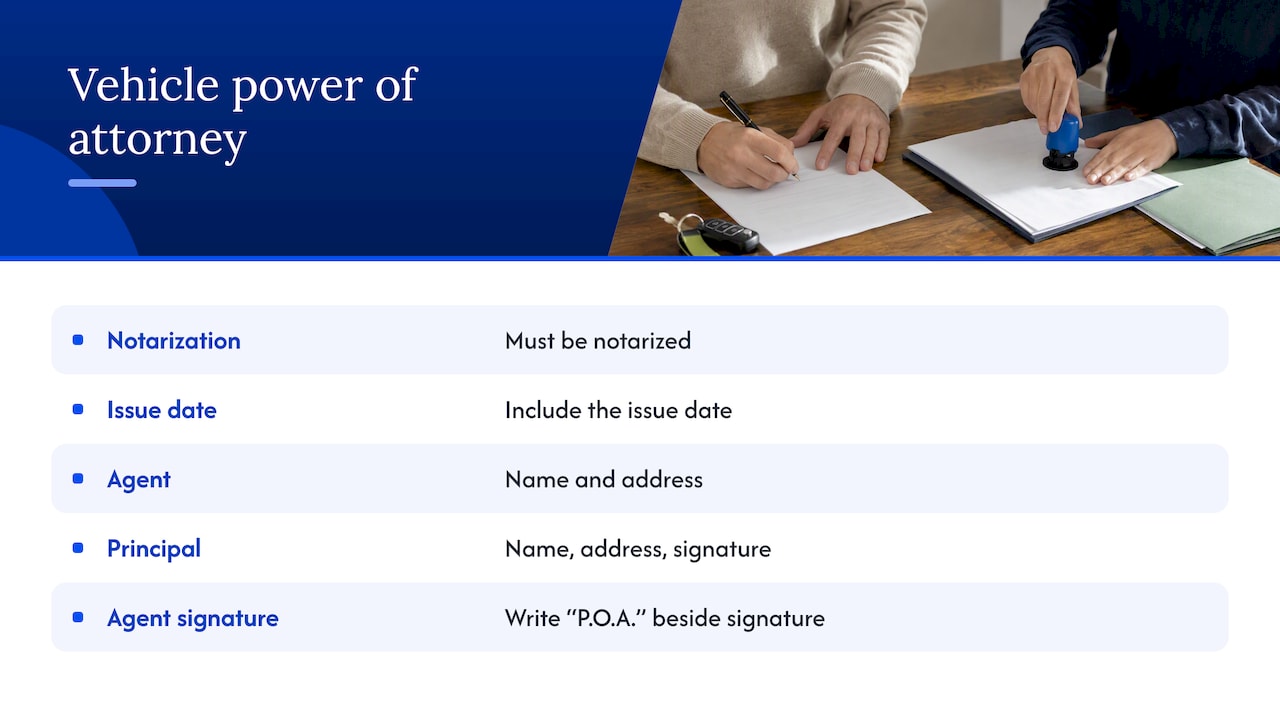
The absent owner is the principal. The person who signs for them is the agent. That agent can be you, which is helpful when you are the one handling the sale.
The other owner refuses
The DMV’s one-signature position on the title means you may be able to proceed on paperwork alone. Whether you should is a separate question. If the car was bought jointly or the other person contributed money, selling without them can start a civil dispute over the proceeds. If the disagreement is serious, a New York attorney or your local court’s self-help resources are the right place to go before you sign, not after.
The other owner has died
Handle this carefully, since the right paperwork depends on who you are in relation to the person who died. For a duplicate-title application when the owner is deceased, the DMV asks for proof of your identity and a death certificate or certification of death, or court letters if the listed relationships do not apply. The same form points to MV-349 or MV-349.1 for additional transfer guidelines. If an estate is involved, an estate attorney or the surrogate’s court can tell you who has authority to sell.
You are divorcing or separating
Title questions in a separation often get tied to a settlement. Don’t sell until you know what the agreement or court order says about the vehicle. A sale that ignores it can cause far bigger problems than a delayed pickup.
Splitting the money fairly
The DMV is silent on proceeds, so the agreement is yours to make. A few approaches work well:
- Even split. Simple when both owners contributed equally.
- Contribution-based split. Fair when one person paid the down payment or most of the loan.
- Buyout. One owner keeps the car and pays the other. Here you don’t sell at all. You file a title transfer between the two of you, with a bill of sale at an agreed price.
Whichever you choose, write the amounts down, and have the person receiving payment send a quick confirmation text. That is your record.
If there is a loan on the car
A lien changes the order of operations. The DMV says that if a lien is present, the seller must give the buyer a lien release or proof of lien satisfaction from the lender, otherwise the lien stays on the title. When the loan is paid in full, you give the buyer the original lien release with the title, and getting a clear title is not required.
In practice:
- Ask the lender for a payoff amount that is good through a specific date.
- Compare it to the offer. If the sale price covers it, you pay the lender at or right after the sale and receive the rest.
- If the price falls short, the two of you owe the difference, and both of you are usually on the loan.
For the step-by-step, see our guide to selling a car with a lien in New York.
If the title is lost
Don’t try to sell without sorting this out. The DMV says that if a title is lost, you apply for a duplicate using Form MV-902 before transferring the vehicle. If a deceased owner or a power of attorney is involved, the same form lists specific documents, and those cases are handled in person or by mail. Online applications are available when the address hasn’t changed.
Our page on the duplicate title process in New York goes through the application, and if a duplicate isn’t practical, selling without a title lays out the options.
Plates, registration and insurance after the sale
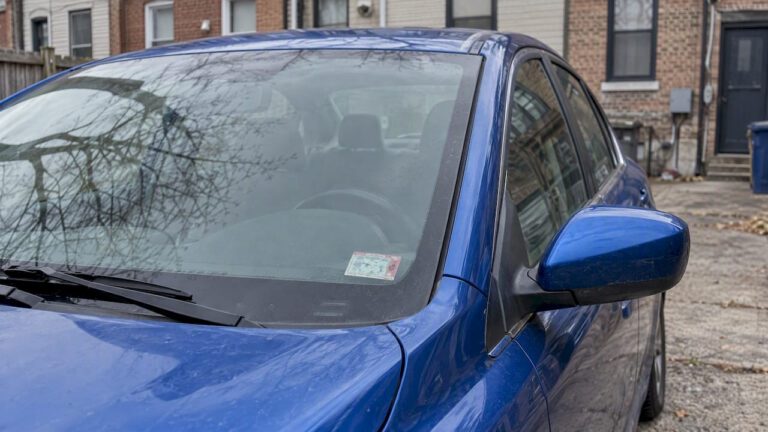
This is the step sellers forget, and it causes the most follow-up headaches. Remove the plates and the windshield registration sticker. The DMV says you can then surrender the plates or transfer them to another vehicle. It also advises surrendering the registration and plates before insurance coverage ends.
If your insurer cancels the policy and the DMV sends an insurance-lapse letter, you respond with proof of sale, such as the bill of sale. That is why keeping your copy matters. For the full order of operations, read our NY car sale paperwork guide and the page on how to report a car sale in New York.
With two owners, decide which of you cancels the insurance and deals with the DMV, so it doesn’t fall between you.
Our perspective: get both names on the paper
We buy cars from New York owners every week, and joint titles are a regular part of that. Here is how we look at it.
The DMV allows one owner to sign. We still prefer it when both owners are in the loop. That doesn’t mean both standing in a driveway. A text from the other owner saying “I agree to the sale at this price” is enough for us to feel good about the transaction, and it protects you from a surprise complaint two weeks later.
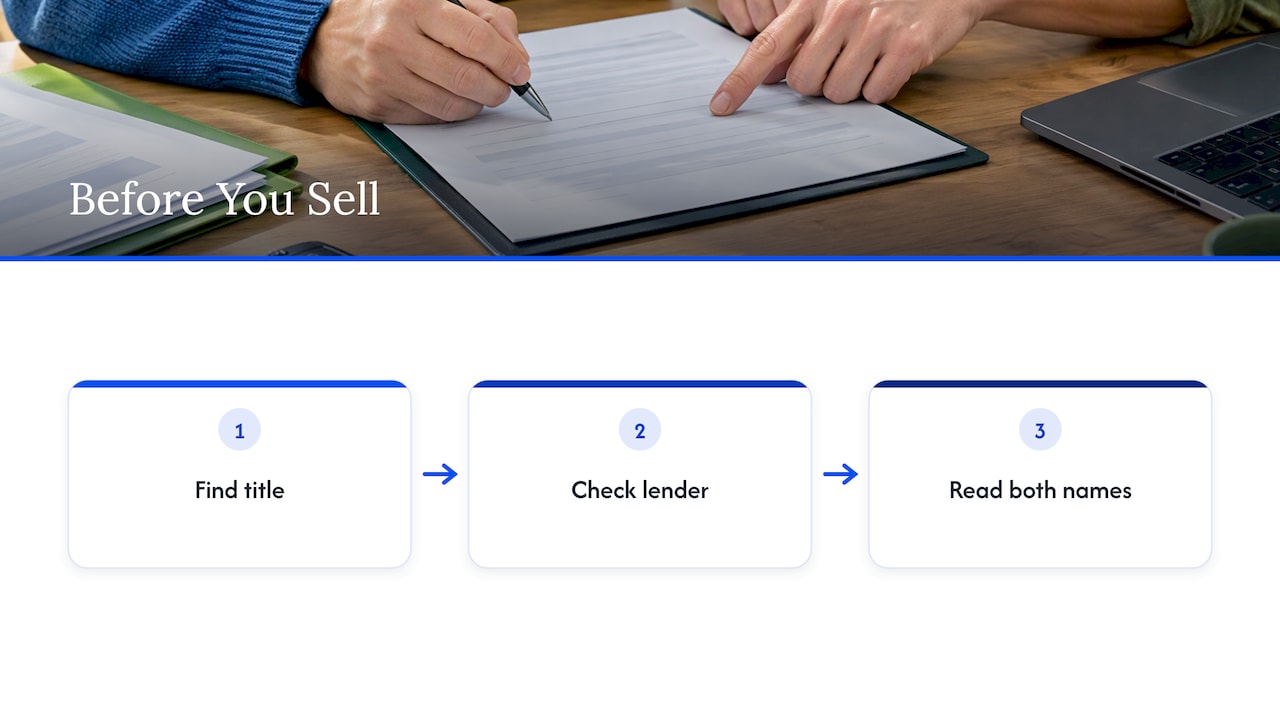
The second thing we see is people waiting on a title they haven’t looked for. Before you list anything or call anyone, find the title, check for a lender, and read both names. Those three minutes decide whether the sale takes an hour or a month.
Third, price the sale for what it is. A private listing means strangers, no-shows and haggling. Trading in may mean a lower number. We built our service around a different promise: we give you an offer, and we pay that stated price at pickup, then handle the paperwork with you. For two owners who just want it done, that is a lot less coordination.
— Eric
Selling to Tri State Cash For Cars
If you and your co-owner would rather skip the listings and the test drives, we come to you in New York and New Jersey, give you a cash offer, and pay the quoted price at pickup. We handle the paperwork with you, and we buy cars that run and cars that don’t. Have the title, both owners’ names and any lender details ready, and the visit goes quickly.
You can start at Tri State Cash For Cars and get your offer without committing to anything.
Common mistakes with co-owned cars
- Signing in the wrong place. Sign only on the seller line, in the way your name is printed.
- Skipping the bill of sale. It is your proof if a ticket or insurance letter arrives later.
- Leaving the plates on. The car may be gone, but the registration is still yours.
- Selling before checking for a lien. The buyer can’t get a clean title and the deal falls apart.
- Not agreeing on the split first. Money disputes are the real reason co-owner sales go wrong.
FAQ
Can my ex sell our car without me?
For the DMV paperwork, yes in many cases. The DMV says that when two people are on the title, either one can sell. That doesn’t settle who is entitled to the money. If there is a separation agreement or court order, follow that and speak to an attorney before anyone signs.
Do both owners have to be present at the sale?
No. The DMV says only one owner is required to sign the title to transfer ownership. Some buyers prefer both, and a notarized power of attorney can cover an owner who can’t attend.
What if one owner is deceased?
You need the right proof for your relationship to the owner. The DMV’s duplicate-title form asks for identification and a death certificate, or court letters if the listed relationships don’t apply. If an estate is involved, an estate attorney can confirm who may sign.
What do I do with the plates after selling?
Remove them, along with the registration sticker, and either surrender them to the DMV or move them to another vehicle. The DMV also says to surrender them before your insurance ends. Keep your bill of sale in case an insurance letter arrives.
Can we sell if there is still a loan?
Yes, but the lender must be paid. You give the buyer a lien release or proof the lien was satisfied. Get a payoff quote first so you know whether the sale price covers it.
Sources
- Insurance Lapses, NY DMV
- Register a Vehicle With More Than One Owner or Registrant, NY DMV
- Power of Attorney for Vehicle Transactions, NY DMV
- MV-902: Application for Duplicate Title, NY DMV
- Buy, Sell, or Transfer Vehicle Ownership, NY DMV
- Certificate of Title, NY DMV
- MV-82.1: Register/Title a Vehicle in New York State, NY DMV
- Title fee form MV-82TON, NY DMV
- Responding to DMV Insurance Letters and Orders, NY DMV