Sell a Failed Inspection Car in New Jersey Within the One Month Window
Yes, you can sell a New Jersey vehicle that failed inspection, and you remain legally responsible if you drive it in the meantime. Your first move is to preserve the Vehicle Inspection Report and your title, then decide whether to repair and re-inspect or sell the car as-is. A failed sticker does not shield you from a citation, so limit driving to what is necessary while you sort out paperwork.
TL;DR:
- Vehicles that fail inspection can be sold legally without repairs, but owners remain responsible for compliance and can be cited at any time.
- The one-month window to repair and re-inspect begins from the last day of the sticker month, not the failure date, and does not prevent citations.
- Most failed vehicles can be repaired by certified shops or owners with receipts, and re-inspection requires specific paperwork, including the original VIR and repair forms.
- Selling options include private sales, dealer transactions, or direct cash buyers, with each route offering different speed, price, and responsibility trade-offs.
- Owners can also sell non-compliant vehicles to companies like Tri State Cash For Cars, which offer same-day pickups and guaranteed cash, bypassing repairs and re-inspections.
Table of Contents
- What a failed inspection means in New Jersey
- Reinspection and repair rules after a failed sticker
- Your selling options once the car has failed
- Title transfer and paperwork for a failed-inspection sale
- Repair or sell: a practical decision framework
- How Tri State Cash For Cars helps NJ sellers in this spot
- Practical priorities for sellers facing a failed inspection
- Quick way to sell your failed-inspection vehicle for cash
- FAQ
- Sources
- Official New Jersey resources and forms
What a failed inspection means in New Jersey
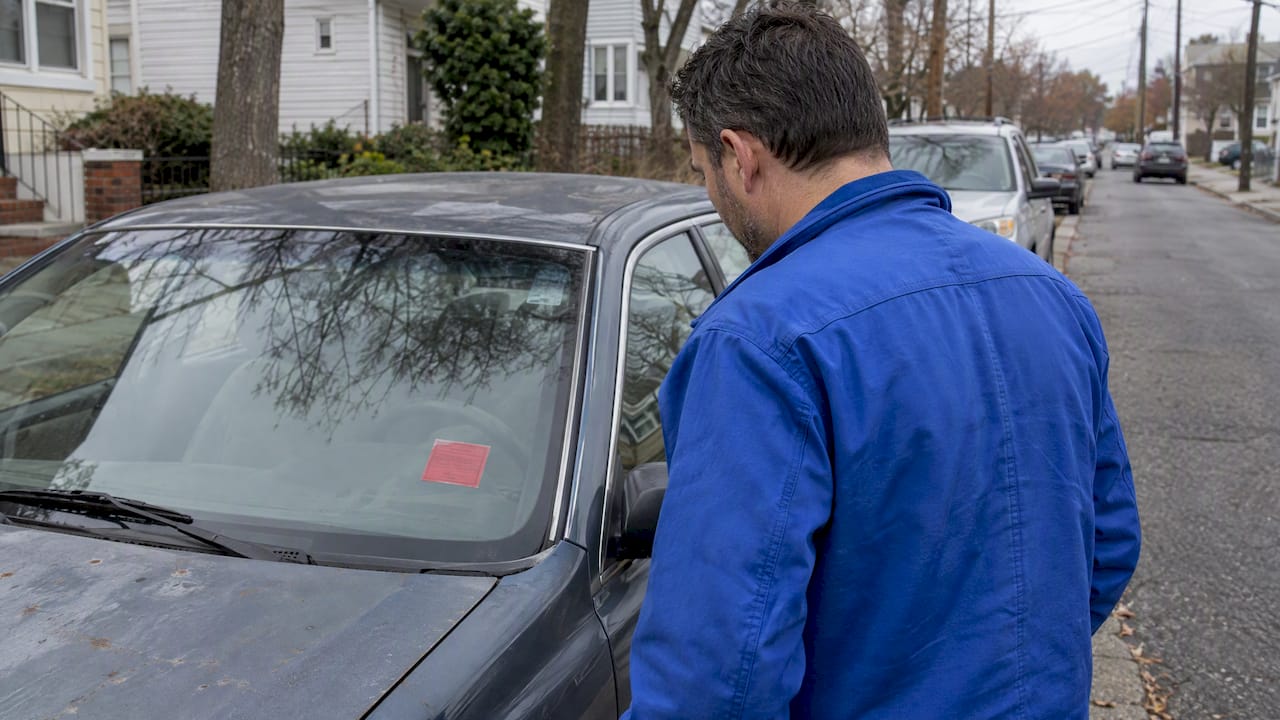
A red failed sticker is not a countdown that protects you from enforcement, it is a flag that your vehicle did not meet emissions or safety standards. New Jersey motor vehicle rules give you up to one month from the last day of the sticker month to make repairs and return for a free reinspection, according to NJ MVC’s guidance on failed inspections. That window is for your own planning. It is not a grace period that excuses you from a ticket if an officer pulls you over and sees the red sticker.

This distinction trips up a lot of owners. They assume that because the state gives them a month to fix things, they are legally covered to drive during that month. They are not. The MVC is explicit that a failed inspection indicates noncompliance, and police can issue a citation at any point after the failure, even the same week you plan to get the car repaired.
A few practical points shape how this plays out for sellers:
- The one-month window starts from the last day of your sticker month, not from the day you failed, so check your registration sticker to calculate the real deadline.
- There is no automatic grace period once you fail: citations are possible from the moment the red sticker is issued.
- Extensions exist for limited reasons, such as a documented parts delay or a scheduled repair appointment that falls outside the window, and you request one through the inspection facility or the MVC before the deadline passes, not after.
New Jersey’s emission failure rate sits around 7%, with 145,739 of 2,083,621 initial emission inspections failing in 2024. That means most cars pass the first time, so a failure usually points to a specific, identifiable problem rather than a systemic issue with the vehicle.
Reinspection and repair rules after a failed sticker
Once you fail, you have two paths to a clean reinspection: a registered Emission Repair Facility (ERF) or self-repair. Both are allowed under New Jersey’s inspection program, but the paperwork differs. If a certified shop does the work, they issue documentation tied to the repair. If you fix it yourself, you need to hold onto receipts for the emissions-related parts you bought, per NJ MVC’s reinspection requirements.
Before you head back to a State Inspection Facility, round up this folder:
- Your original Vehicle Inspection Report (VIR) from the failed test.
- The completed Emission Repair Form, filled out by the ERF or by you if you self-repaired.
- Receipts for any emissions-related parts purchased, since repairs made up to 60 days before the initial failure may qualify.
- Your driver’s license, current registration, and proof of insurance.
A State Inspection Facility will not perform a reinspection without the VIR and the completed Emission Repair Form, so showing up without them means a wasted trip.
Pro Tip: If you disagree with a failure, especially one tied to an OBD trouble code you think is a false read, contact the NJDEP’s OBD Inspection Review Team before paying for repairs you’re not sure you need; they can advise on next steps or a referee inspection.
Retest outcomes in New Jersey tend to favor owners who act quickly. Among vehicles that failed initially in 2024, 56.5% passed on the first retest, and another 13.5% passed on a later attempt.
Your selling options once the car has failed
You do not have to fix a failed-inspection vehicle before you can legally sell it. New Jersey’s title transfer rules do not require a passing inspection sticker for a private sale, confirmed by NJ MVC’s vehicle transfer guidance. That opens up a few routes, each with its own obligations.
- Private sale: You sign the title over to the buyer, hand them a bill of sale listing the sale price, odometer reading, and date, and disclose the failed inspection honestly. The buyer takes on the repair responsibility from that point forward.
- Dealer sale: Dealers generally must ensure a vehicle is saleable and able to pass inspection, unless the buyer signs a waiver. When a buyer does not waive that right, the dealer must inform them the car has to be presented for inspection within 14 days so they can exercise their statutory remedies if something is wrong.
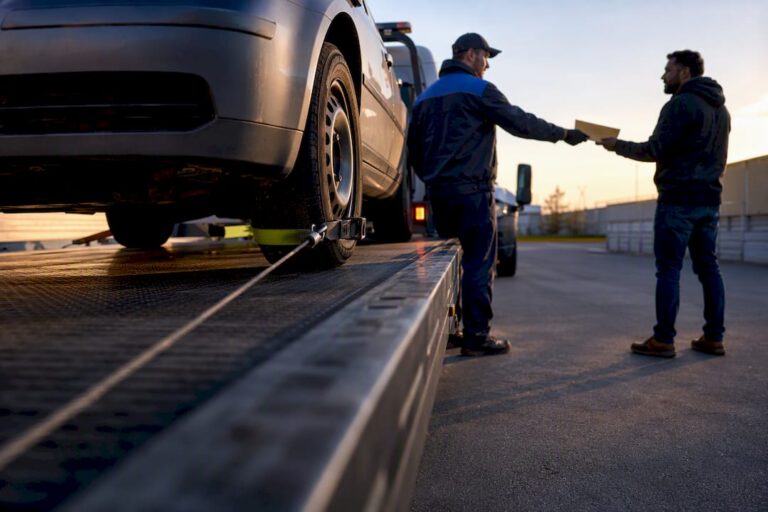
- Direct cash buyer: Services built around buying cars as-is will often make an on-site offer regardless of inspection status, handle the paperwork, and pay at pickup, which sidesteps the repair-and-retest cycle altogether.
Each path trades speed for price differently. A private sale can net more money but takes longer and puts the disclosure burden on you. A dealer sale shifts legal responsibility but may come with a lower offer if the car needs work. A direct buyer moves fastest when you want to skip repairs entirely.
If your car has no title on hand, that is a separate but solvable problem. Our guide to selling without a title covers the workaround steps.
Title transfer and paperwork for a failed-inspection sale
Transferring a title in New Jersey after a failed inspection works exactly like any other private sale, since the inspection status does not factor into the paperwork itself. You still need to get the mechanics right to avoid delays or penalties.
- Sign the reverse side of the title over to the buyer, and make sure the buyer’s name and address are entered correctly.
- Provide a bill of sale that includes the buyer’s name and address, the date of sale, the odometer reading, and the agreed sale price, as outlined in NJ MVC’s transfer guidance.
- Complete the transfer within the expected 10 working days to avoid penalties, and have the buyer handle their registration promptly on their end.
- Remove your plates once the sale is final. New Jersey plates stay with the seller, not the vehicle.
- If the car carries a salvage or rebuilt title, additional forms and inspections apply before a buyer can register it, so check the branding on your title before listing the car.
Our step-by-step New Jersey title transfer guide walks through the full process if you want a more detailed checklist, and our car sale tax guide covers what the 10-day window means for tax obligations on your end.
Repair or sell: a practical decision framework
The math here is simpler than it looks. Compare your repair estimate against your car’s value, and weigh both against how badly you need the cash right now.
Start with the failure cause. Codes tied to the catalytic converter or unmet readiness monitors tend to run expensive, sometimes requiring dealer-level reprogramming rather than a quick fix at a local shop, based on guidance from the NJDEP’s OBD assistance program. A loose gas cap or a sensor swap, by contrast, is cheap and fast.
- Get one or two repair quotes before committing, since estimates for the same code can vary between shops.
- Weigh the repair cost against what the car is actually worth on the private market right now, not what you paid for it.
- If you need cash quickly and the repair bill approaches or exceeds the car’s value, selling as-is usually makes more financial sense than chasing a passing sticker.
Pro Tip: Before paying for a repair, check the general right-to-repair resources on what owners can legally do themselves versus what requires a shop, so you’re not paying labor for a job you could handle.
How Tri State Cash For Cars helps NJ sellers in this spot
For owners who decide repair is not worth it, Some companies buy vehicles regardless of inspection status, including cars that are non-running or damaged. These services often help by handling paperwork and making on-site offers to simplify the selling process.
This option fits best when the math from the repair-versus-sell decision points toward selling. If your retest would need a part with a long wait time, if the repair estimate is close to or above the car’s resale value, or if you simply need cash now instead of in a month, skipping the reinspection cycle entirely can save both time and money.
To move quickly, have these ready when the team arrives: your signed title, a valid ID, the vehicle’s VIN, and the Vehicle Inspection Report if you still have it. None of these are required to be in perfect order before you call, but having them on hand speeds up the pickup. These services may pay the quoted amount at pickup, with no renegotiation once the offer is accepted.
Practical priorities for sellers facing a failed inspection
My short list for anyone in this spot: safety and legality come first, so do not drive the car more than you have to while it’s carrying a red sticker. Document everything, every receipt, the VIR, the Emission Repair Form, because missing paperwork is what turns a simple sale into a slow one. Let the numbers decide repair versus sell, not sentiment about the car.
Two red flags worth avoiding: signing a dealer waiver without reading what rights you’re giving up, and forgetting to pull your plates after the sale closes. Both are small mistakes that create real headaches later.
— Eric
Quick way to sell your failed-inspection vehicle for cash
A failed inspection does not have to mean weeks of repair quotes and a second trip to the inspection lane. If the numbers favor selling, Tri State Cash For Cars gives you a path that skips the reinspection cycle entirely.
Here’s how it works:
- Request an offer online or by phone, describing the car’s condition and the inspection failure honestly.
- Schedule a pickup time that works for you, often the same day.
- Have your title and ID ready when the team arrives, along with the VIR if you have it.
- Receive the guaranteed cash amount at pickup, with no last-minute renegotiation.
Tri State accepts non-running, damaged, and failed-inspection cars across New Jersey, and the guarantee means the number you’re quoted is the number you get. Check your car’s value on the Sell Your Car page before you commit to a repair bill you might not need to pay.
FAQ
Can a dealer sell a car without inspection in NJ?
A dealer can sell a vehicle that has not passed inspection if the buyer signs a waiver accepting that condition. Without a waiver, the dealer must notify the buyer that the car needs to be presented for inspection within 14 days so the buyer can exercise their statutory remedies.
Can I sell a car that has failed inspection?
Yes, a private sale does not require a passing inspection sticker under NJ MVC’s title transfer rules. You still need to sign over the title, provide a bill of sale, and disclose the vehicle’s condition honestly to the buyer.
What happens if a car fails an inspection in NJ?
The vehicle gets a red failed sticker, and you have up to one month from the last day of your sticker month to repair the issue and return for a free reinspection, per NJ MVC guidance. There is no grace period protecting you from a citation while you drive on that failed sticker.
What happens if my car inspection is overdue in NJ?
An overdue inspection, separate from a failed one, can result in citations if law enforcement checks your registration sticker and finds it expired. Scheduling the inspection as soon as possible and avoiding unnecessary driving in the meantime limits your exposure to a ticket.
Sources
Official New Jersey resources and forms
Direct links to NJ MVC and NJDEP pages used throughout this guide.