Selling a Car With Expired Registration in NY: What You Need
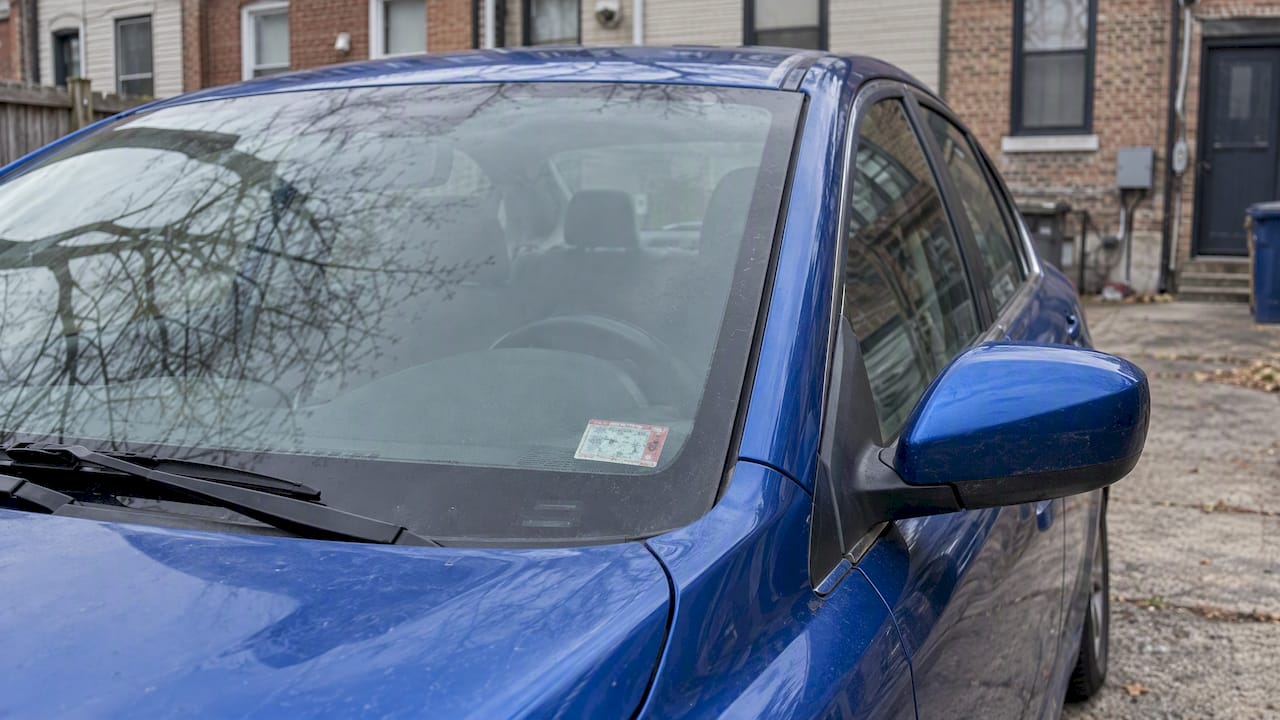
Yes, you can sell a car in New York when the registration has expired. What the DMV cares about at the sale is proof that you own the car, not whether the sticker is current. The DMV says the current owner can transfer ownership with a duplicate New York State transferable registration, even if the registration is expired. The catch is that an expired registration means you cannot legally drive the car to the buyer, so how you hand it over matters as much as the paperwork.
TL;DR
- An expired registration does not block a sale in New York. Proof of ownership, a signed title and proof of sale do the work.
- Do not drive the car on public roads to show it or deliver it. Have the buyer tow it, or sell to a buyer who picks up.
- Take your plates off before the buyer leaves, then surrender them and cancel your insurance only after the plates are dealt with.
- Lost title or no registration on file? Fix that first with the DMV’s duplicate or affidavit routes below.
- If the car does not run or has lapsed paperwork, an on-site cash buyer is often the shortest path.
Table of Contents
- Registration and title are two different things
- Can you drive it to the buyer?
- What you need to sell: the document checklist
- When the paperwork is not in order
- After the sale: plates, insurance and the DMV
- Perspective: what we see on these sales
- Sell the car without moving it
- Private sale, dealer or cash buyer: which fits an expired registration?
- A simple order of operations
- FAQ
- Sources
Registration and title are two different things
Most of the confusion in this topic comes from mixing up two documents. The registration says the car is allowed on public roads. The title says who owns it. A buyer, whether a neighbor, a dealer or a cash buyer, cares mainly about the second one.
In New York, the registration of a motor vehicle expires automatically upon the transfer of ownership under Vehicle and Traffic Law § 420. So the registration is going to end the moment you sell anyway. An expired one simply means it ended earlier than planned.
Where an expired registration does cause trouble:
- Driving the car. You cannot lawfully operate it on public roads until it is registered again.
- Missing paperwork. If you cannot find the registration, you may need a duplicate to prove you are the owner.
- Plates and insurance. If the plates are still on the car and the insurance lapsed or was cancelled, the DMV can send you lapse letters that you then have to clear up.
If the title is clean and in your name, the expired registration is a footnote. If the title is missing or the car was never registered in your name, that is the real problem to solve.
Can you drive it to the buyer?
No. New York’s registration law says a motor vehicle may not be operated on public highways unless it is registered. A traffic ticket firm’s summary of VTL § 401 notes that this is a non-moving violation with no license points, but that it can still bring a fine, a surcharge and, in some cases, a jail sentence. Penalty amounts differ depending on how long the registration has been expired and on the court, so treat any figure you read online as a ballpark and check your ticket or the court.
The practical rule is simple: do not take an unregistered car for a test drive and do not drive it to a dealership or the buyer’s address. Also, an unregistered car with lapsed insurance is a bigger risk than a ticket if you have an accident.
Your safe options:
- Renew first. If the registration lapsed recently and the car passes inspection, renewing may be quick. For a sale of a car you plan to part with within days, it is often not worth the cost.
- Have the buyer tow or trailer the car. Many private buyers do this for a car they are buying cheaply.
- Sell to a buyer who comes to you. An on-site buyer removes the driving question entirely.
- Park it legally until pickup. Keep it on private property or where parking rules allow, since street parking brings its own violations.
What you need to sell: the document checklist
The DMV’s sell or transfer page says that for most sales you need proof of sale and proof of ownership. In practice, that is the title, signed over correctly, and a bill of sale.
The title
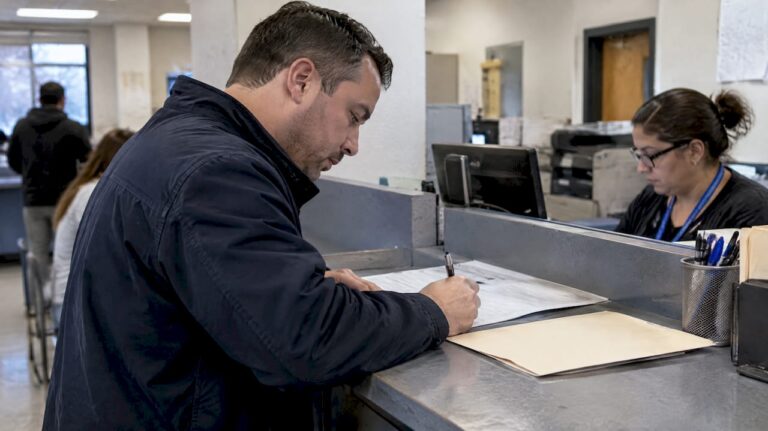
To transfer ownership you complete the “Transfer by Owner” section on the back of the New York State Certificate of Title. The DMV is explicit that there can be no cross-outs or alterations. A smudged or corrected signature is one of the most common reasons paperwork comes back rejected, so use a clean pen and take your time. Our guide on what the DMV accepts as proof of ownership covers the other documents that can stand in when the title is not the only record.
The bill of sale (MV-912)
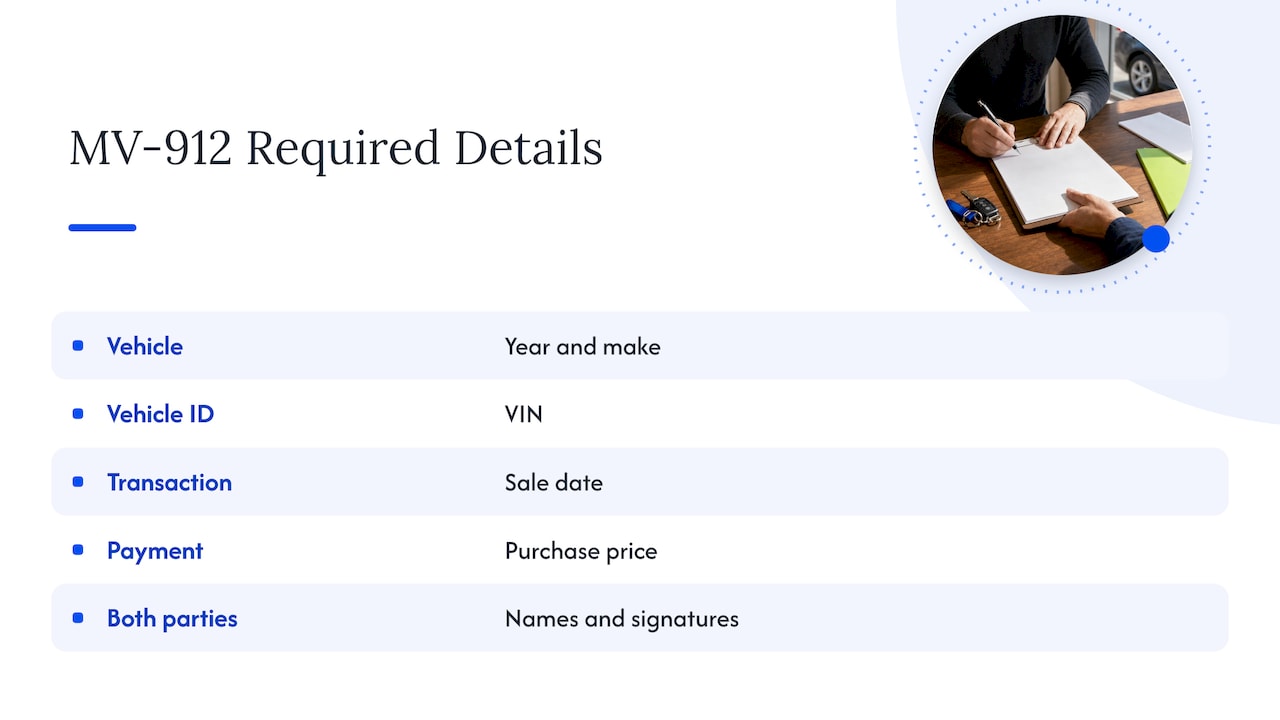
For a private sale, an acceptable MV-912 includes the vehicle’s year and make, the VIN, the sale date, the purchase price, and the names and signatures of both buyer and seller. Fill out two copies and each of you keeps one. Our walkthrough on using the MV-912 and DTF-802 explains the sales-tax side for buyers.
The odometer statement
Sellers must complete the odometer disclosure on the back of the title for vehicles manufactured in or after 2011 that are 20 years old or newer. Write the mileage exactly as the dashboard reads, with no decimals. If you are unsure which form applies, see odometer disclosure in NY and when to use MV-103.
Summary table
| Item | Needed for | Where it comes from |
|---|---|---|
| Signed NY Certificate of Title | Proving ownership and transferring it | Your copy of the title, or a duplicate from the DMV |
| Bill of sale (MV-912 or equivalent) | Proof of sale and price | Both buyer and seller sign |
| Odometer disclosure | Newer vehicles (2011 or later, up to 20 years old) | Back of the title |
| Duplicate transferable registration | Showing ownership when the registration is expired or missing | NY DMV |
| MV-51 and previous bill of sale | Cars you never registered in your name | Previous owner and DMV |
When the paperwork is not in order
This is where most people searching this keyword actually are. The registration is expired and something else is missing too.
You lost the title
You apply to the DMV for a duplicate title before you can sign it over. Our page on the $20 duplicate versus the MV-35 route explains which one fits your situation. Allow time for the mail, since you cannot finish a private sale without it. If you need cash sooner, some buyers can help with title issues, which we cover below.
You never registered the car in your name
If you bought the car and never registered it, the DMV says you must give the buyer the original proof of ownership, a completed Affidavit of Sale or Transfer (MV-51), and a bill of sale received from the previous owner. Keep every piece of paper from your own purchase. The chain of signatures is what proves the car is yours to sell.
The registration is gone and you cannot prove you own the car
The DMV’s route is the duplicate New York State transferable registration mentioned above. This is the document that lets you transfer ownership even when the registration itself is expired.
There is a loan on the car
A lien means the lender holds or is recorded on the title. You will need a payoff amount, and the lender releases the lien when paid. Selling to a buyer who can pay the lender directly and hand you the difference is usually the cleanest way. If you are in this position, our car buying service process explains how a sale works even with a loan.
The car is registered in another state
The seller’s home state rules for the title still apply to the transfer, and the plate surrender happens in the state that issued them. If the car is physically in New York, the DMV can help you with a New York-side transfer, but call before you plan around it.
After the sale: plates, insurance and the DMV
Order matters here, because the mistakes people make usually happen after the buyer drives off.
- Remove the plates and registration sticker before the buyer takes the car. The DMV says to do this before completing the sale.
- Surrender the plates at a DMV office as soon as possible, unless you are transferring them to another vehicle. Failing to do so may leave you liable for traffic or parking violations the next driver racks up. Our guide to surrendering NY plates by mail or in person shows the steps and the receipt you should keep.
- Keep your insurance until the plates are surrendered. New York law requires liability insurance for as long as the vehicle is registered in the state. If you cancel the insurance first, you must immediately surrender the registration and plates to avoid lapse penalties. That is why we describe the correct sequence in NY car sale paperwork, plates before insurance.
- Keep your bill of sale. If a lapse letter arrives after the sale, the DMV tells you to bring proof of sale, such as a bill of sale, to a local DMV office.
- Ask about a refund. If you cancel the registration with time left on it, you may be eligible for money back. Our pages on cancelling your registration and keeping the refund and reporting a car sale in NY cover the forms.
If the registration has already expired, you may have less to refund, but you still need to surrender the plates so that the record shows the car left your hands.
Perspective: what we see on these sales
Most people who call us about an expired registration are worried about the wrong thing. They assume the sticker kills the sale. It almost never does. What slows a sale down is a missing title, a lien nobody has a payoff for, or plates that are still on a car that has already left.
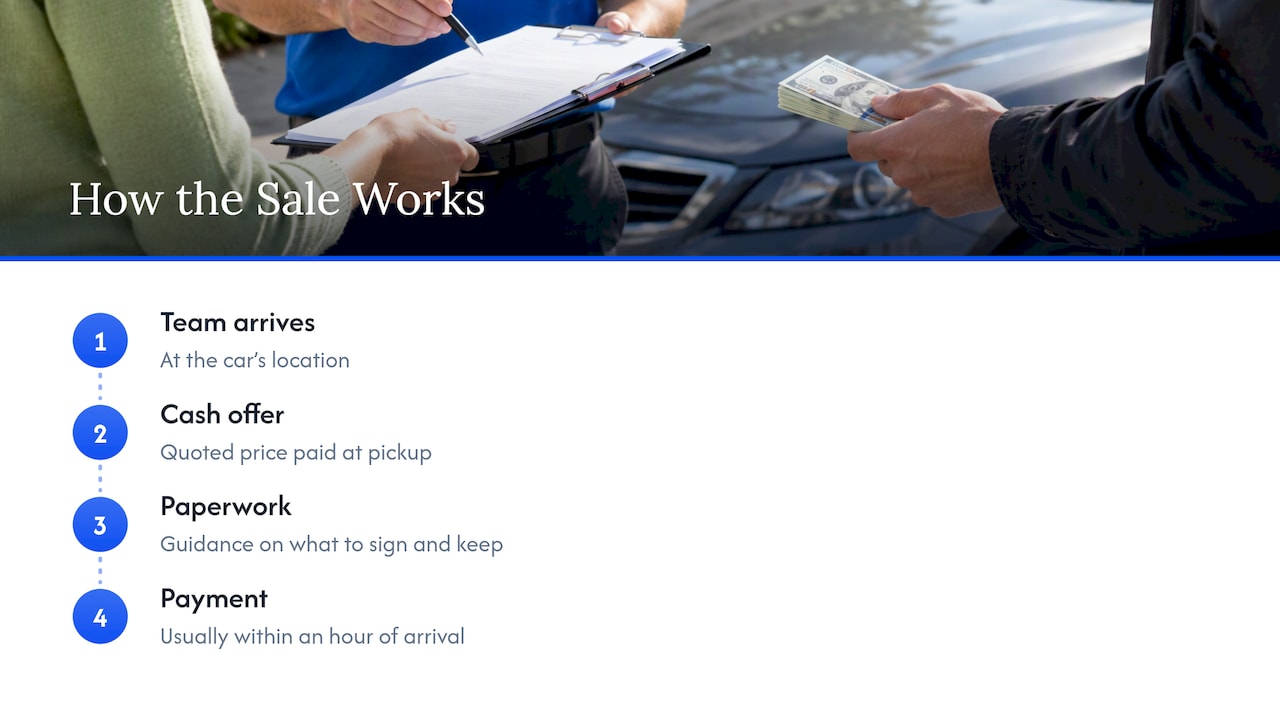
Our approach is built around that. We send a team to where the car is, so nobody has to drive an unregistered vehicle. We give you a cash offer and we stand behind it: the price we quote is the price we pay at pickup. We handle the paperwork on our side and tell you what you need to sign and what you need to keep. For most sellers the money is in your hand within an hour of the team arriving.
Our advice to any seller, whether you sell to us or to someone else: photograph the title front and back before you sign, write down the odometer reading, take the plates off yourself and keep your copy of the bill of sale for at least as long as you would keep a tax record. Those four habits prevent nearly every after-sale headache we hear about.
— Eric
Sell the car without moving it
If your car has an expired registration, does not run, or you simply do not want to spend a weekend on listings and DMV queues, we can come to you. We buy cars, SUVs, trucks and vans in New York, running or not, and we work with sellers who have lapsed registration or title questions. We pick the car up, pay at pickup and handle the transfer paperwork.
To see what we would pay, request a cash offer from Tri State Cash For Cars. If you are in the city, our Brooklyn page shows how pickups work there, and our page on selling with an expired registration goes deeper on towing and paperwork.
Private sale, dealer or cash buyer: which fits an expired registration?
The right buyer depends on whether the car can legally and physically move, and how fast you need the money.
| Route | Handles an expired registration? | Speed | What you do |
|---|---|---|---|
| Private buyer from a listing | Yes, but the buyer must tow or trailer it | Days to weeks | Meet buyers, negotiate, complete MV-912 and title |
| Dealer trade-in | Often yes, but they may need the car driven or towed in | Same day to a few days | Bring the car and paperwork, accept the trade-in offer |
| On-site cash buyer | Yes, the buyer comes to the car | Often same day | Show the title, sign, hand over the plates |
A private sale can bring the highest price when the car is in good running shape and you have time. For a non-running, older or damaged car, the extra weeks and tire-kickers rarely pay off. If a low dealer offer is what is holding you back, see how to raise a low dealer trade-in offer.
A simple order of operations
If you want a checklist you can follow in a single afternoon:
- Find your title. If it is missing, request a duplicate now.
- Check for a lien. Call the lender for a payoff figure if there is one.
- Decide how the car will move: tow, trailer or on-site pickup.
- Agree the price and put it in writing on an MV-912.
- Sign the “Transfer by Owner” section with no corrections and record the odometer reading.
- Take off the plates and the sticker.
- Surrender the plates, then cancel the insurance.
- Keep copies of everything.
FAQ
Can I sell my car in New York if the registration expired years ago?
Yes. The DMV’s route is a duplicate transferable registration, which lets the current owner transfer ownership even with an expired registration. If the car sat off the road for years, ask the DMV whether any inspection or VIN check applies before the buyer tries to register it. That is the buyer’s step, not a barrier to your sale.
Do I have to renew the registration before I sell?
No. Renewing is not a requirement for transferring ownership. You would only renew if you need to drive the car legally before the sale, and for most sellers a tow or on-site pickup costs less than renewal and inspection.
What happens to my plates after I sell?
Remove them before the buyer leaves with the car. Unless you are moving them to another vehicle, turn them in at a DMV office. Keep the receipt and your bill of sale so you can answer any later violation or insurance-lapse letter.
Can I sell a car without a title in New York?
Not as a standard private sale. You generally need to apply for a duplicate title first, or use a documented ownership route if you never registered the car. Some cash buyers can guide you through the options, but the DMV still needs a valid chain of ownership.
Can I get a ticket for driving to the buyer?
Yes. Driving an unregistered vehicle on public roads is a violation under VTL § 401, and penalties depend on how long the registration has been expired and on the court. Having the car towed or picked up avoids the risk.
Sources
- Proof of Ownership is Not Available, NY DMV
- Buy, Sell, or Transfer Vehicle Ownership, NY DMV
- Certificate of Title, NY DMV
- Insurance Lapses, NY DMV
- New York Vehicle and Traffic Law § 420, Justia
- Driving an Unregistered Vehicle in NY, traffictickets.com