How to Sell a Car That Has Sat for Years
A car that has sat for years is still worth money, and you do not have to get it running to sell it. The fastest route is to sell it as is to a buyer that comes to you, quotes a price on the spot and handles the paperwork. In New York, New Jersey and Connecticut, that is what we do: we send a team to the car’s location, give a cash offer, guarantee the stated price at pickup and take care of the transfer paperwork.
TL;DR
- Years of sitting usually cause flat-spotted tires, corroded brakes and stale fuel, so low mileage alone does not tell you what the car is worth.
- Do not pour fresh gas in and crank the engine. Old fuel deposits can clog the fuel system and turn a sellable car into a repair bill.
- Selling as is, running or not, saves you the cost and time of reviving it.
- Have the title, your ID and the plates ready. New Jersey and New York each have their own plate and title steps, and missing them can leave you liable for the car.
- We buy running and non-running cars, with or without a title, and pay at pickup at the price we quoted.
Table of Contents
- What years of sitting do to a car
- Should you revive it before selling?
- What your car is worth after sitting
- Why selling privately is hard with a car like this
- Paperwork for a car that has sat for years
- How to sell it for cash without the runaround
- Sell your car as is for cash
- Our view on cars that sat too long
- FAQ
- Sources
What years of sitting do to a car
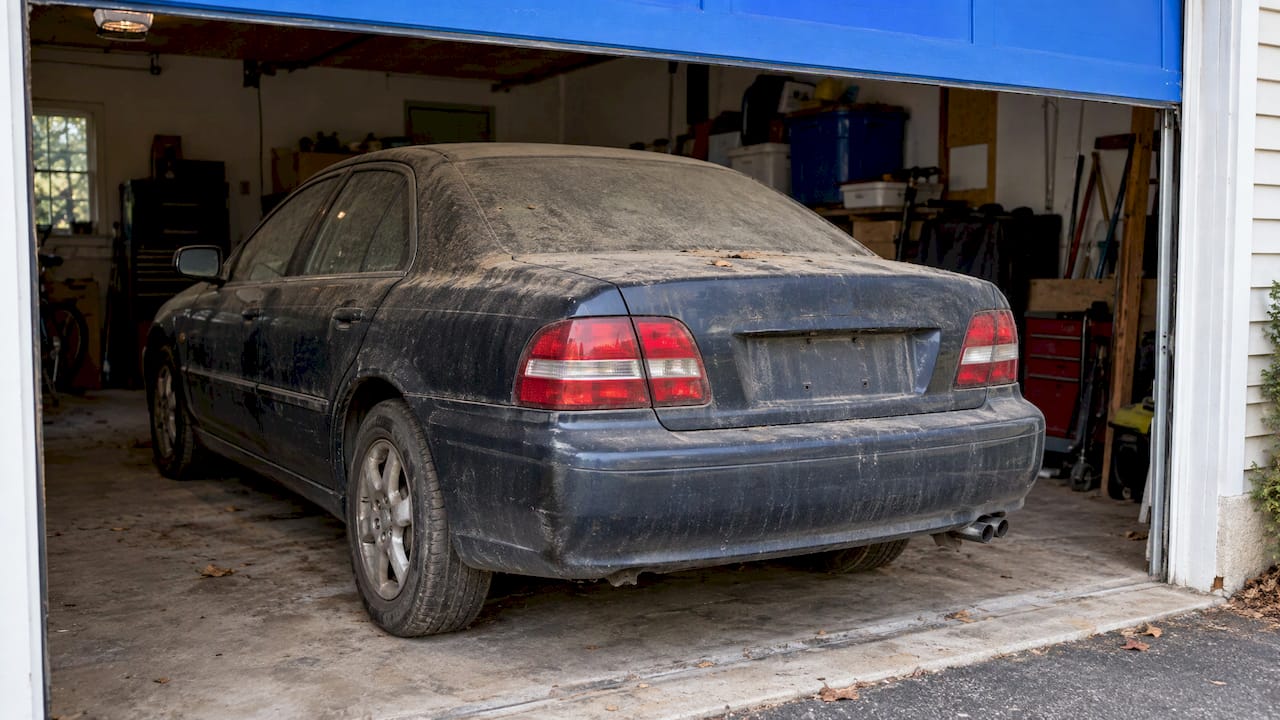
A car is built to move. When it stays parked for a year or more, nearly every system ages without anyone noticing. That matters when you sell, because the buyer will price in what those years did, and you should understand it too.
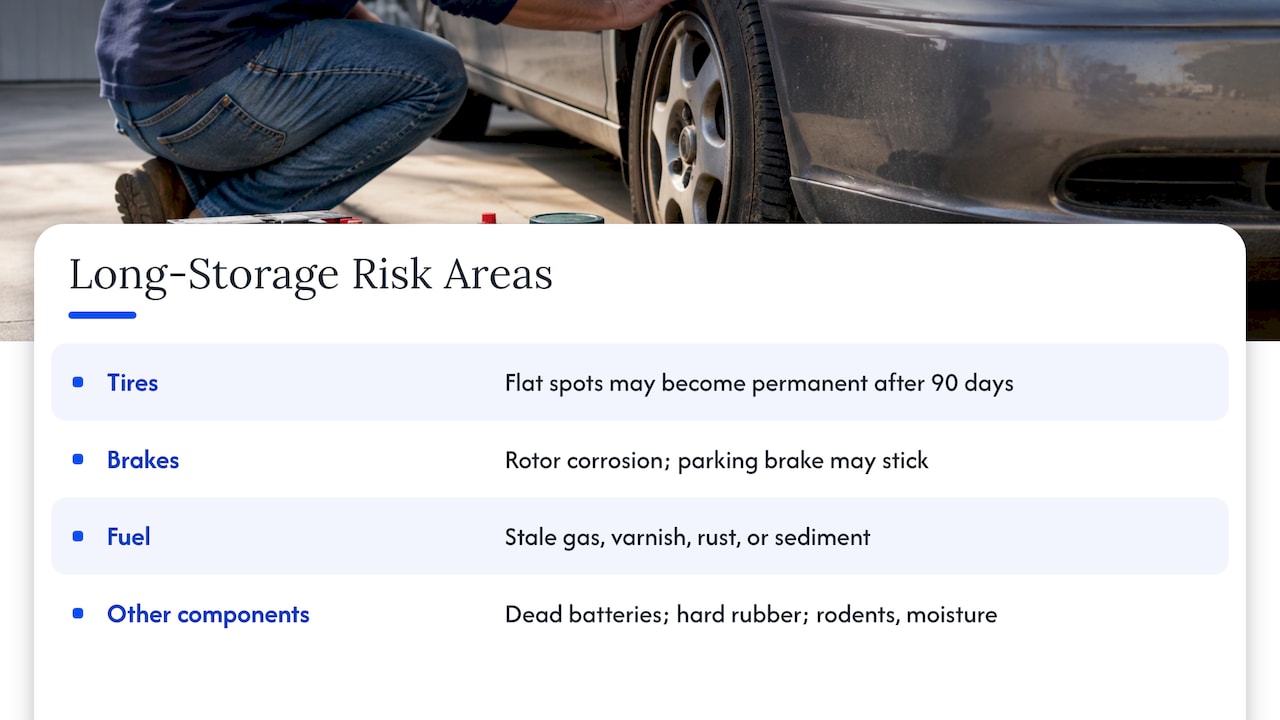
Tires. Cars that sit can develop flat spots, and tires stored outdoors can crack or rot. General Motors guidance hosted by NHTSA says that flat spotting after more than 90 days may become permanent and require new tires. After years, assume the tires are finished.
Brakes. The same NHTSA-hosted guidance notes that extended outdoor storage lets corrosion build on the brake rotor surfaces, which shows up as noise or pulsation. A stuck parking brake is common on cars that sat a long time.
Fuel. Gasoline goes stale. Hagerty’s technical writer describes varnish-like fuel odor as a sign that the system needs draining and cleaning, and the tank should be checked for rust and sediment. In one report from the same article, a long-stored car had goo in the fuel system and a seized fuel pump. Reviving it took far more than a battery and a gallon of gas.
Everything else. Hagerty’s guide says long-term storage can lead to deterioration across vehicle components. Its advice is to look at the car itself rather than assume low mileage means good condition. Batteries die, rubber hardens, and rodents and moisture find their way in.
None of this makes the car worthless. It means the realistic value is set by the car’s actual condition today, not by what a listing for the same model with regular use would fetch.
Should you revive it before selling?
Most owners ask this first, and the instinct to “just get it started” is the one that costs money.
Hagerty’s guidance warns against adding fresh gas and cranking a dormant engine right away. Stale fuel leaves sticky deposits that can break loose and clog injectors or carburetor jets. You can turn a car that was merely old into one with a damaged fuel system.
Here is the practical math for a seller:
- Reviving a long-dormant car can mean fuel system cleaning, a new battery, tires, brake work and fluids. Each of those is a cost and a delay before you see any money.
- Those costs rarely come back to you in full at sale, because the buyer still prices the car by its overall age and condition.
- A buyer who takes the car as is does not need any of that work done first.
If the car sat for years, our advice is simple: leave it as it is and sell it as it is. That also keeps you from towing, repair shops and test drives with strangers. If you want to get the car looking its best for the pickup, our guide to preparing your car for sale covers what is worth doing in a few minutes and what is not.
What your car is worth after sitting
Value depends on a few things you can judge from the driveway:
- Does it run? A complete car that does not run falls into what Hagerty’s condition guide calls a project category, where value depends heavily on rust and on whether the running gear is frozen.
- Rust and body condition. Rust on the frame, floors or rocker panels weighs more than faded paint.
- Is it complete? Missing engine parts, wheels or interior pieces change what a buyer can do with it.
- Make, model and year. Some models keep value as parts or wholesale even when they do not run.
- Title status. A clear title in your name makes everything simpler.
Guide prices for the same model in good running condition are the wrong benchmark. Dealerships tend to discount a long-dormant car heavily, or decline it, because they would have to spend on reconditioning before they could put it on a lot. A buyer that purchases cars for resale, parts or wholesale prices the car differently. That is why owners with a stale car often get better results from a direct cash buyer than from a trade-in counter. If you have already received a low number elsewhere, our scripts for raising a low dealer offer show how to respond.

Why selling privately is hard with a car like this
A private sale means photos, listings, messages, no-shows and test drives. With a car that has sat for years, there is an extra problem: a buyer cannot test drive a car that does not start, and most private buyers do not want a project they cannot see running. The listing may sit as long as the car did.
If you still want to go the private route in New Jersey, our private sale guide for NJ walks through it. For most owners of a long-parked car, though, a direct sale to a buyer who comes to the car is the shorter path. Our page on selling your car from home explains how a pickup sale works.
Paperwork for a car that has sat for years
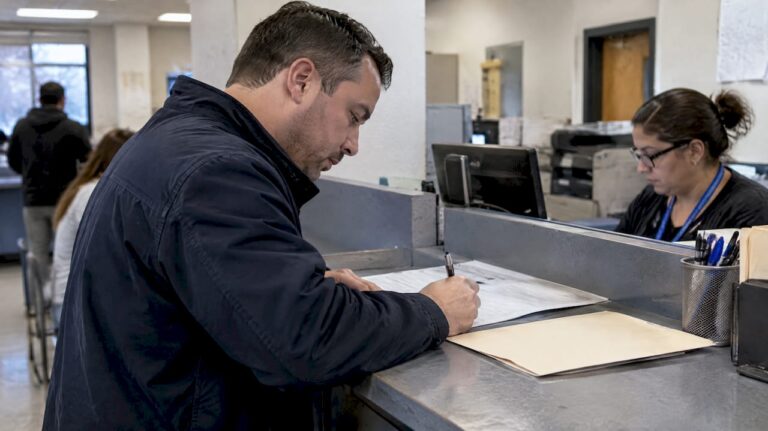
The paperwork is where long-parked cars cause the most trouble. The registration may have lapsed, the plates may be expired, and the title may be in a drawer you have not opened in years. Start by gathering what you have.
The BBB recommends gathering maintenance records, title or loan information, registration and warranty details and being candid about mechanical problems. For a car that has sat, say plainly how long and where.
Bill of sale
The BBB says a written bill of sale should include the VIN, sale price and the buyer and seller names. AAA calls a bill of sale a receipt, particularly for a cash transaction, and notes that some states require a release-of-liability form while filing one is sensible even where it is not required.
New Jersey
The NJ Motor Vehicle Commission says sellers must sign the seller section of the title and give the buyer a bill of sale showing the buyer’s name and address, the sale date, the odometer reading and the price. Plates must be removed and surrendered unless you transfer them to another vehicle. The same page says titles reassigned in New Jersey must be transferred within 10 working days to avoid a $25 penalty.
Three of our guides cover these steps in detail:
- Three forms for NJ car sale paperwork before an MVC visit
- Removing plates after a NJ sale
- Finishing a New Jersey title transfer in six steps
If a notary is involved, see our page on NJ notary rules and the 10 working day deadline.
New York
The NY DMV says plates must be surrendered if you do not transfer the registration to another vehicle, and you may be eligible for a registration refund if plates are surrendered before expiration. For titles, that page says model-year 1973 and newer cars generally need the original or certified title with the seller’s transfer section completed, while model-year 1972 and older cars may use a transferable registration and a bill of sale.
For a car that sat for years, the plates are often the loose end. Our guides explain how to surrender NY plates and get your FS-6T (the receipt that proves you surrendered them), how to cancel registration and keep your refund, and what to complete in NY private sale paperwork.
Connecticut
If the car or the buyer is in Connecticut, the steps differ again. Our page on Connecticut car sale paperwork lists the three papers to sign.
If you cannot find the title
A missing title is common with a car that has been parked for years. We buy cars with or without a title. If that is your situation, read about selling with no title in New Jersey before the pickup. Paperwork rules vary by state, and AAA advises sellers to check their state motor vehicle agency’s requirements, since an odometer reading and extra documents may be needed.
How to sell it for cash without the runaround
Here is the sequence that gets a long-parked car sold with the least effort.
- Leave the car alone. Do not try to start it, and do not spend money on repairs first.
- Gather what you have. Title if you can find it, photo ID, registration if any, and any loan information. Our page on the guaranteed car offer explains how to avoid odometer and title surprises before pickup.
- Describe the car honestly. Tell us the make, model, year, how long it has sat, whether it runs and any known damage. A precise description gives you an offer that holds at pickup.
- Get the offer. We give a cash offer for running and non-running cars, and we guarantee that we pay the stated price at pickup. For how our on-site appraisal works, see that page.
- Schedule the pickup. Our team comes to where the car is. You do not need to tow it, and you do not need to be able to drive it.
- Sign and get paid. We handle the paperwork and pay at pickup. Our customers can have cash in hand within an hour. Our car pickup paperwork guide shows what you sign before the car leaves.
- Finish the state steps. Remove the plates and complete any plate surrender or registration cancellation that applies to your state, using the guides above.
If there is a loan on the car, our car buying service process explains how to sell safely even then.
Sell your car as is for cash
We buy cars, SUVs, trucks, vans and commercial vehicles in New York, New Jersey and Connecticut, running or not, damaged or old, with or without a title. We send a team to you, give a cash offer, handle the paperwork, and pay the price we quoted at pickup.
If your car has been parked for years and you want it gone without repairs, listings or tow bills, start your offer here.

Our view on cars that sat too long
Most people who call us about a car that sat for years are not sure it is worth anything. They have been putting it off because the car does not start, the title is somewhere in a box, or the plates expired long ago.
Our approach is to take those worries off the table. The car does not have to run. You do not have to bring it anywhere. We come to the car, give you a cash offer, and commit to paying that stated price at pickup. We handle the paperwork, so a car that has been waiting for years does not turn into weeks of errands.
The mistake we would most like owners to avoid is spending money to wake the car up before selling it. Revival costs add up, and you can sell the car as it stands. Dealers often discount a car like this heavily. Our model is to buy it directly, which is why we can make an offer you can rely on.
If you are in New York, New Jersey or Connecticut and the car has been in your driveway or garage too long, get the offer first and decide from there.
Eric
FAQ
Can I sell a car that has been sitting for years and does not run?
Yes. We buy running and non-running cars, including damaged and old vehicles. You do not need to repair it or start it first. Tell us the condition honestly and we give you a cash offer.
Should I put new gas in it and try to start it first?
We would not. Hagerty’s guidance warns that stale fuel leaves sticky deposits that can clog injectors or carburetor jets once you crank the engine. Selling as is avoids that risk and the cost of fixing it.
What if I lost the title?
We buy cars with or without a title. Which documents you need varies by state, so check the transfer rules for your state’s motor vehicle agency. Our title and paperwork guides above explain the steps for New Jersey, New York and Connecticut.
What do I do with the license plates after I sell?
In New Jersey, remove the plates and surrender them unless you move them to another vehicle. In New York, surrender the plates if you are not transferring the registration, and you may qualify for a refund if you do so before the registration expires. The state links above give the details.
How fast can I get paid?
We pay at pickup, at the price we quoted, and our customers can have cash in hand within an hour.
Sources
- What Happens When Cars Sit? – Hagerty Media
- NHTSA-hosted GM information bulletin on stationary storage, November 2024
- Don’t try to start a long-dormant engine without checking the gas tank – Hagerty Media
- Vehicle Condition And Relative Value Guide – Hagerty Media
- NJ MVC: Transferring Vehicle Ownership
- NY DMV: How to transfer a registration to another vehicle
- BBB: How to sell a car to a trustworthy, honest buyer
- AAA: How to Sell or Buy a Used Car Privately