Selling a Car With an Open Recall: What the Law Says
Yes, you can usually sell a car that has an open safety recall. Federal law puts the duty to fix a recall on the manufacturer, and a private owner is not required to repair the car before selling it. What you need is the car’s recall status in writing and a buyer who is comfortable taking the car as it is. If you want cash without waiting on a dealership’s parts department, we make an offer on the car as it stands and handle the paperwork at pickup in New York, New Jersey and Connecticut.
TL;DR
- Look up your VIN on NHTSA’s recall page before you list or call anyone. It takes a minute and it is free.
- A private owner can generally sell a car with an open recall. The federal ban on selling recalled vehicles is aimed at new cars and has an exception for ordinary resale after the first purchase.
- Recall repairs are free at the manufacturer’s dealer, but parts can be delayed, so fixing it first can stall your sale.
- If the notice says “do not drive” or “park outside,” follow it until the car is repaired or sold, and tell the buyer.
- Put the recall status on the bill of sale. We buy cars with open recalls, give a guaranteed offer and pay at pickup.
Table of Contents
- What an open recall actually is
- Step 1: Check your recall status
- Step 2: Understand what the law lets you do
- Step 3: Decide whether to fix it first
- Step 4: Disclose it in writing
- Will a recall lower your price?
- Where the sale goes wrong
- How we buy cars with open recalls
- Ready to sell a car with an open recall?
- FAQ
- Sources
What an open recall actually is
A safety recall is a manufacturer’s (or NHTSA-ordered) fix for a defect that affects safety, such as a faulty airbag inflator or a brake part. An “open” recall means the fix has been announced for your VIN, the vehicle identification number stamped on your car, and nobody has done the repair yet.
Open recalls are common. A car can carry one without you ever seeing a letter, especially if you bought it used or the mailing went to a previous owner. NHTSA says the manufacturer must remedy a recalled defect by repair, replacement or refund, or in rare cases by repurchasing the vehicle, and it tells owners to contact the manufacturer’s dealer for the remedy.
Step 1: Check your recall status
Start with the federal lookup. On NHTSA’s recall page you can search by VIN or license plate and see whether your specific vehicle has an unrepaired recall. The 17-character VIN is usually on the lower-left corner of the windshield, and also appears on your registration and insurance card.
Two details matter when you are about to sell:
- Print or screenshot the result with the date. A dated record shows the buyer what was open when you sold.
- Check again right before the sale. NHTSA notes that newly announced recalls may not be matched to every VIN yet, so a clean result last month is not a guarantee. NHTSA also recommends checking at least twice a year.
If the lookup says “0 unrepaired recalls,” you have nothing to disclose and can move on to pricing. If it lists one or more, read each notice. The remedy, the parts status and any driving warning are all spelled out there.
Step 2: Understand what the law lets you do
The confusion comes from one rule that is easy to over-read. Federal law in 49 U.S.C. § 30112 bars selling or delivering a vehicle with a covered safety defect, but the bar does not apply after the first purchase in good faith other than for resale. In plain terms, the strict ban is about new vehicles moving through dealers. It does not turn an ordinary used-car sale by an owner into a violation.
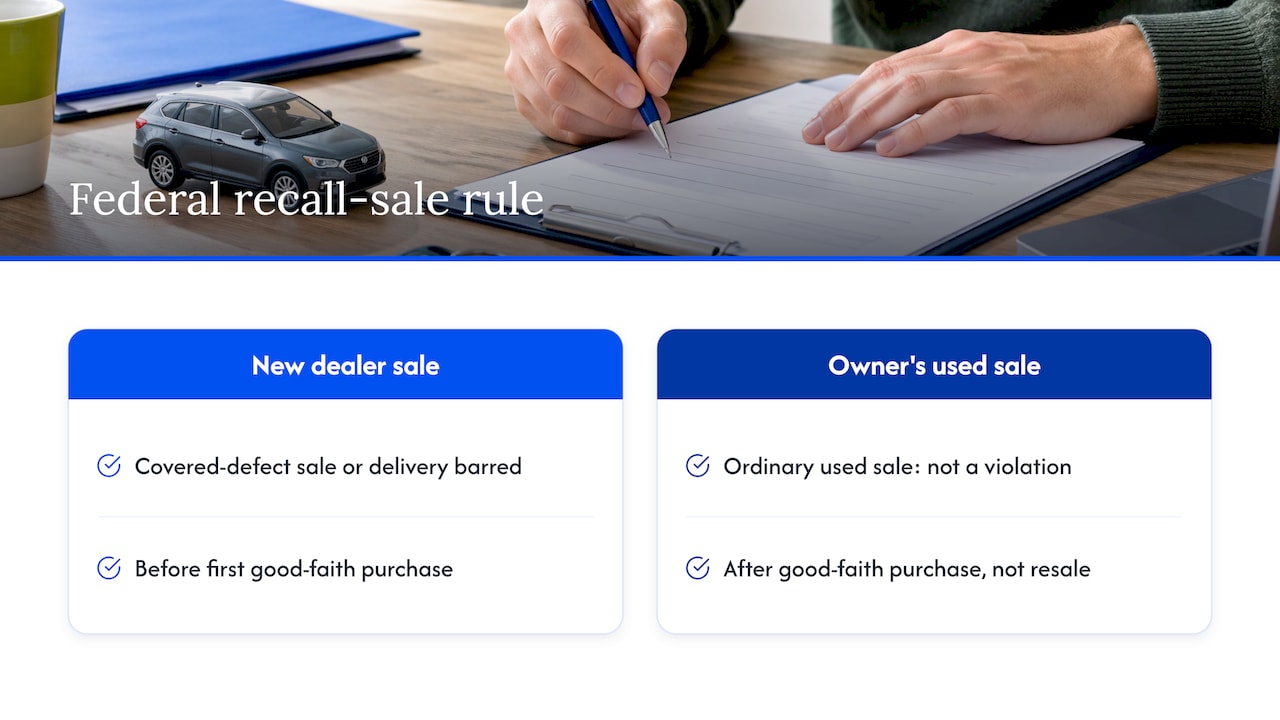
The FTC’s used-car guide says that federal law does not require dealers to fix recalls on used cars. The same guide notes that the FTC’s Used Car Rule generally does not cover private-party sales, and that private sales are usually treated as-is unless the written agreement says otherwise.
Dealers can face stricter state rules
States can add their own requirements on top of the federal baseline for dealers. Tennessee, for example, bars a dealer from retail-selling a used car with a do-not-drive recall or stop-sale order until it is repaired, and for other open recalls it requires a recall report and the buyer’s signed acknowledgment. That is one state’s rule, not a national one, but it shows why the details depend on who is selling and where. If you are selling your own car in New York, New Jersey or Connecticut, check the current rules on the state’s official motor vehicle site, and keep your recall printout with the sale paperwork.
Step 3: Decide whether to fix it first
You have two honest routes: have the recall repaired before you sell, or sell the car with the recall open and say so.
Repair first. The repair is free. NHTSA’s consumer alert says recall repairs are free at the manufacturer’s dealership and tells owners to call the dealership promptly to schedule. The catch is timing. Consumer Reports notes that the repair may take time if parts are not available. If you need money this week, waiting on a backordered part can be the slowest part of the whole sale.
Sell as it stands. You skip the wait and the appointments. The buyer takes on the free repair, and you hand over the recall paperwork. This is the route most sellers in a hurry choose, and it works best with a buyer who plans to handle the repair or resale themselves.
Here is how the two compare for a seller:
| Repair before selling | Sell with the recall open | |
|---|---|---|
| Cost to you | Free repair, but time off for dealer visits | None |
| Speed | Depends on parts and dealer schedule | Can close the same day |
| What the buyer sees | Clean recall record | Recall status in writing |
| Best when | You are not in a rush and parts are in stock | You need cash fast or the car does not run |
Step 4: Disclose it in writing
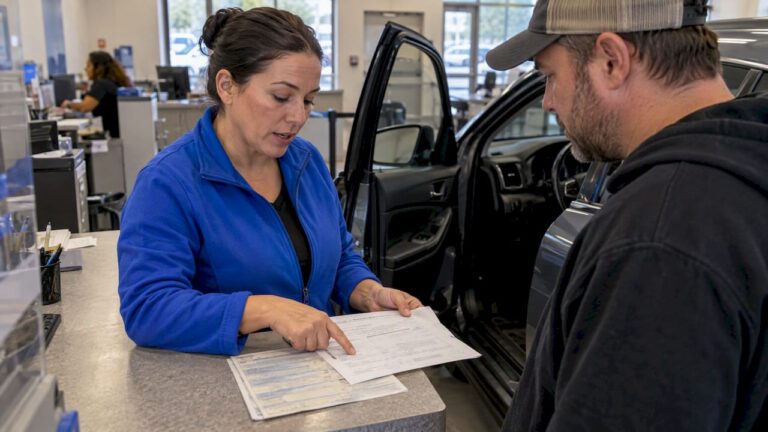
No single federal rule tells a private seller exactly how to disclose a recall, but the safe habit is simple: tell the buyer, and put it on paper.
The FTC’s guide advises buyers to check for unrepaired recalls and warns that an as-is sale does not erase promises made in a written contract. So whatever you write down is what counts. On the dealer side, the National Automobile Dealers Association recommends a current VIN-specific recall lookup and a written recall-status notice, with the buyer acknowledging receipt. A private seller can borrow that habit for free:
- Attach the dated NHTSA lookup showing the open recall.
- Add a line to the bill of sale, such as “Buyer was informed of open safety recall(s) on this VIN and received the recall notice.”
- Have the buyer sign and date it, and keep a copy.
- Keep your license plate and title steps separate and by the book. Our guides on New York paperwork, New Jersey paperwork and Connecticut paperwork cover what each state expects.
If the notice carries a “do not drive” or “park outside” warning, say so plainly and do not drive the car to a showing. NHTSA tells owners to follow the manufacturer’s safety instructions while a recall is awaiting repair. A car with that kind of warning is also a good fit for a buyer who picks it up on site, so you never have to drive it.
Will a recall lower your price?
It can, but usually less than people fear. A buyer who sees an open recall may ask for a lower price to cover their time and the risk that a part is backordered. The repair itself costs the buyer nothing at the manufacturer’s dealer, so the discount is about hassle, not repair cost. How much it matters depends on the recall: a minor software update is a different conversation from an airbag warning with a do-not-drive notice.
Three things keep the price from sliding:
- Know the remedy. If the notice says the fix is a short, free dealer visit, you can tell the buyer that.
- Have the paperwork ready. A dated lookup and a clear bill of sale remove the “what else is hiding?” worry.
- Get an offer that is fixed in advance. Private buyers often reopen the price at the last minute. A guaranteed offer does not.
Where the sale goes wrong
Most problems with recalled cars come from the same few mistakes:
- Skipping the lookup. A buyer who checks your VIN and finds a recall you never mentioned will assume you hid it.
- Verbal promises. “It was fixed last year” is only worth something if the lookup agrees.
- Listing a car you cannot safely show. If the notice says not to drive it, a test drive is off the table.
- Mixing up a title problem with a recall problem. A recall is not a title brand. If the car has a salvage or rebuilt title, that is a separate disclosure; see our guide to selling a salvage title car.
- Waiting on parts while your cash need grows. Repairs are free, but a long wait is not.
How we buy cars with open recalls
If you would rather not wait for parts, list, answer messages and meet strangers, selling to us takes a few steps. We buy cars, SUVs, trucks, vans and commercial vehicles in New York, New Jersey and Connecticut, running or not, with or without a title, and damaged or old vehicles too.
The process, in short:
- Get your offer. Tell us about the car, including the recall status from your lookup.
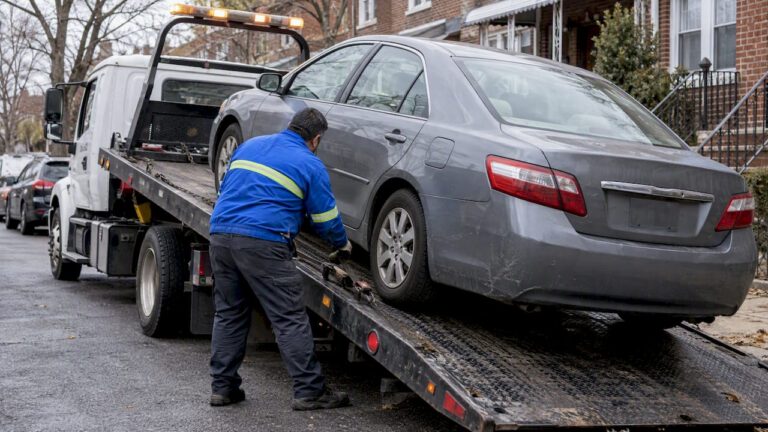
- We come to you. A team arrives at your location for an on-site appraisal, so a car you should not drive never has to leave your driveway under its own power.
- The offer is guaranteed. We commit to paying the price we quoted at pickup.
- Paperwork is handled. We take care of the pickup paperwork, and you can add the recall line to the bill of sale.
- You are paid. Payment is made the same day, at pickup.
Our guaranteed car offer page explains how to avoid odometer and title surprises before pickup, and selling from home walks through a pickup sale start to finish. If your car has other issues besides a recall, such as a check engine light or a failed New York inspection, those cars are also ones we buy.
Our view on recalls and quick sales
Owners tell themselves that a recall means they have to fix the car before anyone will take it. That is not what the law says for a private seller, and it is not what we see as the right way to think about it.
The recall is the manufacturer’s responsibility, and the fix is free to whoever owns the car next. What the seller owes is honesty and a record. Look up the VIN, keep the printout, write the status on the bill of sale. That is the whole job.
What costs sellers money is the drag around it: parts delays, dealer appointments, and private buyers who come back with a lower number once they see the notice. Our offer is built to remove that. We quote a price, we commit to paying it at pickup, and we handle the paperwork, so a recall does not turn into weeks of waiting.
If your car has an open recall and you want cash in hand the same day, that is exactly the situation our pickup service was set up for.
Eric
Ready to sell a car with an open recall?
Get your VIN lookup, then tell us about the car. We send a team to your location, give you a guaranteed cash offer and pay you at pickup. Start your offer at Tri State Cash For Cars.
FAQ
Can I sell my car if it has an open recall?
In most cases, yes. Federal law’s strict bar on selling vehicles with a safety defect has an exception for resale after the first good-faith purchase, and the FTC says private sales are generally not covered by its used-car rule. Disclose the recall in writing and keep your NHTSA lookup with the paperwork.
Do I have to pay to fix a recall before selling?
No. Recall repairs are free at the manufacturer’s dealership, and you are not required to have one done before a private sale. If you would rather skip the wait for parts, you can sell the car with the recall open and let the buyer know.
How do I find out if my car has a recall?
Enter your VIN or license plate on NHTSA’s recall page. The VIN is on the lower-left windshield, your registration and your insurance card. Check again just before you sell, since new recalls can take time to appear for every VIN.
Can I still drive a car with an open recall?
Usually the notice says whether it is safe to drive. If it carries a “do not drive” or “park outside” instruction, follow it until the repair is done. That is another reason many owners choose an on-site pickup sale for a car they should not be driving.
Sources
- NHTSA: Check for Recalls
- NHTSA: Vehicle Safety Recalls Week
- NHTSA: Consumer Alert, Check for Safety Recalls
- 49 U.S.C. § 30112
- FTC: Buying a Used Car
- Tennessee Recall Database Report Requirements
- NADA: Safety Recalls
- Consumer Reports: Why You Should Check for Open Recalls on Used Cars