Car Pickup Paperwork: What to Sign Before the Buyer Drives Away
When a buyer comes to pick up your car in New York, New Jersey or Connecticut, you need three things in order: a signed title, a bill of sale, and a plan for your license plates. After the car leaves, you also have to notify the state and keep your own copies. Skip any of these and the car may be gone while its paperwork is still in your name.
This guide walks through the pickup-day paperwork for each state, what changes if you can’t find your title, and what to do in the days after the sale. We buy cars across the tri-state area, so this is the checklist we run through with sellers every week.
TL;DR
- Sign the seller’s section of the title and complete a bill of sale with the date, price, odometer reading and both parties’ details before the car leaves.
- Remove your plates before pickup. You surrender them or move them to another vehicle you own. They never go to the buyer.
- Keep your insurance active until the plates are surrendened or the registration is cancelled.
- No title? Apply for a duplicate or use the state’s supplemental form first. A bill of sale alone usually isn’t enough.
- Photograph or copy every signed page before the buyer takes the originals.
Table of Contents
- The two documents every pickup needs
- New York: title, MV-912 and a short list of extras
- New Jersey: sign the back of the title, then deal with plates
- Connecticut: bill of sale and a 90-day window for the buyer
- Side-by-side: what you hand over and what you keep
- Selling without a title
- A pickup-day checklist
- After the car leaves
- Our perspective: paperwork is where a cash sale is won or lost
- Get the offer, then let us handle the pickup
- FAQ
- Sources
The two documents every pickup needs
A handshake and a receipt do not transfer a car. State agencies want specific documents, and the New York DMV explains that most sales come down to two things: proof of sale and proof of ownership.
Proof of ownership is the Certificate of Title. You complete and sign the transfer-of-ownership section on it, assigning the car to the buyer.
Proof of sale is the bill of sale. It records who sold the car, who bought it, when, and for how much. A solid bill of sale includes:
- Year, make and VIN
- Date of sale
- Purchase price
- Odometer reading
- Names, addresses and signatures of buyer and seller
Federal rules and most state regulations also call for an odometer disclosure on newer vehicles (model year 2011 or newer, transferred within 20 years of manufacture), according to the research behind this article, which cites the NY DMV page. On most titles the disclosure is built into the assignment section, so write the mileage carefully and don’t cross anything out. A corrected or smudged title can get rejected at the DMV, and the buyer will come back to you.
Fill in every line before the keys change hands
Use a pen, print clearly, and match your name exactly as it appears on the front of the title. If two owners are listed, check how the title joins them before signing. Leave nothing blank for the buyer to fill in later. An open title is a risk to you: if the buyer never registers the car, tickets and tolls can trace back to your name.
New York: title, MV-912 and a short list of extras
In New York, the seller completes the transfer section of the title and both parties sign the Vehicle Bill of Sale, form MV-912. The state requires it even if the car is a gift. The buyer keeps the original to bring to the DMV, and you can each keep photocopies.
The buyer then titles and registers the car and pays sales tax or shows proof of exemption. That part is the buyer’s job, but your photocopy of the bill of sale is your proof of the sale date.
The NY details that trip sellers up are plates and insurance. We cover them in detail in our guide to NY car sale paperwork for private sellers, and the form choices in selling fast in New York with MV-912 and DTF-802. If you need to know about notarization or avoiding a second DMV trip, see New York title transfer forms.
After the sale you can transfer your registration and plates to another vehicle you own at a DMV office. If you aren’t replacing the car, our pages on cancelling a registration in NY and surrendering NY plates cover the FS-6T and the order of steps.
New Jersey: sign the back of the title, then deal with plates
The NJ Motor Vehicle Commission asks the seller to sign the seller’s section on the reverse of the title and hand it to the buyer with a bill of sale. The bill of sale should show:
- The buyer’s name and address
- The date of sale
- The odometer reading
- The sale price
The buyer signs the buyer’s section, adds a driver’s license number or entity ID, and visits a motor vehicle agency to transfer the title and register the car.
The seller has a job too. Per the same MVC page, you remove the plates and either surrender them at a motor vehicle agency or move them to another vehicle you own. Plates can move to another vehicle, but not to another owner. The page also notes a $25 penalty if the title isn’t transferred within 10 working days of the sale, so don’t let the buyer sit on the paperwork without checking in.
Our NJ guides go deeper on each step: three forms to have before an MVC visit and removing plates the day of the sale. If your title is branded salvage, read selling a salvage-title car in NJ first, because the title and plate steps differ.
Do not forget the plate receipt
Surrendering plates doesn’t always clear everything automatically. The MVC publishes a plate status form, RSC-6, that you can use to document what happened to the plates. Keep the plate receipt or the completed form. If your insurer or the state later asks why a car has no coverage, that paper answers the question.
Connecticut: bill of sale and a 90-day window for the buyer
Connecticut’s DMV tells sellers to complete and sign the reverse of the title and give it to the new owner with a bill of sale. The state’s bill of sale is Form H-31, but you can draft your own because no special form is required. If you do write your own, make sure it carries the same details listed above.
The state also expects you to notify the DMV of the sale and handle your plates. Our page on Connecticut car sale paperwork lists the three papers sellers from New Jersey need to sign if the buyer is registering in Connecticut.
Side-by-side: what you hand over and what you keep
| Item | New York | New Jersey | Connecticut |
|---|---|---|---|
| Signed title | Yes, transfer section | Yes, seller’s section on reverse | Yes, reverse side |
| Bill of sale | MV-912 or other acceptable proof | Required, with buyer address, date, mileage, price | Form H-31 or your own draft |
| Plates | Transfer or surrender | Remove; surrender or transfer to your other vehicle | Handle per DMV guidance |
| Your copies | Photocopy of bill of sale | Copy of title and bill of sale | Copy of title and bill of sale |
The table summarizes the state pages cited above. Rules and forms change, so check the agency page before pickup day.
Selling without a title
A lost title is the most common reason a pickup falls apart. The fix has to come before the sale, not after.
The Connecticut DMV says that if your title is misplaced and you are selling to a Connecticut resident, you can fill out the replacement title application, form H-6B, or use the state’s no-title process. Its page on selling a vehicle without a title describes supplemental forms such as Form Q1, and a bill of sale on its own may leave the buyer unable to register. The research behind this article also lists a $25 fee for duplicate title applications in Connecticut.
For New York, our page on selling a car without a title, the $20 duplicate versus the MV-35 compares your options. Order the duplicate early. Waiting until the day of pickup is how a same-day sale turns into a two-week one.
A pickup-day checklist
Run through this before the buyer’s team arrives:
- Find the title and check the name and VIN against the car.
- Clear any lien. If a lender is listed on the title, you need the lien release or a payoff arrangement. Our overview of how a car buying service works, even with a loan explains it.
- Print the bill of sale or have the form ready.
- Photograph the odometer at the time of sale.
- Take your plates off and keep them with you.
- Remove personal items and toll tags, and unlink the car from any apps.
- Sign and date the title and bill of sale in front of the buyer.
- Copy everything before the originals leave.
- Confirm payment before handing over keys.
If the car doesn’t run, nothing changes in the paperwork. The title and bill of sale are the same. Only the logistics differ, because someone has to tow or flatbed it away.
After the car leaves
The sale isn’t finished when the cash changes hands. Our research found that failing to notify the DMV or surrender plates can leave a prior owner exposed to property tax and insurance enforcement until the state record is updated. The CT DMV makes the same point about seller responsibilities.
Keep your insurance until the plates are gone
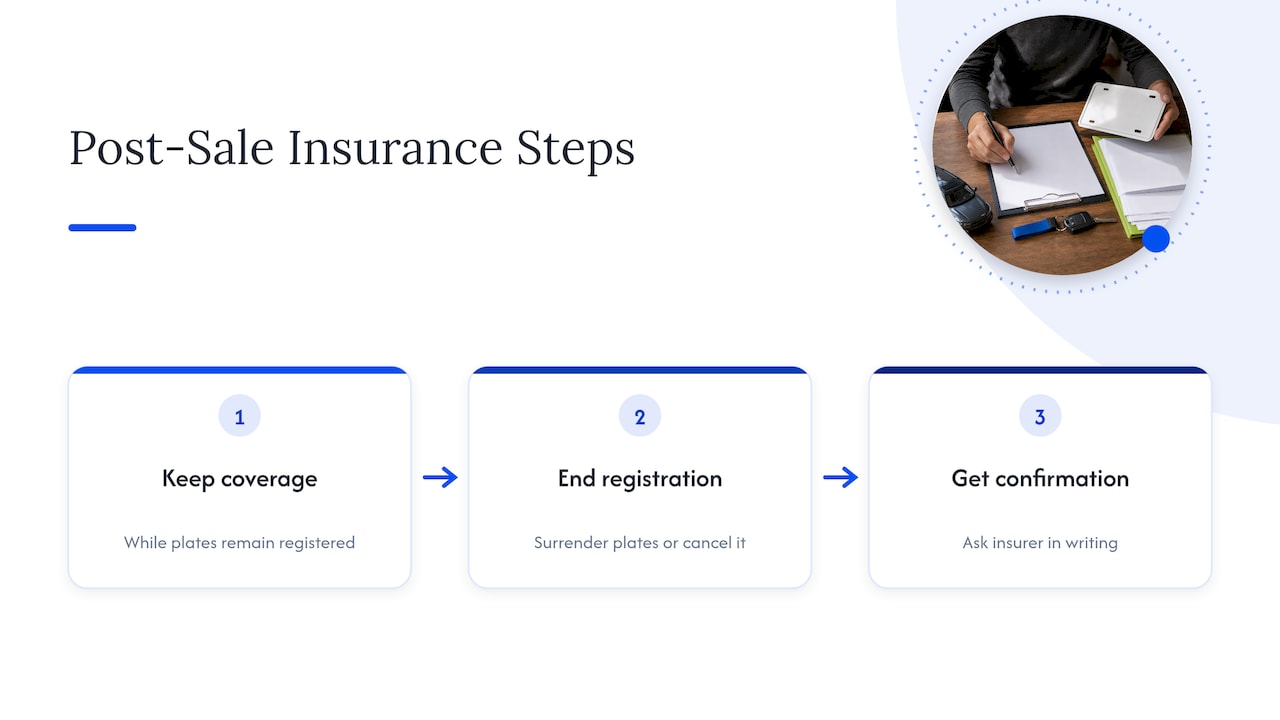
Many sellers cancel coverage the minute the car is gone. That can backfire. New Jersey law requires the registered owner to carry liability coverage, and the MVC’s uninsured motorist enforcement FAQ explains why a suspension notice can arrive if the registration is still active. Keep your policy until the plates are surrendered or the registration is cancelled, then ask your insurer to confirm in writing.
File and store your records
Keep a folder, paper or digital, with the title copy, bill of sale, odometer photo, plate receipt and any DMV confirmation. Hold it for as long as you’d want proof that a toll, ticket or tax bill isn’t yours. The NY DMV’s own registration guidance reflects how much weight agencies give to signed documents, and your copies are the only proof of the sale date you control.
Our perspective: paperwork is where a cash sale is won or lost
Most sellers worry about the price. In our experience the price is the easy part. The deals that go wrong are the ones where a title has a missing signature, a plate is still on the car, or an insurance policy was cancelled a day too soon.
That’s why we built our process around the paperwork. We send a team to your location, give you a cash offer, and handle the paperwork with you at pickup. We stand behind the offer: we pay the quoted price at pickup, so the number you were given is the number you get. Sellers can have cash in hand within an hour.
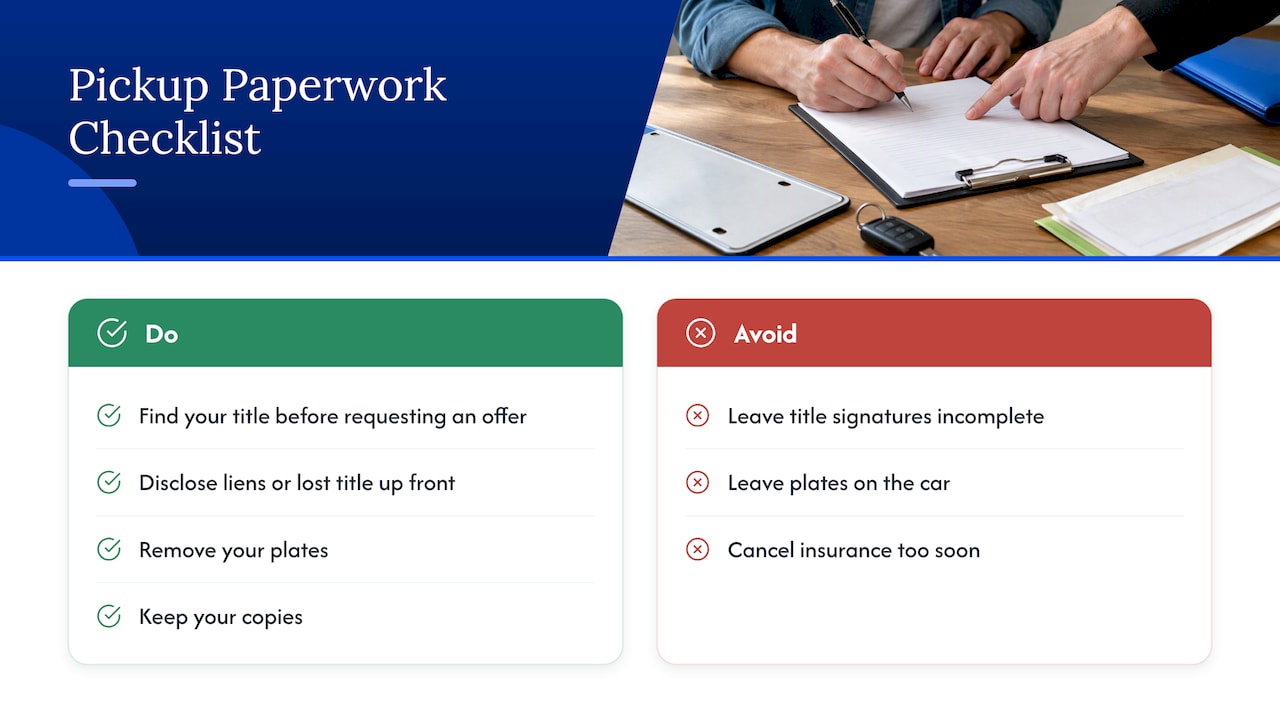
Our advice is simple. Find your title before you request an offer. Tell us if there’s a lien or a lost title up front, because it changes what we need to bring. Take your plates off. And keep your copies. If you do those four things, pickup takes minutes.
We also buy cars that don’t run, are damaged, or are old, with or without a title in some cases, so a hard situation is not a reason to wait. Just tell us the facts when you ask for the offer.
— Eric
Get the offer, then let us handle the pickup
If you’re ready to sell in New York, New Jersey or Connecticut, request your offer from Tri State Cash For Cars. We come to you, pay the stated price at pickup, and walk through the paperwork with you. To prepare, see our guide to getting your car ready for sale, and if you want to know what could change a quote, read about odometer and title surprises before pickup.
FAQ
What paperwork do I need when someone picks up my car?
At minimum, a signed title and a bill of sale with the date, price, odometer reading and both parties’ details. Your plates should be off the car. Keep copies of everything you sign.
Who keeps the license plates, the seller or the buyer?
You do. In New Jersey, plates can move to another vehicle you own but never to another owner, per the NJ MVC. Otherwise you surrender them to the state. New York offers a similar transfer option for another vehicle you own.
Can I sell a car if I lost the title?
Often yes, but you need to fix the title first. Apply for a duplicate or, where the state allows it, use a supplemental form such as Connecticut’s Q1. A bill of sale alone may leave the buyer unable to register the car.
Should I cancel my insurance right after the sale?
Not yet. Keep liability coverage until your plates are surrendered or the registration is cancelled. Cancelling early can trigger a lapse notice, and in New Jersey a suspension notice can follow.
Do I still need a bill of sale if the title is signed?
Yes. The title proves ownership and the bill of sale proves the terms and date of the sale. New York requires the MV-912 or other acceptable proof, even for a gift.
Sources
- Buy, Sell, or Transfer Vehicle Ownership, NY DMV
- How to transfer a registration to another vehicle, NY DMV
- MV-82.1: Register/Title a Vehicle in New York State, NY DMV
- Transferring Vehicle Ownership, NJ MVC
- Plate status form RSC-6, NJ MVC
- Uninsured Motorist Enforcement FAQ, NJ MVC
- Sell your vehicle, CT DMV
- Replace your title, CT DMV
- Selling a vehicle without a title, CT DMV