90 Days to Register a Car in CT: 3 Papers NJ Sellers Must Sign
To sell or register a vehicle in Connecticut, you need a signed title, a bill of sale (Form H-31), and a completed registration application (Form H-13B), and you must finish registration within 90 days. You will also need proof of insurance and a valid photo ID at your DMV appointment. Taxes are calculated on whichever is higher, your bill-of-sale price or the NADA average trade-in value, and some vehicles need a VIN check or emissions test before registration is complete.
TL;DR:
- Bring the original title because copies are rejected; DMV visits require appointments, and lienholders should mail titles directly to the Connecticut DMV.
- Cancel your registration and remove plates as soon as the sale closes, then keep the receipt to document that you no longer own the vehicle.
- Every out of state vehicle needs VIN verification; emissions tests apply to vehicles older than four model years, with exemptions, and occur outside DMV offices.
- Connecticut charges 6.35% sales tax, or 7.75% for vehicles over $50,000; bring an official receipt for tax paid elsewhere to claim credit.
- Record odometer readings for vehicles under 20 model years and disclose salvage or rebuilt status in writing to reduce the risk of fraud claims.
Table of Contents
- Documents checklist to take to the Connecticut DMV
- Seller’s closing checklist: signing the title, completing the bill of sale, and cancelling plates
- How to register a vehicle bought out of state in Connecticut
- Which inspections the vehicle actually needs
- How CT sales tax and registration fees work
- Common errors sellers and buyers make with CT paperwork
- Practical edge-case solutions from real-world sales
- A final word on getting this right
- Skip the DMV paperwork entirely with a cash sale
- FAQ
- Sources
Documents checklist to take to the Connecticut DMV
Before you schedule an appointment, gather everything the DMV will ask for in one sitting. Missing a single item means a second trip, since Connecticut registration is appointment-only and staff will not process an incomplete file.
- Original out-of-state title or Certificate of Origin: a photocopy or digital scan will not be accepted.
- Lienholder-held titles: ask the lender to mail the title directly to the Connecticut DMV; this avoids delays if you do not yet hold the physical document.
- Form H-13B, the registration and title application, available as a downloadable PDF.
- Form H-31 bill of sale, or a private bill of sale containing buyer and seller names, addresses, VIN, sale price, date, and seller signature.
- Valid photo ID and proof of Connecticut auto insurance.
- Odometer disclosure on the title (required for vehicles under 20 model years), plus power of attorney paperwork if the vehicle is leased.
Payment at the DMV is typically by check, money order, or card, depending on the office.
Seller’s closing checklist: signing the title, completing the bill of sale, and cancelling plates
Selling a car in Connecticut, or to a Connecticut buyer, comes down to three actions done in the right order.
- Sign the back of the title: fill in the sale date, the buyer’s name and address, and the odometer reading if the vehicle is under 20 model years old.
- Complete a bill of sale: use Form H-31 or a written equivalent listing both parties’ names and addresses, the VIN, sale price, date, and your signature. Keep a copy for your own records.
- Cancel your registration and remove your plates immediately: hold onto the cancellation receipt, since failing to do this can leave you tied to parking tickets, tolls, or liability questions tied to a vehicle you no longer own.
If a lien is still active, the payoff has to clear before the title can transfer cleanly, and buyers will often ask to see the lien release before handing over payment.
Pro Tip: Photograph the signed title and bill of sale with your phone before handing over the originals, so you have a dated copy if a dispute ever comes up.
How to register a vehicle bought out of state in Connecticut
The 90-day clock starts on the purchase date for most buyers, or on the date you establish Connecticut residency if you moved the vehicle in with you. Either way, registration must be complete within that window.
- If you need to drive the car to Connecticut before registering it, a temporary registration covers transport and inspection trips.
- DMV visits are appointment-only, so check for outstanding compliance issues (unpaid tickets, prior registration holds) before booking, since those can get an appointment turned away.
- Once the DMV receives your title paperwork, including anything mailed in by a lienholder, allow about five business days for it to be fully processed into the system.
- A courtesy registration can bridge the gap if your original title is still in transit from a lender.
Which inspections the vehicle actually needs
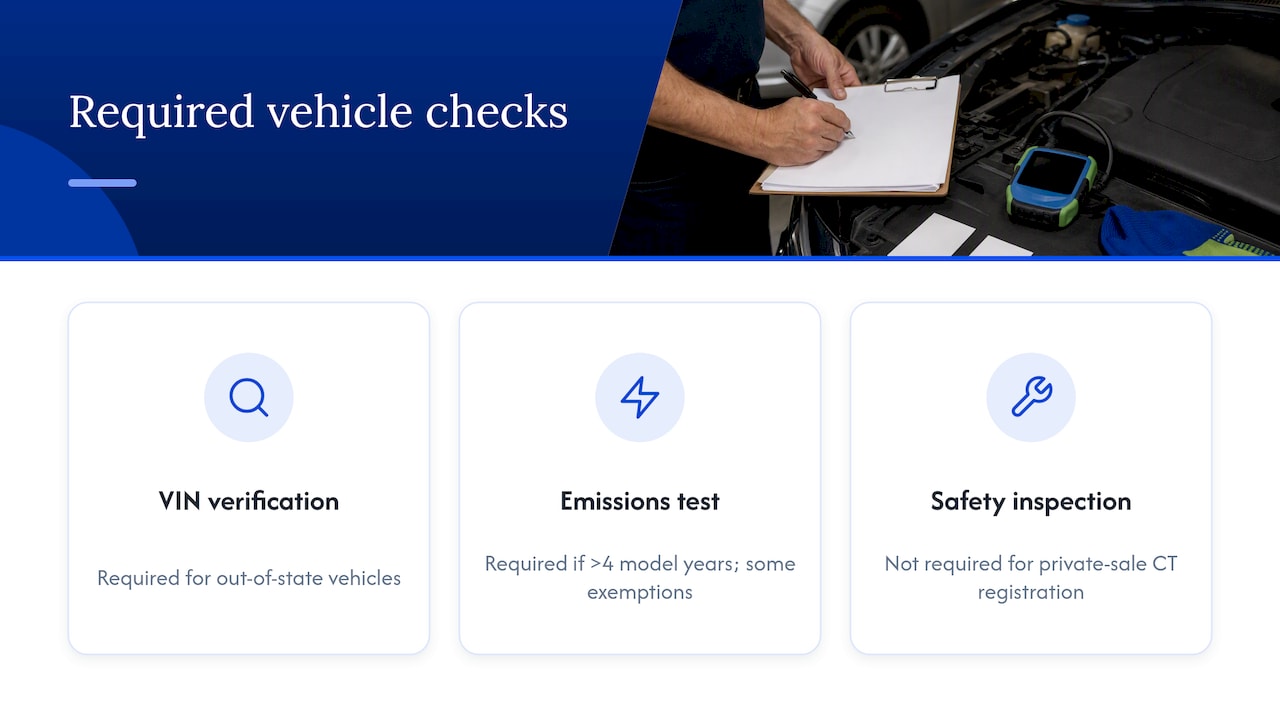
Two separate checks apply, and they are not interchangeable. VIN verification is required for every vehicle coming from out of state, and it can be done at an approved station or the DMV’s VIN unit. Emissions testing applies to vehicles older than four model years, with some exemptions, and it is not performed at DMV offices themselves. A safety inspection is a separate concept altogether and is not a standard part of the Connecticut registration process for a private sale. Confirm which of these your specific vehicle needs before your appointment so you are not turned away for a missing emissions certificate.
How CT sales tax and registration fees work
Connecticut taxes private vehicle sales at 6.35%, rising to 7.75% for vehicles priced over $50,000, and the state bases that tax on whichever figure is higher: your bill-of-sale price or the NADA average trade-in value. That second detail catches a lot of sellers off guard when a private sale price comes in well below book value.
Beyond sales tax, budget for:
- A base registration fee
- A title transfer fee
- A lien recording fee if applicable
- Plate fees if you need new plates rather than transferring existing ones
If you already paid sales tax in another state on this vehicle, bring the official receipt or dealer invoice to your appointment to get credit and avoid double taxation. Without that proof, you may have to pay the Connecticut tax up front and then pursue a refund through DRS using Form CERT-106 via myconneCT.
Common errors sellers and buyers make with CT paperwork
The most expensive mistake is leaving plates on a sold vehicle or delaying cancellation of registration. Do both the moment the sale closes, and keep the cancellation receipt as proof you are no longer responsible for the car.
A second common snag is a delayed title, often because a lienholder is slow to mail it. A courtesy registration or a short wait while the DMV receives the paperwork directly from the lender usually resolves it without restarting the process.
Finally, always complete the odometer disclosure and disclose salvage or rebuilt status in writing. Skipping either invites a fraud claim down the line, even on a straightforward private sale.
Practical edge-case solutions from real-world sales
Messy paperwork, missing titles, open liens, and vehicles that have sat unregistered for years, comes up constantly in private sales. In our experience buying vehicles across New York and New Jersey, the fastest fix is often to preserve what proof exists (a signed title copy, a cancelled-registration receipt) and let the buyer handle the rest, including courtesy registration while a title is in transit.
A final word on getting this right
I’ve spent a lot of time watching private car sales go sideways over paperwork that takes ten minutes to do correctly. The fix is almost always the same three items: a signed title, a bill of sale, and proof of insurance. Cancel your registration the same day you sell, and most of the liability headaches never happen.
— Eric
Skip the DMV paperwork entirely with a cash sale
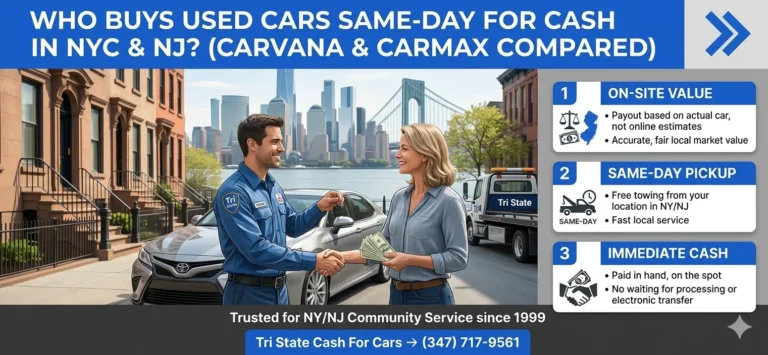
If gathering CT paperwork, chasing a lienholder for a title, or figuring out tax credits feels like more hassle than the sale is worth, selling directly removes that burden. We buy cars, SUVs, trucks, and vans across New York and New Jersey, send a team to you, and handle the paperwork ourselves, so you are not stuck managing forms on a deadline.
- We provide a cash offer and pay at pickup, with no surprises once we arrive.
- We purchase vehicles with or without a clean title, including some with open liens or delayed paperwork.
- We handle title and paperwork questions directly, helping you avoid much of the DMV process.
If a straightforward cash sale sounds better than a DMV appointment, get your offer and schedule a pickup in one call.
This article is general information, not a substitute for advice from a qualified financial advisor. Consult a qualified financial professional about your own circumstances before acting on anything here.
FAQ
How do I fill out a CT title when selling my car?
Sign the reverse side of the Connecticut title, fill in the sale date, the buyer’s name and address, and the odometer reading if the vehicle is under 20 model years old. Keep a copy before handing over the original, and pair it with a completed bill of sale.
Can I buy a car out of state and register it in Connecticut?
Yes. You have 90 days from the purchase date to complete registration, and you will need the original title, a completed H-13B application, proof of insurance, and valid photo ID at an in-person DMV appointment.
What documents does New Jersey require for an out-of-state title transfer?
New Jersey has its own title transfer steps separate from Connecticut’s process, including specific forms for registering a vehicle bought elsewhere. Our New Jersey title transfer guide walks through the sequence if you are bringing a vehicle into NJ instead of CT.
How is Connecticut sales tax calculated on a private car sale?
Connecticut taxes the higher of your bill-of-sale price or the NADA average trade-in value, at 6.35%, or 7.75% for vehicles over $50,000. If you already paid tax in another state, bring that receipt to claim credit and avoid paying twice.
Do I need an emissions test to register an out-of-state vehicle in CT?
Emissions testing applies to vehicles older than four model years, with some exceptions, while VIN verification is required for every vehicle coming from out of state. These are two separate checks, and confirming which applies to your vehicle before your appointment saves a wasted trip.
Sources
- Register a vehicle purchased out of state | CT DMV
- Connecticut registration and title application H-13B (PDF)