Proof of Ownership in NY: What the DMV Accepts
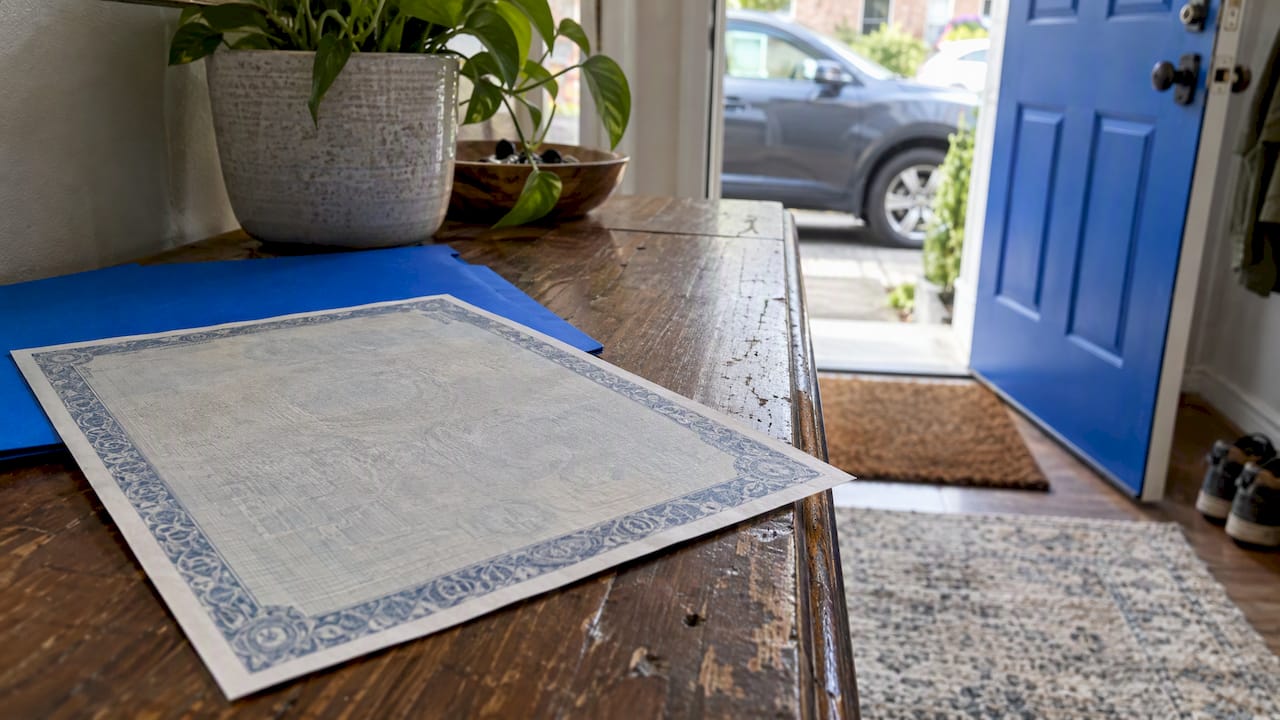
In New York, the proof of ownership for a vehicle from model year 1973 or newer is the original Certificate of Title. For model year 1972 or older, it is a transferable registration. Photocopies and certified copies of a title do not count. If you are selling, you also need a signed transfer section on the title and, in most private sales, a bill of sale. This guide explains each document, what to do when something is missing, and where sellers usually get stuck.
TL;DR
- For model year 1973 or newer, you need the original New York State Certificate of Title. Copies are not accepted.
- For model year 1972 or older, a transferable registration serves as proof of ownership.
- A private sale also needs a signed Vehicle Bill of Sale (MV-912) or another proof of sale the DMV accepts.
- You do not have to clear a lien before selling. The original title plus the original lien release can go to the buyer.
- A lost title means a duplicate first, using form MV-902 or the online order, which costs $20 by mail.
Table of Contents
- What proof of ownership means in New York
- Which document proves ownership, by model year
- Proof of sale: the bill of sale (MV-912)
- Signing the title without ruining it
- Odometer and damage disclosure
- Selling a vehicle with a loan or lien
- If you lost the title: getting a duplicate
- What the buyer must show the DMV
- Our perspective: where sales actually fall apart
- A fast sale when the paperwork is in order
- Quick checklist before you sell
- FAQ
- Sources
What proof of ownership means in New York
The DMV splits a vehicle transfer into two questions. Who owned the vehicle, and who sold it to whom? The first is proof of ownership. The second is proof of sale, which records who sold the vehicle, when, and for how much.
A Certificate of Title (MV-999) is the official proof of ownership for a car, truck, motorcycle, motorboat, manufactured home, or a trailer weighing 1,000 pounds or more. A registration card is not a title. It shows the vehicle is registered to you for driving on the road. It does not, for newer vehicles, prove that you own it.
This is the most common mix-up we see. Sellers hold up an insurance card or a registration and assume that settles it. For a 2005 sedan or a 2019 SUV, it does not.
Which document proves ownership, by model year
| Vehicle | Accepted proof of ownership |
|---|---|
| Model year 1973 or newer | Original New York State Certificate of Title |
| Model year 1972 or older | Transferable registration |
| Lost or stolen title | Duplicate title first (MV-902 or online), then the new original |
The 1973 cutoff matters for classic cars. If you inherited a 1968 pickup, you will not find a title for it, and that is normal. The registration is the document the DMV looks for.
The word “original” carries weight. The DMV states it will not accept certified copies. A scan on your phone, a photocopy from the lender, or a printout of a title record will not get a vehicle transferred.
Proof of sale: the bill of sale (MV-912)
Proof of ownership alone does not complete a private sale. The buyer also needs a record of the transaction. The DMV says you can use the Vehicle Bill of Sale (MV-912), and it asks for a signed one even when the vehicle is a gift.
An acceptable bill of sale carries the vehicle year, make, VIN, date of sale, purchase price, and the signatures of both buyer and seller. Missing a VIN digit or leaving off the price is enough to cause trouble at the counter.
Both sides can keep photocopies. The new owner hands the original bill of sale to the DMV along with the other required proofs when titling and registering. If you want a walkthrough of the form itself, our guide to using MV-912 and DTF-802 for a fast sale in New York covers it field by field.
Signing the title without ruining it
The transfer section on the back of the title is where most paperwork fails. Three rules keep you safe.
- Do not alter anything. Titles are legal documents, and erasures, cross-outs, or changes can make one invalid. An invalid title means a duplicate before you can sell.
- Fill in the buyer’s details at the moment of transfer. Signing early, or writing the wrong name, is how people end up paying for a replacement.
- Use the transfer process, not a name change. Per the DMV, ownership cannot be transferred just by changing a name on an existing title or registration.
If you already signed in the wrong place, you are not stuck. We explain the fix in what to do when a New York title was signed wrong. For the full sequence of forms and notarization questions, see our New York title transfer guide.
Odometer and damage disclosure
Two disclosures ride along with the title. For vehicles manufactured in 2011 or later that are 20 model years old or newer, the seller completes an odometer disclosure statement on the back of the title. A damage disclosure statement is needed for all vehicles, regardless of age, when ownership is transferred.
These are small boxes with real consequences. If they are blank or contradictory, the buyer’s DMV visit can end in a rejection. Our page on odometer disclosure in New York and when to use MV-103 goes deeper on the edge cases.
Selling a vehicle with a loan or lien
Many sellers believe they must wait weeks for a lien-free title before they can sell. The DMV says otherwise: you do not need to remove a lien from the certificate of title when you sell. You can give the buyer the original title and the original lien release.
Two details to watch:
- The lien release must be the original. For the separate process of getting a lien-free title, the DMV says photocopies of the proof the lien was satisfied are not accepted.
- If you still owe money, the payoff has to be settled with your lender before the lien can be released. That is a conversation with your lender, not the DMV.
We lay out how a sale works with an open loan in our six-step guide to selling safely, even with a loan.
If you lost the title: getting a duplicate
No title, no standard sale. You cannot simply sign something else in its place. The route is a duplicate title.
The DMV’s rules for ordering a replacement online are specific. You must be the owner, have a current U.S. address on file, and the vehicle must be registered and titled in New York, with no other changes to the title information. The DMV mails the new title to the address on your title record.
If you order by mail, send:
- a completed Application for Duplicate Title (MV-902)
- proof of identity, such as a photocopy of your NY driver license, learner permit, or non-driver ID
- a $20.00 check or money order payable to Commissioner of Motor Vehicles
Online is usually the quicker path, and it is worth knowing that you will not walk out of a DMV office holding a title. Titles are printed centrally in Albany and mailed. Build that wait into your plans if you have a buyer or a deadline.
For the full process and common snags, read our guide to getting a duplicate title in New York. If you are weighing whether to sell without waiting at all, see selling a car without a title in NY.
Using a Secure Power of Attorney
Sometimes the owner cannot handle the paperwork personally. A Secure Power of Attorney (MV-93) allows an authorized agent to handle title applications and transfers for you. The MV-93 instructions describe the duplicate-title step too: the owner fills out MV-902 and attaches the DMV copy of the MV-93. Professional buyers use this route to keep a sale moving when a title is missing.
What the buyer must show the DMV
If you are the seller, you may think the buyer’s paperwork is not your problem. It is, in one way: a sale that cannot be registered tends to come back to you with questions.
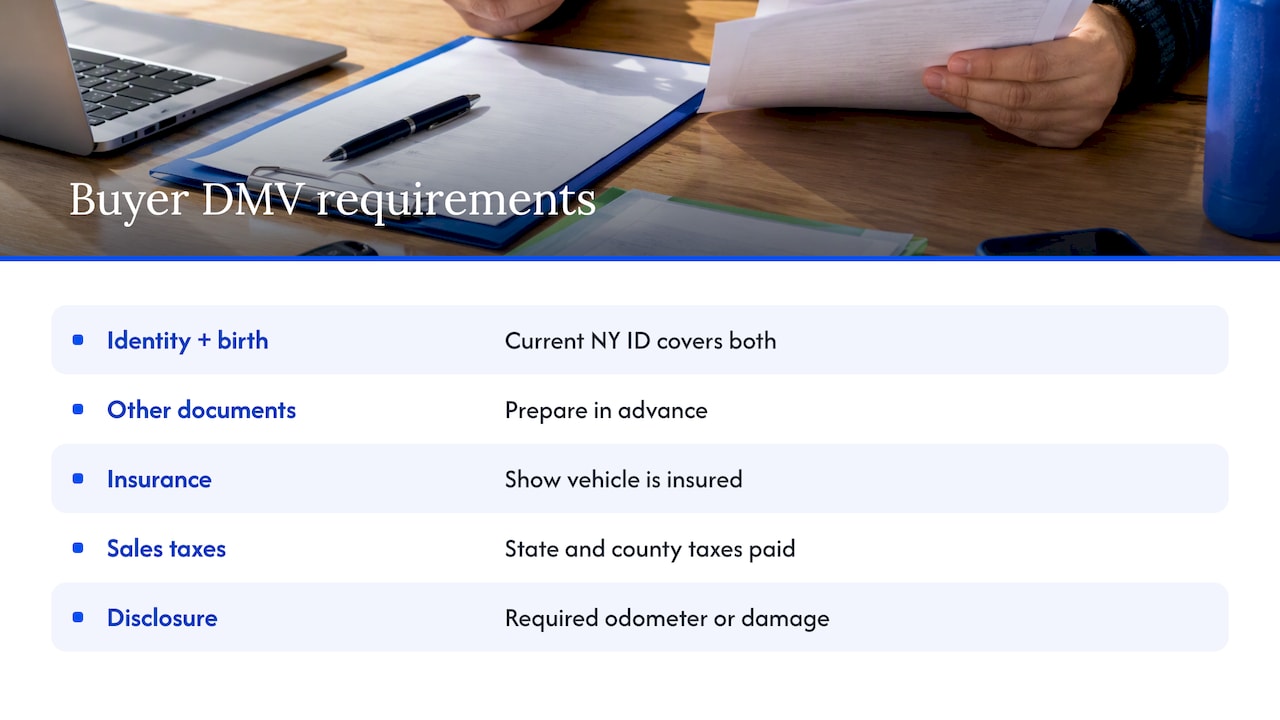
The buyer needs to prove identity worth 6 points and prove date of birth. A current New York driver license, learner permit, or non-driver ID card covers both. Anyone without one has to prepare other documents in advance.
The buyer also has to show the vehicle is insured and that state and county sales taxes have been paid, along with any required odometer reading or damage disclosure. Your part is making sure the title and the bill of sale are clean.
Bought a car in another state? The ownership proof rules differ, and we cover that in registering an out-of-state vehicle in NY.
Our perspective: where sales actually fall apart
We buy cars in New York and New Jersey for cash, so we see the paperwork at the curb, not just on a form page. In our experience, almost every delayed sale traces back to one of four things.
- The title is not where the owner thinks it is. It sits with a lender, a former spouse, or a relative, or it was never received after a payoff.
- The title was marked up. A pen slip in the wrong box turns a five-minute sale into a duplicate request.
- Names do not match. The name on the title and the seller’s ID differ, and nobody has the paperwork explaining why.
- The seller assumes a lien blocks the sale. It usually does not, as long as the original title and original release travel together.
Our approach is to tell sellers what they have and what they lack before anyone drives out. We commit to paying the stated price at pickup, so the useful thing we can do is spell out the document list up front, with no surprises on either side. We also handle the paperwork on our end once the vehicle is ours.
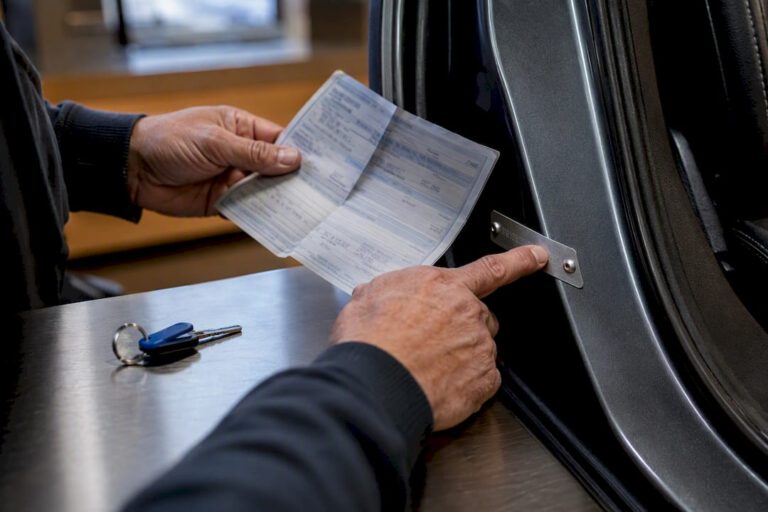
My advice if you are unsure: put the title, your ID, and any lien release on a table and check the names and VIN against each other before you list anything. Ten minutes there saves weeks later.
— Eric
A fast sale when the paperwork is in order
If your title is in hand, selling does not have to mean strangers, test drives, and haggling. Tri State Cash For Cars sends a team to your location, gives you a cash offer, and handles the paperwork. Same-day payment is part of the service, and it covers running and non-running vehicles in New York, New Jersey, and Connecticut.
You can start with a quote for your car and tell us what documents you have. If something is missing, we will say so plainly rather than leave you guessing.
Quick checklist before you sell
- Find the original title and confirm your name and the VIN match your ID and the vehicle.
- Check whether a lien appears on the title, and locate the original lien release if the loan is paid.
- Leave the transfer section blank until the buyer is present.
- Prepare the odometer reading and the damage disclosure.
- Fill out the MV-912 with year, make, VIN, date, price, and both signatures.
- If the title is lost, order a duplicate before you commit to a date.
For a longer prep list, our guide to preparing your car for sale covers what to gather and what to skip.
FAQ
Can I get a copy of my title online in NY?
Yes, in many cases. You must be the owner, have a current U.S. address on file, and the vehicle must be registered and titled in New York with no other changes to the title information. The DMV mails the replacement to the address on the title record, so it will not arrive instantly.
Is a registration enough to prove I own my car?
Not for model year 1973 or newer. Those vehicles need the original Certificate of Title. A transferable registration works as proof of ownership only for model year 1972 or older.
Do I need to pay off my loan before I sell?
You do not need to remove the lien from the title before a sale. The DMV allows you to give the buyer the original title and the original lien release. The loan itself still has to be settled with your lender so that release exists.
What happens if I wrote on the title by mistake?
A title with erasures, cross-outs, or alterations can be treated as invalid. In that case you apply for a duplicate title before the sale can go through. Waiting to fill in buyer information until the moment of transfer helps you avoid this.
Sources
- Acceptable Proofs of Ownership for Vehicles, NY DMV
- Buy, Sell, or Transfer Vehicle Ownership, NY DMV
- Certificate of Title, NY DMV
- Removing a lienholder, NY DMV
- Add or Remove a Lienholder, NY DMV
- Replace a Title Certificate, NY DMV
- MV-902 Application for Duplicate Title
- Secure Power of Attorney (MV-93) Instructions
- How to transfer a registration to another vehicle, NY DMV
- Chapter 3: Owning a Vehicle, NY DMV