NJ Notice of Sale: What Sellers Actually File in 2026
If you are looking for a “notice of sale” form to file after selling your car in New Jersey, here is the short answer: for an ordinary private sale, there isn’t one. New Jersey does not use a state-issued notice of sale or release of liability form the way some states do. What protects you is a signed title, a clear bill of sale, and getting your license plates off the car and back to the Motor Vehicle Commission (MVC) or onto your next vehicle.
This guide walks through what the term really means in New Jersey, what you hand the buyer, what you do with the plates, and where sellers and buyers get caught on tax.
TL;DR
- New Jersey has no standard “notice of sale” form for a normal private car sale. The term mostly refers to legal procedures for lienholders, repair shops and property owners.
- As the seller, you sign the title, provide a bill of sale, deliver the title to the buyer, and remove and surrender your plates (or move them to another vehicle).
- A bill of sale with the true price, date, odometer reading and both parties’ details protects the buyer from a tax reassessment and protects you from disputes.
- Selling to a cash buyer that handles the paperwork on site can take most of this off your plate.
Table of Contents
- Why you can’t find a notice of sale form for private sales
- What you hand the buyer
- The step that actually ends your liability: the plates
- The tax trap sellers should understand
- Our perspective: where private sales go wrong
- Selling to a buyer who handles the paperwork
- A seller’s checklist for the day of the sale
- Special cases that look like a notice of sale
- FAQ
- Sources
Why you can’t find a notice of sale form for private sales
People search “NJ notice of sale” for two very different reasons, and the results mix them together.
The first group just sold a car and wants to tell the state. In some states that means a notice of transfer. In New Jersey, the MVC’s transferring vehicle ownership page lists the seller’s duties as removing the plates, signing the title, providing a bill of sale and delivering the title. Nothing on that list is a separate notice form.
The second group is dealing with a vehicle that was repossessed, left at a repair shop or abandoned on private property. For them, “notice of sale” is a formal legal step. The MVC publishes separate instructions for each situation, such as the packet for vehicles abandoned at repair facilities, the private property procedure (where vehicles must generally go to public sale or auction) and the page on repossessed vehicles, which notes that requests to title or sell a repossessed vehicle must follow the state’s statute.
Those are strictly regulated processes for lienholders and property owners. If you are an individual selling your own car, you do not need them, and filling one out by mistake only adds confusion.
A quick way to tell which situation you are in
| Your situation | What you need |
|---|---|
| You own the car and are selling it to a person or a buyer | Signed title, bill of sale, plates handled |
| You are a lender or repair shop with a vehicle you must dispose of | The MVC’s formal notice and sale procedure for your case |
| You own property where a vehicle was left | The MVC’s private property procedure, including public sale |
| A car was repossessed from you | Contact the lienholder and review the MVC repossession guidance |
What you hand the buyer
For a normal sale, the paperwork is simple, but each piece has to be right.
The title
The title has to be properly assigned. The MVC’s pre-owned vehicle title page says the buyer needs the title assigned with the seller and buyer names and addresses, signatures, the date of sale and the purchase price, along with the buyer’s driver license. That means anything you leave blank or fill in wrong can stall the buyer at the MVC agency.
Sign only in the seller’s section, and fill in the price honestly. Do not sign an “open title” with the buyer’s section empty. If you do, you have no record of who ended up with the car.
The bill of sale
The state’s guidance says the bill of sale should include the buyer’s name and address, the date of sale, the odometer reading and the sale price. Even if the title carries some of that, write one anyway. It costs you ten minutes and gives both sides a copy of the deal.
A solid bill of sale for a New Jersey car also includes:
- Year, make, model and VIN
- Seller’s name and address
- A line saying the car is sold as is, if that is the deal
- Signatures and the date
- A copy for each party
Our page on the three forms for NJ car sale paperwork covers what to have ready before anyone goes to an MVC agency.
The odometer reading
Mileage is part of the paperwork, and getting it wrong creates problems that follow the car. Our guide to filing the odometer disclosure correctly explains how the OS/SS-2 fits in and what to do if the title does not have room for it.
The step that actually ends your liability: the plates
Since there is no notice form, the plates do the job of telling the state you no longer have the car. Per the MVC, the seller must remove the plates and surrender them to a motor vehicle agency, unless they are being transferred to another vehicle of yours. The plates stay with you, not with the car.
The practical sequence looks like this:
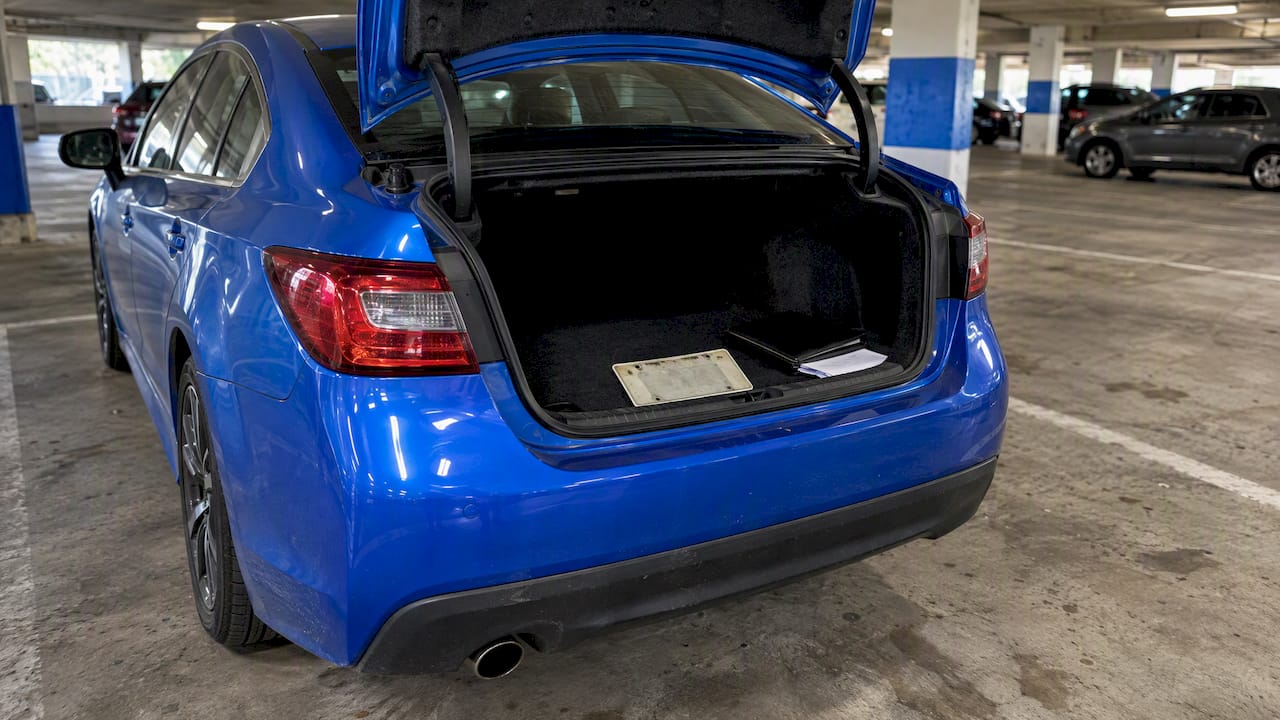
- Take the plates off the car at the time of the sale, before the buyer drives away.
- Decide whether you are buying another vehicle. If so, transfer the plates to it. If not, surrender them.
- To surrender, bring them to any MVC agency, either to staff or to the drop box outside, or mail them. The MVC mails a receipt as proof, and you can ask the greeter desk for one immediately if you need it right away.
- Keep the receipt with your copy of the bill of sale.
A few details matter here. The MVC does not accept out-of-state plates, which have to go back to the issuing state. Plates also cannot be surrendered at inspection stations. If your car is being sold and you do not plan to buy another, the MVC’s surrendering registration page says you must turn in the plates for cancellation.
If you do want to keep your plates, we explain the timeline in what to do when you remove plates after an NJ sale. If you are moving plates to a new car, our guide to the steps for a plate transfer at the MVC walks through the visit. And if something goes wrong, common mistakes that create liability after a sale is worth a read before you hand over the keys.
Why “I gave them the keys” is not enough
Until the plates are surrendered or transferred, the registration can still be tied to you. Parking tickets, tolls and other trouble linked to the plate may come back to the registered owner. That is why handing over keys and a title without dealing with the plates is the most common mistake we see sellers make.
The tax trap sellers should understand
Sales tax is the buyer’s obligation, but your paperwork decides how it is calculated.
The NJ Division of Taxation states the sales tax rate on a new or used vehicle is 6.625% of the purchase price. In its example, a $5,000 purchase price produces $331.25 in tax. The buyer typically pays it when registering the car at an MVC agency.
The Division also sends notices on “casual sales,” which are private vehicle sales. According to its Q&A on motor vehicle casual sales notices, a buyer who reports a price far below what the car is worth may be asked to explain. In that case the State may tax the car at its estimated market value, using guide values such as N.A.D.A.
What this means for you:
- Write the real price on the bill of sale and the title. A “gift” price of $1 on a car worth thousands invites an audit of the buyer.
- If the car is damaged or has problems, say so in the bill of sale and price it to match. A documented reason for a low price is the buyer’s best defense.
- Keep your copy. If a buyer is questioned months later, a signed bill of sale is the clearest record of what was paid.
Selling a car for less than book value is not wrong. It just needs to be written down truthfully.
Does it matter where the buyer bought the car?
New Jersey residents owe the tax when they title and register in New Jersey, whichever state the car was purchased in. Crossing the state line does not avoid it. Exemptions exist, but they are limited and tied to specific conditions, such as those reported on the Form ST-10 for motor vehicle sales and use tax exemptions.
Our perspective: where private sales go wrong
We buy cars from owners across New Jersey, New York and Connecticut, so we see the paperwork side of a sale every week. Most of the problems we are called about are not about price. They are about a sale that was never finished properly.
The pattern is consistent. A seller hands over a car, assumes the state has been told, and the plates are still sitting on the vehicle. Or the title was signed but the price line was left blank. Or the bill of sale was never written, so there is no proof of what was paid when a notice shows up months later.
The word “notice” makes people think there is one magic form that closes a sale. In New Jersey there isn’t. The sale is closed by a handful of ordinary documents done correctly and at the same moment the car changes hands. That is why we handle the paperwork at pickup instead of leaving it for the seller to sort out later.
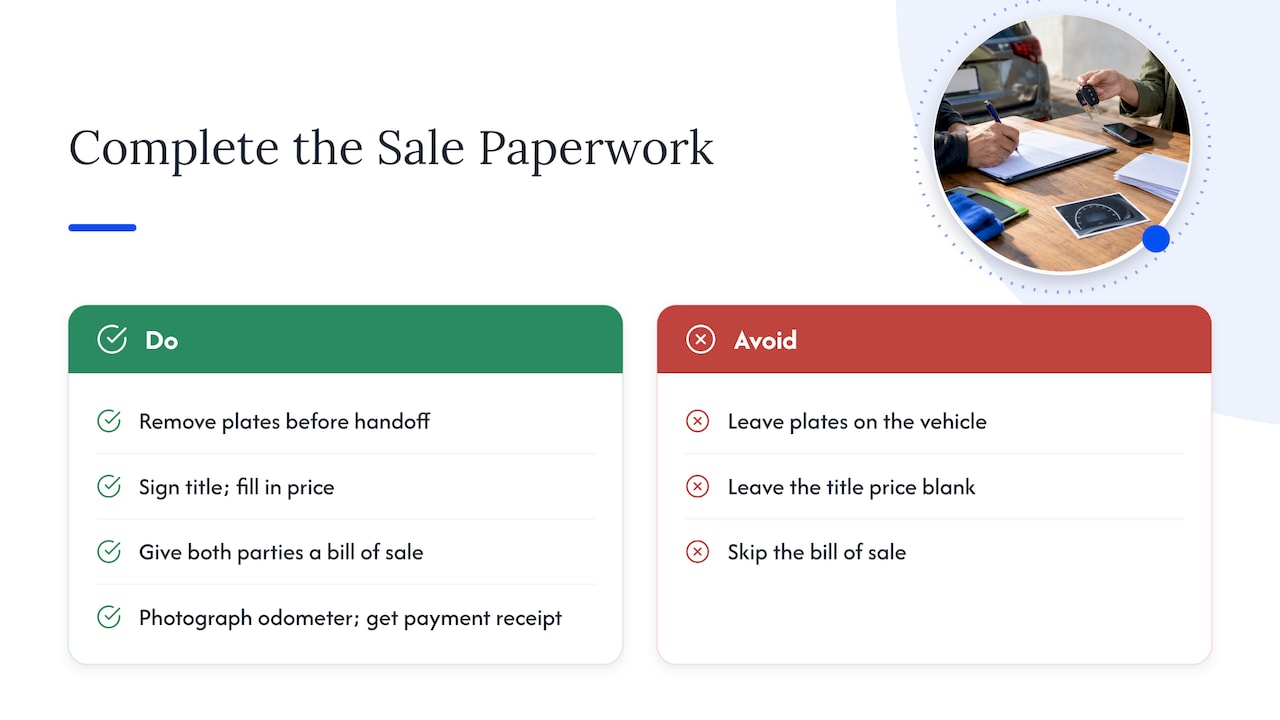
Our advice, whoever you sell to: finish everything before the car leaves. Plates off, title signed, bill of sale in both hands, photo of the odometer, receipt for any money. If you do those five things, you will almost never need to think about the sale again.
— Eric
Selling to a buyer who handles the paperwork
A private sale means dealing with listings, test drives, no-shows and a stack of forms. The other common route is a dealer trade-in, where the offer is often lower than owners expect. Our guide to raising a low dealer offer covers how to respond if you are in that spot.
A third route is selling to a cash buyer. At Tri State Cash For Cars, we send a team to your location, give you a cash offer, and handle the paperwork. Our guarantee is that we pay the price we quoted at pickup, with no surprises, and we aim to have cash in your hand within an hour. We buy running and non-running vehicles, and we can work with sellers who do not have a title in hand.
If you want to see how an offer is built and why it holds, read our piece on closing the gap in instant car offer accuracy or our six-step car buying process, including when there is a loan. When you are ready, you can get your offer from Tri State Cash For Cars.
This does not replace your own responsibilities, such as dealing with plates. The difference is that we walk you through them while we are there, so nothing is left until later.
A seller’s checklist for the day of the sale
Print this or screenshot it. It works whether you are selling to a neighbor or a company.
Before the buyer arrives
- Find the title. If a lender holds it because of a loan, call the lender first to arrange the payoff and release.
- Check that the name on the title matches your ID.
- Take a clear photo of the odometer.
- Fill out two copies of a bill of sale, leaving the signature lines for the handover.
- Remove personal items, toll tags and anything stored in the glovebox or trunk.
At the handover
- Confirm the buyer’s name and address from their driver license.
- Agree on the price, and write that exact figure in both the bill of sale and the title.
- Sign the title in the seller’s section only.
- Both sign the bill of sale. Each of you keeps a copy.
- Take payment in a form you trust before you give up the title.
- Remove your plates.
After the sale
- Transfer the plates to your next vehicle or surrender them, and keep the receipt.
- Contact your insurer to cancel or change coverage once the plates and sale are handled. Do not cancel before the car is gone.
- Keep the bill of sale and any messages with the buyer for your records.
If you are moving plates between your own vehicles, our page on who handles plate and tag paperwork in dealer versus private sales explains how the process differs, and our note on replacing lost or stolen plates in New Jersey helps if yours are missing at the time of sale.
Special cases that look like a notice of sale
Some sellers are not in the ordinary situation, and a few of them are worth naming.
You sold a company vehicle. A business sale involves authority to sign and sometimes more than one signer. Our page on closing a company car sale in New York shows how that paperwork is handled at the same visit.
Your title says salvage. A salvage-title car can still be sold, but the paperwork and plate steps need extra care. See our guide to selling a salvage-title car in NJ.
You do not have the title. Selling without a title is possible in some circumstances, but the route depends on the facts. Start by contacting the MVC about a replacement title, and ask any buyer how they handle missing titles before you agree to anything.
A vehicle was left on your property or at your shop. This is where the formal notice of sale procedures apply. Use the MVC’s own packets linked above, not a generic form from a template site.
FAQ
Is there an official notice of sale form in New Jersey?
Not for a standard private sale. The MVC’s seller steps are to sign the title, provide a bill of sale, deliver the title and surrender or transfer the plates. Formal notice and sale procedures exist only for lienholders, repair shops and property owners dealing with repossessed or abandoned vehicles.
Do I need a bill of sale to sell a car in NJ?
The MVC lists a bill of sale among the seller’s steps, with the buyer’s name and address, the date, the odometer reading and the price. Even where the title carries much of that information, a separate signed bill of sale is smart protection for both sides. Keep your copy.
How do I tell the MVC I sold my car?
The plates are your signal. Take them off at the sale, then transfer them to another vehicle or surrender them at an MVC agency or by mail, and keep the receipt. If you are unsure about your case, contact the MVC directly before the sale.
Is NJ sales tax 7% on a used car?
No. The rate on a new or used vehicle is 6.625% of the purchase price. The buyer usually pays it when registering the car, and it is based on the actual price unless the State finds the stated price far below market value.
Sources
- NJ MVC: Transferring Vehicle Ownership
- NJ MVC: Pre-owned Vehicle Title
- NJ MVC: How to Surrender Plates
- NJ MVC: Repossessed Vehicles
- NJ MVC: Private Property Abandoned Vehicles
- NJ MVC: Repair Facility Packet
- NJ Division of Taxation: Motor Vehicle Casual Sales Q&A
- NJ Division of Taxation: Form ST-10