How to Transfer Plates in NJ Between Your Own Vehicles
Yes, you can transfer plates in NJ, but only between vehicles registered in the same name and the same class. A car plate stays with a car; it can’t jump to a truck, and it can’t jump to your neighbor’s name either. You do this at a New Jersey Motor Vehicle Commission (MVC) agency, and the transaction itself costs $4.50 plus any difference in registration fees between your old and new vehicle.
Three things matter right now, before you do anything else:
- Same owner, same class. The MVC won’t move plates across owners or between mismatched vehicle types.
- The fee is small but not zero. Expect $4.50 for the transfer itself, plus a possible registration adjustment.
- If you’re selling, take the plates off first. Remove them, transfer or surrender them, and get a receipt before the buyer ever drives away.
Key Takeaways
Transferring plates in New Jersey only works between vehicles you own in the same class, costs $4.50 plus any registration difference, and requires you to remove plates before any sale to avoid liability.
| Point | Details |
|---|---|
| Eligibility comes first | Both vehicles must share your name and the same vehicle class before MVC will process a transfer. |
| Transfer beats buying new | The $4.50 transfer fee is far cheaper than the $25 cost of a new standard plate set. |
| Bring complete paperwork | Title or dealer reassignment, Form BA-49, insurance proof, and valid ID prevent a wasted MVC trip. |
| Remove plates before selling | Take plates off before the buyer leaves, then transfer or surrender them and keep the receipt. |
| Fast alternative exists | A local cash buyer can handle plate and title paperwork on-site the same day you sell. |
Table of Contents
- Quick Facts and Eligibility Checklist for a Plate Transfer NJ
- Steps to Complete a Transfer Plates NJ Request at MVC
- Documents You Need for an NJ Plate or Registration Transfer
- What Does It Cost to Transfer Plates in NJ vs. Buying New?
- Replacing Lost or Stolen Plates in New Jersey
- Dealer vs. Private Sale: Who Handles the Plate and Tag Paperwork?
- Common Mistakes That Create Liability After a Sale
- Why Some NJ Sellers Skip the MVC Line Entirely
- A Local Perspective on Getting NJ Plate Transfers Right
- Sources
- FAQ
Quick Facts and Eligibility Checklist for a Plate Transfer NJ
Before you drive to an MVC agency, run through a short eligibility check. The rules are less about paperwork volume and more about matching.
- The name on the current registration must match the name on the new vehicle’s title exactly.
- The vehicle class has to line up. A passenger car plate transfers to another passenger car, not to a commercial truck or motorcycle.
- Plates are tied to the owner, not the household. You cannot hand your plates to a spouse, adult child, or friend and call it a transfer.
- If you’re moving out of state or selling without buying a replacement vehicle right away, surrender the plates instead of holding onto them.
Quick fact: according to New Jersey’s Title 39 §3-30, a vehicle’s registration becomes void the moment it’s sold. The law lets you apply the unexpired portion of that registration to a replacement vehicle, but only by paying the transfer fee and following MVC procedure. Skip that step and you’re driving on a registration that no longer legally exists.
One overlooked wrinkle: leasing companies and co-owned vehicles trip people up constantly. If your current registration lists a lienholder or a leasing company alongside your name, bring that paperwork. The name-matching rule still applies, and the MVC will check.

Steps to Complete a Transfer Plates NJ Request at MVC
Walking into an MVC agency without the right paperwork is the single fastest way to burn an afternoon. Here’s the order that actually works.
- Confirm whether you need an appointment. Many MVC agencies handle plate transfers as walk-ins, but title-related transactions sometimes require scheduling ahead through the MVC registration page. Check the specific agency before you go.
- Gather your current plates and the new vehicle’s title. If you bought from a dealer, bring the dealer’s reassignment paperwork instead of a separate title. If you bought privately, make sure the seller signed the title over correctly.
- Fill out Form BA-49 (the Vehicle Registration Application) if your transaction requires it. Dealers often supply this, but private buyers usually complete it themselves.
- Bring proof of insurance and acceptable identification. The clerk will ask for both before touching the registration.
- Request the plate transfer at the counter. Tell the clerk directly that you’re transferring existing plates, not requesting new ones. Pay the $4.50 transfer fee plus any registration difference.
- Collect your updated registration and receipt. Do not leave without a paper or digital confirmation of the transaction.
Pro Tip: Photograph or scan your receipt the same day. If you’re ever questioned about a plate on a car you no longer own, that receipt is your only quick proof the transfer or surrender actually happened.
The whole process at the counter usually takes less time than the drive there, assuming your paperwork matches. Mismatched names or missing insurance cards are what turn a 15-minute visit into a second trip.
Documents You Need for an NJ Plate or Registration Transfer
Bring more than you think you’ll need. Here’s what actually gets checked:
- Signed title or dealer reassignment. For private sales, make sure the seller’s signature, date, and odometer disclosure are all filled in correctly, since a single blank line can send you back home.
- Form BA-49, when the MVC requires it for your specific registration scenario.
- Proof of insurance covering the vehicle you’re registering, current and active, not expired.
- Acceptable identification under New Jersey’s 6-point ID verification system, which combines documents like a driver’s license, Social Security card, and a utility bill.
- Power of attorney paperwork, if someone else is completing the transaction on your behalf.
- Lienholder documentation, if a bank or credit union holds the title.
Lost or missing titles complicate things but don’t stop them. If you’re dealing with a salvage title or no title at all, Tri State Cash For Cars’ guide on selling salvage-title vehicles in NJ walks through what documentation the MVC still requires.
What Does It Cost to Transfer Plates in NJ vs. Buying New?
The math almost always favors transferring. A standard new two-plate set runs $25, while transferring your existing plates costs just $4.50. That’s a real savings if your old plates are in good shape and your vehicle class hasn’t changed.
- Plate transfer fee: $4.50
- New standard two-plate set: $25
- Replacement plate (if damaged or lost): $6
- Remanufactured plate: a moderate fixed fee
The catch: if your new vehicle is a heavier class or higher registration tier, you’ll owe the difference in registration fees on top of the $4.50. A sedan-to-sedan swap usually costs nothing extra. A sedan-to-pickup swap might not. Run your numbers through the MVC’s online registration fee calculator before your visit so you’re not surprised at the counter.
Replacing Lost or Stolen Plates in New Jersey
Plates go missing more often than people expect, usually stolen off a bumper in a parking lot rather than lost outright. If yours are stolen, file a police report first. Most MVC agencies want that report on file before issuing a replacement, since stolen plates can be used on other vehicles to dodge tolls or citations.
- Stolen plates: file a police report, then bring it to the MVC along with your registration.
- Damaged plates: request a replacement for $6 or a remanufactured plate for $11, depending on condition.
- Processing time varies by agency, so ask about temporary registration options if you need to drive legally while waiting.
Don’t put off a stolen-plate report. Every day those plates are active in someone else’s hands is a day you’re the registered owner tied to whatever they do with them.
Dealer vs. Private Sale: Who Handles the Plate and Tag Paperwork?
Dealers and private sellers work under different rules, and mixing them up causes most of the confusion.
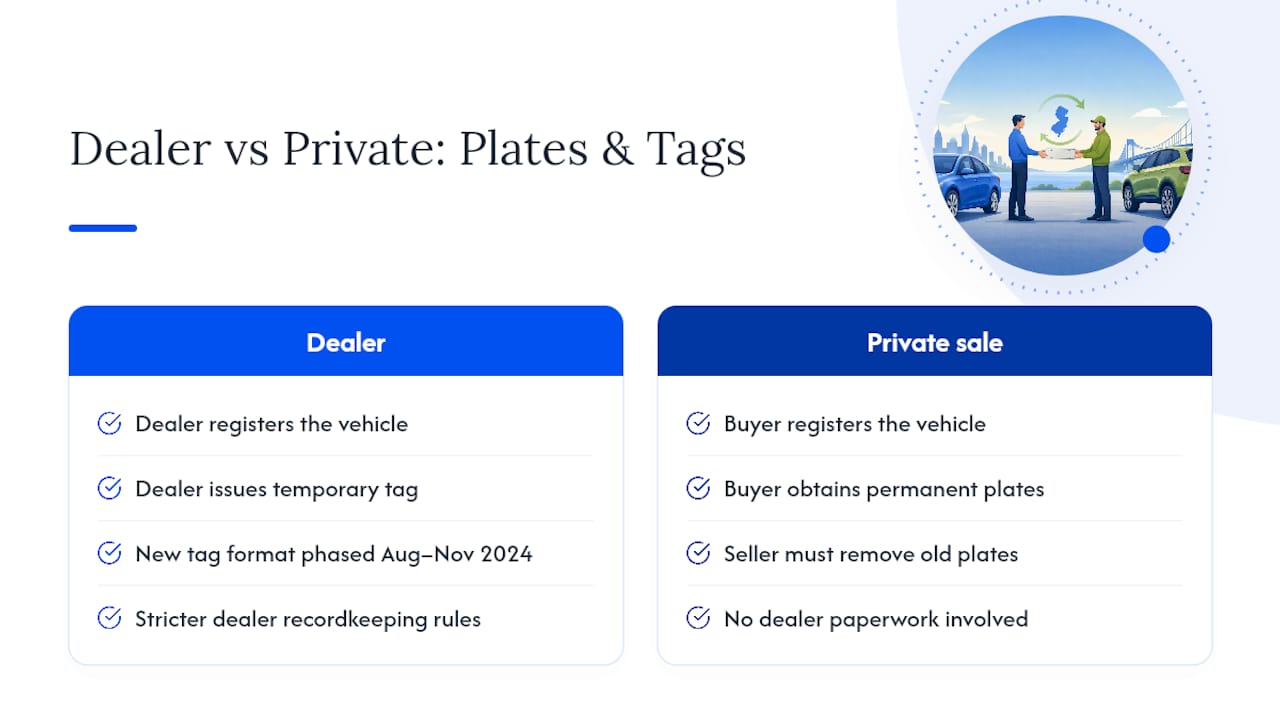
When you buy from a dealership, the dealer typically registers the vehicle for you and issues a temporary tag while your permanent plates process. New Jersey tightened these rules recently under P.L.2023, c.285.
The MVC’s 2024 advisory describes new temporary tag security features and stricter dealer recordkeeping requirements. Dealers could begin issuing the new tags starting August 11, 2024, and after November 1, 2024, only the new format should appear on the road.
Private sales work differently. There’s no dealer in the middle handling paperwork, so the buyer is fully responsible for registering the vehicle and getting their own plates once the title transfers into their name. That’s exactly why the seller’s job is to remove the old plates before the buyer ever leaves the driveway. If you’re navigating a private sale, this NJ private-sale guide covers the seller’s side step by step, and a bill of sale explainer from Liberty CDJR breaks down language worth including about plate removal.
Common Mistakes That Create Liability After a Sale
The single biggest mistake sellers make is handing plates to the buyer along with the keys. Don’t do this. It feels convenient in the moment, but it leaves your name attached to a vehicle you no longer control.
- Remove the plates before the buyer drives off. They stay with you, not the car.
- Transfer the plates to your new vehicle or surrender them to the MVC. Mail surrenders go to Motor Vehicle Commission, P.O. Box 129, Trenton, NJ 08666-0129.
- Keep your receipt. If you mail plates in, include a self-addressed stamped envelope so the MVC can mail confirmation back.
- If tickets or toll notices show up later tied to plates you already surrendered, your receipt is what clears your name. Contact the MVC and the issuing agency immediately with that proof in hand.
Pro Tip: Even a texted photo of your plates sitting in your trunk, timestamped the day of sale, has helped sellers dispute a wrongly issued toll notice while waiting on official MVC confirmation.
Why Some NJ Sellers Skip the MVC Line Entirely
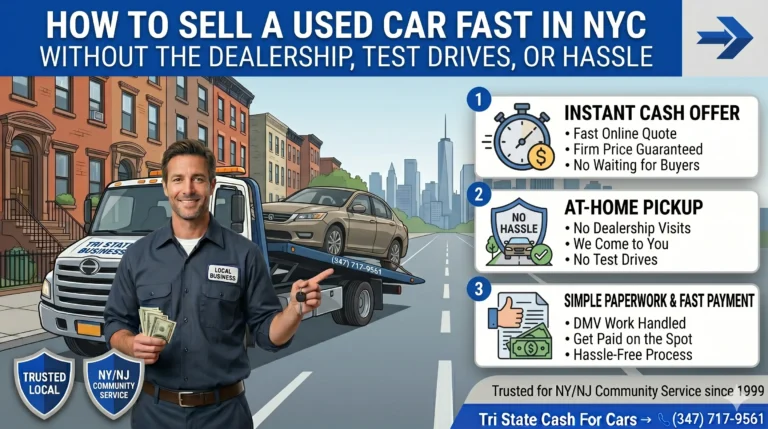
Handling plates and title paperwork yourself works fine when you have time. Not everyone does. Tri State Cash For Cars sends someone to your location, handles the paperwork on-site, and pays cash at pickup, which means the plate and title steps get done correctly in the same visit instead of across two or three MVC trips.
- On-site pickup means plate removal and transfer paperwork happen with someone present who does this daily, cutting the odds of a rejected transaction later.
- Tri State Cash For Cars guarantees the offer stated at pickup and provides documentation on the spot, giving you proof the transaction and plate handling were completed.
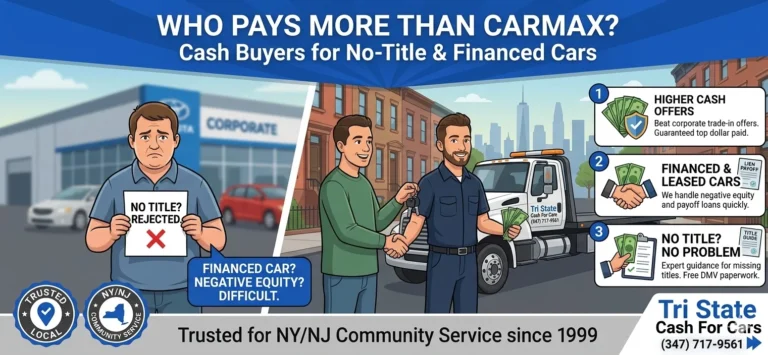
- This route makes sense when you’re short on time, dealing with a damaged vehicle, or facing a missing or salvage title. If your car is in good shape and you’re simply upgrading, transferring plates yourself at MVC is just as reasonable.
A Local Perspective on Getting NJ Plate Transfers Right
The rule people underestimate is how thin the line is between “transferred” and “still legally yours.” New Jersey doesn’t care that you sold the car in good faith. It cares whether the paperwork says so.
Remove your plates before any sale, keep every receipt, and confirm your vehicle class and insurance line up before you walk into an MVC counter. If you’re selling and don’t have time for a second MVC trip, a documented cash sale through Tri State Cash For Cars can close that gap the same day. Either way, check the MVC’s site before you go. Forms and appointment rules shift more often than people expect.
— Eric
Sources
FAQ
Can I transfer plates from one car to another in NJ?
Yes, as long as both vehicles are registered in your name and belong to the same vehicle class. You cannot transfer plates to another person’s vehicle.
How do I transfer my plates from one vehicle to another?
Visit an MVC agency with your current plates, the new vehicle’s title or dealer reassignment paperwork, proof of insurance, and valid ID, then request the transfer at the counter and pay the fee.
How much does it cost to transfer plates in New Jersey?
The transfer fee is $4.50, plus any difference in registration fees if your new vehicle falls into a higher class or weight tier.
Is it cheaper to transfer plates or get new ones?
Transferring is almost always cheaper. A new standard two-plate set costs $25, while transferring existing plates costs just $4.50 plus any registration adjustment.