Raise a Low Dealer Trade In Offer in One Hour: Scripts & Same Day Cash
You don’t have to accept it. Get at least two written offers, check NADA and Kelley Blue Book for your vehicle, and compare before you decide anything. If you need cash fast, a guaranteed cash buyer is a workable backup. Keep every written quote, and refuse to sign until any loan payoff promise appears in the contract itself.
TL;DR:
- Low dealer trade-in offers are based on wholesale values after deductions for reconditioning, auction fees, market risk, and profit margin, which can cause the offer to feel significantly lower than private-party prices.
- Comparing your offer against multiple written quotes and valuation guides across different sources helps determine if the dealer is lowballing, especially if the offers consistently fall within a similar range.
- Negotiating the out-the-door price and securing all payoff promises in writing prevents hidden costs and rollover negative equity from increasing your total loan amount.
- Using preapproval from a bank or credit union provides leverage and typically results in better loan rates, which can improve your negotiating position for trade-in value.
- If negotiations stall, selling privately or to an instant-cash buyer guarantees payment and speeds up the process, especially for damaged or urgent-sale vehicles, avoiding dealer lowball tactics altogether.
Table of Contents
- What a low dealer trade-in offer actually means
- How to check whether the offer is a lowball
- Negotiation steps that can raise a dealer’s offer or protect you from bad financing
- Real alternatives when a dealer refuses to close the gap
- Negative equity, disclosures to watch, and a paperwork checklist
- Practical checklist and when to pick a same-day cash buyer
- When to accept versus when to walk away
- How to get an immediate offer from Tri State Cash For Cars
- Primary sources and regulator links
- Sources
- FAQ
What a low dealer trade-in offer actually means
A dealer’s trade-in number is not a private-party price. It’s a wholesale figure, an estimate of what the dealer can get for your car at auction or on a wholesale lot, and that gap is the whole reason the offer feels low.
From that wholesale starting point, dealers subtract several things before they ever quote you a number:
- Reconditioning costs: detailing, tires, brakes, or cosmetic fixes needed before resale.
- Auction and transport fees: costs if the car goes to a wholesale auction instead of the dealer’s own lot.
- Market risk: a buffer against the car sitting unsold or losing value before it’s resold.
- Profit margin: the dealer’s built-in cut on the transaction.
This is also why valuation guides don’t agree with each other. NADA figures lean toward wholesale and auction data, while Kelley Blue Book’s private-party and retail figures tend to run higher because they reflect what individual sellers actually get. When you compare your dealer’s offer against a guide, make sure you’re looking at the trade-in column, not the private-party or retail one, or the gap will look bigger than it really is.
How to check whether the offer is a lowball
Before you argue with anyone, get the facts in hand. This takes an hour, not a day, and it turns a vague feeling that you’re being shortchanged into a number you can defend.
- Get at least two more written quotes. Try a competing dealer and an online instant-offer platform so you have a real market range, not a guess.
- Pull your VIN’s value on NADA, Kelley Blue Book, and Edmunds. Compare the trade-in figures across all three, not just one guide.
- Write down your car’s condition honestly. Mileage, tire wear, dents, and warning lights all matter.
- Gather maintenance and repair receipts. Recent brake jobs, tires, or a new battery can directly reduce a dealer’s reconditioning deduction.
- Line up the numbers side by side. If every written quote lands within a similar range and the dealer’s offer sits far below all of them, you have a lowball.
Pro Tip: Ask each dealer to put the offer in writing or email, even an informal one, before you leave the lot. A verbal number is not a number.
Negotiation steps that can raise a dealer’s offer or protect you from bad financing
Negotiate the out-the-door price first and refuse to let the conversation drift to monthly payments. Dealers can hide a weak trade-in offer inside a longer loan term that keeps the monthly figure low while the total cost climbs. The FTC advises negotiating the full out-the-door price rather than focusing on payments, since that’s where deceptive terms tend to hide.
- Bring preapproval from a bank or credit union. Independent financing gives you an APR to compare against the dealer’s offer and real leverage at the table.
- Ask for an itemized list of every deduction. Reconditioning estimates should come with some explanation, not just a flat subtraction.
- Get any payoff promise in writing. If a salesperson says they’ll handle your remaining loan balance, that promise belongs in the contract, not just in conversation.
- Check the “amount financed” line before signing anything. This field shows whether negative equity has been quietly rolled into your new loan.
Preapproved financing from a bank or credit union gives buyers leverage and often a lower rate than dealer-arranged loans, which makes it one of the simplest ways to shift the negotiation in your favor before you even discuss the trade-in.
Real alternatives when a dealer refuses to close the gap
If the dealer won’t move, you still have options, and the right one depends on how much time you have.
- Sell privately. This usually brings the highest price, but it means writing an ad, screening buyers, arranging safe meetups, and handling the title transfer yourself.
- Use an instant-cash or local cash buyer. These services trade some negotiating room for guaranteed payment and paperwork handled for you, often the same day.
- Wait and make small repairs. If your timeline allows it, fixing minor issues before selling can shrink the deductions that dragged the dealer’s offer down in the first place.
Owners weighing time against dollars often find a side-by-side look at trade-ins versus cash-for-cars payouts helpful before deciding which route fits their situation.
Negative equity, disclosures to watch, and a paperwork checklist

Negative equity happens when what you owe on your current loan is more than your car’s trade-in value. The CFPB defines negative equity as this payoff-versus-value gap, and rolling that balance into a new loan increases both the total amount financed and the interest you pay over the life of the loan.
Before you sign anything, check these fields on the contract:
- Amount financed. This should match what you expect, not include a hidden rolled-over balance.
- APR and loan term. Confirm they match what you were quoted, not a higher number slipped in.
- Itemized fees. Every add-on or fee should be listed separately, not bundled.
- Written payoff commitments. Any promise to pay off your old loan needs to be in the contract itself.
The FTC warns that verbal promises to pay off a trade-in loan can be misleading if they never make it into writing. If a dealer won’t put it in the contract, don’t sign, and consider reporting the issue to the FTC.
Practical checklist and when to pick a same-day cash buyer
Once you’ve verified the offer and negotiated as far as you can, the decision becomes about time versus money. A guaranteed cash sale skips the back-and-forth entirely.
- On-site inspection and a guaranteed offer. Tri State Cash For Cars sends someone to look at the car and gives a number upfront.
- Payout at pickup. The price quoted is the price paid, with no renegotiating once the buyer arrives.
- Paperwork handled for you. Title transfer and related forms may be taken care of on the spot.
This route tends to fit best for damaged or non-running vehicles, urgent cash needs, or anyone who simply doesn’t want the hassle of a private listing. Compare it against continuing to negotiate by weighing three things: how much time you have, the net cash after any repair or listing costs, and the risk of a dealer quietly rolling negative equity into a new loan.
When to accept versus when to walk away
Accept a dealer’s offer only when the written out-the-door price and amount financed match the target you built from your own research. Walk away if the dealer won’t put payoff handling in writing, or if the offer sits far below every other written quote you collected. If your need for cash is urgent, choosing a guaranteed instant-cash buyer instead of dragging out the negotiation is a reasonable, practical call, not a defeat.
— Eric
How to get an immediate offer from Tri State Cash For Cars
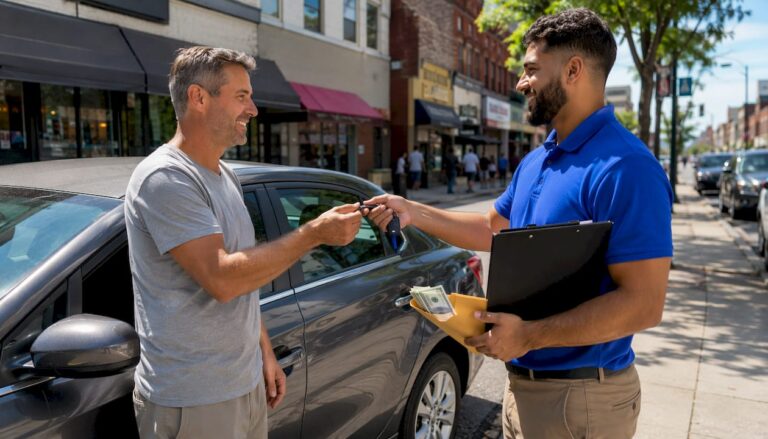
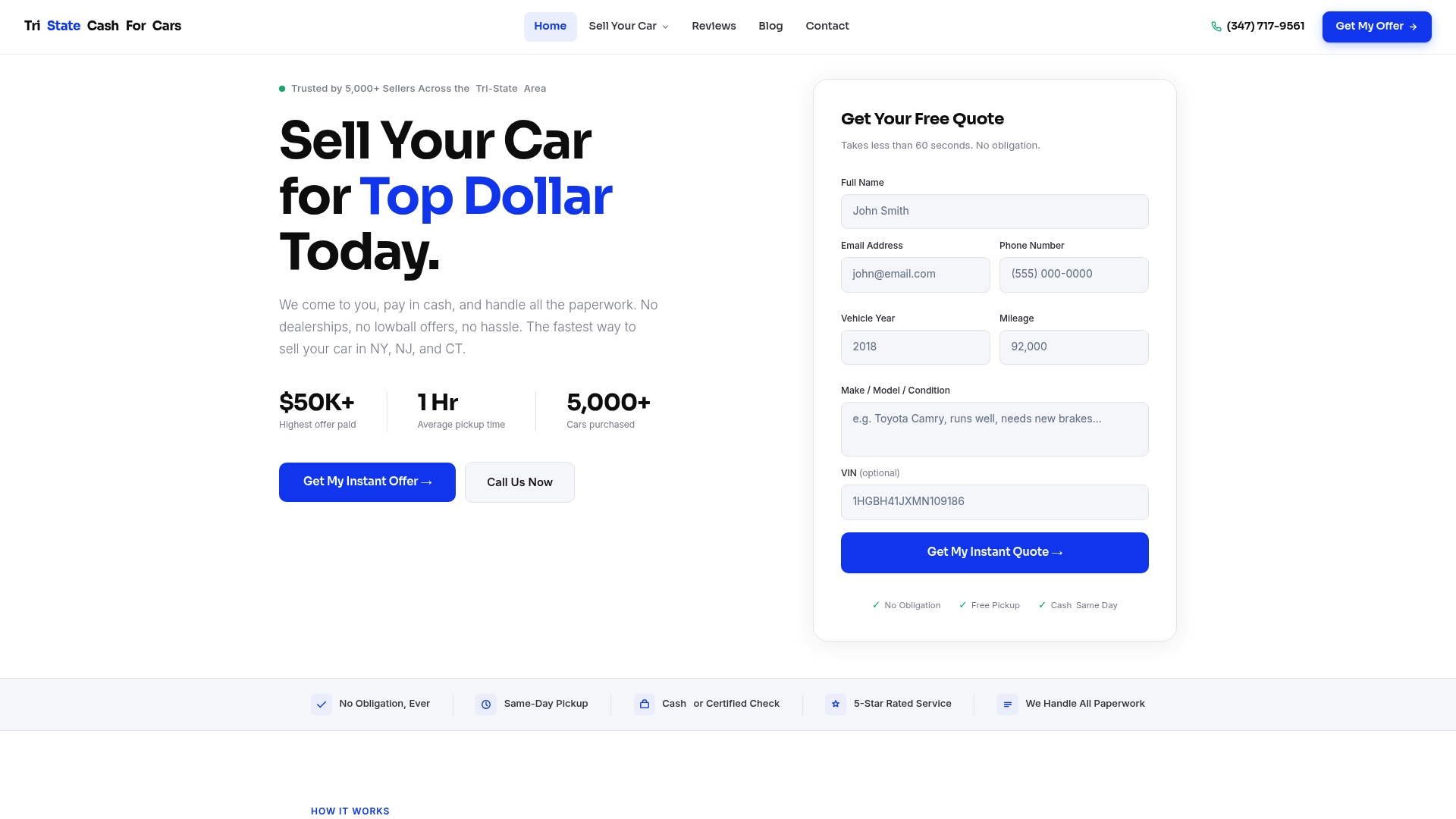
If you’ve checked the guides, gathered quotes, and still want a faster path than haggling, Tri State Cash For Cars offers a guaranteed price with same-day pickup and payment, no negotiating once you accept.
Here’s what the process looks like:
- Request a quote. Share basic details about your vehicle to get a cash offer.
- Schedule an inspection. A team comes to your location to confirm the car’s condition.
- Get paid at pickup. The offer is guaranteed, so the number quoted is the number paid, with paperwork handled on the spot.
Typically you’ll just need your title or proof of ownership and a photo ID. If your situation involves a damaged or non-running vehicle, the cash for clunkers near me page covers that specifically. Start at Tri State Cash For Cars to get your offer today.
Primary sources and regulator links
- CFPB: negative equity findings from the auto finance data pilot
- FTC: auto trade-ins and negative equity guidance
- CFPB: negotiating tips for car buyers
- CFPB: negative equity in auto lending report
Sources
- Data Spotlight — Negative equity: Findings from the auto finance data pilot
- Auto trade-ins and negative equity: When you owe more than your car is worth | FTC
- What things can I negotiate when shopping for a car or auto loan? | CFPB
- Negative equity in auto lending report | CFPB
FAQ
What is the $3,000 rule for buying cars?
There is no official regulator rule by this name, and definitions vary online. Some buyers use it informally to describe keeping any negative equity or rolled-over balance under a self-imposed cap, but it is not a standard defined by the FTC or CFPB.
How much does a car salesman make off a $20,000 car?
This isn’t publicly tracked in a standardized way, since dealer profit depends on the specific vehicle, trade-in deductions, financing terms, and add-ons. What matters more for you as a seller or buyer is negotiating the out-the-door price and checking the amount financed, since that’s where dealer margin often hides.
What is the red flag rule for car dealers?
The Red Flags Rule is a Federal Trade Commission requirement that businesses, including some auto dealers, have a written program to detect and respond to signs of identity theft during financing transactions. It’s separate from trade-in pricing and applies specifically to identity verification during credit applications.
What is considered a lowball offer on a used car?
A lowball offer is one that falls well below the trade-in values shown on guides like NADA, Kelley Blue Book, and Edmunds, and below competing written quotes from other dealers or buyers. Getting at least two other offers and checking those guides is the clearest way to confirm whether a number qualifies as a lowball.