Avoid DMV Rejections: Odometer Disclosure in NY and When to Use MV-103
If your car’s title already has a filled odometer section and damage box, you likely don’t need a separate form. If that section is missing, blank, or the title is from an older printing, you need Form MV-103 before you can transfer ownership. Check the title first. False mileage statements or altered titles can trigger fines and criminal charges.
TL;DR:
- The vehicle’s model year determines federal odometer disclosure requirements, with vehicles from 2011 onward needing a completed statement if within 20 years.
- New York’s damage disclosure obligation applies to all vehicle transfers, regardless of age or federal odometer exemption status.
- Completing and signing the MV-103 or the title’s odometer and damage boxes in order is essential for documentation validity and DMV approval.
- A false mileage or damage statement is a serious offense that can lead to fines and criminal charges, with no corrections allowed on signed titles.
- Sellers should keep copies of all paperwork, photograph the odometer, and verify details carefully to avoid rejection or disputes later.
Table of Contents
- What MV-103 is and how federal and New York rules interact
- Who must complete an odometer disclosure and common exemptions
- Step-by-step: fill the MV-103 or title’s odometer and damage boxes
- Where to submit completed paperwork at the DMV
- Penalties and legal consequences for false statements
- Common mistakes and how to avoid a rejected title
- How we handle odometer and title paperwork for New York sellers
- A faster path when the paperwork feels like the hard part
- FAQ
- Sources
What MV-103 is and how federal and New York rules interact
MV-103, officially the Odometer and Damage Disclosure Statement, exists for one narrow purpose: filling the gap when a New York certificate of title or dealer certificate of sale doesn’t include a built-in odometer or damage disclosure section. You complete it, sign it, and attach it to the title transfer packet instead of writing the mileage directly on the title.
Two separate rule sets apply here, and conflating them causes most of the confusion:
- Federal odometer disclosure, under NHTSA’s rule, applies to vehicles from the 2011 model year onward for 20 years from that model year; older vehicles are exempt from the federal requirement.
- New York’s damage disclosure requirement is separate and applies to every vehicle transfer in the state regardless of age, according to the NY DMV’s buyer guidance.
You can download MV-103 directly from the New York DMV website or pick one up at any DMV office.
Who must complete an odometer disclosure and common exemptions
The seller, or transferor, is legally responsible for completing the odometer disclosure. The buyer’s job is to review the stated mileage and sign to acknowledge it, not to fill in the numbers.
Model year is the deciding factor for whether federal odometer rules apply to your sale:
- A vehicle manufactured after 2011 and within 20 model years of the current year requires a completed odometer statement.
- A vehicle older than that federal disclosure window is exempt from the federal odometer disclosure requirement, per NHTSA.
- Vehicles with a gross vehicle weight rating over 16,000 pounds are exempt from federal odometer disclosure.
- Vehicles that aren’t self-propelled, such as trailers, are exempt.
None of those exemptions touch New York’s damage disclosure requirement. Even a vehicle old enough to skip the odometer statement still needs the damage box completed on every transfer in the state.
Step-by-step: fill the MV-103 or title’s odometer and damage boxes
Follow this order at the point of sale so the paperwork holds up at the DMV counter.
- Check the title first. If it has printed odometer and damage boxes, use those. If they’re missing or the title predates that format, use MV-103 instead.
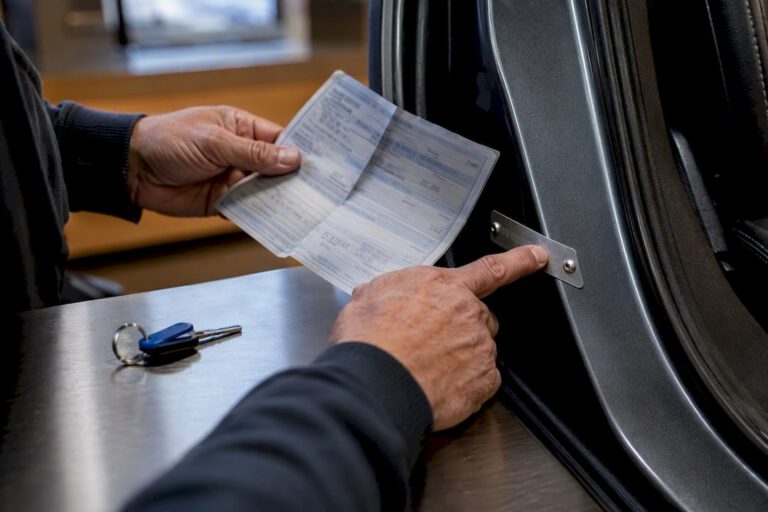
- Record the exact odometer reading. Write the number precisely as displayed, dropping any tenths digit, and mark the correct accuracy box: actual mileage, mileage exceeds mechanical limits, or odometer reading is not actual mileage.
- Complete the damage disclosure box. State plainly whether the vehicle has or has not been wrecked, destroyed, or declared salvage, then sign and date in the seller’s line; the buyer signs and dates their own line.
- Handle a missing or inaccessible title. If a lienholder holds the title, 49 CFR part 580 permits a power of attorney for the mileage disclosure in that situation, and some electronic titling systems allow electronic disclosures where the state supports them. If the title is lost outright, our guide to duplicate titles in New York walks through getting a replacement before the sale closes.
- Copy and keep everything. Both parties should retain a signed copy of MV-103 or the completed title page, with the buyer’s initials next to the odometer entry.
Pro Tip: Photograph the dashboard odometer with a timestamp before you sign anything. It costs nothing and settles any later dispute about the mileage on file.
Where to submit completed paperwork at the DMV
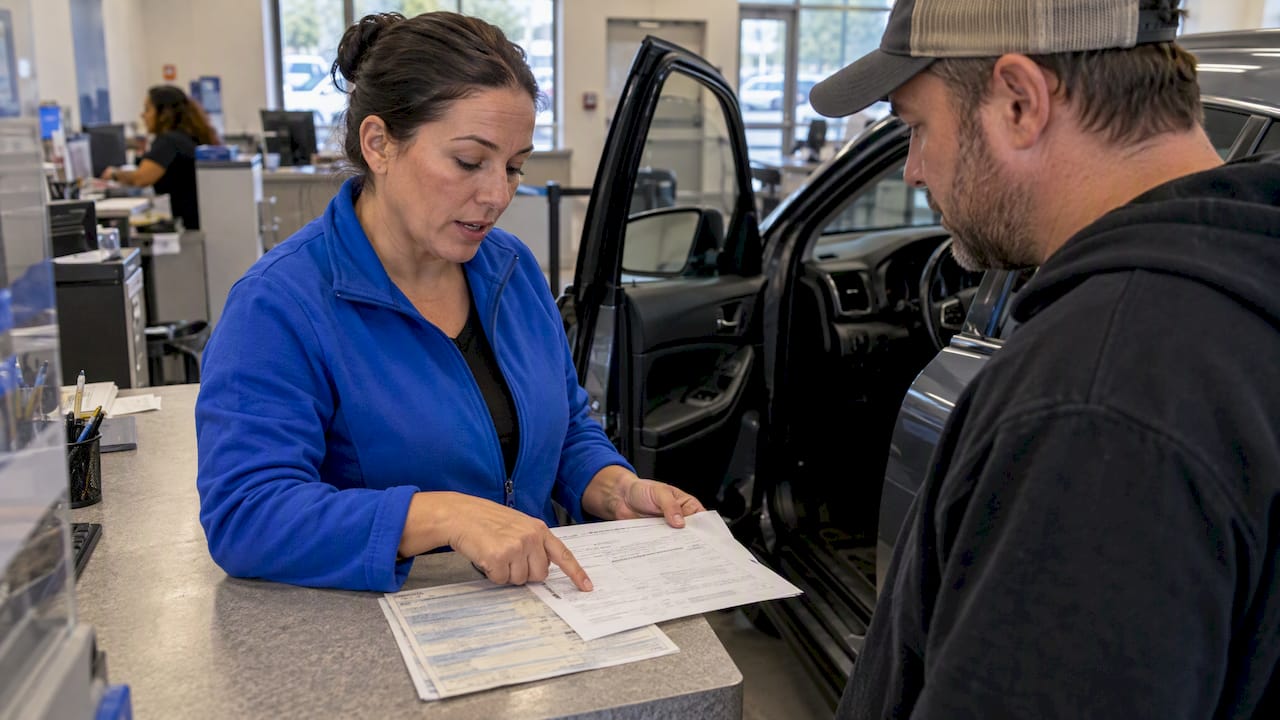
Bring the completed title, or title plus MV-103, to any New York DMV office as part of the title transfer and registration packet. A clerk will reject the submission if either signature is missing or the mileage boxes are blank.
Pack these along with it:
- The signed Certificate of Title (MV-999 series forms cover title applications).
- A completed Statement of Transaction (DTF-802) for sales tax purposes, which our guide to New York bill of sale paperwork covers in more detail.
- Proof of insurance and valid photo ID for the new owner.
- A lien release, if a loan was attached to the vehicle.
If the damage disclosure indicates the vehicle has been wrecked or declared salvage, expect an added step: a vehicle identified as rebuilt salvage must pass inspection for stolen parts before the DMV will issue a new title, which extends processing time.
Penalties and legal consequences for false statements
New York and federal rules both treat a false odometer or damage statement as a serious offense, not a paperwork slip. A false mileage statement can carry civil fines and criminal charges under New York law and federal odometer rules, according to state statutes governing mileage disclosure and the federal framework in 49 CFR part 580.
Never cross out or erase an entry on a title once it’s signed. Doing so voids the document, and the DMV will reject it outright; the only fix is applying for a duplicate title and starting over on that copy. Dealers are required to retain disclosure records for five years, and private sellers and buyers should hold onto their own copies for just as long in case a dispute surfaces later.

Common mistakes and how to avoid a rejected title
Most DMV rejections trace back to the same handful of errors, all avoidable with a little care at the kitchen table before anyone signs.
- Never alter a signed title. If you catch a mistake, stop, and apply for a duplicate title rather than correcting it by hand.
- Confirm the odometer reading against the dashboard display one more time before signing, not from memory or a prior listing.
- Have the buyer initial the odometer box directly, not just sign the main title line.
- If a damage claim later depends on a police report (MV-78B) and one is refused, document the request in writing; MV-1441.3 covers the process for that situation.
Pro Tip: Keep digital and paper copies of MV-103, the signed title, and the bill of sale together in one folder. If a mileage dispute surfaces months later, that single folder is your entire defense.
How we handle odometer and title paperwork for New York sellers
Eric here. In handling New York vehicle purchases firsthand, we see the same paperwork snags over and over: a title with no odometer box, a lost title, a duplicate-title request stuck in processing. We built our pickup process to catch those problems before they stall a sale, which helps sellers when a title isn’t straightforward.
— Eric
A faster path when the paperwork feels like the hard part
If you’d rather skip the DMV counter altogether, we buy vehicles directly and handle the odometer and title paperwork on-site as part of the pickup. We make a cash offer and pay the agreed amount at pickup with no surprises later.
This fits a specific kind of seller:
- Owners whose title is missing an odometer box or is otherwise non-standard.
- Sellers waiting on a duplicate title who don’t want the sale to stall further.
- Anyone who wants a transaction done in person, same day, without a second DMV trip.
Start the process on our Sell Your Car page and we’ll walk you through what paperwork we need on our end.
FAQ
Where can I get an odometer disclosure statement in New York?
You can download Form MV-103 directly from the New York DMV website, or pick up a paper copy at any DMV office. Use it only when your title or dealer certificate of sale doesn’t already have a built-in odometer and damage section.
Can the odometer disclosure be completed online?
Federal rules under 49 CFR part 580 allow electronic odometer disclosures within approved electronic titling systems, but New York’s standard process still relies on the paper MV-103 or the title’s printed boxes for most private transfers. Check with the DMV office handling your transfer if you’re unsure which applies.
What vehicles are exempt from odometer disclosure?
Vehicles manufactured in or before model year 2010 are exempt from the federal odometer disclosure requirement, which covers vehicles from the 2011 model year forward for 20 years, according to NHTSA. Vehicles with a gross weight rating over 16,000 pounds and trailers that aren’t self-propelled are also exempt, though New York’s damage disclosure still applies regardless of age.
How do I get an odometer disclosure statement if my title has no odometer section?
Download MV-103 from the New York DMV or request one in person at a DMV office, then have the seller complete the mileage and damage sections with the buyer signing to acknowledge. If the title itself is lost, you’ll need a duplicate title before the MV-103 can be attached to a valid transfer.
Sources
- Odometer and Damage Disclosure Statement (MV-103) — NY DMV
- NHTSA consumer alert — changes to odometer disclosure requirements
- 49 CFR Part 580 — Odometer Disclosure Requirements