Sell Your Cargo Van Fast in the U.S.: Use Cargo Specs and Fix Paperwork
For the best mix of speed and fair price, price your van by cargo specs and comps, present a clean and measured cargo area, and have your title and odometer disclosure ready before you list it. Private sale typically nets the highest price but takes longer, a cash buyer gets you a guaranteed, fast pickup, and a dealer trade-in trades convenience for a lower payout.
TL;DR:
- Private sales yield higher prices but require patience, whereas cash buyers offer quick transactions, especially useful if the van is non-running or you need urgent cash.
- Pricing should be based on cargo dimensions, payload, GVWR, roof height, and condition, with comparable listings carefully adjusted for mileage and cargo features.
- Preparing the van involves decluttering, cleaning, measuring cargo space, and documenting recent repairs and maintenance to attract serious buyers.
- Legal paperwork, including the title, bill of sale, and odometer disclosure, must be accurate and compliant with state and federal requirements to avoid delays.
- Listing in specialized commercial vehicle marketplaces with clear cargo stats improves buyer qualification, while handling negotiations carefully helps secure the best deal.
Table of Contents
- Quick checklist: choose the selling route that matches your goal
- How to price and value your cargo van
- Prepare the van to get top offers
- Paperwork and legal essentials when selling a cargo van
- Where to list, how to screen buyers, and negotiation safety tips
- Special case: selling a business-owned cargo van and tax reporting basics
- Author’s practical perspective: fastest wins and common mistakes
- How Tri State Cash For Cars can help you sell fast
- FAQ
- Sources
Quick checklist: choose the selling route that matches your goal
Selling a cargo van comes down to one trade-off: how much time you have versus how much money you want to walk away with. Each route handles that trade-off differently.
- Private sale: Usually the highest net proceeds, but it can take weeks of listing, screening, and negotiating with buyers.
- Dealer trade-in: The fastest low-effort option, but offers are typically lower because the dealer needs resale margin.
- Cash buyer: A guaranteed offer with same-day or next-day pickup, trading some top-dollar potential for speed and certainty.
A private sale makes sense when you have a few weeks, a van in solid mechanical shape, and the patience to field calls from buyers who want to negotiate or inspect in person. Commercial buyers, in particular, tend to take their time comparing specs across several listings before committing.
A guaranteed cash offer makes more sense when your van is not running, when you need the cash quickly, or when you simply do not have the bandwidth to manage photos, calls, and test drives. It also removes a layer of risk: no fear of a buyer backing out after a deposit, no waiting on a personal check to clear, no scheduling multiple showings.
A trade-in works best when you are buying a replacement van from the same dealer and want to roll the transaction into one visit, even though it rarely maximizes what you get for the van itself.
How to price and value your cargo van
Cargo vans do not sell like passenger cars, so consider using a diesel calculator to estimate fuel costs that affect operating expenses and buyer interest. Buyers, especially small business owners and fleet managers, care less about trim level and more about what the van can actually carry and fit.
Before you set a number, gather these specifics and lead with them in your listing:
- Cargo dimensions (length, width, height of the cargo area), since they determine whether a buyer’s equipment or inventory will fit.
- Payload capacity, the maximum weight the van can carry.
- GVWR (gross vehicle weight rating), which affects licensing and insurance for some commercial buyers.
- Roof height (low, medium, or high), a major factor for anyone who needs to stand inside the cargo area.
- Shelving or racking, and whether it stays with the van or gets removed before sale.
Once you have those details, pull three to five comparable listings for the same year, mileage band, and roof height. Adjust up or down for condition, mileage, and any built-ins. A van with intact shelving that a contractor can use immediately often commands more than a stripped one, while high mileage or body damage pulls the price down.
Photographing the payload and GVWR plate and listing those exact numbers up front matters because commercial buyers and fleet managers check those fields immediately before they even look at photos of the interior.

Here is a simple worked example. Say you find comparable vans listing between $18,000 and $21,000 for your year and mileage range. Your van has slightly higher mileage than average, which pulls your estimate down by roughly $800, but it includes a usable shelving package, which adds back about $500. That lands your realistic asking price around $19,700, with a negotiation floor near $18,200, enough room to field offers without giving away value on the first call.
Prepare the van to get top offers
Preparation is where sellers either close the gap to their asking price or lose it on sight. For a cargo van, that starts with the cargo area, not the dashboard.
- Remove all clutter, tools, and debris, then do a deep clean, including sweeping out dust and degreasing the floor.
- Decide whether shelving or racks stay with the van or get removed. Clearly state your decision in the listing since it changes the value conversation.
- Measure the cargo area yourself with a tape measure and note length, width, and height so buyers do not have to guess.
- Address small mechanical or cosmetic fixes, new wiper blades, a topped-off fluid, a touched-up scratch, and keep receipts for anything repaired recently.
- Keep maintenance records and repair receipts on hand or scanned, since documented brake pad or tire replacements build buyer confidence well beyond their cost.
For photos, capture the full exterior from four angles, the empty cargo area from the rear doors and side doors, the odometer, the payload and GVWR plate, the engine bay, and the dashboard. Clear, well-lit photos of the empty cargo space do more to generate serious inquiries than any cosmetic detail on the outside.
Pro Tip: Take cargo-area photos in daylight with the doors fully open; shadows inside a windowless cargo box hide dents and stains that buyers will find anyway at inspection.

Paperwork and legal essentials when selling a cargo van
Clean paperwork is what separates a same-day sale from a stalled one. Before you meet a buyer, gather these documents and confirm your state’s exact requirements, since title and disclosure forms vary.
- The vehicle title, signed over to the buyer per your state’s instructions; some states require notarization.
- A bill of sale, listing the sale price, date, VIN, and both parties’ information.
- Odometer disclosure, a federal requirement for most vehicle sales, completed accurately at the time of transfer.
- Any lien release, if you financed the van and have since paid it off.
Odometer rules have been evolving. NHTSA finalized a rule allowing electronic odometer disclosures and extended federal disclosure coverage to vehicles up to 20 years old starting with model year 2011. Ask your buyer whether their state accepts an electronic disclosure or requires a signed paper form, and keep a copy either way.
Accurate odometer disclosure and correct title signing prevent delays and reduce fraud risk.
New York and New Jersey sellers can use state-specific forms to avoid a second trip to the DMV: New York sellers can work from MV-912, DTF-802, or a same-day cash option, while New Jersey sellers can file the OS/SS-2 odometer disclosure correctly the first time.
If the van is a business asset, the paperwork extends beyond the DMV. Report the sale correctly using IRS Publication 544 and consult the Form 4797 instructions for how to allocate proceeds and report any gain.
Where to list, how to screen buyers, and negotiation safety tips
Where you list shapes who shows up. General marketplaces reach the widest audience but mix serious commercial buyers with tire-kickers, while specialty commercial vehicle sites attract fewer but more qualified fleet buyers. Write your headline with cargo dimensions and payload first, since that is what commercial buyers search by, before mentioning trim or color.
- Lead your listing title and description with cargo length, payload, and roof height, not the paint color or stereo.
- Screen buyers by phone before an in-person meeting and ask what they plan to use the van for; vague answers are a red flag.
- Meet in a public, well-lit location for test drives, or at your home during daylight hours if that is where the van is kept.
- Accept payment as cash, a verified cashier’s check confirmed with the issuing bank, or a bank transfer you can confirm as cleared before handing over keys and title.
- Never sign the title over until payment is fully in hand and confirmed.
On negotiation, know your floor before you start talking numbers. A buyer who pushes hard on price but will not commit to a meeting time is often not a serious one. If you get a guaranteed cash offer that is close to your floor and a private buyer who is still “thinking it over,” the guaranteed offer is usually the better bet once you factor in the time cost of continuing to show the van.
Special case: selling a business-owned cargo van and tax reporting basics
If your cargo van was used in a business, selling it triggers tax reporting beyond a simple handshake deal. Start by calculating your adjusted basis: original cost plus any improvements, minus accumulated depreciation you have already claimed. Your gain or loss is the sale price minus selling expenses minus that adjusted basis, a calculation Publication 544 walks through in detail.
Depreciation you claimed over the years can trigger recapture, taxed as ordinary income rather than capital gains. Depending on how the sale is structured, Form 4797 may apply to report the disposition, and if the van was part of a larger business asset sale, Form 8594 may be required to allocate the price across assets.

Keep your purchase records, depreciation schedule, and improvement receipts before you negotiate a price, and talk to a tax professional with that documentation in hand rather than guessing at the numbers after the sale closes.
Author’s practical perspective: fastest wins and common mistakes
Clean cargo specs beat cosmetic touches every time. Buyers forgive a scuffed bumper faster than they forgive a cargo area they cannot measure from the listing. The costliest mistake I see is sellers burying payload and GVWR numbers at the bottom of the ad, after paragraphs about the stereo. If you need cash fast, take a guaranteed pickup offer. If you can wait, list privately and let the specs do the selling.
— Eric
How Tri State Cash For Cars can help you sell fast
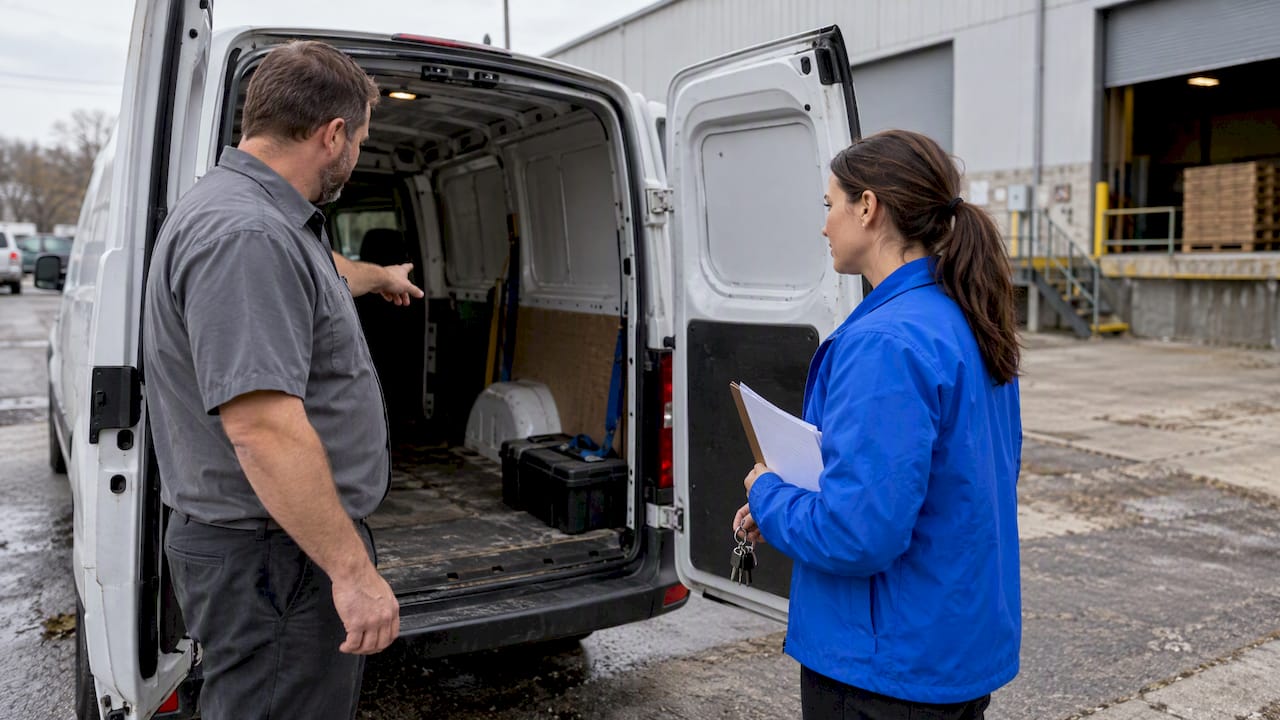
When speed and certainty matter more than squeezing out the last dollar, we offer a service where we send someone to look at your cargo van, make a cash offer, and handle the paperwork on the spot.

This route tends to fit sellers best when:
- The van is not running or has mechanical issues that would scare off private buyers.
- You need cash quickly and do not have weeks to field calls and showings.
- You do not have time to manage listings, screen strangers, or handle title paperwork yourself.
For a smooth pickup, have your title, any lien release, and your ID ready. We walk through the odometer disclosure and bill of sale with you on-site, and payment happens at the same visit. Start the process on our Sell Your Car page to see what a guaranteed offer looks like for your van.
FAQ
Are cargo vans profitable to sell?
A well-maintained cargo van with clear cargo specs, intact shelving, and clean paperwork typically sells for a fair price relative to its condition and mileage, though exact returns depend on your local market and the van’s upkeep. Commercial buyers often pay more for vans that are ready to put straight to work.
What is the best way to sell a van?
The best method depends on your priority: private sale generally nets the most money but takes longer, while a guaranteed cash offer trades some of that upside for speed and certainty. Preparing the cargo area, gathering your title and odometer disclosure, and pricing by specs and comps improves your outcome either way.
How much should I sell my van for?
Price by pulling comparable listings for your year, mileage, and roof height, then adjust for condition, mileage, and any shelving or racking included. There is no single number that applies across the market, so comps specific to your van’s configuration are the most reliable starting point.
What is the best-selling cargo van?
Full-size cargo vans from major domestic and import manufacturers dominate the segment, with buyers choosing based on roof height, payload, and cargo length rather than brand loyalty alone. The “best” choice for resale depends on what local commercial buyers in your area are actively searching for.
Do I need to disclose the odometer reading when selling my van?
Yes, federal rules require an odometer disclosure for most vehicle sales, and NHTSA has extended that requirement to vehicles up to 20 years old starting with model year 2011. Check whether your state accepts an electronic disclosure or requires a signed paper form at transfer.
Sources
- Publication 544 (2025), Sales and Other Dispositions of Assets | Internal Revenue Service
- NHTSA Announces Final Rule on Electronic Odometer Disclosures | NHTSA