Get Same Day Cash When Selling a Car With Transmission Failure
Yes, you can sell a car with a failed transmission. Your fastest paths are a cash-for-cars buyer, a salvage yard, or a dealer trade-in, while private buyers usually pay more but take weeks longer to close. Expect offers significantly below running value, and protect yourself with written disclosure and clean title paperwork before any cash changes hands.
TL;DR:
- Selling to a cash-for-cars buyer offers same-day payment and free towing but typically results in the lowest offers, usually around 40 to 60 percent of the vehicle’s value.
- Private buyers pay the most for cars with transmission problems because they plan to repair it themselves, but the sale process can take several weeks.
- A vehicle with a failed transmission can drop in value significantly, with private-sale offers roughly 40 to 60 percent lower than the car’s normal private-sale value, depending on repair costs and vehicle age.
- Proper written disclosure of transmission failure, including a mechanic’s diagnostic, is essential to legally protect yourself and prevent scams or legal claims during the sale.
- Repair costs often outweigh potential gains unless the vehicle is relatively new and in good condition, making selling as-is a more practical option in most cases.
Table of Contents
- Where Can You Sell a Car With Transmission Problems?
- What Does a Bad Transmission Do to Your Car’s Value?
- How Do You Protect Yourself Legally When Selling?
- Step-by-Step: From Diagnosis to Handoff
- Selling a Car With an Outstanding Loan
- Should You Repair It First or Sell As-Is?
- How Tri State Cash For Cars Handles Transmission Failures
- What Will This Actually Cost You?
- Choosing the Right Buyer: Price, Convenience, and Risk
- What the Guides Get Wrong About Selling a Broken-Down Car
- Ready to Sell? Here’s What to Have on Hand
- Sources
- FAQ
Where Can You Sell a Car With Transmission Problems?
Every buyer type prices transmission failure differently, and understanding that math before you make a call saves you from lowball surprises.
Cash-for-cars buyers want speed and certainty. They typically quote a price over the phone or online based on your description and VIN, then send someone to inspect, pay, and tow the vehicle, often the same day. You lose some negotiating room, but you gain a guaranteed number and zero listing hassle.
Private buyers, often hobbyist mechanics or people shopping for a project car, tend to pay the most for a car with transmission problems, since they plan to repair it themselves and skip the labor markup. The tradeoff is time. Expect the listing to take several weeks before the right buyer appears.
Dealers will sometimes take a car with transmission failure as a trade-in, but they price it for wholesale auction, not retail. A trade-in deduction on a vehicle can be substantial once repair costs are factored into the offer.
Salvage yards buy for scrap and parts value, which means sedans often fetch just a few hundred dollars, while trucks and SUVs can bring more because of their weight and salvageable components.
Here’s how to match the channel to your priority:
- Need cash today and don’t want to deal with strangers? Call a cash-for-cars buyer first.
- Have time and want top dollar? List privately on marketplace sites and screen buyers carefully.
- Already shopping for a replacement vehicle? Ask the dealer for a trade-in quote alongside your new purchase.
- Car is barely worth towing? A salvage yard clears it fast with minimal paperwork.
Pros and cons in short:
- Cash buyers: fastest close, free towing, guaranteed number, but typically the lowest ceiling on price.
- Private sale: highest potential payout, but slower and requires you to arrange your own towing.
- Dealer trade-in: convenient if you’re buying another car, but the weakest standalone offer.
- Salvage/junk yard: quick and simple, best only when the vehicle has little value beyond parts.
What Does a Bad Transmission Do to Your Car’s Value?
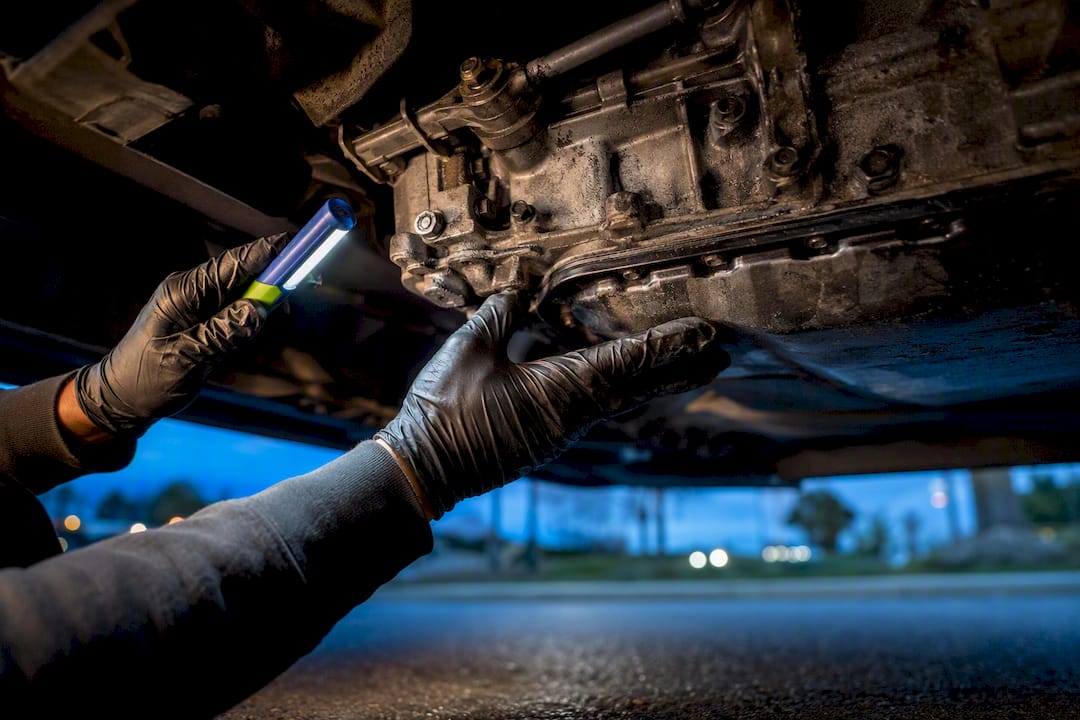
A failed transmission is one of the steepest value hits a vehicle can take, and the reason is simple: it’s expensive and complicated to fix. Transmission rebuilds and replacements typically run $1,800 to $7,000, depending on your vehicle and whether the damage is a minor sensor issue or a full rebuild. Every buyer factors that repair bill into their offer before they factor in anything else.
Pro Tip: Get a written diagnostic before you list the car. Spending $100 to $150 on a mechanic’s estimate tells buyers exactly what they’re facing, which removes their biggest excuse to lowball you.
Expect a documented transmission failure to cut your private-sale value by roughly 40 to 60 percent compared to a running equivalent, and salvage offers can land even lower. A rough formula: take your car’s current running private-sale value and multiply it by a moderate fraction to estimate a realistic as-is offer. A car worth a typical running value might fetch a significantly reduced range as-is, with the lower end reflecting salvage buyers and the higher end reflecting a motivated private buyer or specialist mechanic.
How Do You Protect Yourself Legally When Selling?
“As-is” doesn’t mean “say nothing.” You can sell a car with a bad transmission legally, but you have to disclose the condition in writing to avoid a fraud claim down the road. Verbally mentioning the problem isn’t enough if a buyer later says you hid it.
Here’s the paperwork sequence that keeps you covered:
- Write the transmission condition directly into the bill of sale, using plain language like “transmission failure, sold as-is, no warranty expressed or implied.”
- Complete the title transfer with the buyer’s full legal name and current signature, matching state requirements exactly.
- File your state’s notice of transfer or release-of-liability with the DMV as soon as the sale closes, so you’re not on the hook for tickets or accidents after the fact.
- Photocopy or photograph every signed document before handing over the keys, and keep those copies for at least a few years.
On payment, accept cash or a verified cashier’s check, and confirm the check clears with the issuing bank before you release the vehicle. Never accept a personal check or a payment app promise for a large sale. Wire transfers work too, but wait for the funds to actually land in your account first.
Step-by-Step: From Diagnosis to Handoff
Selling a car with transmission failure goes faster when you follow a set order instead of improvising.
- Get a written diagnosis. A basic mechanic estimate costs little and gives every buyer confidence that you’re not hiding a worse problem.
- Photograph the car and write an honest description. Note mileage, the transmission symptoms, and any other issues up front.
- Collect two to three quotes from different buyer types, a cash-for-cars service, a local mechanic, and maybe a dealer, so you know your real range before committing.
- Verify the buyer and agree on a payment method in writing before scheduling pickup.
- Arrange towing if the car doesn’t run; many cash buyers include this free.
- Sign the title and bill of sale at handoff, file the DMV release, and cancel your insurance the same day.
Pro Tip: Small pre-sale repairs under a few hundred dollars, like fixing a check-engine light or topping off fluids, can sometimes bump your offer enough to be worth the cost. Ask your mechanic which cheap fixes buyers actually notice before you spend a dime on anything transmission-related.
Selling a Car With an Outstanding Loan
A lien complicates things, but it doesn’t block the sale. Your lender legally owns part of that title until the loan clears.
- Call your lender and request the exact payoff figure in writing, along with their lien-release procedure.
- If the buyer’s payment covers the payoff amount, use those funds to clear the loan directly, then get the lien release before finalizing the transfer.
- If you’re underwater, meaning the offer doesn’t cover what you owe, you have three real options: pay the gap out of pocket, arrange a joint payoff meeting at the lender’s branch with the buyer present, or work with a buyer experienced in handling lien payoffs at closing.
Never hand over the title before the lien is officially released. Skipping that step is the single most common way private sales fall apart.
Should You Repair It First or Sell As-Is?
Run the math before you decide. Compare your car’s post-repair market value against the sum of your best as-is offer, the repair cost, and the time and risk of getting it fixed.
Repairing usually only makes sense when the repair cost is a small slice of the car’s running value, or when the vehicle is newer and otherwise in strong shape. On an older car worth $6,000 running, spending $4,000 on a transmission rebuild rarely pencils out. On a three-year-old SUV worth $22,000, it often does.
| Repair Cost Band | Typical As-Is Offer Range | Better Move |
|---|---|---|
| — | 60% of running value | Repair, then sell |
| $1,800–$4,000 (partial rebuild) | 40–55% of running value | Depends on vehicle age |
| $4,000–$7,000 (full replacement) | 30–45% of running value | Usually sell as-is |
How Tri State Cash For Cars Handles Transmission Failures
Some cash-for-cars services specialize in vehicles that are hard to sell the normal way. Instead of asking you to fix anything or find your own buyer, the process works like this:
- A team comes to your location, inspects the vehicle, and makes a cash offer on the spot.
- The offer is guaranteed, meaning the price quoted at pickup is the price paid, with no last-minute deductions.
- Paperwork, including title transfer and sale documentation, is handled by the buying team rather than left to you.
- Payment can happen the same day, often quickly, which matters most for sellers who need liquidity fast.
This approach fits sellers dealing with a non-running vehicle, an estate situation, or even a lost title where extra documentation guidance helps. If your transmission has failed and you’d rather skip the mechanic quotes and marketplace back-and-forth entirely, this is one direct route. Readers weighing all their choices can review the options for selling a car before deciding which channel fits.
What Will This Actually Cost You?
Selling a car with a bad transmission carries its own set of expenses, and skipping this math is how sellers end up disappointed by their final number.
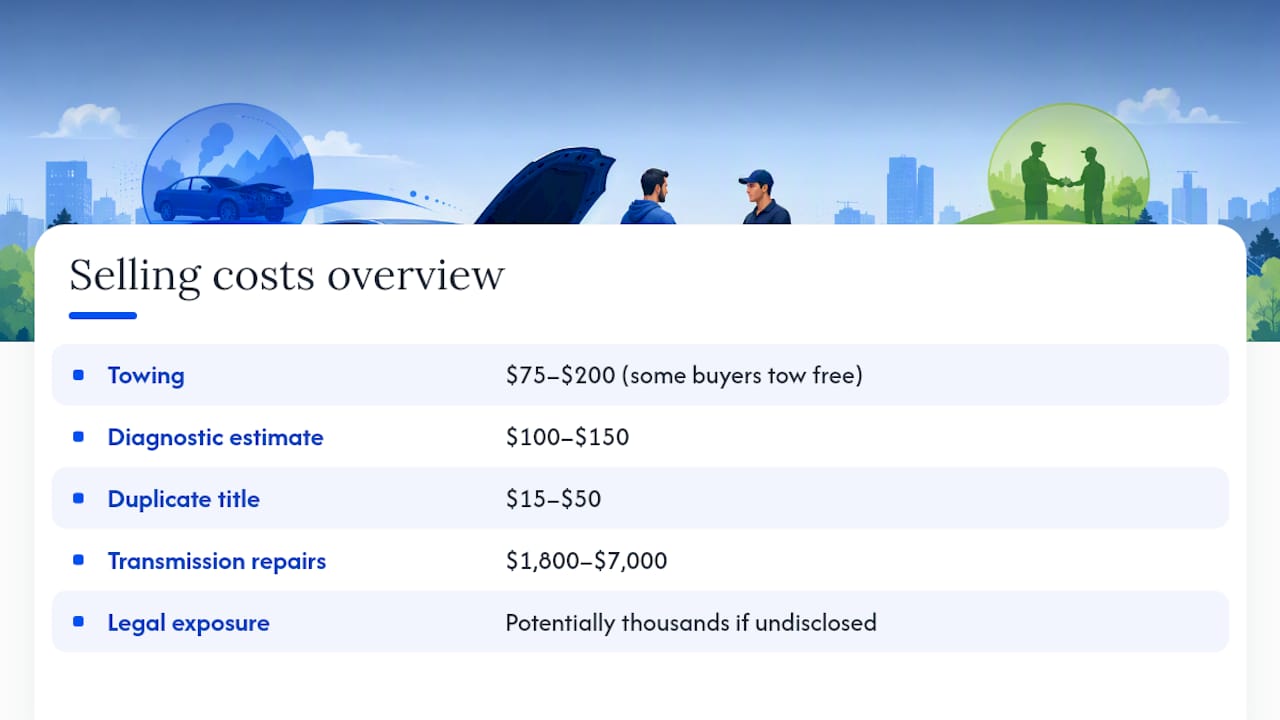
Towing is the biggest wildcard if the car doesn’t run. A local tow can run anywhere from $75 to $200 depending on distance, though many cash-for-cars buyers, including Tristatecashforcars, tow non-running vehicles at no charge as part of the offer.
The diagnostic estimate is a small but worthwhile expense, typically $100 to $150, and it pays for itself by giving buyers confidence in your asking price.
Title or lien fees vary by state and lender. A duplicate title request might cost $15 to $50, and a lender’s lien-release paperwork is usually free but can take a few business days to process.
Legal exposure is the cost you don’t see coming. Skipping written disclosure of the transmission failure can expose you to a lawsuit later if a buyer argues you misrepresented the vehicle’s condition. That risk costs nothing to avoid with proper paperwork, but it can cost thousands if ignored.
Repairs, if you choose that route instead of selling as-is, run $1,800 to $7,000 depending on severity, and rarely make sense unless the underlying vehicle is worth protecting.
Add these up before you commit to a channel. A private sale that nets you $500 more than a cash buyer isn’t a win if it costs you three weeks, a tow bill, and a diagnostic fee you wouldn’t have needed otherwise.
Choosing the Right Buyer: Price, Convenience, and Risk
Every buyer type sits somewhere different on the price-versus-convenience scale, and picking the wrong one for your situation is the most common mistake sellers make.
If price is your only priority and you have time, a private buyer, ideally a mechanic or hobbyist actively hunting for a project car, will usually beat every other option. If convenience and certainty matter more, a cash-for-cars buyer or a dealer trade-in wins, even though the number is lower.
Before accepting any offer, ask these questions:
- Is this offer guaranteed at pickup, or can it change after inspection?
- Who handles towing, and is it included in the price?
- Who prepares the title transfer and bill of sale, and can I get copies?
- How is payment made, and can I verify funds before releasing the vehicle?
- What happens if there’s an outstanding lien on the title?
A buyer who dodges these questions or pressures you to skip paperwork is a red flag, regardless of how attractive the price sounds. The safest deals are the ones where every answer is clear before the tow truck shows up.
What the Guides Get Wrong About Selling a Broken-Down Car
Most advice on this topic treats every transmission failure the same way, and that’s the first mistake. A minor solenoid issue on a three-year-old SUV and a full rebuild on a fifteen-year-old sedan are not the same math problem, yet plenty of guides push a single “always repair” or “always sell as-is” rule.
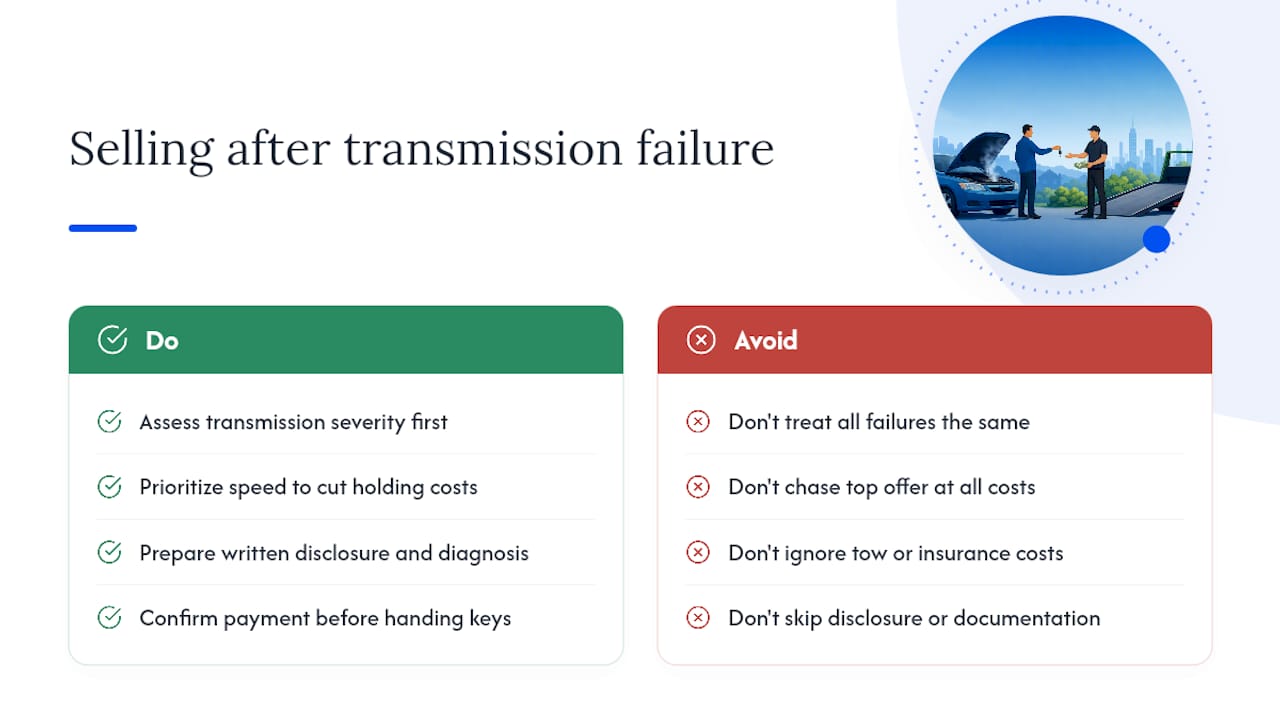
The bigger blind spot is time. Sellers chasing the highest possible number often underestimate what three weeks of private-sale limbo actually costs, in tow bills, insurance payments, and the stress of screening no-show buyers. Speed has real value, and pretending otherwise does readers a disservice.
What should come first isn’t the highest offer. It’s a clean paper trail: written disclosure, a documented diagnosis, and confirmed payment before the keys change hands. Get that right, and the choice between a cash buyer, a dealer, or a private sale becomes a matter of preference, not risk. Skip it, and even a great price can turn into a legal headache months later.
— Eric
Ready to Sell? Here’s What to Have on Hand
Some cash-for-cars services give you a guaranteed price at pickup and handle the paperwork most sellers dread, which matters most when you’re stuck with a car that won’t even start.

Before you call, gather your VIN, a few clear photos of the vehicle, your title status (clean, lost, or lien), and, if applicable, your loan payoff figure from your lender. Having these ready shaves real time off your quote.
At pickup, expect a straightforward process: a guaranteed cash offer with no last-minute renegotiation, the title and bill of sale prepared for you, and free local towing in many cases. Confirm your payment method, cash or verified funds, before the buyer arrives so there are no surprises. If your car is closer to the end of its life, the cash for clunkers program offers the same guaranteed pickup and same-day payment. Reach out today to get your offer started.
Sources
- Can You Sell a Car With a Bad Transmission: Disclosure Rules – LegalClarity
- How to Sell a Car with a Bad Transmission? – SellCarAdvisor
FAQ
Can You Sell a Car With a Faulty Transmission?
Yes. You can sell it as-is to a private buyer, dealer, salvage yard, or cash-for-cars service, but you must disclose the transmission condition in writing to avoid a future fraud claim.
How Much Is a Car With a Failing Transmission Worth?
Expect roughly 40 to 60 percent less than the running private-sale value, with salvage offers often landing at just a few hundred dollars for smaller sedans and more for trucks or SUVs.
Will a Dealer Take a Trade-In With a Bad Transmission?
Many dealers will accept it, but they price the trade-in for wholesale or auction resale and subtract expected repair costs, so the offer is usually lower than a private sale or a dedicated cash buyer.
Can You Sue Someone for Selling You a Car With a Bad Transmission?
Yes, if the seller knowingly hid or misrepresented the transmission condition in writing or verbally, a buyer may have grounds for a fraud or misrepresentation claim, which is exactly why documented, written disclosure protects sellers.
How Long Does It Take to Sell a Car With Transmission Problems?
A cash-for-cars buyer can often close within the same day, while a private sale typically takes one to three weeks to find the right buyer.