Selling a Moldy Car: What It’s Worth and How to Sell It
You can sell a car with mold, and you do not have to pay for a full cleanup first. Tell the buyer about the mold, get a firm written offer, and sell to a buyer who takes cars as they are and picks them up. Dealers and private buyers tend to treat mold as a red flag and mark the price down hard. Our job at Tri State Cash For Cars is simpler: we send a team to your location in New York, New Jersey or Connecticut, give you a cash offer, handle the paperwork and pay the stated price at pickup.
TL;DR
- Mold is a health and value problem. Buyers discount it heavily, so expect a lower price than a clean car and plan around that.
- Professional removal is often priced in the hundreds to the low thousands of dollars. On an older car, that can eat most of what the car is worth.
- Describe the mold honestly and in writing. Hiding a known problem is the one move that can turn a simple sale into a dispute.
- Mold does not stop you from selling a car that runs badly or not at all. We buy running and non-running vehicles, with or without a title.
- Our guarantee: we commit to paying the price we quote at pickup, with no surprises.
Table of Contents
- Why mold changes how a car sells
- How to tell how serious the mold is
- What mold removal costs, and when it makes sense
- What buyers do with a moldy car
- What to disclose and document
- How to sell a moldy car for cash in NY, NJ or CT
- If the car has more than mold
- Sell your moldy car with Tri State Cash For Cars
- Our perspective
- FAQ
- Sources
Why mold changes how a car sells
Mold is not cosmetic. The CDC says exposure to damp, moldy environments can cause a stuffy nose, sore throat, coughing or wheezing, burning eyes or skin rash. People with asthma or mold allergies can react severely, and people with weakened immune systems or chronic lung disease can develop lung infections. A car is a small enclosed space with a ventilation system that moves air straight to the occupants, so buyers take it seriously.
The American Lung Association notes that leaks or floods can lead to mold in a car’s HVAC system and interior, and that clutter and food waste in the cabin can also harbor mold, bacteria and pests. That matches what most owners of moldy cars describe: a window left cracked, a clogged sunroof drain, a wet floor mat that never dried, or a car that sat for months.
As a seller, you do not need to become a mold expert. You need to know three things: how bad it is, where it came from, and whether the moisture source is fixed. Those answers drive everything a buyer will offer.
How to tell how serious the mold is
You can usually size it up in ten minutes with a flashlight.
- Smell. A persistent musty, earthy odor that returns after airing out the car points to active growth, often in the vents or under the carpet.
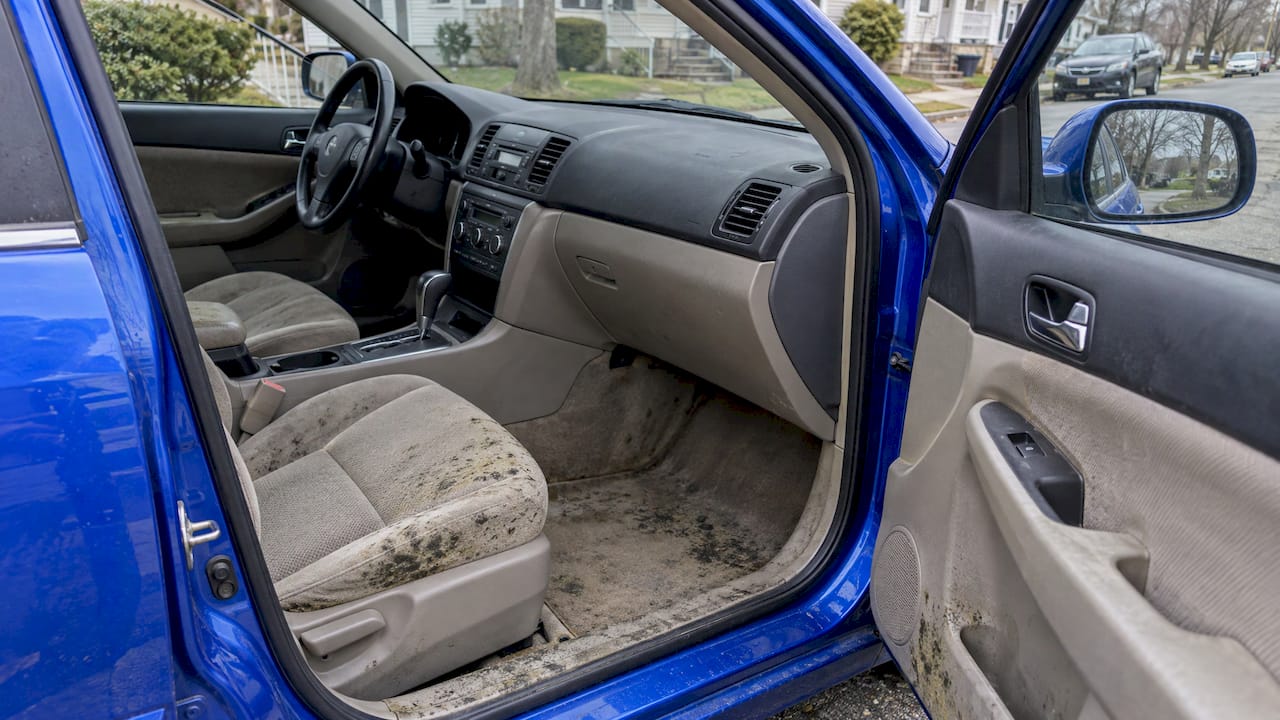
- Look. Check the seat seams, door panels, headliner, seat belts, floor mats and the carpet under them. Mold shows as white, green or black fuzzy or powdery spots.
- Feel for moisture. Press the carpet near the door sills and in the footwells. Dampness, rust on seat bolts or fogging that will not clear all suggest a leak.
- Notice how you feel. Sneezing, coughing or eye irritation that starts in the car and fades when you leave is a sign to stop driving it for now.
Some detailers sell mail-in test kits. One mobile detailer explains that these kits can show spores are present but not where the growth is or how much there is. For a sale, a kit is rarely necessary. Photos and an honest description do more.
One point sellers often ask about: WikiHow, citing medical sources, notes there is no evidence that so-called black mold is more dangerous than other molds. Treat any visible growth the same way: with care, gloves and a mask if you are handling the car, and without driving passengers who have asthma or allergies.
Surface mold versus deep mold
The kind of mold decides the price drop more than anything else.
- Surface mold is on mats, a seat cover or a hard plastic surface. It is usually from a one-time spill or a short period of dampness.
- Deep mold has reached the carpet padding, seat foam, headliner or HVAC system. That is harder to reach and is where buyers expect the largest discount.
- Flood-related mold comes with water damage. If that is your situation, our guide on selling a flood damaged car in NY, NJ or CT covers the specifics.
What mold removal costs, and when it makes sense
Many owners ask whether they should clean the car first. The honest answer is that it depends on the car’s value, and on whether the price you would gain is bigger than the bill.
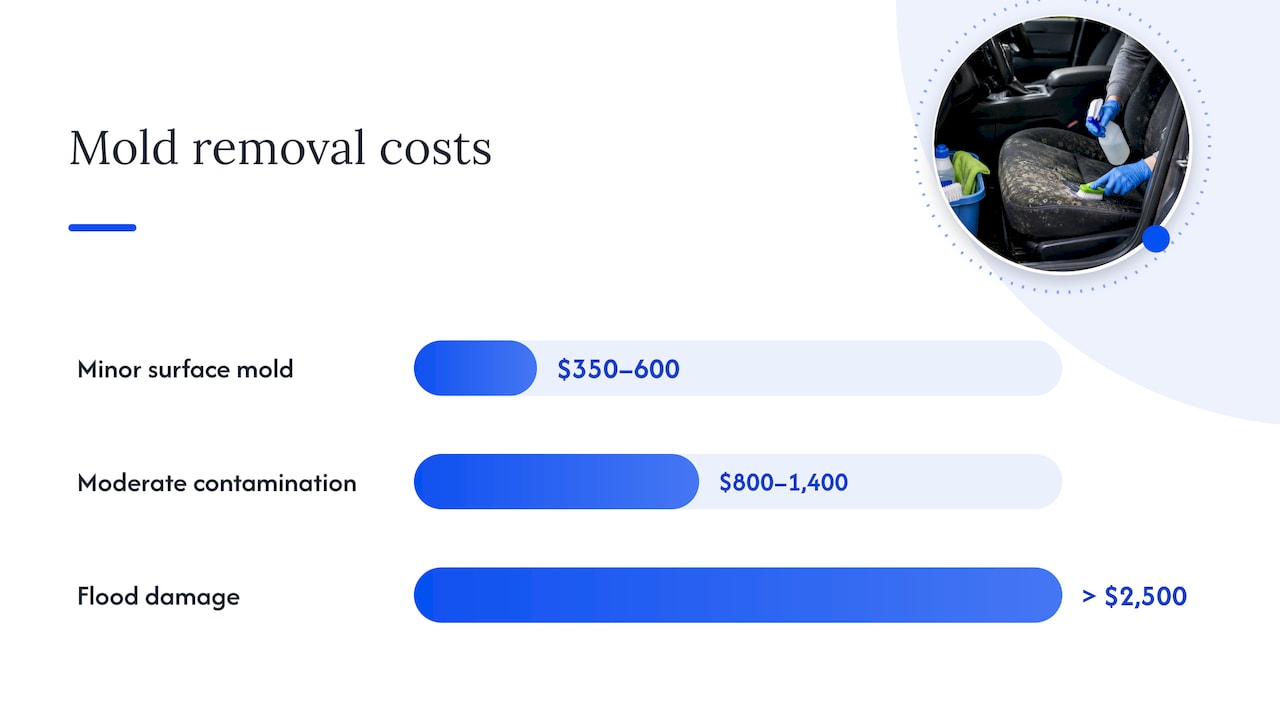
Professional pricing varies a lot by region, vehicle and severity, and published numbers come from detailers’ own price lists. For a sense of scale:
| Severity | Typical published range | Source |
|---|---|---|
| Minor surface mold | $350 to $600 | Derek’s Detail, 2026 guide |
| Moderate contamination | $800 to $1,400 | Derek’s Detail, 2026 guide |
| Flood damage | Past $2,500 | Derek’s Detail, 2026 guide |
One mobile service’s 2024 price list shows Level 1 surface mold starting at $389 and extreme full-interior cases above $1,289, with HVAC treatment priced on top. Another detailing shop’s guide says most insurance policies do not cover mold removal, so the bill usually lands on the owner.
The size of the vehicle, whether the growth is hidden, and how long the car stayed damp all push the price up. A quote that looks cheap can leave out padding replacement or leak repair, so any estimate should say exactly what it includes.
A simple way to decide
Take the highest realistic removal quote and compare it with what the car is worth. If you are paying a few hundred dollars to clean a late-model car you plan to list for a long time, cleaning can make sense. If the car is older, has other problems, or you need the money soon, the cleanup bill, plus weeks of listing, plus the risk the buyer still walks away, can easily outweigh the benefit.
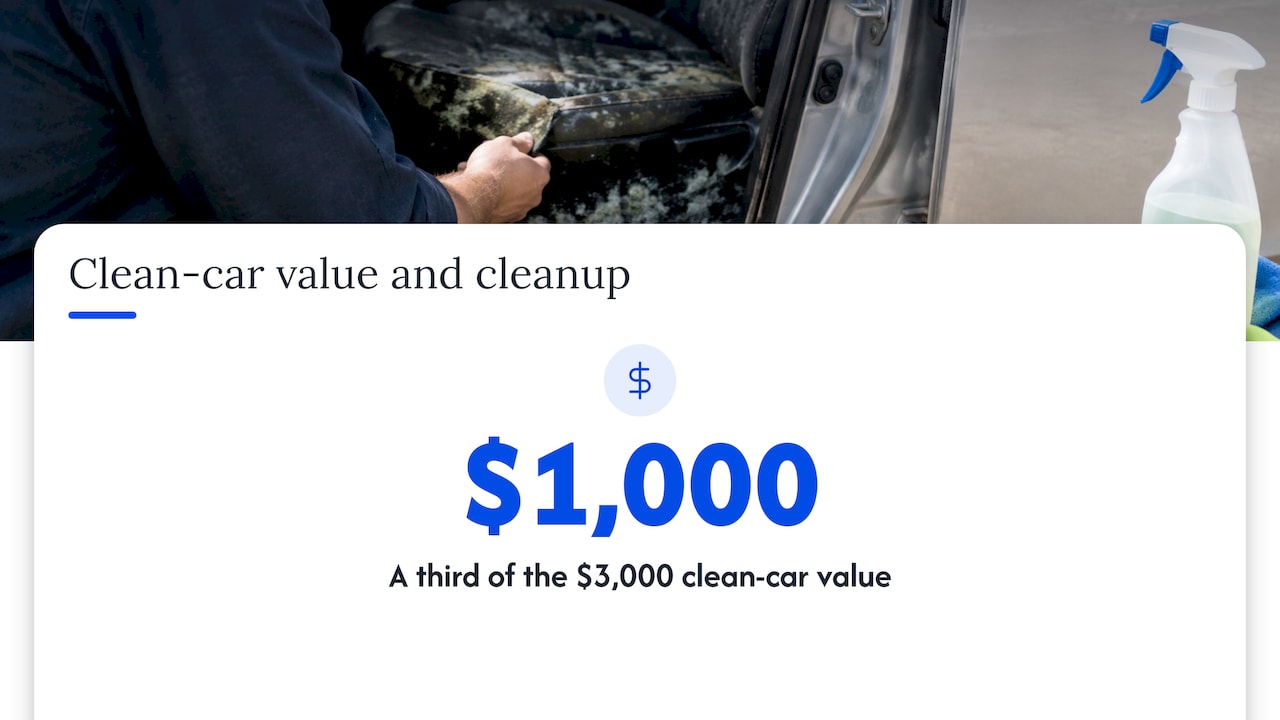
A worked example: your 2009 sedan would sell for about $3,000 clean. A moderate mold job quoted at $1,000 takes a third of that, and you still have to list it, answer buyers’ questions and let strangers inspect it. Selling as-is for cash means you skip the spend and the wait.
What buyers do with a moldy car
The market treats mold harshly. One detailing company reports that dealers may deduct $500 to $2,000 or more from a trade-in offer when mold is present or suspected, and that private buyers often go silent or ask for a steep discount.
That tracks with how the trade works at the wholesale level. The National Auto Auctions Association has a published standard on mold. It says mold should be announced as a biohazard even when the car has been professionally cleaned, and it recommends marking the car’s glass. In other words, a dealer who takes your car in trade has a hard time reselling it the usual way, and the offer reflects that.
Three common routes for a moldy car:
- Dealer trade-in. Fast, but the offer carries the mold discount and often a lowball adjustment. If you already have a low dealer number in hand, see how to raise a low dealer trade-in offer.
- Private sale. You may get a higher number on paper, but every showing means smell, questions and negotiation. Many buyers walk away the moment they open the door.
- Direct cash buyer who comes to you. One offer, one pickup, no listing. This is the route we built our service around.
What to disclose and document
Selling a car with mold is not the problem. Hiding it is. A buyer who finds mold after the sale and learns you knew about it has grounds for a dispute, and labeling a sale “as-is” is not a safe way to hide a known defect.
Keep it simple:
- Write down what you know. Where the mold is, how long it has been there, what caused it, and whether the leak was fixed.
- Take dated photos of the affected areas and of any repair or cleaning.
- Keep receipts for anything you paid for, such as a drain repair, a seal replacement or a cleaning.
- Put the disclosure on the bill of sale or a signed note both of you keep.
- Do the standard transfer paperwork. Title, odometer statement, and bill of sale. State rules differ, so use the version for your state: our guides cover NY car sale paperwork for private sellers and NJ car sale paperwork before an MVC visit.
If you are unsure about your legal exposure in a particular sale, a licensed attorney in your state is the right person to ask. For ordinary sales of a car with a known condition, clear disclosure and clean paperwork cover most of the ground.
How to sell a moldy car for cash in NY, NJ or CT
Here is the routine, with what to watch at each step.
Step 1: Gather the basics
Have the year, make, model, mileage, location, and whether the car runs. Note whether you have the title. Not having it does not end the sale with us, since we buy with or without a title, but tell us up front so the paperwork plan is right.
Step 2: Describe the mold honestly
Tell us how widespread it is and whether the car is also damaged or does not start. A truthful description is what lets us quote a price we will stand behind. Our guarantee is that we pay the price we state at pickup. If the quote is built on accurate facts, there is nothing to renegotiate on the driveway. Our guide to a guaranteed car offer explains the odometer and title items that most often cause surprises.
Step 3: Compare the offer with your alternatives
A fair offer for a moldy car reflects the mold. Do not compare it with a clean-car book value. Compare it with what a dealer would deduct, what removal would cost, and how long a private listing would take. For a sense of how the options trade speed against price, read our fast car sale options for NY, NJ and CT.
Step 4: Schedule the pickup
We send a team to your location. You do not need to drive the car anywhere, which matters when the cabin is unpleasant or the car does not run. Our guide to selling your car from home walks through how a pickup sale works.
Step 5: Sign and get paid
We handle the paperwork, and payment comes at pickup, with cash in hand within an hour as our service aims. Before the team arrives, remove your personal items, take the plates if your state requires it, and read through what to sign at pickup. Then cancel or update your insurance as your state requires.
If the car has more than mold
Mold often comes with something else: a leak, a rusted floor, or a car that sat so long it will not start. Those problems stack. A car with water entry might have electrical trouble, and a car with a rotten floor pan might have structural rust. Our pages on selling a rusted car for same-day cash, selling a frame damaged car and selling a damaged car fast cover how each affects the price and the sale.
Sell your moldy car with Tri State Cash For Cars
We buy cars, SUVs, trucks, vans and commercial vehicles in New York, New Jersey and Connecticut, running or not. We give you a cash offer, come to you, handle the paperwork and pay the quoted price at pickup. If a dealer has marked your car down for mold, or you would rather not spend on cleanup and a listing, start with a quote.

Get your offer on our Sell Your Car page and tell us about the mold when you do.
Our perspective
Most people with a moldy car feel stuck between two bad choices: pay for a cleanup they are not sure will work, or take a dealer’s discount and hope for the best. We think there is a third option that is simpler. Be straightforward about the condition, get a price from a buyer who will stand behind it, and let the buyer come to you.
The reason we guarantee our offers is that surprises are what make car selling stressful. A price that changes at the curb is not a price. When you tell us what is wrong with the car and we quote against that, you know what you will get before anyone arrives.
We also handle the paperwork, because the transfer forms are where a quick sale can turn into a long one. For a car you no longer want to sit in, that is worth a lot.
Eric
FAQ
Can mold in a car make you sick?
It can. The CDC lists a stuffy nose, sore throat, coughing, wheezing, burning eyes and skin rash as possible effects of damp, moldy environments, with stronger reactions for people with asthma or mold allergies. Avoid driving the car with passengers who have these conditions. If you have symptoms that persist, see your doctor.
Do I have to tell the buyer the car has mold?
Yes, disclose it. Concealing a known problem is the main way a sale becomes a dispute, and an as-is sale does not make hiding it safe. Put the details in writing on the bill of sale, with photos and any repair receipts. For a specific legal question, talk to an attorney in your state.
How much does it cost to remove mold from a car?
Published detailer price lists put minor surface mold at roughly $350 to $600, moderate contamination at $800 to $1,400, and flood damage past $2,500. Your quote depends on the vehicle size, whether growth is hidden, and your region. Compare it with the car’s value before deciding.
Can I sell a moldy car that does not run?
Yes. We buy running and non-running vehicles in New York, New Jersey and Connecticut, with or without a title. Give us an honest description of the car and its condition, and we will quote a price and arrange pickup at your location.
Sources
- Mold | CDC
- Air Pollution in Your Car | American Lung Association
- Managing Vehicles with Mold | NAAA Standards
- Detecting Mold in a Car | Car Mold Guys
- How to Get Rid of Mold in Your Car | WikiHow
- Car Mold Removal: A Seattle Driver’s Guide for 2026 | Derek’s Detail
- Car Detailing Mold Removal Cost | BD Auto Detailing
- How Mold Can Tank Your Car’s Resale Value | Auto Detailing Solutions