How to Sell a Hail Damaged Car for Fair Cash
You can sell a hail damaged car whether it runs or not, and you don’t need to fix a single dent first. The fastest route is a cash buyer who prices the damage up front, comes to you, and pays at pickup. Trade-ins and private listings usually take longer or pay less, because hail dents scare off retail buyers and dealers price in their own risk.
This guide covers how to document the damage, what it does to your offer, what you must disclose, which paperwork to sign, and how to pick the sale route that fits your situation. We buy cars, SUVs, trucks and vans in New York, New Jersey and Connecticut, so the examples lean toward the tri-state area, but most of the advice applies anywhere in the US.
TL;DR
- Photograph the whole car within a day or two of the storm, with the VIN, each panel and close-ups of the worst dents.
- Expect a lower offer than a clean car would get. Dealers price hail damage in wholesale-to-retail terms, so compare the offer with the real repair cost.
- Disclose the hail damage and any insurance claim in writing, and keep your title, bill of sale and release of liability paperwork straight.
- A direct cash buyer can skip the repair, the listing and the haggling, and pays when the car is picked up.
- If your insurer has paid a total-loss claim, check your state’s salvage title rules before you sell.
Table of Contents
- What hail damage does to your car’s value
- Document the damage before anyone looks at the car
- Your options for selling a hail damaged car
- What if the car doesn’t run?
- Insurance claims, salvage titles and your state’s rules
- What to disclose to the buyer
- Paperwork for a clean sale
- Getting an offer that holds at pickup
- Our perspective
- Ready to sell your hail damaged car?
- FAQ
- Sources
What hail damage does to your car’s value
Unrepaired hail damage reduces resale value by roughly $2,500 to $5,000 on average, or about 15 to 20% of actual cash value, according to one paintless dent repair shop’s 2026 guide. That is an industry estimate, not a fixed rule. Your car’s number depends on how much damage it has.
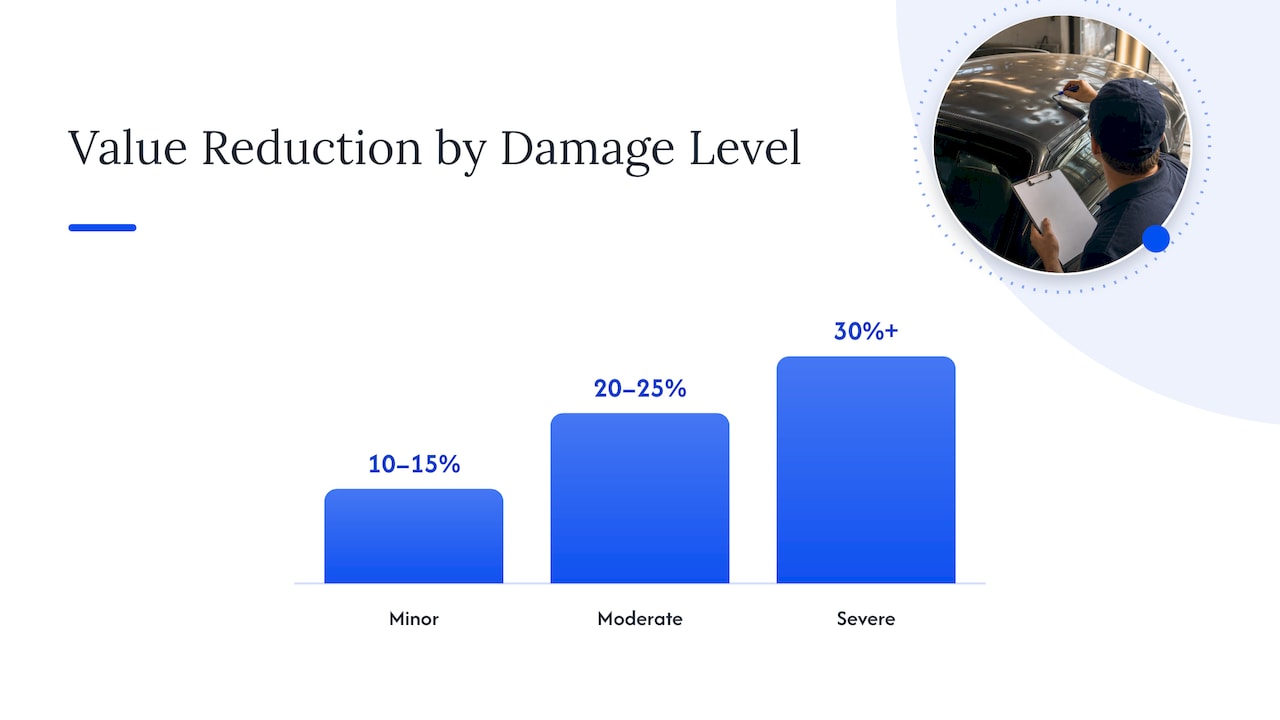
One hail damage resale guide breaks it into three tiers:
| Damage level | What it looks like | Typical value reduction |
|---|---|---|
| Minor | 20 to 40 small dents, quarter-sized or smaller, no paint cracking | About 10 to 15% |
| Moderate | Dents across all body panels, some paint cracking | About 20 to 25% |
| Severe | Large dents, extensive cracking, possible glass or trim damage | 30% or more |
The same source explains why dealers are tough on hail. They buy wholesale and sell retail, so they subtract the repair cost plus their margin, and they allow for the car sitting longer on the lot and for repairs that uncover more problems. The Hail-Tech guide adds that dealers often deduct about 1.5 times the actual repair cost from a trade-in offer.
That gap is why sellers feel lowballed. If a dealer’s number looks far below what you expected, our page on how to raise a low dealer trade-in offer walks through what to say and what to compare.
Document the damage before anyone looks at the car
Good documentation protects you in three ways. It supports an insurance claim, it makes your asking price defensible, and it gives a buyer an honest picture so the offer you get is the offer you keep.
Do it within the first day or two after the storm, while the weather record is easy to match:
- Photograph the entire vehicle. Include the VIN, the roof, hood, trunk and every side panel, plus close-ups of the worst dents and wide shots of overall condition. Lord of the Dings recommends this approach and notes the storm’s date and location.
- Add a size reference. DentAdvisor suggests date-stamped photos with a coin next to each dent, shot from two or three angles.
- Work panel by panel. Write down the dent count, size range and severity for each panel, and note any cracked paint.
- Separate old damage from new. Earlier door dings or scrapes are not hail damage. Photograph them separately so the offer reflects what actually happened.
- Check the car’s function. Note cracked glass, broken lights or mirrors, and whether it starts and drives. A non-running car is still sellable, but the buyer needs to know up front.
Keep the photos in one folder. You will use them for an insurance adjuster, for a cash quote and for your own records when you hand over the car.
Your options for selling a hail damaged car
There are four common routes. Which one fits depends on how much time you have, whether the car runs and how much hassle you want.
Dealer trade-in or hail buy-back event
Some dealerships run buy-back events after big storms. It is convenient if you are already buying another car there. The trade-off is that the dealer prices in repair cost, margin and slower resale, as described above, and the offer often ties to buying from them.
Private sale
A private listing can reach buyers who will take on a cosmetic project. It also means photographing the car, answering messages, meeting strangers, handling no-shows and managing the payment and paperwork yourself. Hail dents tend to draw bargain hunters, so expect repeated haggling.
Repair first, then sell
Paintless dent repair or body work can restore the look. It adds weeks and an upfront bill before you see any money. If you go this route, build a disclosure packet. DentPicks recommends an itemized repair order by panel, before and after photos from the same angles, claim details, the warranty document and the shop’s contact details.
Direct cash buyer
This is the route we built our service around. You describe the car, share your photos, get an offer, and a team comes to your location, inspects the car, handles the paperwork and pays you. It works for running and non-running cars alike, and it skips the repair bill, the listing and the strangers. Our Sell Your Car page starts the process.

What if the car doesn’t run?
Hail alone rarely stops a car from driving, but a storm that also shattered the windshield, flooded the cabin through a broken window or knocked out electrical parts can. A non-running car is still a car with value, and the pickup crew handles the towing logistics. Our guides on moving a non-running car and same-day pickup for a non-running car explain what to expect. For a broader look at pricing a damaged vehicle, see how to sell your damaged car fast and get fair cash.
Insurance claims, salvage titles and your state’s rules
This is the part that changes the most from state to state, so slow down here.
Did you file a claim? If you did, your insurer decides whether the car is repaired or declared a total loss. There is no universal formula. The Colorado Division of Insurance, for example, says no law sets a total-loss threshold, and it is an insurer business decision with each company using its own valuation method. Insurance.com reports that state thresholds range from 50% to 100% of value, with some states using formulas.
Could it get a salvage title? Rules differ. New York’s 75% figure is a DMV title-branding rule for vehicles 8 model years old or newer, not a rule telling insurers when to total a car. A few states go further and have a hail-specific brand. Wisconsin requires a ‘Hail damaged’ title brand on a vehicle under seven years old damaged only by hail when repair costs exceed 70% of fair market value, and the owner must disclose it when selling. Illinois allows owners of hail-only damaged vehicles to retain ownership by agreement in some cases rather than the car being treated as salvage.
If your insurer paid out a total loss and your car now has or may need a salvage brand, read our guide on how to legally sell a salvage title car, including how state rules for salvage titles vary. Call your state DMV or your insurer if you are unsure which brand applies to your car.

What to disclose to the buyer
Be straightforward. Tell the buyer about the hail damage, how many panels it affects, whether you filed a claim, whether the car was repaired and whether the title carries any brand. Written disclosure forms in many states cover flood, fire or hail damage history. North Carolina, for example, requires a damage disclosure statement for vehicles five model years old or newer when a single event such as a hailstorm cost more than 25% of fair market value to repair.
Will it show on a vehicle history report? It can. Insurers report claims to the data networks behind history reports, so a filed hail claim may be logged as a damage event. If the damage was never claimed and no shop reported it, a report may not show it. Either way, accurate disclosure up front prevents disputes after the sale, and a cash buyer who inspects the car in person sees the dents regardless of what a report says.
Paperwork for a clean sale
The Better Business Bureau lists the basics: put the agreed price in writing, sign over the title, complete a bill of sale with the VIN, sale price and both parties’ names, keep your insurance active until the buyer signs, and notify the DMV or file a release of liability if your state requires it. Signing over the title and notifying the DMV protect you from responsibility for the car afterward.
State details matter. Use whichever guide matches where you live:
- New York: NY car sale paperwork for private sellers, including the plates-before-insurance order.
- New Jersey: the three forms for an NJ car sale and the odometer disclosure.
- Connecticut: CT car sale paperwork.
On pickup day, our checklist of what to sign before the buyer drives away keeps you from leaving a signature or a form out.
Getting an offer that holds at pickup
Hail damage is visible, so there is no reason an offer should change at your driveway. A few habits keep it firm:
- Be exact in your description. Give the year, make, model, mileage, whether it runs, and the dent severity. Our guide on closing the gap in instant car offer accuracy shows which details move the number.
- Share your photos. They let the buyer price the real damage instead of padding for the unknown.
- Sort out title and odometer first. Our page on a guaranteed car offer explains the odometer and title surprises that trip up sellers.
- Have your ID, title (or documents for a no-title sale) and keys ready.
Our perspective
Most hail damage sellers come to us after a dealer’s number surprised them. The dealer is pricing in the repair, the margin and the months a dented car sits on a lot, and the seller is the one who absorbs it.
Our approach is simpler. We look at the car as it is, give you a number, and commit to paying that number at pickup. We send a team to you, we handle the paperwork, and the goal is cash in your hand within the hour. That is our own promise to sellers, and it is why we think a direct sale is the cleanest answer for a hail damaged car, running or not.
If your car has dents across the roof and hood and you don’t want to spend weeks on repairs or listings, start with a quote and a set of photos. That is usually all it takes.
Eric
Ready to sell your hail damaged car?
We buy cars, SUVs, trucks and vans in New York, New Jersey and Connecticut, running or not, with or without a title. Send us the details and your photos, get a guaranteed offer, and we pick the car up and pay you at pickup.

Start on our Sell Your Car page, or if you are in the city, see our Sell My Car NYC page.
FAQ
Is hail damage considered salvage?
Not automatically. A car is branded salvage when an insurer declares it a total loss under your state’s rules, and thresholds range from 50% to 100% of value. Most hail-damaged cars are repairable or sold with a clean title. A few states, such as Wisconsin, use a separate hail brand.
Does hail damage show up on CarFax?
It can, if an insurance claim or shop report was filed, because insurers feed data into history reports. Damage that was never claimed or reported may not appear. Disclose the damage yourself either way.
Should I fix the hail dents before selling?
You don’t have to. Repairs cost money and time, and a direct cash buyer prices the car as it is. If you do repair it, keep the repair order and before and after photos to show the next owner.
Can I sell a hail damaged car that doesn’t run?
Yes. A cash buyer can pick up a non-running car, tow it and pay on the spot. Tell the buyer upfront that it doesn’t start so the offer matches the car.
What paperwork do I need to sell?
You need the signed-over title, a bill of sale with the VIN, price and both names, and your state’s release of liability or DMV notice. Requirements differ for New York, New Jersey and Connecticut, so check the state guide above.
Sources
- Hail Damage & Car Resale Value: 2026 Guide, Hail-Tech PDR
- Hail Damage and Your Car’s Resale Value, Hail Protector
- How to Assess and Document Hail Damage, Lord of the Dings
- How to Document Hail Damage for Your Insurance Claim, DentAdvisor
- How to document repairs for a future buyer, DentPicks
- After a Hail Storm Insurance FAQs, Colorado Division of Insurance
- Totaled car insurance guide, Insurance.com
- New York Total Loss Law, Total Loss Toolkit
- Hail damaged title brand, Wisconsin DMV
- 625 ILCS 5/3-117.1, Illinois Vehicle Code
- Is It Illegal to Sell a Car Without Disclosing Problems?, LegalOverview
- Damage Disclosure Statement North Carolina, SnapClaim
- How to sell a car to a trustworthy, honest buyer, BBB