Selling a Car With a Broken Odometer: Rules and Steps
Yes, you can sell a car with a broken odometer. The law does not stop the sale. It requires you to tell the buyer in writing that the mileage on the dash is not reliable. Do that, and a dead cluster is a pricing issue, not a legal one. If you want it handled start to finish, we buy cars in New York, New Jersey and Connecticut, send a team to your location, give you a cash offer and take care of the paperwork, including the mileage statement.
This guide covers what federal and state rules say, which box to check on the title, whether fixing the odometer first pays off, how to word an ad and a bill of sale, and what to do about a side issue many sellers raise: peeling paint.
TL;DR
- A broken or inaccurate odometer does not block a sale, but you must disclose in writing that the reading is not the actual mileage.
- On the title or the New York MV-103 or New Jersey OS/SS-2 form, check the “not the actual mileage” box. Never certify a reading you know is wrong.
- Repairing is optional. If the mileage can’t be kept the same, federal law requires specific steps, so repair only with a shop that knows them.
- Peeling paint lowers the price but does not stop a sale. Disclose it and price accordingly.
- We pay the quoted price at pickup and handle the paperwork, including the odometer statement.
Table of Contents
- What the law requires when the odometer is broken
- Which box to check: New York and New Jersey
- Should you repair the odometer before you sell?
- How a broken odometer affects value
- Sell it step by step
- How to word the ad and bill of sale
- A note on peeling paint
- Why a direct cash sale suits this kind of car
- Get an offer for your car as it is
- FAQ
- Sources
What the law requires when the odometer is broken
Federal law is the starting point. Under 49 U.S.C. § 32705, anyone transferring ownership must give the buyer a written disclosure of the mileage registered on the odometer. If you know that reading differs from the miles the vehicle has actually traveled, you must disclose that the actual mileage is unknown.
The regulation behind it, 49 CFR 580.5, gets more specific. If you know the odometer does not show a valid mileage, or it is off by more than the normal calibration error, your statement must say the reading does not reflect actual mileage and should not be relied upon. A warning that a discrepancy exists must accompany it.
There is a narrow nuance for a completely dead unit. NHTSA’s Wedekind interpretation explains that you choose among three statements: the mileage is actual, it exceeds the mechanical limits, or it is not the actual mileage and should not be relied on. The only case where a transfer can happen without stating a reading is when the odometer has been destroyed and cannot give one. A cluster that is dark or frozen is not the same as a destroyed one, so most sellers should still complete the statement.
What if you are not sure the mileage is wrong?
Many owners only suspect a problem: the cluster flickers, the number stopped moving for a few months, or a previous owner replaced it. NHTSA’s interpretation 74-4.11 says that if you have good reason to believe the reading is off, you must tell the buyer in positive terms. If you are uncertain, decide whether there is a credible basis for treating the mileage as correct or incorrect. With good reason to think it is inaccurate, check the statement that the mileage shown is incorrect.
A practical way to apply this: compare the dash number with service records, past inspection stickers, emissions or inspection reports and old listings. If a record shows 142,000 miles in March and the odometer reads 96,000 today, you have your answer.
Vehicles exempt from the federal form
NHTSA says a vehicle is exempt from the written federal odometer disclosure if it is 20 years old or older, or a model year 2010 vehicle or older. State rules can still apply, and honest mileage information is still the safest approach in a sale.
Which box to check: New York and New Jersey
The federal wording shows up on every state form. The details are what trip people up.
New York
The New York DMV’s MV-103 form asks the seller to enter the reading exactly as it appears, leaving out tenths, and check one of three boxes: the reading reflects actual mileage, it exceeds mechanical limits (the odometer started over at zero), or it is not the actual mileage, with a warning that an odometer discrepancy exists. A broken odometer belongs in the third box.
For vehicles that need it, the DMV’s MV-82.1 instructions require an odometer statement for a model year 2011 or newer vehicle transferred within 20 years of manufacture. If the proof of ownership does not contain the statement, buyer and seller complete and sign that section of MV-103.
The DMV’s Chapter 3 guide adds a warning worth taking seriously: for a private sale, the seller completes and the buyer acknowledges by signature the correct statements, and the DMV will not accept a title where the statement is missing, wrong, or has been adjusted, erased or canceled. So no scribbles and no white-out. For a walk-through of the form, see our guide to odometer disclosure in New York and when to use MV-103.
New Jersey
The New Jersey MVC asks sellers for an accurate reading at the time of sale and says that if the actual reading is inaccurate, you must give an estimate of what it should be. The state’s Odometer Disclosure Statement (OS/SS-2) includes a checkbox certifying that the reading is not the actual mileage and should not be relied upon. It also notes that leaving the statement incomplete or giving false information can bring fines, imprisonment or both.
On the title side, the MVC’s sample form language states that knowingly making a false statement in title papers, or altering them, is a misdemeanor under New Jersey law. The takeaway is simple: the discrepancy box protects you. A false “actual mileage” certification is what creates exposure. Our page on filing the NJ odometer disclosure with OS/SS-2 shows the form step by step, and the NJ notary and 10 working day rules cover timing.
What a complete mileage disclosure includes
Per 49 CFR 580.5©, the disclosure goes on the title or reassignment document and carries:
- The odometer reading at transfer, with no tenths of miles
- The date of transfer
- Printed names and addresses of both seller and buyer
- The vehicle’s make, model, year, body type and VIN
- Your signature with your printed name
Should you repair the odometer before you sell?
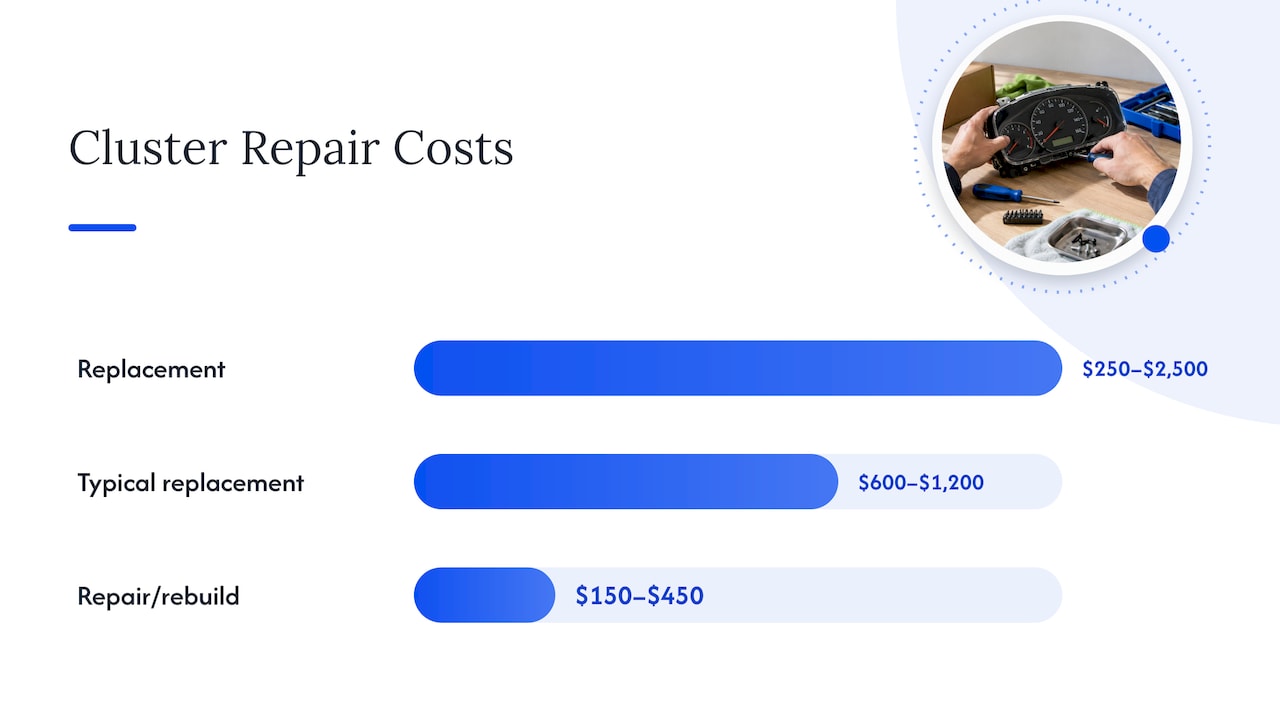
Often you don’t have to, but it is a fair question when the fix is cheap. A failed gauge cluster is usually the culprit. One 2026 cost breakdown puts instrument cluster replacement at $250 to $2,500, with most drivers paying $600 to $1,200 for the part, labor and programming. Repairing or rebuilding an existing cluster ran $150 to $450 in the same source. Late-model digital clusters sit at the top of the range.
The legal catch matters more than the price. Under 49 U.S.C. § 32704, a person may service, repair or replace an odometer if the mileage it registers stays the same. If it cannot stay the same, the odometer must be adjusted to read zero, and a written notice must be attached to the left door frame stating the mileage before the service and the date it was done. Skipping that notice is how an innocent repair turns into a problem.
A simple way to decide:
| Situation | Usual best move |
|---|---|
| Newer car, cheap cluster fix, good records | Repair, keep the receipt, disclose the repair history |
| Cluster replaced and the mileage reset | Keep the door frame notice, check “not the actual mileage” |
| Older car, repair costs more than the value gap | Sell as is with full disclosure |
| Car also has other problems or doesn’t run | Sell as is with full disclosure |
If the repair would cost more than the price difference it creates, skipping it is the practical choice. Our odometer discrepancy guide lays out the fix, report or sell options in more detail.

How a broken odometer affects value
Buyers discount uncertainty. LegalClarity notes that a branded title, whether marked not actual mileage or true mileage unknown, can cut resale value substantially, make lenders reluctant to finance the car and lead insurers to charge more. That is why a retail buyer financing a purchase will hesitate, and why this sale tends to go better with a buyer who pays cash and inspects the car in person.
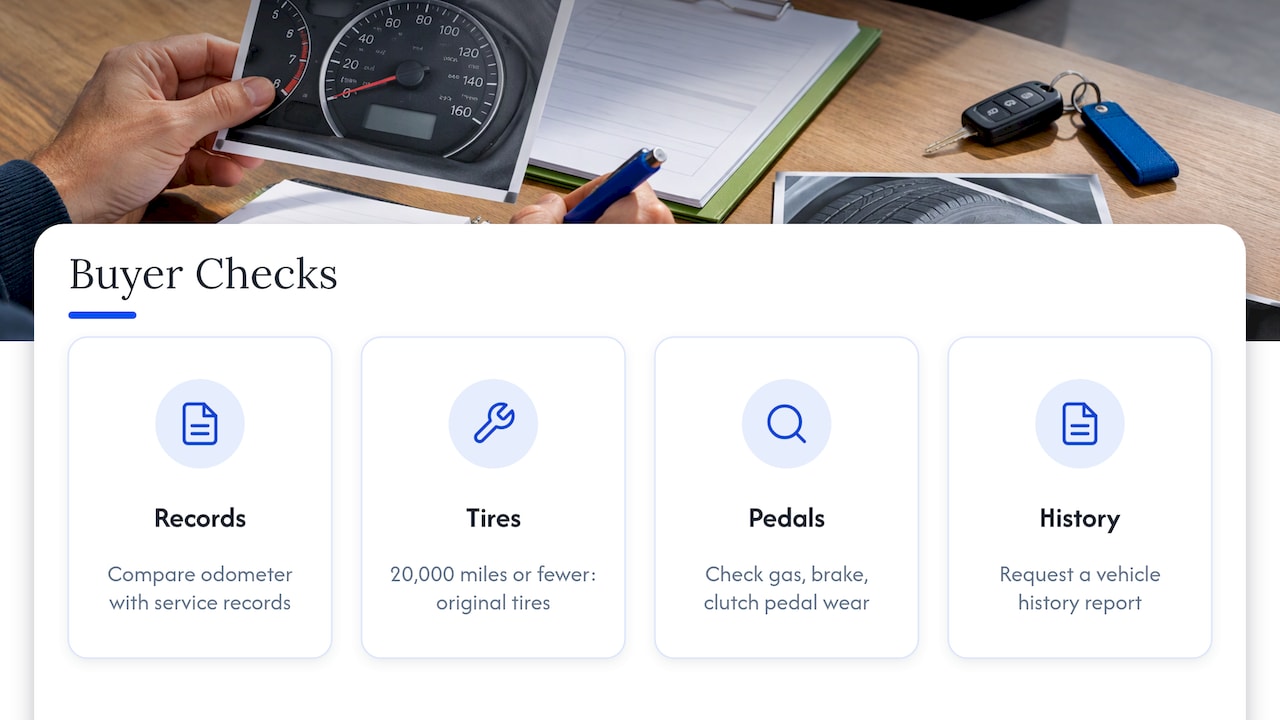
Buyers also have a standard checklist. NHTSA tells them to compare the odometer with maintenance and inspection records, look at the tires (a car showing 20,000 miles or fewer should have its original tires), check wear on the gas, brake and clutch pedals and request a vehicle history report. You can get ahead of this by gathering your service receipts, inspection reports and any repair invoice for the cluster in a folder before you list.
The more evidence you show for a likely mileage, the less of a discount a careful buyer applies. It still does not replace the written statement: even a well-documented estimate goes on the form as not the actual mileage.
Sell it step by step
- Confirm what is wrong. Is the display blank, frozen, or jumping, or was the cluster swapped? Pull records to estimate true mileage.
- Decide on repair. Use the table above. If a repair changes the reading, follow the zero reset and door frame notice rule.
- Gather the title. Complete the assignment in permanent ink with no erasures. If the title is missing, our guide on how to sell a car without a title in NY explains the options.
- Complete the odometer section honestly. Check “not the actual mileage” or the equivalent. Enter the displayed reading without tenths, or follow your state form’s instruction for a dead display.
- Write the bill of sale. One 2026 private-party sales guide recommends listing the parties, vehicle details, date, price, payment method, the exact odometer reading and mileage-status statement, known defects, any permitted as-is language and signatures. Keep copies of the title information, bill of sale and payment record.
- Get paid and hand over the car. Do it in person, with payment confirmed before you sign over the title.
If you sell to us, steps 3 through 6 are lighter. We handle the paperwork, and we commit to paying the stated price at pickup. Our pickup paperwork page shows what gets signed before the vehicle leaves.
How to word the ad and bill of sale
Keep it plain. Put the problem in the listing so nobody is surprised at the meeting. Wording that works:
- In the ad: “Odometer inoperative. Mileage unknown. Estimated 140,000 miles based on service records.”
- On the bill of sale: “Odometer reading is not the actual mileage and should not be relied upon.”
Many sellers use the abbreviation TMU, for true mileage unknown, in the listing and on the bill of sale. One consumer guide recommends this alongside checking the not-actual-mileage box on the title. Whichever phrasing you choose, the title statement is the one with legal weight. Never write “actual mileage” anywhere when you know it isn’t.
A note on peeling paint
Peeling paint is a separate issue that people often search together with the odometer. A car with peeling paint can be sold. It affects price, not legality. Mention it in your listing and photograph it.
Peeling usually means the clear coat has failed. One repair cost guide says the damage cannot be fixed by washing or waxing, only by repainting the affected panel. It lists small repairs at $300 to $800, per-panel repaints at $500 to $1,500 and a full repaint at $3,000 to $10,000, and says widespread failure could reduce value by $500 to $2,000 or more. For a car worth a few thousand dollars, a full repaint rarely pays for itself. Most owners do better to sell as is.
Why a direct cash sale suits this kind of car
A private buyer worries about the mileage, the paint and the paperwork all at once. A dealership trade-in will often come in low on a car that has a documented question mark. A buyer that purchases cars as they are does not need a clean dashboard to decide.
That is how we work. We buy cars, SUVs, trucks, vans and commercial vehicles in New York, New Jersey and Connecticut, running or not, with or without a title, including damaged and older vehicles. You get an instant guaranteed offer, we come to you, and payment is made the same day at pickup. Our aim is cash in hand within an hour of arrival.
Our view
Most sellers with a broken odometer assume the car is hard to sell. In our experience of how these sales are structured, the hard part is the paperwork, not the car. The statement is one checkbox, but a wrong one can cost a seller more than any price difference.
That is why we put the guarantee up front: the offer we state is the price we pay at pickup. When we arrive, we handle the title paperwork and the odometer section with you, so the mileage is described correctly the first time and the DMV or MVC has nothing to reject.
If your odometer is broken, your paint is peeling or both, you do not have to fix anything to get an offer. Our offers are built for cars as they are.
Eric
Get an offer for your car as it is
If you would rather skip the listing, the questions and the paperwork, get a guaranteed cash offer from Tri State Cash For Cars. We come to your location, pay the stated price at pickup and handle the paperwork, including the odometer statement.
Want to compare speed against price first? Our page on fast car sale options in NY, NJ and CT explains the trade-offs, and our six step selling process covers selling even with a loan.
FAQ
Is it illegal to sell a car with a broken odometer?
No. What is illegal is giving a false mileage statement or hiding that the reading is wrong. Federal law requires you to disclose in writing that the actual mileage is unknown when you know the reading differs from the miles traveled.
What do I check on the title if the odometer doesn’t work?
Check the box saying the reading is not the actual mileage, with the discrepancy warning. New York’s MV-103 and New Jersey’s OS/SS-2 both include it. Do not erase or overwrite entries, because the New York DMV rejects adjusted titles.
How much does it cost to fix an odometer?
Fixing it usually means repairing or replacing the instrument cluster. One 2026 estimate lists $150 to $450 for a repair and $250 to $2,500 for replacement, with most drivers paying $600 to $1,200. If the mileage can’t stay the same, federal law requires a reset to zero and a door frame notice.
Can I sell a car with peeling paint?
Yes. Peeling paint lowers the price but is not a legal barrier. Photograph it, mention it in the listing and price for it. A full repaint often costs more than the value it adds.
Will a broken odometer lower my car’s value?
Usually, yes. Buyers discount mileage they can’t verify, and financing can be harder. Service records and inspection reports help. A direct cash buyer who inspects the car in person is often the simplest route.
Sources
- 49 U.S.C. § 32705
- 49 CFR 580.5
- NHTSA Wedekind interpretation
- NHTSA interpretation 74-4.11
- NHTSA Odometer Fraud
- New York DMV MV-103
- New York DMV MV-82.1
- New York DMV Chapter 3: Owning a Vehicle
- NJ MVC Transferring Vehicle Ownership
- NJ MVC Odometer Disclosure Statement OS/SS-2
- NJ MVC sample title statement form
- 49 U.S.C. Chapter 327, including § 32704
- Instrument cluster replacement cost in 2026
- LegalClarity on mileage rollback and branded titles
- Private-party vehicle sales guide
- Understanding the legal side of a car listing
- What clear coat does and when a car needs it