Car Sale Taxes in NY: What Sellers and Buyers Owe
If you sell a car in New York, the sales tax is normally the buyer’s bill, not yours. The buyer pays it at the DMV when registering the vehicle, based on the price paid and the rate where the buyer lives. Your job as the seller is to document the sale correctly, so the tax is calculated on the real price and the car is off your name.
That is the short version. Below is the longer one: who owes what, how the math works, when the IRS cares, and where sellers get tripped up.
TL;DR
- In a private or cash sale, the buyer pays New York sales tax at the DMV. The seller does not collect or remit it.
- The rate depends on the buyer’s county or city, from about 7% in some rural counties to 8.875% in New York City.
- Selling a personal car for less than you paid usually means no federal capital gains tax, and you cannot deduct the loss.
- A $1 “sale” does not dodge tax. The DMV can assess tax on book value.
- Remove your plates and keep copies of the bill of sale. Those protect you more than any tax rule does.
Table of Contents
- Who pays sales tax when you sell a car in New York
- How much tax the buyer pays, with real numbers
- The $1 sale and other tax myths
- Do you owe income tax or capital gains tax on the sale?
- Private sale vs. trade-in: the tax credit you give up
- What the seller actually has to do
- Special cases that change the paperwork
- Our perspective: tax anxiety is mostly paperwork anxiety
- Selling for cash without the tax and paperwork headache
- FAQ
- Sources
Who pays sales tax when you sell a car in New York
New York taxes the purchase, and the purchaser pays. Sales tax on a vehicle bought from a private party is due at the time of registration at a DMV office, and the buyer files a Statement of Transaction (Form DTF-802) so the state can calculate it. A DTF-802 walkthrough explains that the form tells the DMV how much was paid so the correct tax can be collected on private-party sales and gifts.
So if you list a 2016 sedan and a neighbor buys it, you do not add tax to the price and you do not send anything to Albany. What you owe on your side is accurate paperwork.
The same logic applies when you sell to a cash car buyer. The buyer takes on the registration or resale steps and the tax consequences that come with them. What you want from that buyer is a written price, a signed bill of sale and a clean title transfer.
How much tax the buyer pays, with real numbers
New York State’s rate is 4%. Counties and cities add their own share, and the combined rate runs from 7% in rural counties to 8.875% in New York City. The state’s own publication lists 8.875% for NYC and 8.625% for Nassau and Suffolk as of early 2025. Rates change, so check the current rate for the buyer’s address before you quote a figure to anyone.
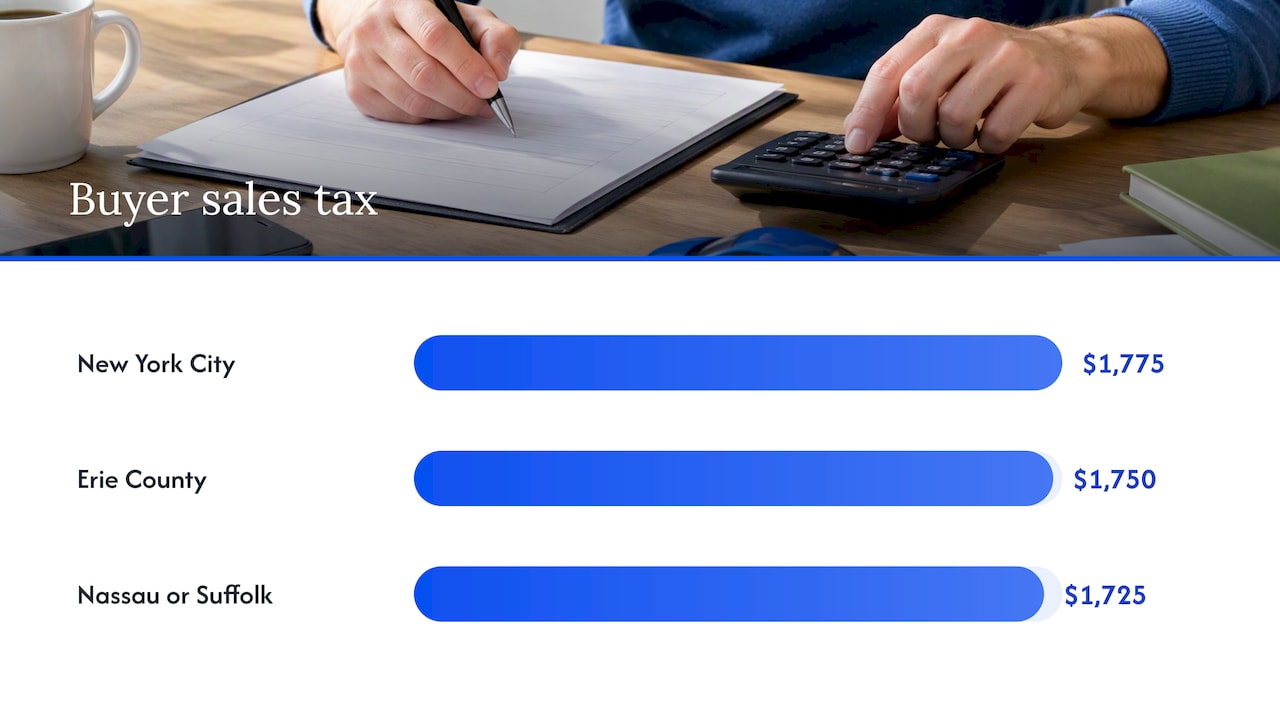
Here is what a $20,000 sale looks like at three rates (our arithmetic, using the rates above and a 8.75% rate reported for Erie County):
| Buyer lives in | Combined rate | Tax on $20,000 |
|---|---|---|
| New York City | 8.875% | $1,775 |
| Erie County | 8.75% | $1,750 |
| Nassau or Suffolk County | 8.625% | $1,725 |
That answers the question people often type: sales tax on a $20,000 car in New York is roughly $1,700 to $1,800 in the most populated areas, and the buyer pays it.
The buyer’s residence sets the rate
The rate follows the buyer’s home, not the seller’s driveway. The Tax Department’s guidance on motor vehicle sales notes a special rule for vehicles, different from the general rule that tax is set where property is delivered. Sellers sometimes tell buyers to use the seller’s county or a ZIP code. That causes wrong payments and rejected registrations, so point the buyer to the state’s rate lookup by address.
The price on paper must be the real price
Tax is based on what was paid, but the DMV can look at the vehicle’s value. One DMV-focused guide says the tax uses the purchase price or the clean retail value the DMV determines, whichever is higher. A suspiciously low number on a bill of sale does not protect anyone and can cost the buyer more later.
The $1 sale and other tax myths
“I’ll sell it for $1 and skip the tax.” It does not work. If a sale is below fair market value, the DMV can assess sales tax on book value. Real exemptions exist for gifts between a spouse, parent, child, stepparent or stepchild, documented on Form DTF-802. A friend, cousin or coworker does not qualify.
“The seller’s county decides the rate.” No. See above: the buyer’s residence does.
“If I sell, my registration and insurance end automatically.” They do not. We cover that in the plates section below, because it costs sellers real money.
“A car sale is taxable income.” Usually not, as the next section explains.
Do you owe income tax or capital gains tax on the sale?
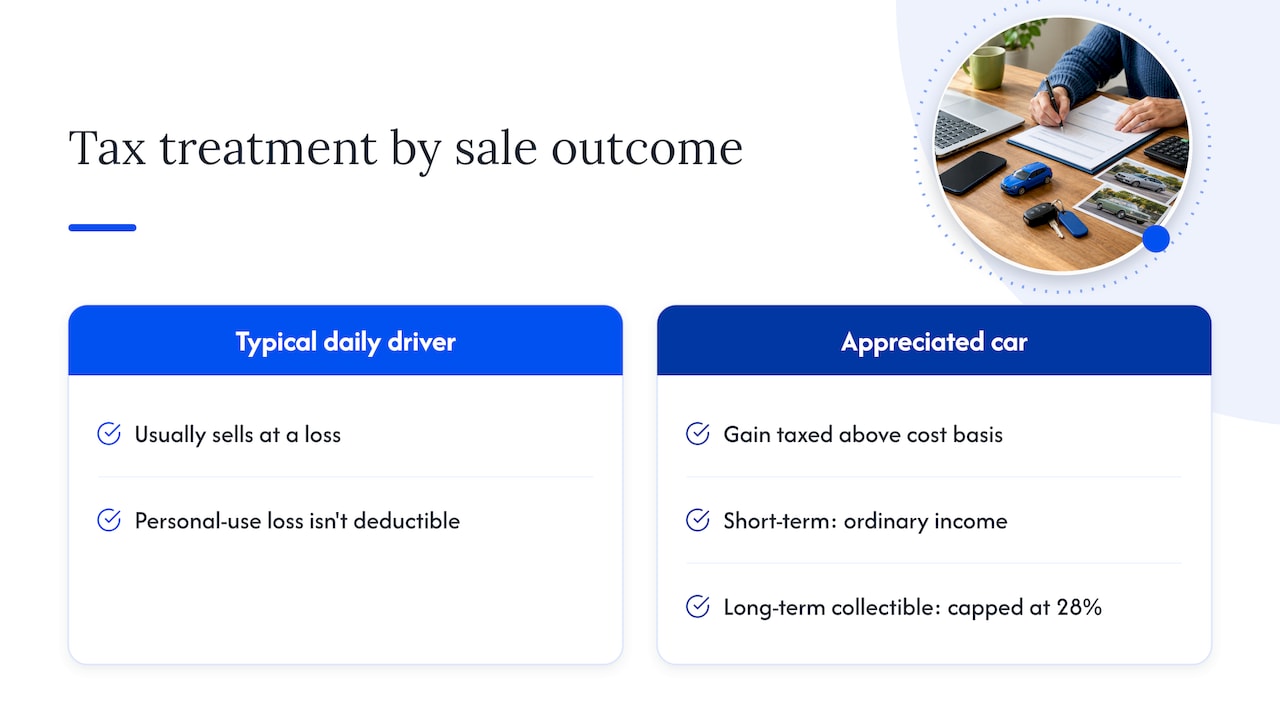
For most people, no. Federal capital gains tax applies only if you sell for more than your cost basis, which is the purchase price plus the cost of capital improvements. Daily drivers lose value, so the typical sale is a loss, and that same source notes a loss on a personal-use vehicle cannot be deducted.
The exception is a car that appreciated: a classic, a collectible, a limited-run model. In that case the gain is the sale price minus your adjusted basis. The same source says short-term gains are taxed as ordinary income and long-term gains on collectibles are capped at 28%. If you think you are in that category, keep your purchase records and restoration receipts, and ask a CPA or an enrolled agent about how to report it. Do not guess on the IRS.
If you sold the car as part of a business, depreciation can change the math. That is a question for your accountant, not a rule of thumb.
Private sale vs. trade-in: the tax credit you give up
There is one tax-related reason sellers choose a dealer trade-in. When you trade in toward another car, New York subtracts the trade-in value from the price before tax is applied. On a $15,000 trade-in at 8.875%, that is about $1,331 in tax you do not pay (our arithmetic). Selling privately or to a cash buyer does not carry that credit.
It only matters if you are buying another car from a dealer at the same time. The honest comparison is:
- Take the trade-in offer and add the tax savings.
- Take the best cash or private offer.
- Compare the totals, not the headline numbers.
If you are not buying a replacement from a dealer, the credit is irrelevant and you should compare offers on price, speed and hassle.
What the seller actually has to do
Tax is the buyer’s problem. These steps are yours.
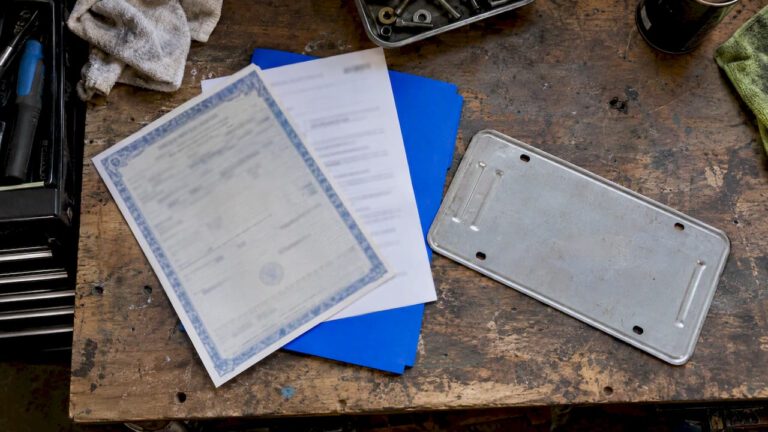
Complete the bill of sale
Use a written bill of sale with the vehicle details, price, date and both parties’ names. Our guide to MV-912, DTF-802 and same-day cash sales walks through which form does what.
Sign the title correctly
Mismatched signatures and missing disclosures are among the common reasons for DMV rejection, according to one title services write-up. Read our notes on title transfer forms and notarization before you sign anything. If a previous owner skipped the paperwork, see how to fix a jumped title. If you cannot find the title at all, here is how to sell a car without a title in NY.
Complete the odometer disclosure
Odometer statements trip people up. We explain when to use MV-103 so the paperwork is not bounced.
Take your plates and stop the insurance clock
In a private sale the seller removes the plates and the registration and inspection stickers. Selling does not cancel registration or insurance on its own, and failing to surrender plates can leave insurance obligations running. Do not cancel insurance before the plates are dealt with. Our page on private-seller paperwork and the plates-before-insurance order covers the sequence.
Keep your records
Keep a copy of the signed bill of sale, the title page you signed, a photo of the odometer and the date and time of the handover. If a ticket or toll bill shows up later, those papers show when the car left your hands.
Special cases that change the paperwork
- Expired registration. You can still sell. See selling with expired registration in NY.
- Out-of-state vehicle. If you just moved and the car has another state’s title, our guide to registering an out-of-state vehicle in NY explains your 30-day window and the sell-instead option.
- Company vehicle. Fleet and business sales have their own paperwork. See selling a company car in NY.
- Gifts to family. Use the documented family exemption, not a $1 sale.
Our perspective: tax anxiety is mostly paperwork anxiety
People ask us about taxes before they ask about price, and the worry is usually misplaced. The seller’s tax exposure on an ordinary used car in New York is small. The costly mistakes are procedural: a title signed in the wrong place, plates left on the car, insurance cancelled too early, a bill of sale that shows a number that does not match what changed hands.
When we buy a vehicle, we send a team to your location, make a cash offer, guarantee that price at pickup and handle the paperwork with you. Our aim is that you hand over the keys and the documents are done right, so nothing comes back to you later. We cannot give tax advice, and for anything involving a gain on a collectible, an accountant is the right call. For everything else, accurate documents and a written price protect you.
— Eric
Selling for cash without the tax and paperwork headache
If you want a fast sale with the paperwork handled, Tri State Cash For Cars buys cars, SUVs, trucks and vans across New York, New Jersey and Connecticut, running or not, with or without a title. We pay the quoted price at pickup. If you want to know what to expect, read our six-step process, even with a loan, or prepare your car for sale to get the strongest offer. In the city, start with our page for selling your car in Brooklyn.
FAQ
Do you pay sales tax on a used car in New York?
Yes, the buyer does. It is paid at the DMV at registration, even when the car comes from a private seller. The seller does not collect it.
Is New York sales tax 8%?
Not exactly. The state rate is 4%, and the combined rate depends on the county or city. It ranges from about 7% to 8.875% in New York City. Check the rate for the buyer’s address.
Can I avoid tax by selling my car for $1?
No. When the price is below fair market value, the DMV can assess tax on the vehicle’s book value. The tax exemption is for documented gifts between immediate family members, not for friends.
Do I owe capital gains tax if I sell my car?
Usually not. Most cars sell for less than their cost basis, so there is no gain, and you cannot deduct the loss on a personal vehicle. A profitable sale of a classic or collectible can be taxable, so talk to a tax professional.
Sources
- New York DMV Fee Calculator 2026
- NY Tax Department Publication 718
- Motor Vehicles, Vessels, and Trailers (NY Tax Department)
- How to Fill Out New York Form DTF-802
- Used Car Title Transfer Guide for West Seneca
- Gift a Car in NY Without Paying Too Much Tax
- Do You Pay Capital Gains Tax on a Car Sale?
- How To Sell Your Car in New York (CarGurus)