Can You Sell a Car Without Insurance? NJ and NY Rules
In most cases, yes. Many states do not ask for proof of insurance just to transfer a title. The catch is that the car’s status while it is still registered in your name matters more than the sale itself. In New Jersey and New York, a registered car is expected to be insured, so the order in which you sell, remove plates and cancel coverage decides whether you pay a penalty or walk away clean.
This guide explains how that works for sellers in the tri-state area, what to do when your policy has already lapsed, and how to sell a car that cannot be driven to a buyer.
TL;DR
- Selling does not usually require you to hold insurance, but a car registered in your name generally must be insured until the plates come off.
- In New Jersey, plates must be removed and surrendered or transferred within five days of the sale, and the title must be transferred within 10 working days to avoid a $25 penalty.
- In New York, the DMV’s rule is “no insurance, no plates”: if coverage ends, you surrender the registration and plates.
- Never let a stranger test-drive an uninsured car. If something goes wrong, you may pay out of pocket.
- If the car is parked, unregistered or uninsured, a pickup sale means nobody has to drive it anywhere.
Table of Contents
- The short answer: selling and insuring are two separate questions
- What counts as “without insurance”?
- New Jersey: what sellers need to know
- New York: “no insurance, no plates”
- Why you should not cancel insurance before the sale closes
- Test drives are where uninsured sellers get hurt
- Selling a car you cannot or should not drive
- Mistakes that cost uninsured sellers money
- A quick checklist for any uninsured sale
- Perspective: why the paperwork order matters more than the policy
- Get a cash offer without driving the car anywhere
- FAQ
- Sources
The short answer: selling and insuring are two separate questions
Two things get mixed up when people search this topic.
- Transferring ownership. Many states do not require the seller or buyer to show insurance to move a title. HiRoad notes that most states do not ask for proof of insurance to transfer a title, but that rules differ from state to state.
- Owning a registered car. Nearly every state requires owners to carry at least minimum liability insurance, even for a short period of ownership.
So the sale paperwork is rarely what blocks you. What can cost you money is the time between your insurance ending and the car leaving your name. A few states are stricter. Florida, for example, tells private sellers that keeping insurance so the title can be transferred is the seller’s responsibility. That is why you should always check your own state’s motor vehicle agency before you act.
What counts as “without insurance”?
The right answer depends on which of these describes you.
| Your situation | What it usually means for the sale |
|---|---|
| Policy is active, car is registered | Simplest case. Keep the policy until the title is signed and plates are handled. |
| Policy lapsed, plates still on the car | You are exposed to penalties every day the plates stay registered. Act quickly. |
| Policy cancelled, plates already surrendered | Usually the cleanest uninsured position, because the car is no longer registered to you. |
| Car was never registered or registration expired | Often still sellable. See our guide to selling a car without registration. |
New Jersey: what sellers need to know
New Jersey is strict about insurance on registered vehicles. The MVC states that every registered New Jersey vehicle needs liability, personal-injury protection and uninsured-motorist coverage. Driving without proof of insurance can bring fines, community service, license suspension and insurance surcharges.
That does not stop you from selling. It means you should treat the plates as the live issue.
Plates come off at the sale
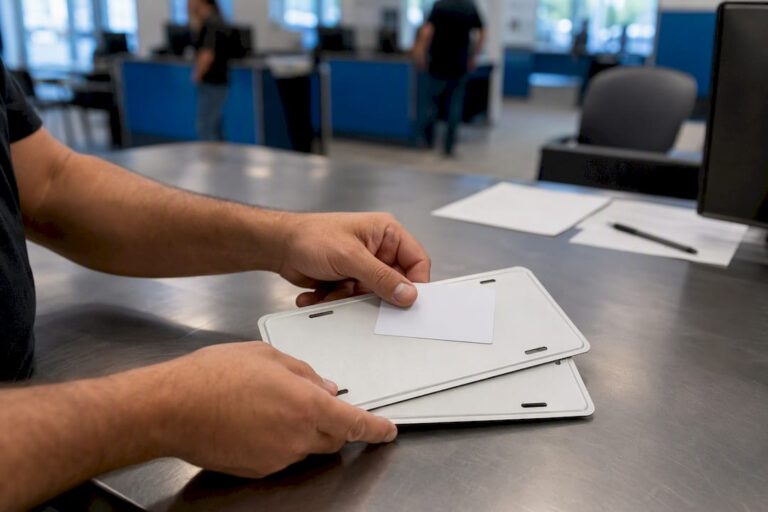
The seller removes the plates and either surrenders them to a motor vehicle agency or moves them to another vehicle. NJ plates can go to another vehicle you own, but never to another owner. Under the state’s administrative code, plates must be removed and surrendered within five days after an ownership transfer when you are not registering another vehicle for the unexpired period. Our walkthrough on removing plates after an NJ sale covers the transfer-or-surrender choice in detail.
Proof that you no longer own the car
If your insurance ended and the state’s uninsured-motorist system flags you, the way out is documentation. The MVC’s uninsured motorist FAQs explain that if you no longer own the vehicle, you submit proof such as the plate receipt you get when you surrender the plates. Keep that receipt, along with your bill of sale.
The paperwork itself
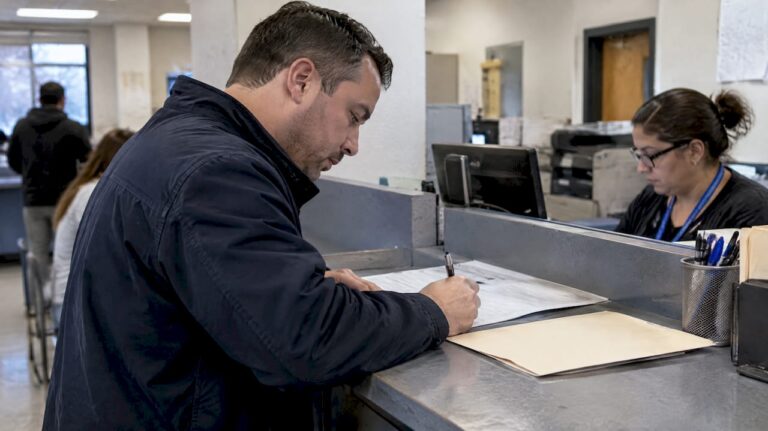
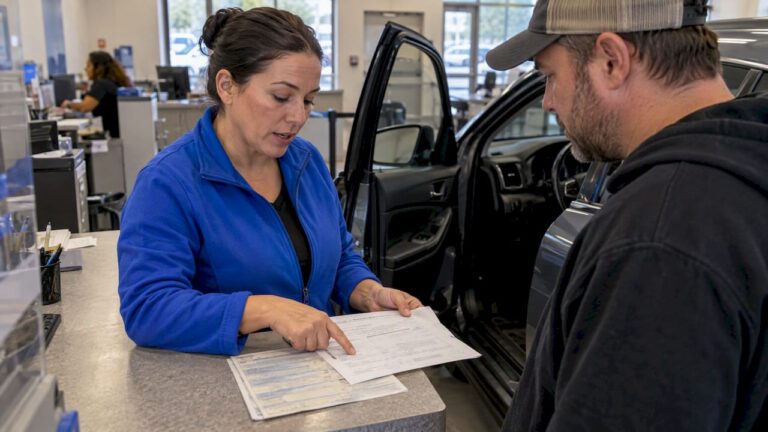
Per the NJ MVC, the seller signs the back of the title and gives the buyer the assigned title plus a bill of sale. The bill of sale should show the buyer’s name and address, the sale date, the odometer reading and the price. The buyer then goes to an MVC agency to transfer the title. The title should be transferred within 10 working days to avoid a $25 penalty.
For help with each form, see three forms for NJ car sale paperwork, the six-step title transfer guide and the explainer on notary rules for NJ sales. If you are weighing a private sale, our private sale guide for NJ walks through it.
New York: “no insurance, no plates”
New York puts it bluntly. A vehicle registered in New York must stay covered by liability insurance. If you cannot keep coverage, the DMV says you must immediately surrender the registration and plates, which it sums up as “no insurance, no plates.”
The cost of ignoring it adds up. According to LegalClarity’s summary of DMV penalties, a lapse while plates are still registered brings civil penalties that start at $8 per day, and a 60-day lapse comes to $540. A 90-day lapse reaches $960. Check the DMV page above for current figures before you rely on them.
The practical order for a New York seller with a lapsed policy:
- Stop driving the car. Without coverage, it should not be on the road.
- Decide whether you will sell within days or whether you need to surrender the plates now.
- Complete the bill of sale and ownership documents. Our guide to New York sale paperwork explains why plates come before insurance, and the MV-912 and DTF-802 guide covers the forms.
- Only after the plates are handled, cancel any remaining coverage.
Why you should not cancel insurance before the sale closes
If your policy is still active, resist the urge to cancel it the moment you list the car. Progressive advises keeping coverage while the car remains registered in your name, even if it is parked, because cancelling can lead to fines, suspension or a lapse on your record. The Texas Department of Insurance makes the same point from the liability side: it says you cannot simply cancel before selling because you could be responsible for damage that happens while the car is still in your name, including during test drives.
A safe order of operations:
- Keep the policy active until the title is signed over and the plates are off.
- Complete the bill of sale and any notice of sale your state requires.
- Contact your insurer to cancel or remove the vehicle.
- If you will have no other car, ask about a non-owner policy so you do not create a gap in coverage history. Progressive suggests considering one.
Test drives are where uninsured sellers get hurt
A private sale invites strangers behind the wheel. In New Jersey, drivers must show proof of insurance when operating a vehicle, and an uninsured car on the road can trigger the penalties described above.
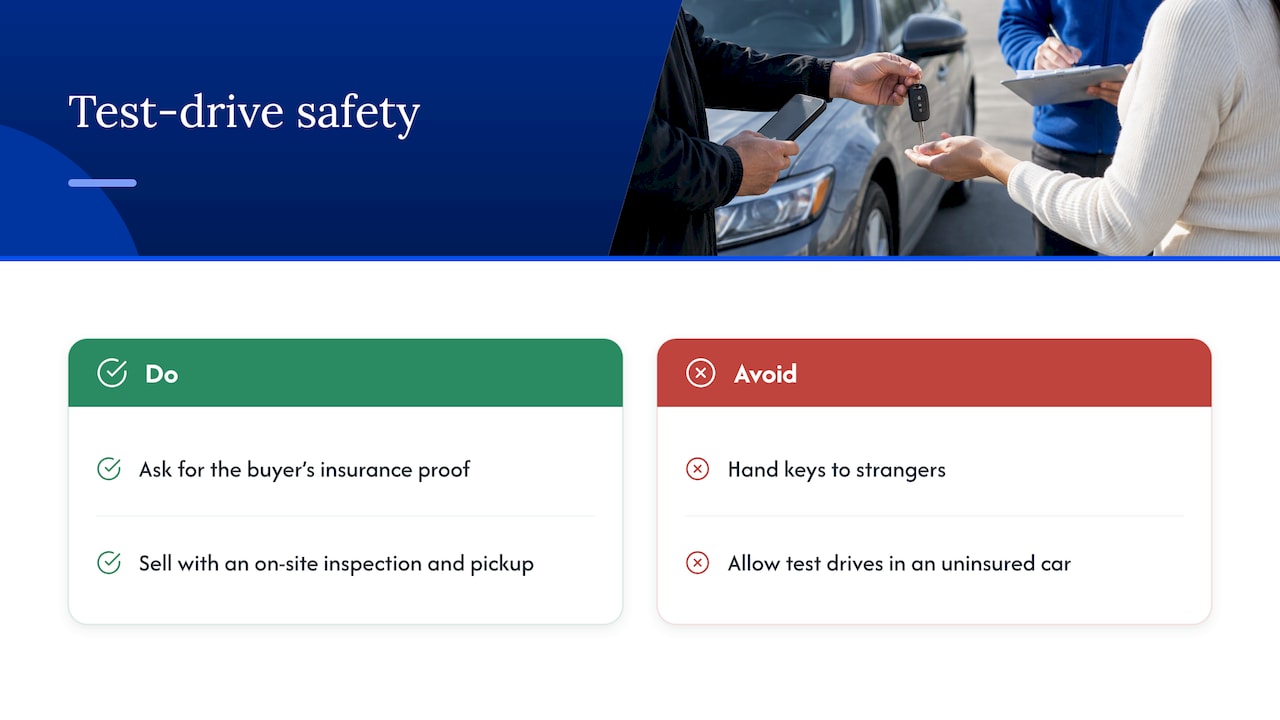
Who pays if a prospective buyer crashes? Progressive explains that in a private sale the seller’s policy typically covers a permissive driver, and that sellers can ask for the buyer’s proof of insurance. Without any policy, the seller may have to pay out of pocket for damage and could face fines or other consequences.
If your car is uninsured, the safest answer is not to hand over the keys to strangers at all. Sell to a buyer who inspects the car where it sits and does not need a test drive. That is exactly how a pickup sale works.
Selling a car you cannot or should not drive
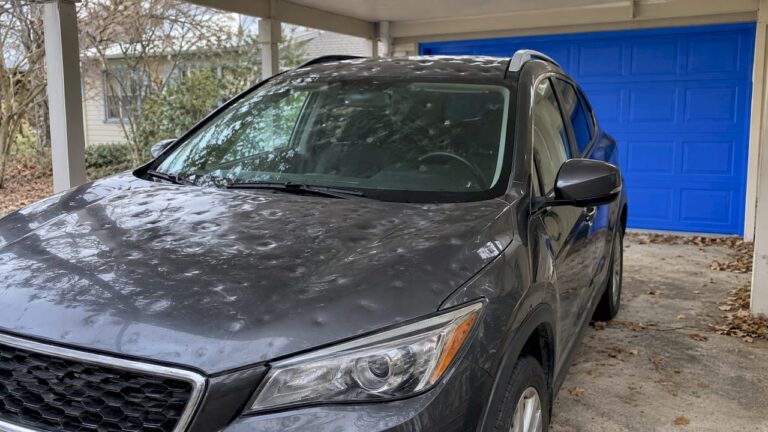
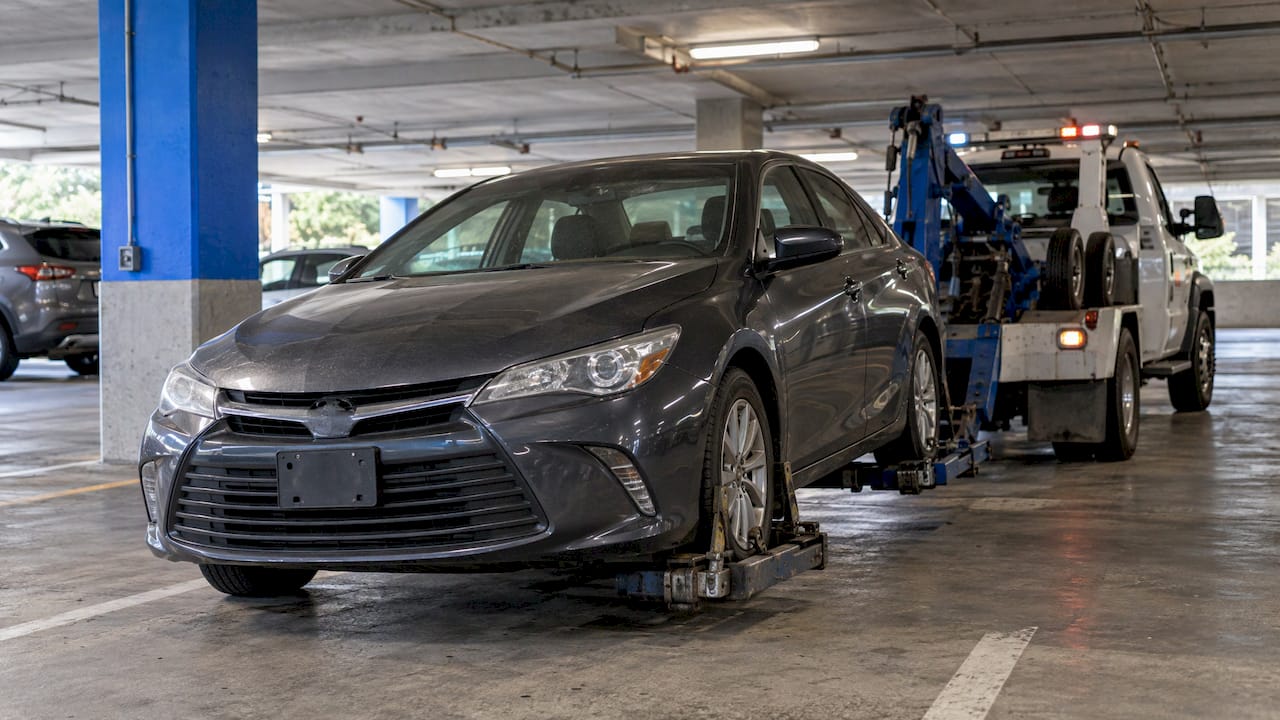
A lapsed policy, expired registration or a dead battery all lead to the same problem: how does the car get to the buyer? Driving it is the wrong answer. You risk fines, an accident with no coverage and a car that is not legal to be on the road.
With a pickup sale, the buyer comes to you. Our team arrives where the car is parked, in a driveway, garage, street spot or office lot, gives you a cash offer, handles the paperwork and takes the vehicle. That works for running and non-running cars, and for cars with or without a title. Our page on how selling from home works shows the steps from request to handoff.
Before pickup, have these ready:
- Your driver’s license or other photo ID.
- The title, if you have it. If not, tell us when you ask for the offer so the paperwork can be planned.
- Keys, if you have them.
- The odometer reading and any loan payoff details.
Our pickup paperwork checklist lists what is signed before the buyer drives away, and the guaranteed offer guide explains how to avoid odometer and title surprises.
Mistakes that cost uninsured sellers money
Leaving plates on a sold car. In New Jersey, plates stay your responsibility until they are surrendered or transferred. Remove them at handoff.
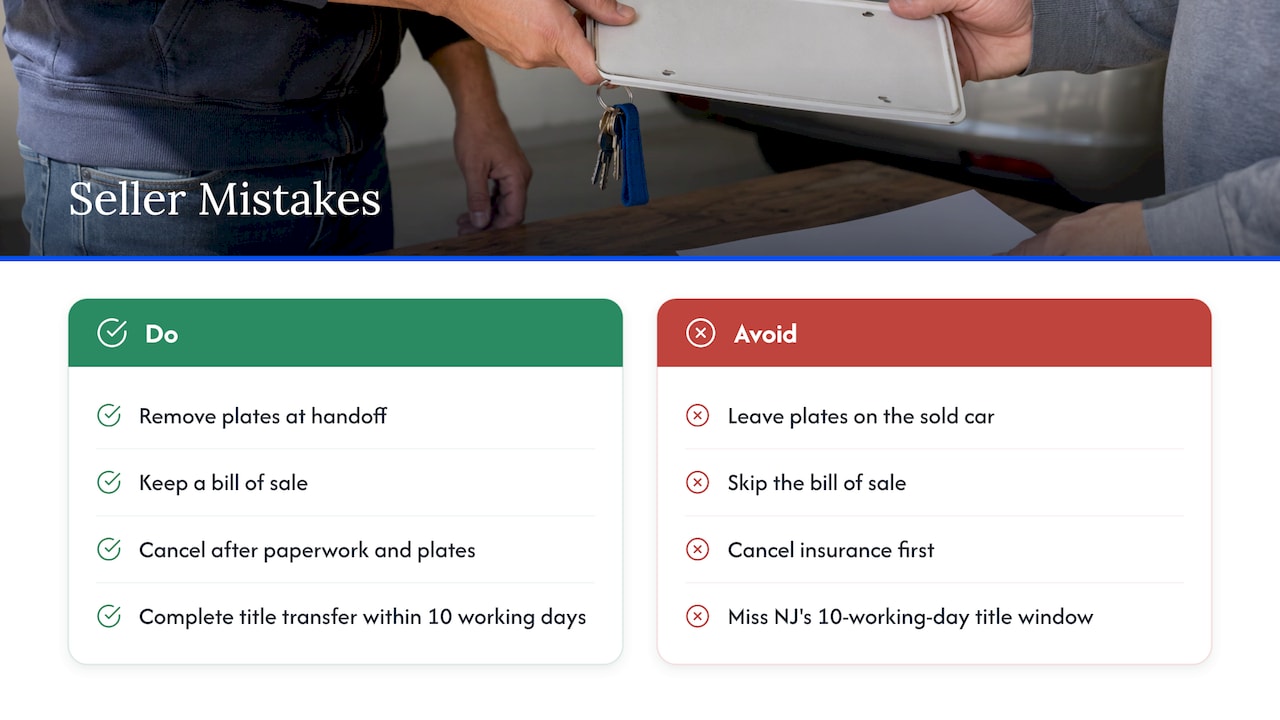
Skipping the bill of sale. It is your proof of when ownership changed, the date, the price and the odometer reading. Without it, a ticket or toll bill after the sale can land on you.
Cancelling insurance first. Cancel coverage after the paperwork and plates are done, not before.
Letting the title window slip. In New Jersey, the buyer’s 10 working days run from the sale. Your own car sale tax guide explains why that window matters for most sellers.
Taking a dealer’s low number because the car is a hassle. If a trade-in offer is lower than you expected, see how to raise a low dealer offer before you accept.
A quick checklist for any uninsured sale
- Confirm whether the car is still registered in your name.
- Do not drive it. Arrange pickup or a tow.
- Gather the title, ID and loan information.
- Sign the title and complete a bill of sale with the buyer’s details, date, price and odometer reading.
- Remove the plates, then surrender or transfer them, and keep the receipt.
- Cancel or adjust your insurance last.
- Keep copies of everything for your records.
Perspective: why the paperwork order matters more than the policy
Most sellers who call us about an uninsured car are worried about the wrong thing. They think the sale is blocked. Usually it is not. What hurts them is the days between a lapse and the plates coming off, and the risk of a stranger driving a car with no coverage behind it.
That is why we built our service around pickup. We come to the car, give an offer, and commit to paying the quoted price at pickup. We handle the paperwork, so the order of signatures, plates and receipts does not become your problem. For many sellers, cash arrives within an hour of the handoff.
If you are unsure what your car needs, ask before you move it. A short conversation up front is cheaper than a penalty later.
Eric
Get a cash offer without driving the car anywhere
If your car is uninsured, parked, damaged or just more trouble than it is worth to list privately, we can help. Tri State Cash For Cars buys cars, SUVs, trucks and vans in New York, New Jersey and Connecticut. We come to you, make a guaranteed offer, handle the paperwork and pay at pickup.
Start on our Sell Your Car page and tell us about the vehicle. In New York City, our NYC page has local details.
FAQ
Can you sell a car without insurance in New Jersey?
Usually yes, because a title transfer does not by itself depend on the seller holding a policy. However, a car registered in New Jersey must carry liability, PIP and uninsured-motorist coverage, so remove and surrender the plates promptly and keep the receipt as proof you no longer own the car.
Can I sell a car privately without insurance?
It is possible, but risky. Without a policy, you could pay out of pocket if a buyer damages the car on a test drive. A sale where the buyer inspects the car in place, with no test drive, removes that exposure.
Do I need insurance to sell a car that does not run?
Not to hand it over to a buyer who picks it up. The issue is registration: if the plates are still active in your name, your state may expect coverage until they are surrendered. Check with your state’s motor vehicle agency.
When should I cancel my insurance after selling?
After the title is signed over, the bill of sale is done and the plates are removed or surrendered. Progressive recommends keeping coverage active until the title is signed and the buyer registers the vehicle, then contacting your insurer.
What happens if my insurance lapsed before I sold?
In New York, the DMV treats a lapse with plates still registered as an insurance violation and you should surrender the plates. In New Jersey, surrender the plates and keep your plate receipt. Either way, act as soon as you notice the lapse.
Sources
- Can You Transfer a Car Title Without Auto Insurance? (Experian)
- Can You Transfer a Car Title Without Insurance? (HiRoad)
- Can I Buy a Car and Sell It Right Away (LegalClarity)
- Consumer Traps & Tips (Palm Beach County)
- NJ MVC: Insurance Requirements
- NJ MVC: Transferring Vehicle Ownership
- N.J. Admin. Code 13:21-5.10
- NJ MVC: Uninsured Motorist Enforcement FAQs
- NY DMV: Insurance Lapses
- How to Cancel Vehicle Registration and Surrender Plates (LegalClarity)
- Texas Department of Insurance: Insurance when selling a vehicle
- Progressive: When to Cancel Insurance After Selling a Car
- Progressive: Do You Need Insurance to Test Drive a Car?
- Progressive: How to Sell a Car Privately