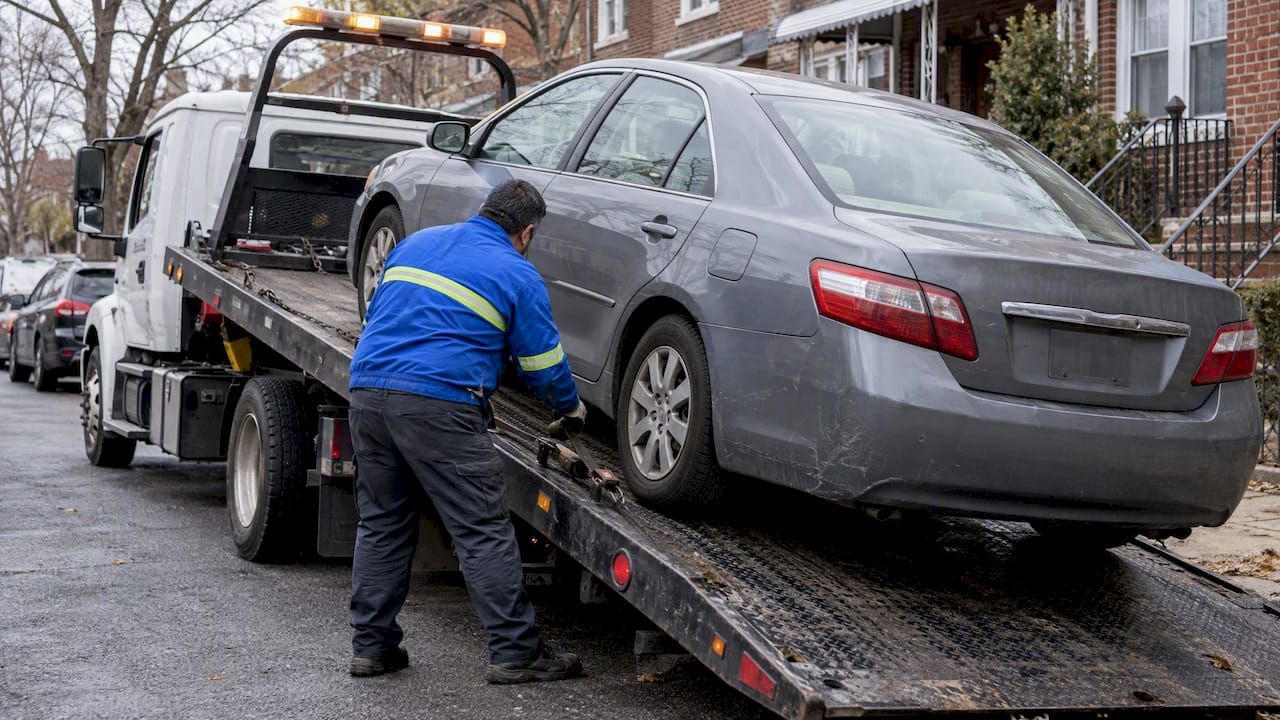
Sell Your Car in NY With Expired Registration? Cash Buyers Tow It
An expired registration does not by itself stop a private sale in New York. NY DMV says the sale rests on proof of ownership, usually the signed title, plus a completed Vehicle Bill of Sale (MV-912). The buyer titles and registers the car afterward. Pull the plates at the handoff, and do not let anyone drive the car away on expired ones.
TL;DR:
- For 1973 and newer vehicles, transfer the original signed title; older vehicles may use transferable registration, since a bill of sale alone proves no ownership.
- Remove the plates and windshield sticker before handoff, tow the car instead of driving it, and keep insurance active until the plates are surrendered.
- If ownership documents are missing, seek a duplicate title or acceptable DMV proof before promising an immediate sale; missing paperwork can delay the buyer’s transfer.
- Buyers apply for title and registration, pay sales tax and fees, plus a $50 title fee when the title is not in their name.
- If a lien remains, provide the original title with the original lien release; obtaining a replacement title without a lien can take 60–90 days.
Table of Contents
- What documents does the DMV accept when registration is expired?
- How do you sell the car step by step?
- What if your title or registration is lost?
- What must you do with plates, insurance, and transport?
- What does the buyer do after the sale?
- How do liens and older vehicles complicate a sale?
- Where I land on selling as-is versus fixing paperwork first
- How we help New York sellers with expired registration
- FAQ
- Sources
- Authoritative NY DMV pages and forms to consult
What documents does the DMV accept when registration is expired?
Registration status is not the ownership document. What matters is proving you own the car, and the DMV wants originals or certified copies, never ordinary photocopies. Acceptable proofs of ownership depend on the vehicle’s model year and the state that issued the paperwork. Here is what a New York private sale typically involves:
- Certificate of Title: For model year 1973 or newer, the seller signs the ownership-transfer section of the original title and hands it to the buyer.
- Transferable registration: For older non-titled vehicles, a New York transferable registration plus MV-912 can serve as the ownership route.
- MV-912 Vehicle Bill of Sale: The bill of sale form documents the private sale, and both parties should complete and sign it.
- MV-51B or MV-353: When a transferable registration is missing, these are the alternatives for proving ownership, covered in the lost-proof section below.
- Bill of sale alone: It is not enough to establish ownership. Pair it with a title or acceptable registration.
Keep copies of everything you hand over. Our guide to MV-912 and DTF-802 shows how the two forms work together.
How do you sell the car step by step?
Follow this order on the day of sale to document the transfer:
- Gather your paperwork before meeting the buyer. Pull the title or transferable registration, a blank MV-912, any lien release, and a government photo ID. Settle on a payment method in advance.
- Sign the transfer section of the title or transferable registration exactly as your name appears on it. Our walkthrough of title transfer forms and notarization can save you a second trip.
- Complete MV-912 with the VIN, date, sale price, odometer reading, and both signatures.
- Remove the plates and the windshield registration sticker before the car leaves your hands. New York law ends the registration when ownership transfers, and an expired registration cannot be moved to another vehicle.
- Arrange towing or buyer-arranged transport. An expired registration means the car should not be driven on public roads.
- Confirm payment, then hand over the keys and the originals. Keep copies of the signed title, the MV-912, and the payment record.
Pro Tip: Photograph the signed title, the completed MV-912, and the car’s odometer at the moment of handoff. Keep those images with your transfer records.
If you want to cancel the registration and chase a refund, we cover canceling registration in NY separately.
What if your title or registration is lost?
Resolve missing proof before you promise a buyer an immediate transfer. A sale without acceptable paperwork can make the transfer more difficult for the buyer. The DMV’s missing-proof guidance lays out the options:
- Lost title: File an Application for Duplicate Title, form MV-902. The duplicate replaces earlier titles, and you certify the original is lost or damaged. Our duplicate title walkthrough covers the process.
- Lost transferable registration: Apply for a duplicate registration, or use MV-353.
- DMV cannot issue a transferable registration: You must show other evidence of ownership or use MV-51B.
- Title not in your name: Sellers generally need a title displaying their own name rather than passing along a previous owner’s title.
If a duplicate is not realistic right now, see our guide to selling a car without a title in NY.
What must you do with plates, insurance, and transport?
Three habits protect you after the sale:
- Remove and surrender the plates. If you are not moving them to another vehicle, surrender them to the DMV. Do not leave them on the car.
- Skip the test drive down the block. Expired registration means no public-road driving. Use a tow or have the buyer arrange lawful transport.
- Keep liability coverage active until the plates are surrendered. The DMV says owners must surrender plates and registration before canceling insurance, and an insurance lapse can lead to a registration suspension.
What does the buyer do after the sale?
Once the keys change hands, the paperwork duty shifts. The buyer typically does the following:
- Applies for title and registration with acceptable proofs of ownership, using the Vehicle Registration/Title Application (MV-82).
- Pays sales tax or documents an exemption, plus the usual fees. The DMV lists a $50 title fee when the title is not already in the buyer’s name.
- Files the Statement of Transaction (DTF-802) as proof of sales tax payment. A title-only transaction needs the MV-82, proof of ownership, proof of sales tax payment, and the title fee.
- Cannot rely on your expired registration. A registration being transferred must still have time left on it.
Keep your own copies of every document in case the DMV or tax authorities contact you later.
How do liens and older vehicles complicate a sale?
Three situations come up most often:
- A lien on the title: Do not describe the car as lien-free. The DMV allows you to give the buyer the original title with the original lien release, but a lien-free replacement title can take 60–90 days, so contact your lender early.
- Prior owners on the paperwork: Provide the chain of ownership and any bills of sale from earlier transfers.
- Pre-1973 or non-titled vehicles: Rely on a transferable registration route or MV-51B, and let the buyer verify the proofs before paying.
Where I land on selling as-is versus fixing paperwork first
If your title is in hand and the car is clean on liens, sell now. If the title is lost, a duplicate costs you days, not the sale. But when cash is urgent, the car does not run, or paperwork is tangled, a local buyer who handles pickup and paperwork shortens the whole ordeal. Before accepting an offer, ask whether the quoted price can change at pickup.
— Eric
How we help New York sellers with expired registration
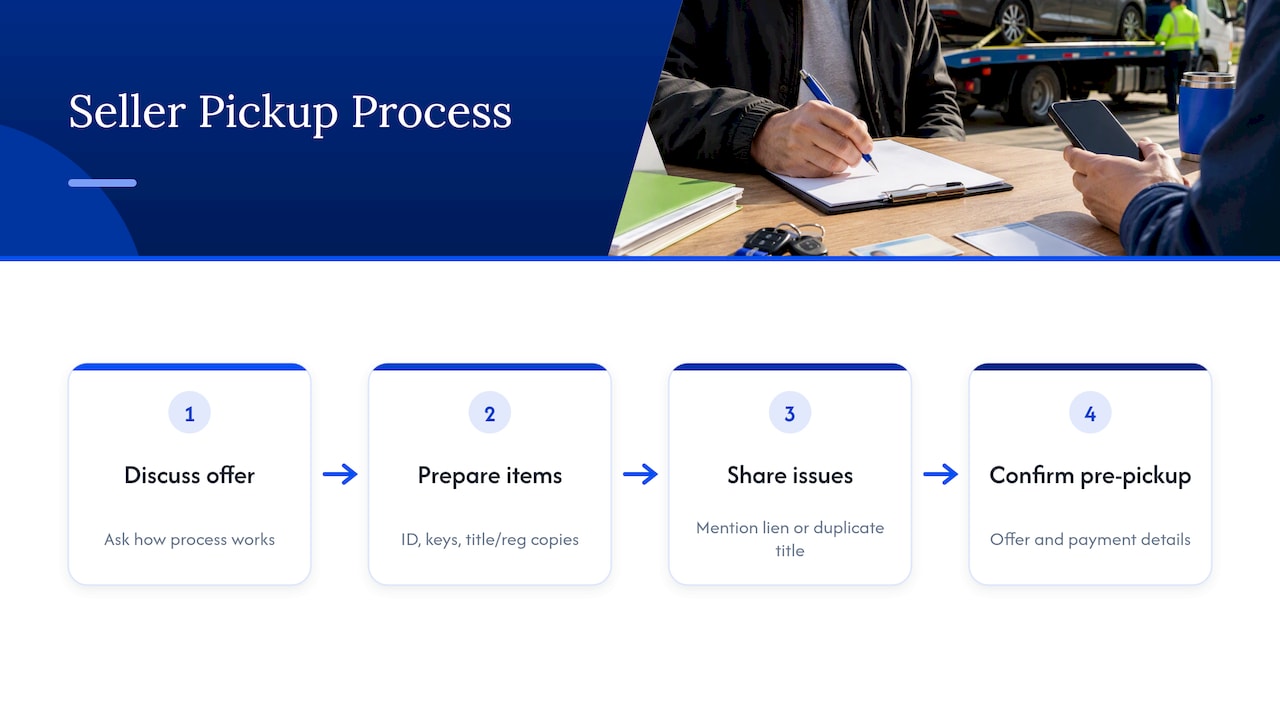
We can discuss buying your car in New York and arranging pickup and paperwork. Ask us about the offer and how the process works. Have a photo ID, the keys, and any title or registration copies you can find ready, and tell us if a lien or duplicate title is involved so we can plan around it. Ask us to confirm the offer and payment details before pickup.
Get an offer at Tri State Cash For Cars online or by phone today.
This article is general information, not a substitute for advice from a qualified lawyer. Consult a qualified legal professional about your own circumstances before acting on anything here.
FAQ
What happens if car registration expires in NY?
Do not drive the car on public roads. An expired registration cannot be transferred to another vehicle. The DMV treats ownership transfer separately, so you can still sell with proper proof of ownership.
Can you get rid of a car if the registration is expired?
Yes. Sign over the title, complete the MV-912 bill of sale, and remove the plates. Arrange towing or transport rather than driving it away.
Can I sell my car to CarMax or Carvana with expired registration?
Buyers set their own policies, so confirm with them directly before you commit. Whatever the buyer, the DMV still requires acceptable proof of ownership. We buy cars and handle the paperwork at pickup.
What if I lost the title and the registration is expired?
File MV-902 for a duplicate title or follow the DMV’s alternative proof routes. We also explain the options in our guide to selling without a title.
Sources
- Buy, Sell, or Transfer Vehicle Ownership | NY DMV
- Surrender (Return or Turn-in) Your Vehicle Plates and Registration | NY DMV
Authoritative NY DMV pages and forms to consult
The DMV is the final word on timing, fees, and documentary rules, so confirm details there before you sign anything.